Map of Netherlands showing where the Jaeger arms are recorded
The Jaeger arms were recorded in Amsterdam, c. 1815.
This is where the arms were entered in the register. Families often moved to other parts of the country, so the same name can turn up in more than one region.
Region
Amsterdam
Town
Amsterdam
First recorded
1815
Granting Authority for the Jaeger Arms
Hoge Raad van Adel
Photograph made by me · CC BY-SA 3.0
The body that granted and recorded arms in Netherlands in this period.
William I of the Netherlands
Sovereign of the period
William I of the Netherlands
1815–1840
Reigning in Netherlands when the Jaeger arms are first recorded.
How Arms Worked in Netherlands
In the Netherlands, coats of arms were often used by noble families and those who held specific public offices. These arms were passed down through the generations to legitimate descendants. Younger branches of a family usually kept the original design without needing to add special marks. This system ensured that the family identity remained clear and consistent over many years.
Granting authority
The Hoge Raad van Adel is the official body that regulates and manages noble titles and coats of arms in the Netherlands.
How they got arms
Families typically obtained their coats of arms through official royal grants or by proving their long-standing historical use of the symbols.
Where arms were recorded
Coats of arms are officially recorded in the registers held by the Hoge Raad van Adel, which began its work in 1814.
The family's standing
Recorded among the armigerous families of Netherlands.
Origin & History of the Jaeger Family in Netherlands
The surname Jaeger originates from the Middle Low German word for a hunter or a gamekeeper. By the time the family was firmly established in Amsterdam in 1815, the name reflected a long-standing tradition of professional service in forestry or wildlife management. During the early nineteenth century, Amsterdam was a bustling center of trade and rapid urban growth following the end of the Napoleonic Wars. Families like the Jaegers often moved into the city to take advantage of the expanding economy and the new opportunities provided by the restoration of the Dutch monarchy. As they integrated into the local population, they transitioned from their rural roots into the diverse professional life of the capital. This period marked a significant shift for the family as they moved away from traditional agrarian roles to become part of the growing urban middle class in the Netherlands.
Coat of Arms & Family Crest Details
Symbols on this shield
knightChivalry and service in arms
Colours
Gold (Or)Means: Generosity
Black (Sable)Means: Constancy
Historical info
Source
J. B. Rietstap, Armorial Général, Gouda: G. B. van Goor Zonen, 1884–87
Blazon (the actual original written record)
“Coupé d'or sur sa.; à un homme, le corps terminé en membre d'aigle, coiffé d'un chapeau, donnant dans un huchet, le tout de l'un en l'autre. C.: l'homme, iss.”
GermanyNördlingen Bav, c. 1765
Digital archive packCoat of arms PNG, gold border print PDF, vector SVG and the certificate of authenticity. Sent to your email in minutes.
Map of Germany showing where the Jaeger arms are recorded
The Jaeger arms were recorded in Nördlingen Bav, c. 1765.
This is where the arms were entered in the register. Families often moved to other parts of the country, so the same name can turn up in more than one region.
The body that granted and recorded arms in Germany in this period.
Francis I, Holy Roman Emperor
Sovereign of the period
Francis I, Holy Roman Emperor
1745–1765
Reigning in Netherlands when the Jaeger arms are first recorded.
How Arms Worked in Germany
In the Holy Roman Empire, coats of arms were often granted to individuals by the Emperor or his representatives. These arms were then passed down through the generations to all legitimate descendants of the original holder. Younger branches of a family usually kept the same shield design without needing to change it, as the arms belonged to the entire lineage.
Granting authority
The Holy Roman Emperor held the sole power to grant new coats of arms throughout his vast imperial territories.
How they got arms
Families typically obtained their coats of arms through a formal imperial grant or by proving their noble status to the authorities.
Where arms were recorded
These grants were officially recorded in the Imperial Chancery registers, which began keeping formal records of such honors during the Middle Ages.
The family's standing
Recorded among the armigerous families of Germany.
Origin & History of the Jaeger Family in Germany
The surname Jaeger is an occupational name that originated in the German-speaking regions of Europe during the Middle Ages. It is derived from the Middle High German word *jeger*, which translates to hunter or gamekeeper. In a time when forests were strictly managed by local nobility, individuals who held this title were often responsible for protecting hunting grounds and providing game for the lord’s table. By the mid-18th century, the name was well-established in the town of Nördlingen. Records show that members of the Jaeger family were living in this historic Bavarian city by 1765. At that time, Nördlingen was a significant center for trade and craftsmanship, and families like the Jaegers were often integrated into the local guilds or agricultural life of the region. The name serves as a direct link to the professional roles that ancestors held within the social structure of early modern Germany.
Coat of Arms & Family Crest Details
Symbols on this shield
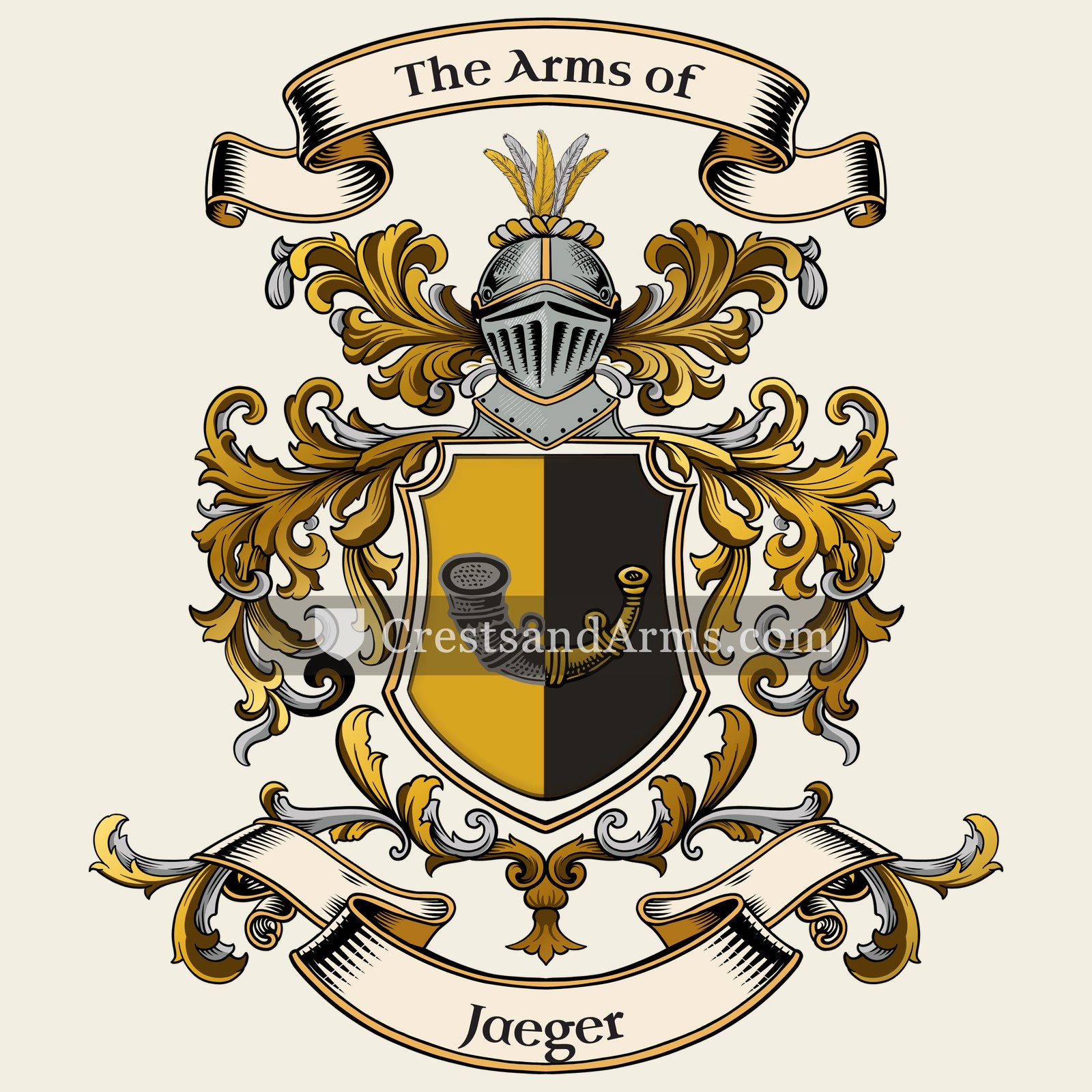
hunting horn stringedOne who delights in the chase
Colours
Gold (Or)Means: Generosity
Black (Sable)Means: Constancy
Historical info
Source
J. B. Rietstap, Armorial Général, Gouda: G. B. van Goor Zonen, 1884–87
Blazon (the actual original written record)
“Parti d'or et de sa., à un cor-de-chasse de l'un en l'autre, l'embouchure à dextre. Cq. cour. C.: le cor-de-chasse ; entre deux prob., d'or et de sa.”
Austriac. 1772
Digital archive packCoat of arms PNG, gold border print PDF, vector SVG and the certificate of authenticity. Sent to your email in minutes.
Map of Austria showing where the Jaeger arms are recorded
The Jaeger arms were recorded in Austria, c. 1772.
Arms such as these were typically recorded in Tyrol.
Tyrol was mountain country in western Austria, where the valleys were held by families who had been there a very long time. Old tenure counted for more than money, and old families carried arms.
This is where the arms were entered in the register. Families often moved to other parts of the country, so the same name can turn up in more than one region.
Region
Tyrol
First recorded
1772
Granting Authority for the Jaeger Arms
Imperial and Royal chancery
Sodacan · CC BY-SA 3.0
The body that granted and recorded arms in Austria in this period.
Joseph II, Holy Roman Emperor
Sovereign of the period
Joseph II, Holy Roman Emperor
1765–1790
Reigning in Netherlands when the Jaeger arms are first recorded.
How Arms Worked in Austria
Austrian coats of arms were often linked directly to noble titles granted by the Emperor. These symbols belonged to the entire family line rather than just one individual. When a family grew, new branches kept the original design without needing to change it. This system allowed all members of a noble house to share the same identity across many generations.
Granting authority
The Imperial and Royal chancery managed all heraldic matters and controlled the official granting of arms throughout the Austrian lands.
How they got arms
Families typically received their arms through a formal imperial decree that often accompanied the elevation of a person to noble status.
Where arms were recorded
Official records of these grants were kept in the Imperial Register of Nobility which began its formal documentation process in 1453.
The family's standing
Recorded among the armigerous families of Austria.
Origin & History of the Jaeger Family in Austria
The surname Jaeger is a classic occupational name that originated from the Middle High German word "jeger," which translates to hunter or gamekeeper. In the rugged landscape of the Austrian Tyrol, this name was often given to individuals who served as professional foresters or huntsmen for local nobility. By the time records confirm the family presence in Tyrol in 1772, the name had become well-established among rural communities that relied on the dense alpine forests for their livelihood. Because the geography of the Tyrol region was defined by steep mountains and vast woodlands, the role of a hunter was vital for both protecting crops and managing the local wildlife population. Families carrying this name were typically deeply connected to the land, often living in small, isolated mountain settlements where their specific skills in tracking and forest management were passed down through generations.
Related Branches & Arms
Root word
jagen
A Middle Dutch verb meaning to hunt or chase.
This name
JaegerAn occupational surname for a hunter or a gamekeeper.
also spelled
Jaeger
Yager
Jagar
Documented Sources
J. B. Rietstap, Armorial Général, Gouda: G. B. van Goor Zonen, 1884–87
Debrabandere, Frans. Woordenboek van de familienamen in België en Noord-Frankrijk. 2003
Van der Schaar, Joannes. Woordenboek van voornamen. 1964


 wheelFortune's turning, and the carter's trade
 fishA true and generous mind, and Christian faith
 mulletThe third son, and a divine quality from above
 wheelFortune's turning, and the carter's trade
 fishA true and generous mind, and Christian faith
 mulletThe third son, and a divine quality from above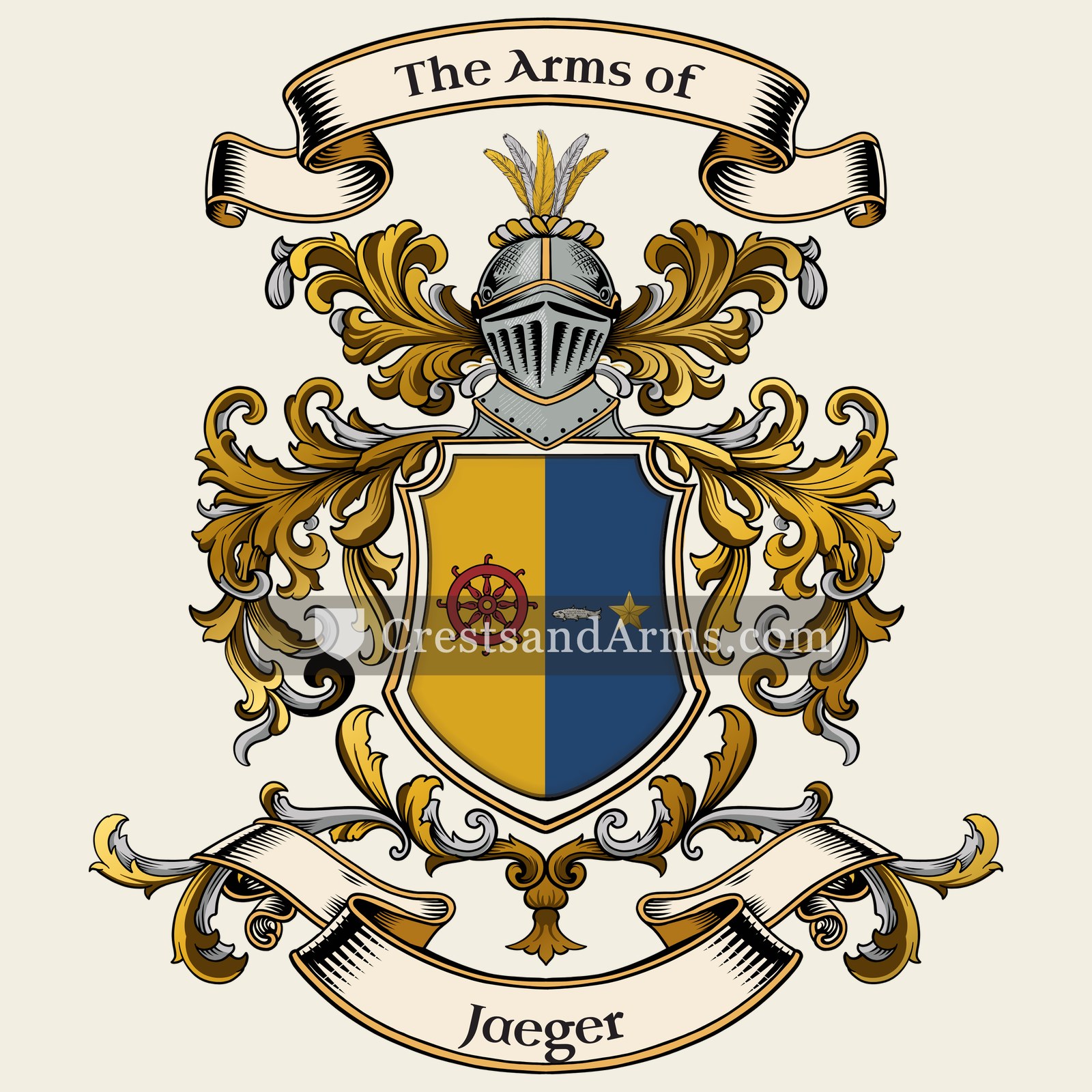


 knightChivalry and service in arms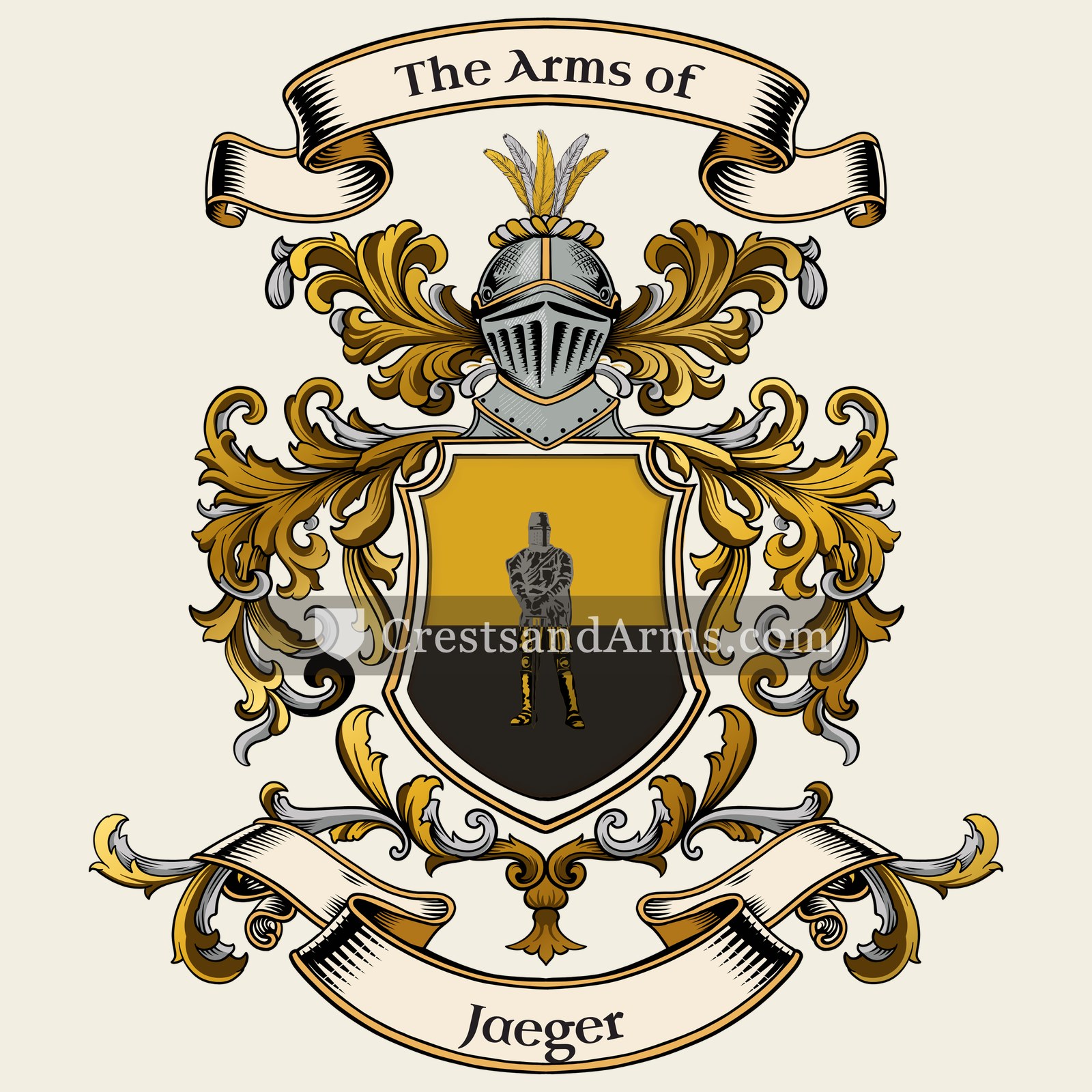


 hunting horn stringedOne who delights in the chase