Map of Netherlands showing where the Jagger arms are recorded
The Jagger arms were recorded in Amsterdam, c. 1815.
This is where the arms were entered in the register. Families often moved to other parts of the country, so the same name can turn up in more than one region.
Region
Amsterdam
Town
Amsterdam
First recorded
1815
Granting Authority for the Jagger Arms
Hoge Raad van Adel
Photograph made by me · CC BY-SA 3.0
The body that granted and recorded arms in Netherlands in this period.
William I of the Netherlands
Sovereign of the period
William I of the Netherlands
1815–1840
Reigning in Netherlands when the Jagger arms are first recorded.
How Arms Worked in Netherlands
In the Netherlands, coats of arms were often used by noble families and those who held specific public offices. These arms were passed down through the generations to legitimate descendants. Younger branches of a family usually kept the original design without needing to add special marks. This system ensured that the family identity remained clear and consistent over many years.
Granting authority
The Hoge Raad van Adel is the official body that regulates and manages noble titles and coats of arms in the Netherlands.
How they got arms
Families typically obtained their coats of arms through official royal grants or by proving their long-standing historical use of the symbols.
Where arms were recorded
Coats of arms are officially recorded in the registers held by the Hoge Raad van Adel, which began its work in 1814.
The family's standing
Recorded among the armigerous families of Netherlands.
Origin & History of the Jagger Family in Netherlands
The surname Jagger likely emerged as an occupational name, historically linked to individuals who worked as peddlers or carriers of goods. By the early nineteenth century, the family established a notable presence in Amsterdam, a city that served as a bustling hub for trade and migration during the post-Napoleonic era. In 1815, Amsterdam was undergoing a significant transformation as it transitioned into the capital of the newly formed United Kingdom of the Netherlands. During this period, families like the Jaggers were often integrated into the city’s vibrant merchant class, contributing to the local economy through small-scale commerce or specialized labor. The presence of the name in municipal records from this time suggests that these ancestors were part of the urban workforce that helped rebuild the city’s commercial influence after years of political instability. This era marked a time of bureaucratic formalization in the Netherlands, meaning that the documentation of the Jagger name in 1815 provides a clear window into the family's transition into the modern Dutch administrative system.
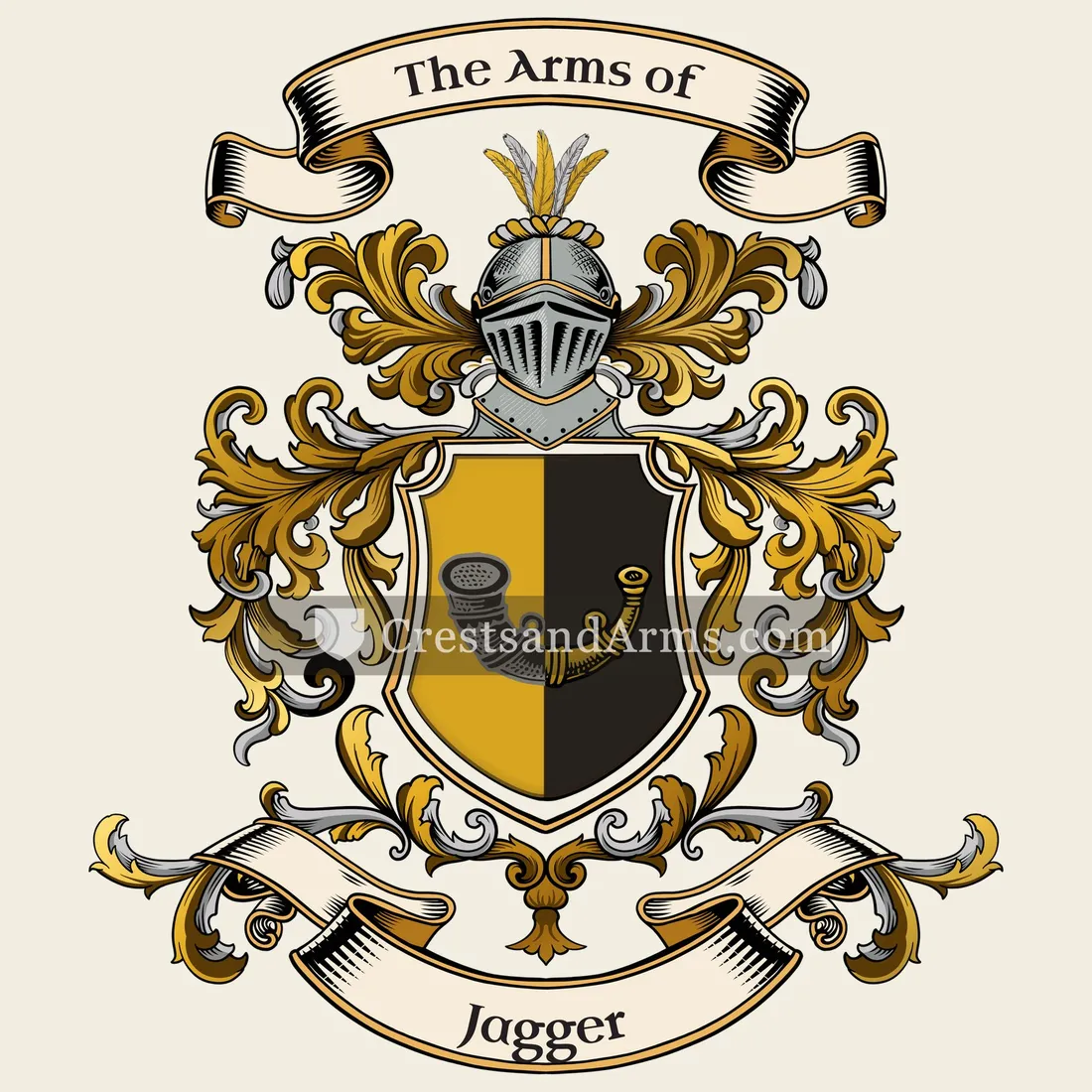
Meaning of the Jagger family crest colors & symbols
Symbols on this shield
knightChivalry and service in arms
Colours
Gold (Or)Means: Generosity
Black (Sable)Means: Constancy
Historical info
Source
J. B. Rietstap, Armorial Général, Gouda: G. B. van Goor Zonen, 1884–87
Blazon (the actual original written record)
“Coupé d'or sur sa.; à un homme, le corps terminé en membre d'aigle, coiffé d'un chapeau, donnant dans un huchet, le tout de l'un en l'autre. C.: l'homme, iss.”
GermanyNördlingen Bav, c. 1765
Digital archive packCoat of arms PNG, gold border print PDF, vector SVG and the certificate of authenticity. Sent to your email in minutes.
Map of Germany showing where the Jagger arms are recorded
The Jagger arms were recorded in Nördlingen Bav, c. 1765.
This is where the arms were entered in the register. Families often moved to other parts of the country, so the same name can turn up in more than one region.
The body that granted and recorded arms in Germany in this period.
Francis I, Holy Roman Emperor
Sovereign of the period
Francis I, Holy Roman Emperor
1745–1765
Reigning in Netherlands when the Jagger arms are first recorded.
How Arms Worked in Germany
In the Holy Roman Empire, coats of arms were often granted to individuals by the Emperor or his representatives. These arms were then passed down through the generations to all legitimate descendants of the original holder. Younger branches of a family usually kept the same shield design without needing to change it, as the arms belonged to the entire lineage.
Granting authority
The Holy Roman Emperor held the sole power to grant new coats of arms throughout his vast imperial territories.
How they got arms
Families typically obtained their coats of arms through a formal imperial grant or by proving their noble status to the authorities.
Where arms were recorded
These grants were officially recorded in the Imperial Chancery registers, which began keeping formal records of such honors during the Middle Ages.
The family's standing
Recorded among the armigerous families of Germany.
Origin & History of the Jagger Family in Germany
The surname Jagger is deeply rooted in the linguistic traditions of southern Germany, where it likely originated as a descriptive occupational name. The name is derived from the Middle High German word *jager*, which translates to a hunter or a huntsman. In the social structure of the eighteenth century, this title often referred to a professional gamekeeper or a forest warden employed by local nobility to manage woodland estates. By 1765, records confirm that members of the Jagger family were well-established residents of Nördlingen. During this period, Nördlingen was a significant center for trade and craftsmanship, and families like the Jaggers were often integrated into the local guilds or the administrative systems that kept the city running. Their presence in this historic walled town suggests they were part of the hardworking middle class that sustained the regional economy through their specialized skills and service to the community.
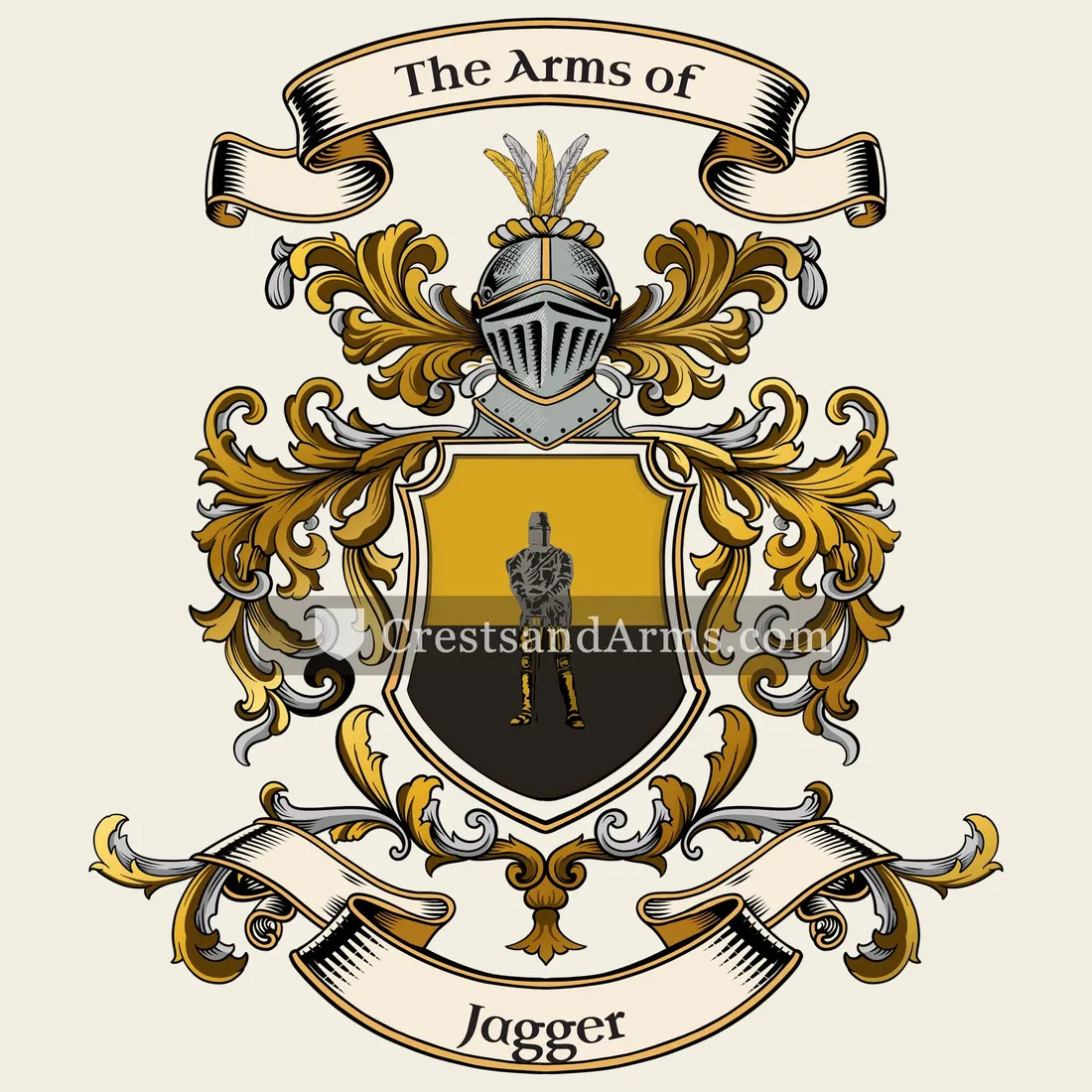
Meaning of the Jagger family crest colors & symbols
Symbols on this shield
hunting horn stringedOne who delights in the chase
Colours
Gold (Or)Means: Generosity
Black (Sable)Means: Constancy
Historical info
Source
J. B. Rietstap, Armorial Général, Gouda: G. B. van Goor Zonen, 1884–87
Blazon (the actual original written record)
“Parti d'or et de sa., à un cor-de-chasse de l'un en l'autre, l'embouchure à dextre. Cq. cour. C.: le cor-de-chasse ; entre deux prob., d'or et de sa.”
Austriac. 1772
Digital archive packCoat of arms PNG, gold border print PDF, vector SVG and the certificate of authenticity. Sent to your email in minutes.
Map of Austria showing where the Jagger arms are recorded
The Jagger arms were recorded in Austria, c. 1772.
Arms such as these were typically recorded in Tyrol.
Tyrol was mountain country in western Austria, where the valleys were held by families who had been there a very long time. Old tenure counted for more than money, and old families carried arms.
This is where the arms were entered in the register. Families often moved to other parts of the country, so the same name can turn up in more than one region.
Region
Tyrol
First recorded
1772
Granting Authority for the Jagger Arms
Imperial and Royal chancery
Sodacan · CC BY-SA 3.0
The body that granted and recorded arms in Austria in this period.
Joseph II, Holy Roman Emperor
Sovereign of the period
Joseph II, Holy Roman Emperor
1765–1790
Reigning in Netherlands when the Jagger arms are first recorded.
How Arms Worked in Austria
Austrian coats of arms were often linked directly to noble titles granted by the Emperor. These symbols belonged to the entire family line rather than just one individual. When a family grew, new branches kept the original design without needing to change it. This system allowed all members of a noble house to share the same identity across many generations.
Granting authority
The Imperial and Royal chancery managed all heraldic matters and controlled the official granting of arms throughout the Austrian lands.
How they got arms
Families typically received their arms through a formal imperial decree that often accompanied the elevation of a person to noble status.
Where arms were recorded
Official records of these grants were kept in the Imperial Register of Nobility which began its formal documentation process in 1453.
The family's standing
Recorded among the armigerous families of Austria.
Origin & History of the Jagger Family in Austria
The family name Jagger finds its historical roots in the rugged landscape of the Austrian Tyrol, where the name was closely tied to the traditional occupation of hunting and forestry. In the German language, the term Jäger refers to a hunter or a gamekeeper, a role that was highly respected and essential for managing the vast mountain estates of the region. By 1772, records confirm that members of the Jagger family were firmly established within these alpine communities. These early ancestors likely served as skilled woodsmen or mountain guides who possessed an intimate knowledge of the treacherous terrain. Their lives were defined by the rhythm of the seasons and the demands of the local nobility who relied on their expertise to navigate the dense forests and high peaks. Over time, the name evolved from a simple description of a person’s job into a permanent family identifier that linked them to the unique culture and geography of the Austrian Alps.
Jagger Meaning & Related Branches
Root word
Jagen
To hunt or to pursue game in a forest or field.
This name
JaggerAn occupational surname for a professional hunter or a gamekeeper.
also spelled
Jaeger
Yager
Jagar
Documented Sources
J. B. Rietstap, Armorial Général, Gouda: G. B. van Goor Zonen, 1884–87


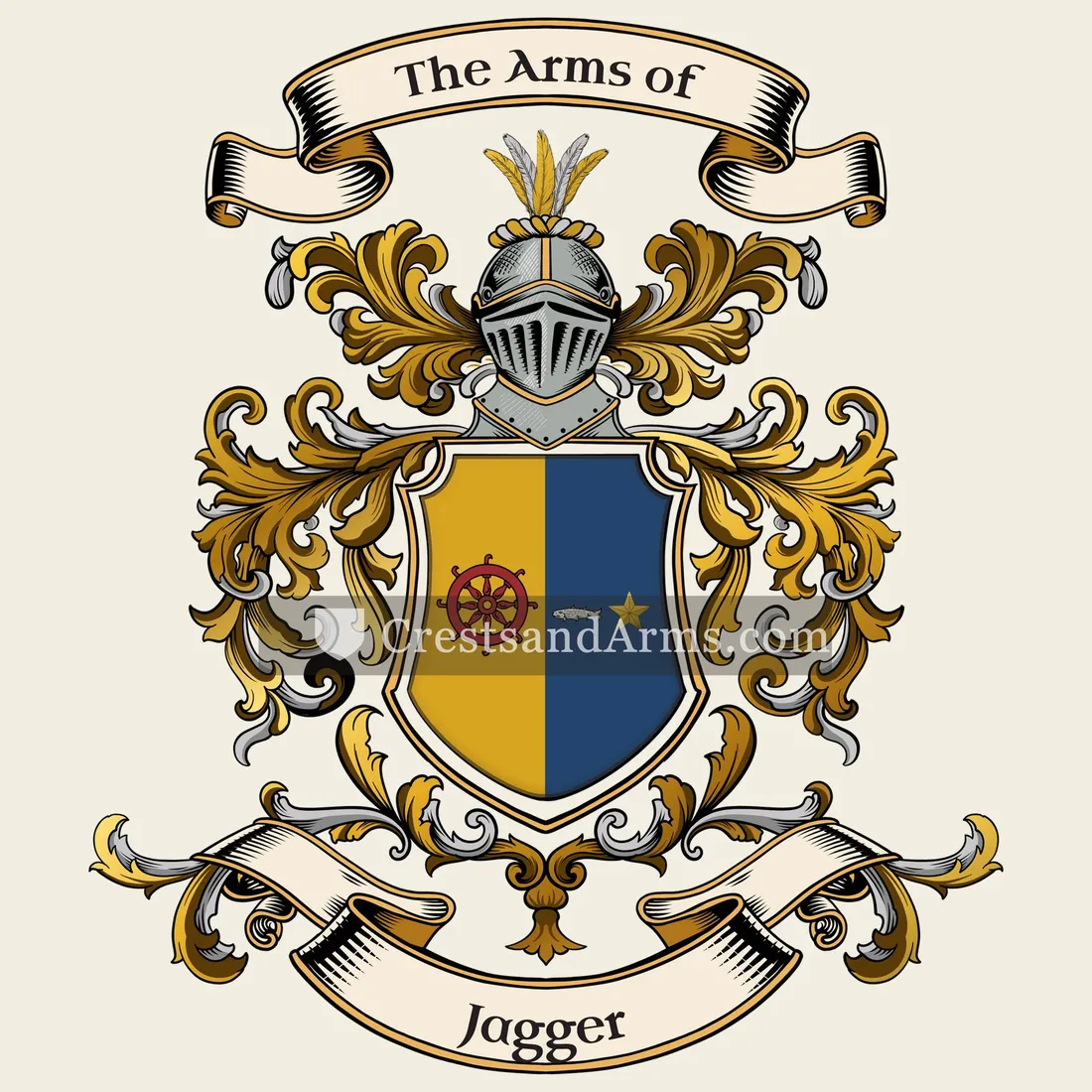
 wheelFortune's turning, and the carter's trade
 fishA true and generous mind, and Christian faith
 mulletThe third son, and a divine quality from above
 wheelFortune's turning, and the carter's trade
 fishA true and generous mind, and Christian faith
 mulletThe third son, and a divine quality from above


 knightChivalry and service in arms


 hunting horn stringedOne who delights in the chase