Map of Germany showing where the Jan arms are recorded
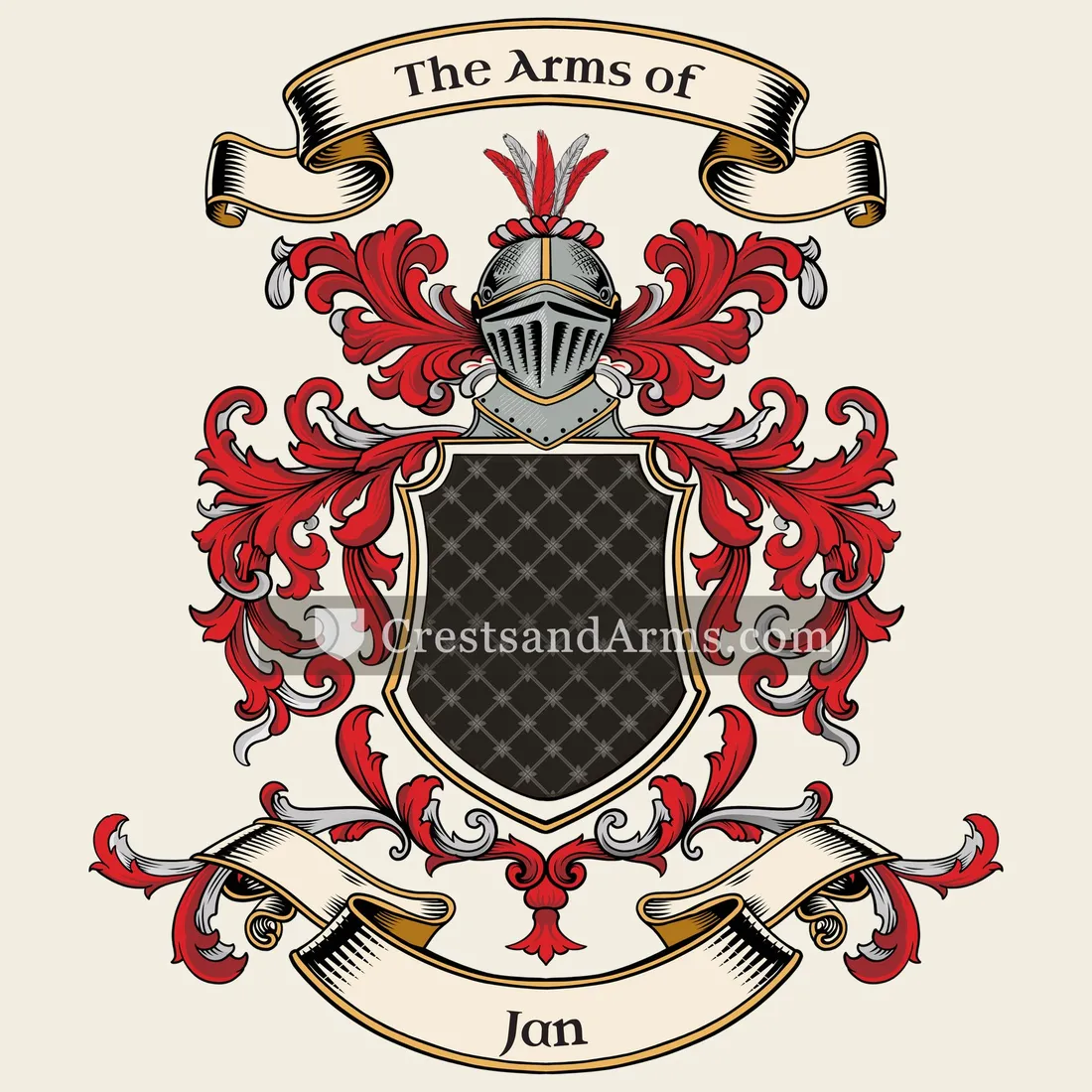
The Jan arms were recorded in Wurttemberg, c. 1779.
Wurttemberg was southern German country of small estates and well-off market towns. Both landowners and leading townsmen kept arms there, so the region carries far more names than its size suggests.
This is where the arms were entered in the register. Families often moved to other parts of the country, so the same name can turn up in more than one region.
The body that granted and recorded arms in Germany in this period.
Joseph II, Holy Roman Emperor
Sovereign of the period
Joseph II, Holy Roman Emperor
1765–1790
Reigning in Germany when the Jan arms are first recorded.
How Arms Worked in Germany
In the Holy Roman Empire, coats of arms were often granted to individuals by the Emperor or his representatives. These arms were then passed down through the generations to all legitimate descendants of the original holder. Younger branches of a family usually kept the same shield design without needing to change it, as the arms belonged to the entire lineage.
Granting authority
The Holy Roman Emperor held the sole power to grant new coats of arms throughout his vast imperial territories.
How they got arms
Families typically obtained their coats of arms through a formal imperial grant or by proving their noble status to the authorities.
Where arms were recorded
These grants were officially recorded in the Imperial Chancery registers, which began keeping formal records of such honors during the Middle Ages.
The family's standing
Recorded among the armigerous families of Wurttemberg.
Origin & History of the Jan Family in Germany
The surname Jan is a shortened form of the name Johannes, which was a very popular name throughout German-speaking regions during the Middle Ages. Families carrying this name often lived in the southwestern parts of Germany, including the region of Württemberg. By the late 18th century, records confirm that members of the Jan family were established residents in this area, specifically appearing in official documents by 1779. During this period, the family likely lived as part of a rural or village community where they worked in agriculture or local trades. Because the name was derived from a common given name, it was often used to distinguish a specific household in a small town. Over time, the family name became a permanent way to track their lineage as they moved through the changing political landscape of the German states.
Jan Meaning & Related Branches
Root word
Yochanan
Hebrew for Yahweh is gracious.
This name
JanA German diminutive form of John, signifying God is gracious.
also spelled
Jann
Jane
Jannue
Documented Sources
J. B. Rietstap, Armorial Général, Gouda: G. B. van Goor Zonen, 1884–87
Brechenmacher, Josef Karlmann. Etymologisches Wörterbuch der deutschen Familiennamen. 1957
Heintze, Albert. Die deutschen Familiennamen: geschichtlich, geographisch, sprachlich. 1903
Hauptstaatsarchiv Stuttgart. Kirchenbücher der evangelischen Landeskirche in Württemberg. 1779
Digital archive packCoat of arms PNG, gold border print PDF, vector SVG and the certificate of authenticity. Sent to your email in minutes.