A record of documented arms, meaning and origin, researched for the Janeczek family lines. Documented in 2 countries.
Reg. 3563 · Polish, J–L
Meaning of the Janeczek family crest colors & symbols
Symbols on this shield
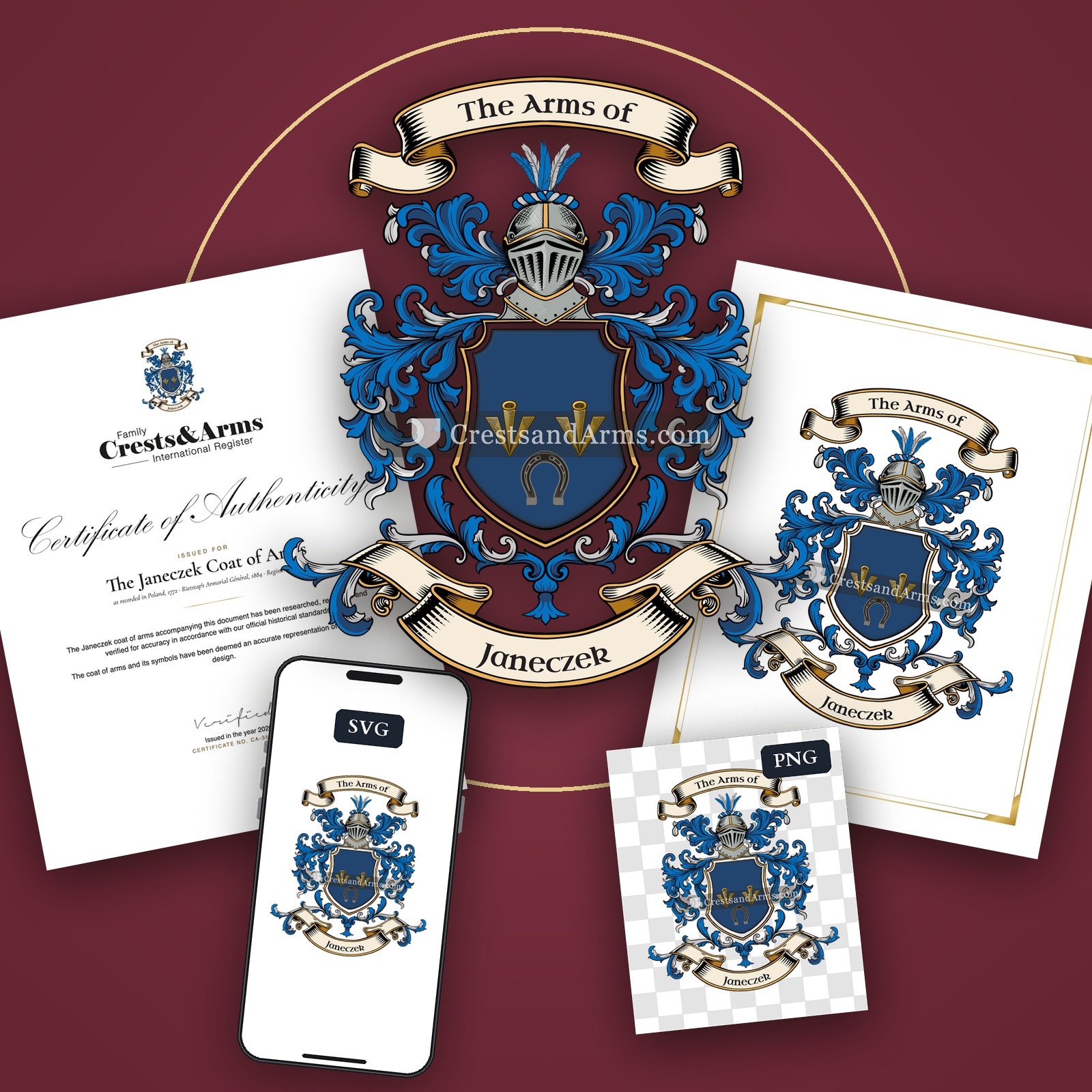
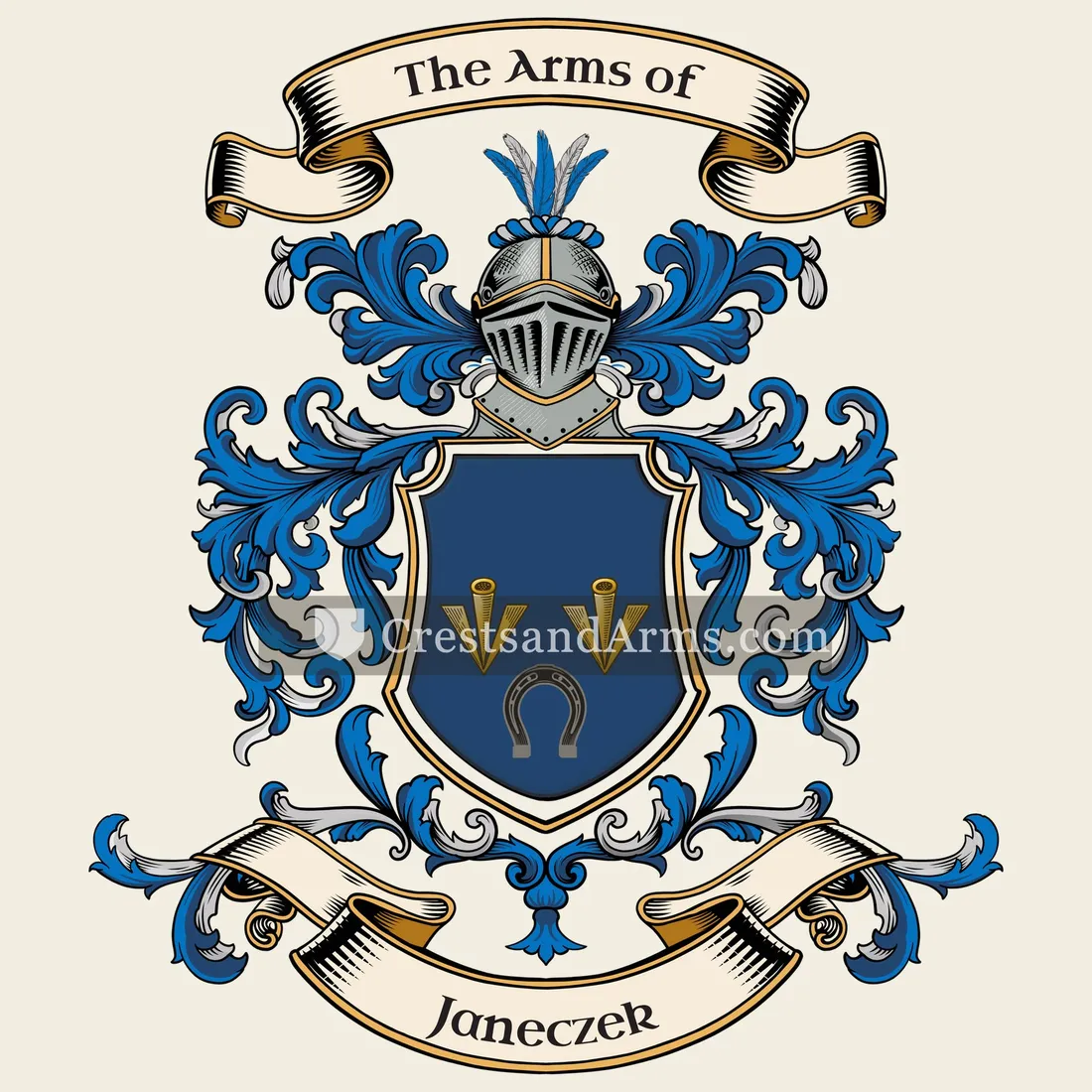
arrowReadiness for battle, and affliction endured
horseshoeGood fortune and protection from harm
Colours
Blue (Azure)Means: Loyalty and truth
Gold (Or)Means: Generosity
Black (Sable)Means: Constancy
Historical info
Source
J. B. Rietstap, Armorial Général, Gouda: G. B. van Goor Zonen, 1884–87
Blazon (the actual original written record)
“D'azur à deux flèches d'or, arm. et empennées d'arg., passées en saut., posées en chef, acc. en p. d'un fer-à-cheval de sa. Cq. cour. C.: un vol, d'or et d'azur. L. d'arg. et d'azur.”
CourlandCourland, c. 1772
Digital archive packCoat of arms PNG, gold border print PDF, vector SVG and the certificate of authenticity. Sent to your email in minutes.
Map of Poland showing where the Janeczek arms are recorded
The Janeczek arms were recorded in Courland, c. 1772.
Courland was Baltic coast country held in large estates by a small number of families. They kept their land for generations and served as officers abroad, and both landholding and service brought arms with them.
This is where the arms were entered in the register. Families often moved to other parts of the country, so the same name can turn up in more than one region.
Region
Courland
First recorded
1772
Granting Authority for the Janeczek Arms
Ennoblement by the Sejm
Author: Olek Remesz · CC BY-SA 3.0
The body that granted and recorded arms in Poland in this period.
Stanisław August Poniatowski
Sovereign of the period
Stanisław August Poniatowski
1764–1795
Reigning in Poland when the Janeczek arms are first recorded.
How Arms Worked in Poland
Polish noble families shared a single coat of arms across many different surnames, creating large clans rather than individual designs. These symbols were held collectively by all members of the clan regardless of their specific family name. When a new family joined the nobility, they were adopted into an existing clan and began using that group's established shield.
Granting authority
The Sejm, which was the Polish parliament, held the power to grant noble status and the right to bear arms.
How they got arms
Families typically received their coat of arms through a formal act of ennoblement granted by the Sejm for distinguished service.
Where arms were recorded
These grants were officially recorded in the Crown Metrica, which served as the central archive for state documents starting in the sixteenth century.
The family's standing
Recorded among the armigerous families of Courland.
Origin & History of the Janeczek Family in Poland
The surname Janeczek is a diminutive form of the name Jan, which is the Polish equivalent of John. In the Polish naming tradition, adding the suffix "eczek" often served as a term of endearment or a way to distinguish a younger or smaller member of a family. By the late 18th century, the name had spread beyond the borders of the Polish-Lithuanian Commonwealth, reaching the region of Courland by 1772. At that time, Courland was a duchy with deep cultural and political ties to Poland, and many families moved across these borders for trade, military service, or land management. The presence of the Janeczek family in this Baltic territory during that era suggests they were part of a mobile population that maintained strong linguistic and cultural connections to their Polish roots while settling in new administrative districts. This migration pattern reflects the broader movement of people across Eastern Europe during a period of significant political transition.
Meaning of the Janeczek family crest colors & symbols
Symbols on this shield
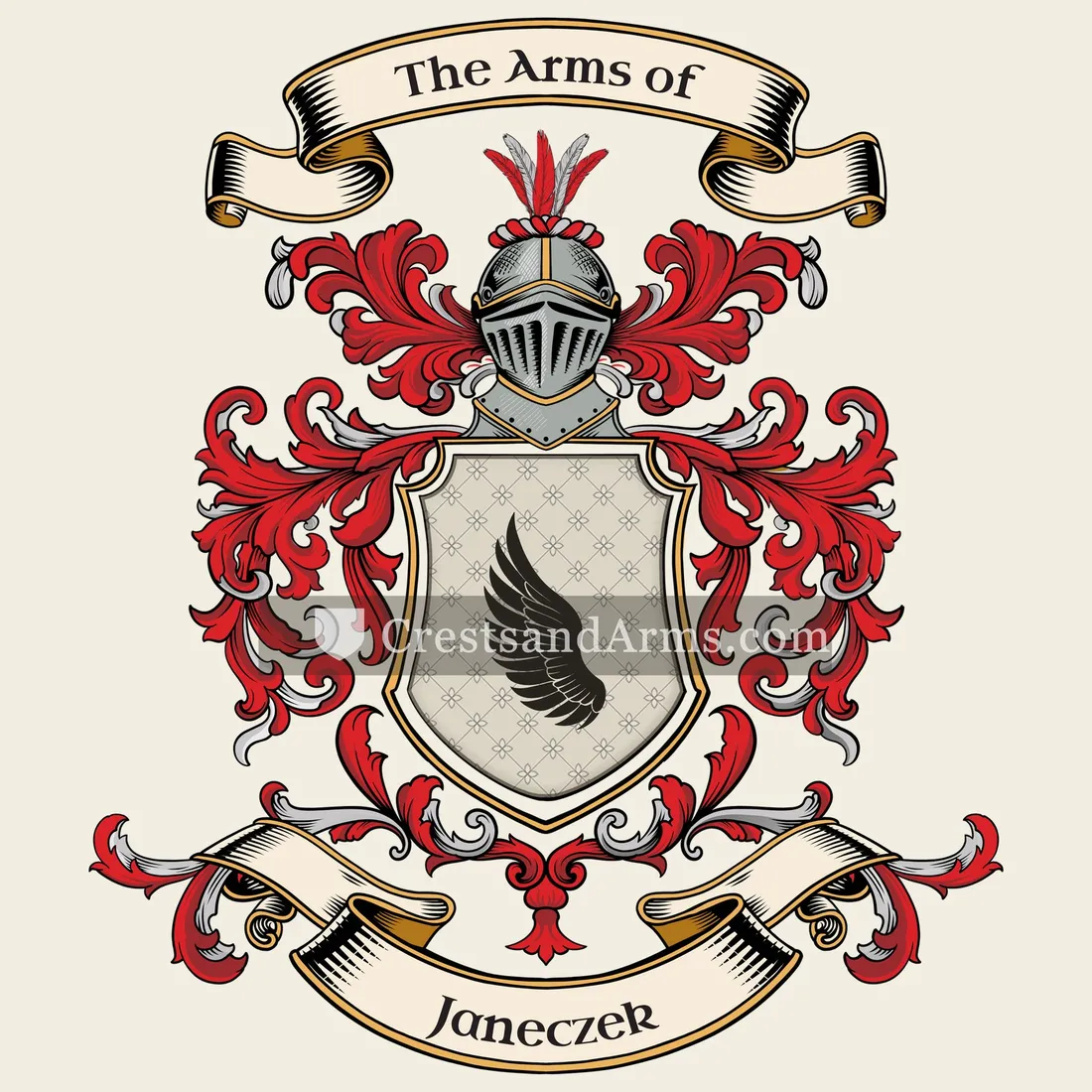
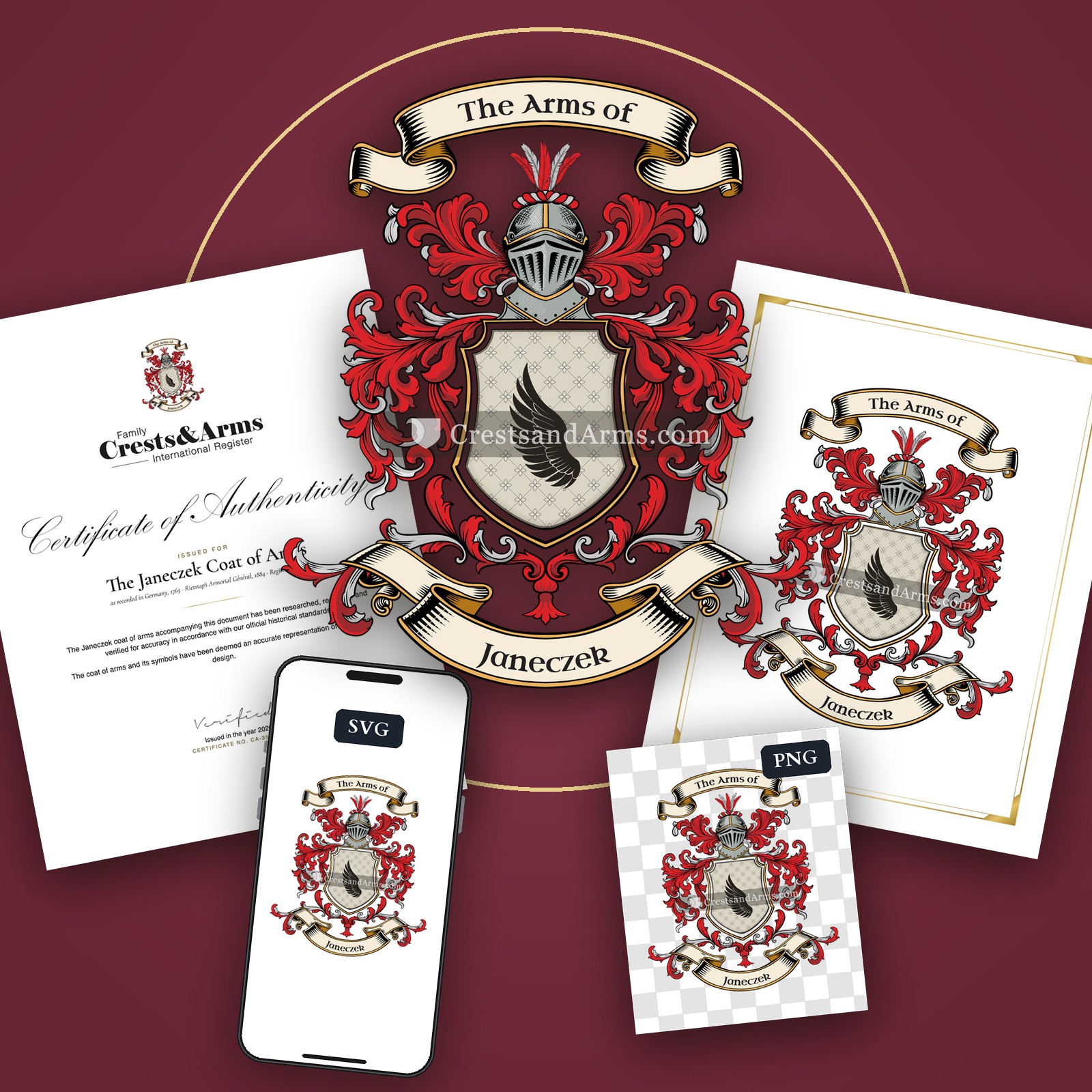
wingSwiftness, and protection under a raised wing
Colours
Silver (Argent)Means: Peace and sincerity
Black (Sable)Means: Constancy
Historical info
Source
J. B. Rietstap, Armorial Général, Gouda: G. B. van Goor Zonen, 1884–87
Blazon (the actual original written record)
“un demi-vol de sa., percé d'une flèche d'or, empennée d'arg., en fasce. L. d'arg. et d'azur.”
Germanyc. 1765
Digital archive packCoat of arms PNG, gold border print PDF, vector SVG and the certificate of authenticity. Sent to your email in minutes.
Map of Germany showing where the Janeczek arms are recorded
The Janeczek arms were recorded in Germany, c. 1765.
Arms such as these were typically recorded in Bavaria.
Bavaria was a country of old landed families and walled market towns. Estates passed down the same line for centuries, and both the landowners and the leading townsmen kept arms, which is why so many Bavarian names sit in the registers.
This is where the arms were entered in the register. Families often moved to other parts of the country, so the same name can turn up in more than one region.
The body that granted and recorded arms in Germany in this period.
Francis I, Holy Roman Emperor
Sovereign of the period
Francis I, Holy Roman Emperor
1745–1765
Reigning in Poland when the Janeczek arms are first recorded.
How Arms Worked in Germany
In the Holy Roman Empire, coats of arms were often granted to individuals by the Emperor or his representatives. These arms were then passed down through the generations to all legitimate descendants of the original holder. Younger branches of a family usually kept the same shield design without needing to change it, as the arms belonged to the entire lineage.
Granting authority
The Holy Roman Emperor held the sole power to grant new coats of arms throughout his vast imperial territories.
How they got arms
Families typically obtained their coats of arms through a formal imperial grant or by proving their noble status to the authorities.
Where arms were recorded
These grants were officially recorded in the Imperial Chancery registers, which began keeping formal records of such honors during the Middle Ages.
The family's standing
Recorded among the armigerous families of Germany.
Origin & History of the Janeczek Family in Germany
The surname Janeczek is a diminutive form of the name Jan, which serves as the Slavic equivalent of John. While the name has deep roots in Slavic regions, its presence in Bavaria by 1765 highlights the historical movement of families across Central European borders. During the eighteenth century, Bavaria was a hub for trade and migration, often drawing people from neighboring territories due to its agricultural stability and religious significance. Families bearing this name likely integrated into the local Bavarian social structure by working in skilled trades or farming, which were the primary occupations for common citizens at the time. Over generations, the name adapted to the local German linguistic environment while maintaining its distinct phonetic origins. This transition reflects the broader history of families who moved across the Holy Roman Empire, blending their cultural heritage with the traditions of their new communities.
Janeczek Meaning & Related Branches
Root word
Jan
A Slavic form of the Hebrew name Yochanan meaning God is gracious.
This name
JaneczekA diminutive form indicating the son or a small version of John.
also spelled
Janczewske
Janczewskie
Janczewsk
Yanchevski
Janchevski
Documented Sources
J. B. Rietstap, Armorial Général, Gouda: G. B. van Goor Zonen, 1884–87


 arrowReadiness for battle, and affliction endured
 horseshoeGood fortune and protection from harm
 arrowReadiness for battle, and affliction endured
 horseshoeGood fortune and protection from harm


 wingSwiftness, and protection under a raised wing