Map of Netherlands showing where the Jansen arms are recorded
The Jansen arms were recorded in Netherlands, c. 1815.
Arms such as these were typically recorded in Friesland.
Friesland was low, wet country on the northern coast of the Netherlands, farmed by families who had held the same land for centuries. Free landholders were unusually common there, and a free landholder could carry arms.
This is where the arms were entered in the register. Families often moved to other parts of the country, so the same name can turn up in more than one region.
Region
Friesland
First recorded
1815
Granting Authority for the Jansen Arms
Hoge Raad van Adel
Photograph made by me · CC BY-SA 3.0
The body that granted and recorded arms in Netherlands in this period.
William I of the Netherlands
Sovereign of the period
William I of the Netherlands
1815–1840
Reigning in Netherlands when the Jansen arms are first recorded.
How Arms Worked in Netherlands
In the Netherlands, coats of arms were often used by noble families and those who held specific public offices. These arms were passed down through the generations to legitimate descendants. Younger branches of a family usually kept the original design without needing to add special marks. This system ensured that the family identity remained clear and consistent over many years.
Granting authority
The Hoge Raad van Adel is the official body that regulates and manages noble titles and coats of arms in the Netherlands.
How they got arms
Families typically obtained their coats of arms through official royal grants or by proving their long-standing historical use of the symbols.
Where arms were recorded
Coats of arms are officially recorded in the registers held by the Hoge Raad van Adel, which began its work in 1814.
The family's standing
Recorded among the armigerous families of Netherlands.
Origin & History of the Jansen Family in Netherlands
The name Jansen is a classic patronymic surname, which means it was originally created to identify a person as the son of Jan. In the Netherlands, this naming style became common as populations grew and officials needed a way to distinguish between individuals with the same first name. By the early 19th century, the name was firmly established across many Dutch provinces, including the northern region of Friesland. While many families in the Netherlands used the prefix "van" to denote a place of origin, the Jansen name focused entirely on family lineage and the connection to a father named Jan. When the Dutch government mandated the formal registration of surnames in 1811, families like yours solidified their identity in official records. This transition helped turn a simple descriptive phrase into a permanent family name that has been passed down through generations.
Coat of Arms & Family Crest Details
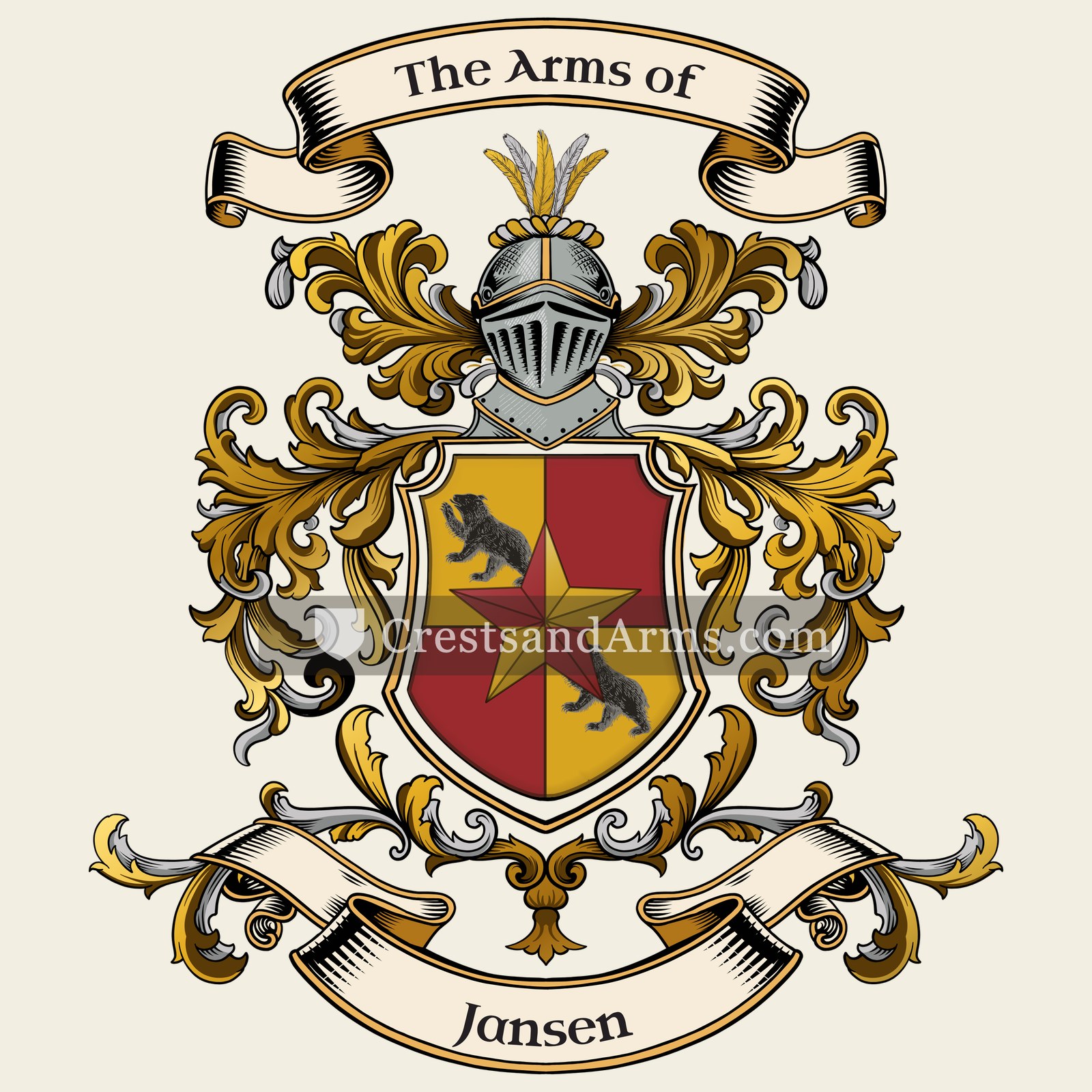
Symbols on this shield
mulletThe third son, and a divine quality from above
bearStrength, cunning and protection of kin
Colours
Gold (Or)Means: Generosity
Red (Gules)Means: Military strength
Black (Sable)Means: Constancy
Historical info
Source
J. B. Rietstap, Armorial Général, Gouda: G. B. van Goor Zonen, 1884–87
Blazon (the actual original written record)
“Ec.: aux 1 et 4 d'or à un ours ramp. de sa., cour. d'or, celui du 1 cont.; aux 2 et 3 taillé de gu. sur arg.; à une étoile (8) de l'un en l'autre. Cq. cour. C.: l'ours du 4, iss., tenant de ses pattes une épée d'arg., garnie d'or. L. d'or et de sa.”
Germanyc. 1765
Digital archive packCoat of arms PNG, gold border print PDF, vector SVG and the certificate of authenticity. Sent to your email in minutes.
Map of Germany showing where the Jansen arms are recorded
The Jansen arms were recorded in Germany, c. 1765.
Arms such as these were typically recorded in Bavaria.
Bavaria was a country of old landed families and walled market towns. Estates passed down the same line for centuries, and both the landowners and the leading townsmen kept arms, which is why so many Bavarian names sit in the registers.
This is where the arms were entered in the register. Families often moved to other parts of the country, so the same name can turn up in more than one region.
The body that granted and recorded arms in Germany in this period.
Francis I, Holy Roman Emperor
Sovereign of the period
Francis I, Holy Roman Emperor
1745–1765
Reigning in Netherlands when the Jansen arms are first recorded.
How Arms Worked in Germany
In the Holy Roman Empire, coats of arms were often granted to individuals by the Emperor or his representatives. These arms were then passed down through the generations to all legitimate descendants of the original holder. Younger branches of a family usually kept the same shield design without needing to change it, as the arms belonged to the entire lineage.
Granting authority
The Holy Roman Emperor held the sole power to grant new coats of arms throughout his vast imperial territories.
How they got arms
Families typically obtained their coats of arms through a formal imperial grant or by proving their noble status to the authorities.
Where arms were recorded
These grants were officially recorded in the Imperial Chancery registers, which began keeping formal records of such honors during the Middle Ages.
The family's standing
Recorded among the armigerous families of Germany.
Origin & History of the Jansen Family in Germany
The surname Jansen is a classic patronymic name, which means it was originally created to identify a person as the son of Jan or Johannes. In the German-speaking regions, this name became common as people began to adopt permanent family names during the late Middle Ages and the early modern period. By the time your ancestors were documented in Bavaria in 1765, the name had already been established for generations across Northern and Central Europe. Families with this name were often part of the hardworking middle class, frequently working as farmers, craftsmen, or tradespeople in growing regional towns. Living in Bavaria during the mid-eighteenth century placed your ancestors in a region undergoing significant social and agricultural changes under the rule of the Wittelsbach dynasty. As the population moved and expanded during this era, the Jansen name served as a vital link to their family heritage and their specific place within the local community.
Related Branches & Arms
Root word
Johannes
Hebrew name meaning Yahweh is gracious
This name
JansenA patronymic surname meaning son of Jan or son of John
also spelled
Janssen
Janson
Johnson
Related arms
Jansonvariant spelling
Janssenvariant spelling
van den Dyckrecorded with Jansen, same area
Documented Sources
J. B. Rietstap, Armorial Général, Gouda: G. B. van Goor Zonen, 1884–87
Meertens, P.J., De betekenis van de Nederlandse familienamen, 1959
Van Berkel, G. and Samplonius, K., Nederlandse familienamen, 2018
Tresoar (Fries Historisch en Letterkundig Centrum), Burgerlijke Stand Friesland, 1811–1900
Digital archive packCoat of arms PNG, gold border print PDF, vector SVG and the certificate of authenticity. Sent to your email in minutes.


 fessThe military belt, and readiness to serve
 cantonA mark of honour granted by the sovereign
 mulletThe third son, and a divine quality from above
 fessThe military belt, and readiness to serve
 cantonA mark of honour granted by the sovereign
 mulletThe third son, and a divine quality from above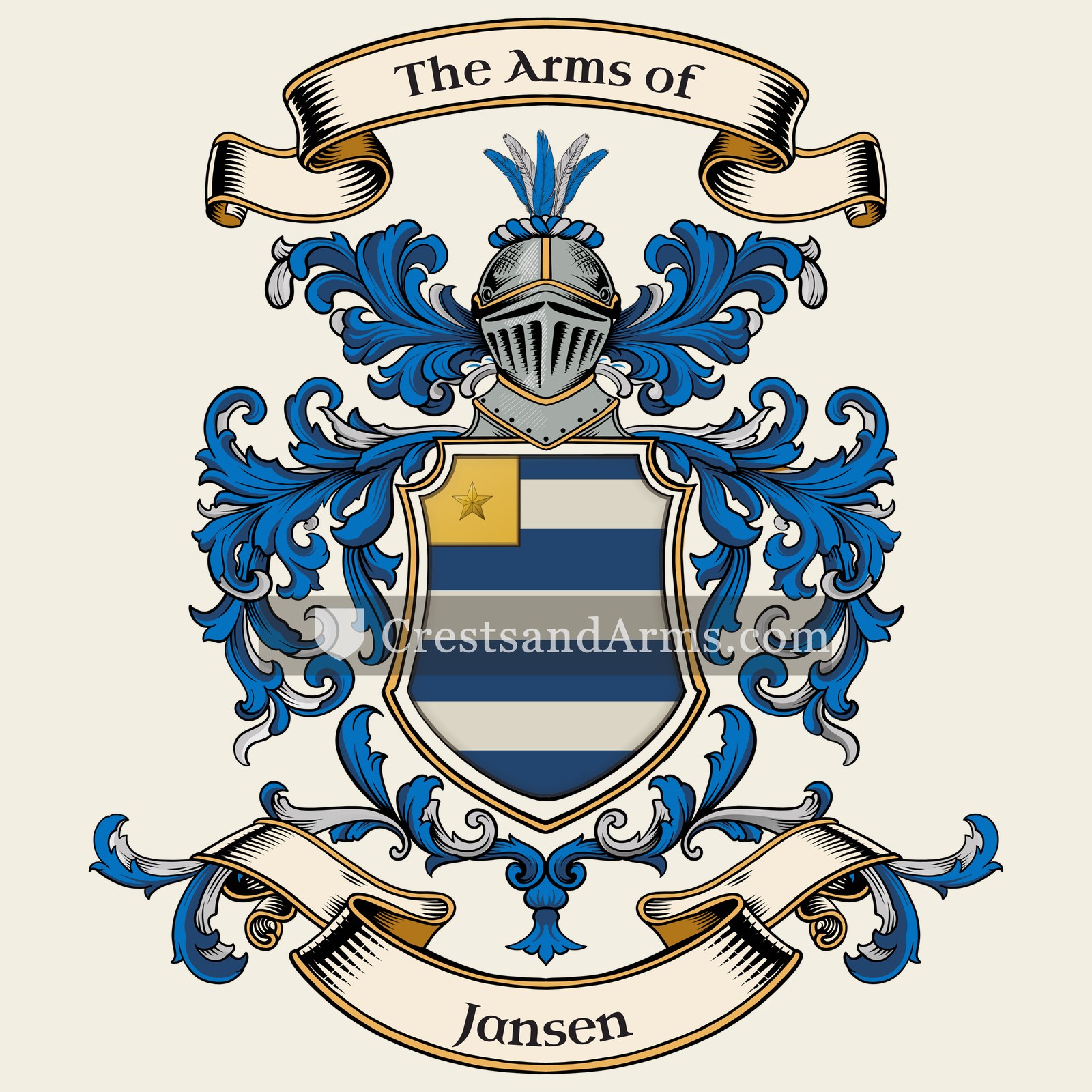


 bearStrength, cunning and protection of kin