Map of Netherlands showing where the Jarreau arms are recorded
The Jarreau arms were recorded in Amsterdam, c. 1815.
This is where the arms were entered in the register. Families often moved to other parts of the country, so the same name can turn up in more than one region.
Region
Amsterdam
Town
Amsterdam
First recorded
1815
Granting Authority for the Jarreau Arms
Hoge Raad van Adel
Photograph made by me · CC BY-SA 3.0
The body that granted and recorded arms in Netherlands in this period.
William I of the Netherlands
Sovereign of the period
William I of the Netherlands
1815–1840
Reigning in Netherlands when the Jarreau arms are first recorded.
How Arms Worked in Netherlands
In the Netherlands, coats of arms were often used by noble families and those who held specific public offices. These arms were passed down through the generations to legitimate descendants. Younger branches of a family usually kept the original design without needing to add special marks. This system ensured that the family identity remained clear and consistent over many years.
Granting authority
The Hoge Raad van Adel is the official body that regulates and manages noble titles and coats of arms in the Netherlands.
How they got arms
Families typically obtained their coats of arms through official royal grants or by proving their long-standing historical use of the symbols.
Where arms were recorded
Coats of arms are officially recorded in the registers held by the Hoge Raad van Adel, which began its work in 1814.
The family's standing
Recorded among the armigerous families of Netherlands.
Origin & History of the Jarreau Family in Netherlands
The family name Jarreau carries a distinct history that reflects the movement of people across European borders during the early nineteenth century. While the name is often associated with French origins, records confirm that members of the Jarreau family were firmly established in Amsterdam by 1815. During this era, Amsterdam served as a bustling center for trade and migration following the end of the Napoleonic Wars. Families like the Jarreaus often settled in the city to participate in the growing maritime and merchant industries that defined the Dutch economy at the time. By embedding themselves into the social fabric of Amsterdam, these early family members navigated a period of significant political transition as the Netherlands emerged as a unified kingdom. Their presence in the city archives suggests that they were part of a diverse population that helped shape the urban life of the Dutch capital during the nineteenth century.
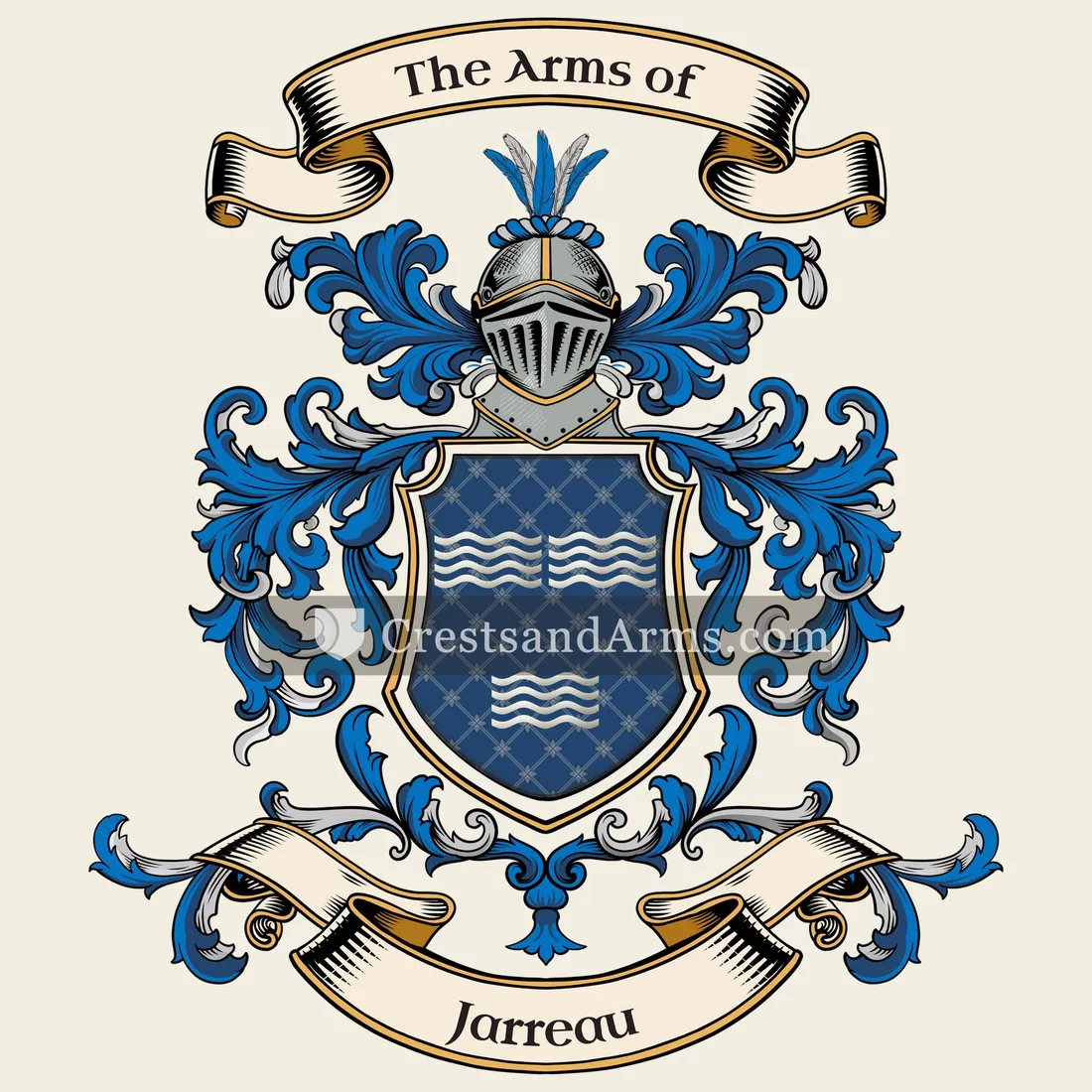
Meaning of the Jarreau family crest colors & symbols
Symbols on this shield
riverThe bounds of a land, and life carried through it
Colours
Blue (Azure)Means: Loyalty and truth
Silver (Argent)Means: Peace and sincerity
Historical info
Source
J. B. Rietstap, Armorial Général, Gouda: G. B. van Goor Zonen, 1884–87
Blazon (the actual original written record)
“D'azur à trois lacs d'amour d'arg., entrelacés en pairie. C.: deux prob., coupées alt. d'arg. et d'azur.”
GermanyHambourg, c. 1765
Digital archive packCoat of arms PNG, gold border print PDF, vector SVG and the certificate of authenticity. Sent to your email in minutes.
Map of Germany showing where the Jarreau arms are recorded
The Jarreau arms were recorded in Hambourg, c. 1765.
This is where the arms were entered in the register. Families often moved to other parts of the country, so the same name can turn up in more than one region.
The body that granted and recorded arms in Germany in this period.
Francis I, Holy Roman Emperor
Sovereign of the period
Francis I, Holy Roman Emperor
1745–1765
Reigning in Netherlands when the Jarreau arms are first recorded.
How Arms Worked in Germany
In the Holy Roman Empire, coats of arms were often granted to individuals by the Emperor or his representatives. These arms were then passed down through the generations to all legitimate descendants of the original holder. Younger branches of a family usually kept the same shield design without needing to change it, as the arms belonged to the entire lineage.
Granting authority
The Holy Roman Emperor held the sole power to grant new coats of arms throughout his vast imperial territories.
How they got arms
Families typically obtained their coats of arms through a formal imperial grant or by proving their noble status to the authorities.
Where arms were recorded
These grants were officially recorded in the Imperial Chancery registers, which began keeping formal records of such honors during the Middle Ages.
The family's standing
Recorded among the armigerous families of Germany.
Origin & History of the Jarreau Family in Germany
The family name Jarreau carries a distinct history that reflects the movement of people across European borders during the eighteenth century. While the name is often associated with French linguistic roots, records confirm that members of the Jarreau family were established residents of Hamburg by 1765. During this period, Hamburg served as a major center for international trade and a gateway for families migrating between Western Europe and the German states. The presence of the family in this bustling port city suggests they were likely part of a mobile class of merchants or skilled artisans who sought new opportunities in the urban centers of the Holy Roman Empire. By settling in Hamburg, the early Jarreaus integrated into a society defined by maritime commerce and a growing middle class, marking the beginning of their documented legacy in the region.
Jarreau Meaning & Related Branches
Root word
Gari
A Germanic root meaning spear or lance.
This name
JarreauA French-influenced variant of a name derived from spear-warrior or spear-strong.
also spelled
Jarree
Jarr
Jar
Yar
Documented Sources
J. B. Rietstap, Armorial Général, Gouda: G. B. van Goor Zonen, 1884–87


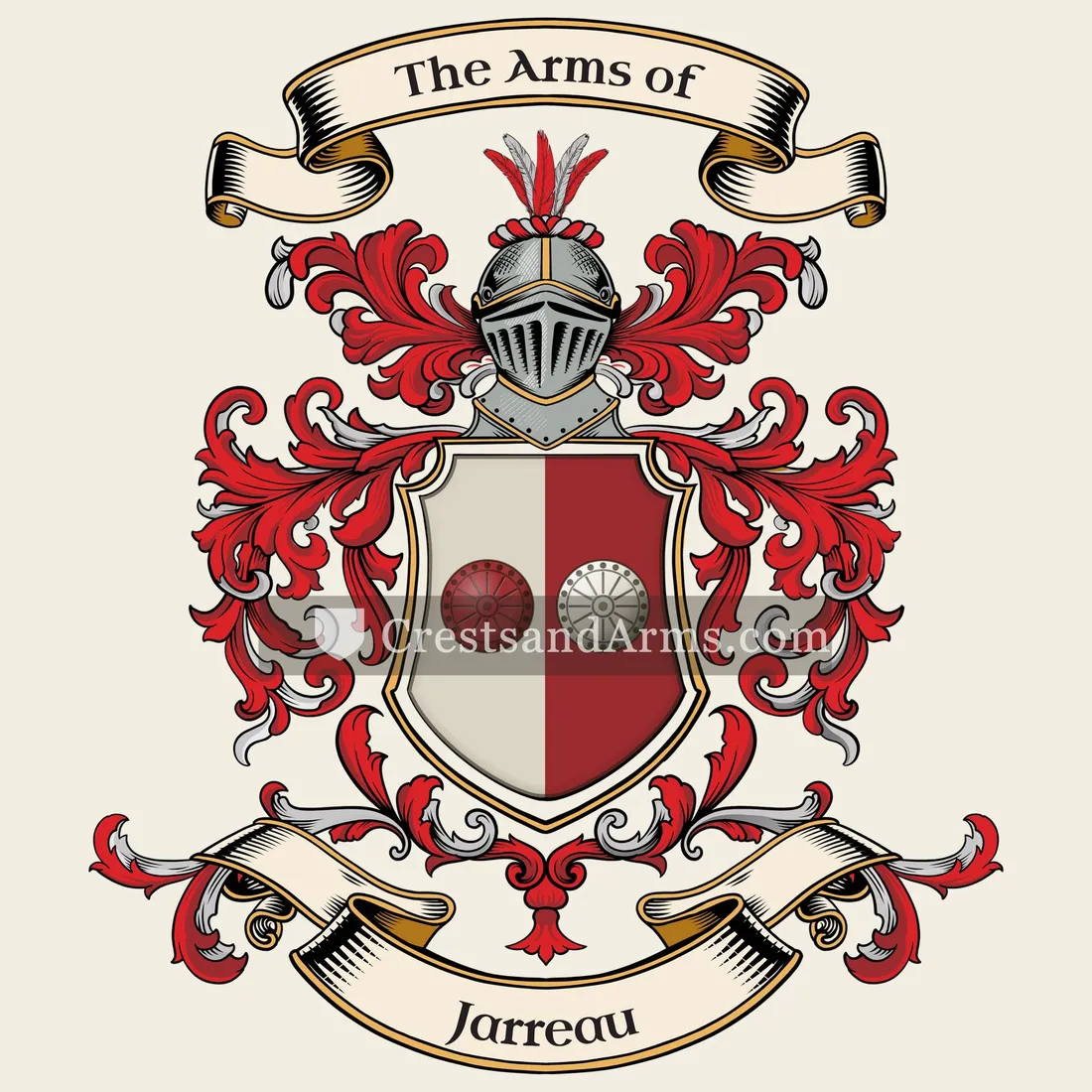
 roundelA coin, and one who has been to the crusades
 roundelA coin, and one who has been to the crusades


 riverThe bounds of a land, and life carried through it