Map of Germany showing where the John arms are recorded
The John arms were recorded in Silesia, c. 1607.
Silesia was farming country in the east of the German lands, held in large estates by families who stayed put for generations. Owning land was what entitled a family to arms, so the region fills a good deal of the register.
This is where the arms were entered in the register. Families often moved to other parts of the country, so the same name can turn up in more than one region.
The body that granted and recorded arms in Germany in this period.
Emperor Rudolf II
Sovereign of the period
Emperor Rudolf II
1576–1612
Reigning in Germany when the John arms are first recorded.
How Arms Worked in Germany
In the Holy Roman Empire, coats of arms were often granted to individuals by the Emperor or his representatives. These arms were then passed down through the generations to all legitimate descendants of the original holder. Younger branches of a family usually kept the same shield design without needing to change it, as the arms belonged to the entire lineage.
Granting authority
The Holy Roman Emperor held the sole power to grant new coats of arms throughout his vast imperial territories.
How they got arms
Families typically obtained their coats of arms through a formal imperial grant or by proving their noble status to the authorities.
Where arms were recorded
These grants were officially recorded in the Imperial Chancery registers, which began keeping formal records of such honors during the Middle Ages.
The family's standing
Recorded among the armigerous families of Silesia.
Origin & History of the John Family in Germany
The family name John finds its roots in the medieval German tradition of adopting personal names as permanent surnames. Derived from the Hebrew name Yochanan, it evolved through the Latin form Johannes into the shortened German version known as John. By the early 17th century, the name was firmly established among families living in the region of Silesia. Historical records confirm that members of the John family were present in this area by 1607, often working as skilled tradespeople or landowners within the local community. During this period, the name served as a way to identify families as they moved from small villages into growing towns. Because Silesia was a crossroads for trade and cultural exchange, families with this name were frequently involved in the shifting social landscape of the Holy Roman Empire. This early presence in Silesia highlights how the family name became a lasting marker of identity for those living in Central Europe during the transition into the modern era.
Coat of Arms & Family Crest Details
Symbols on this shield
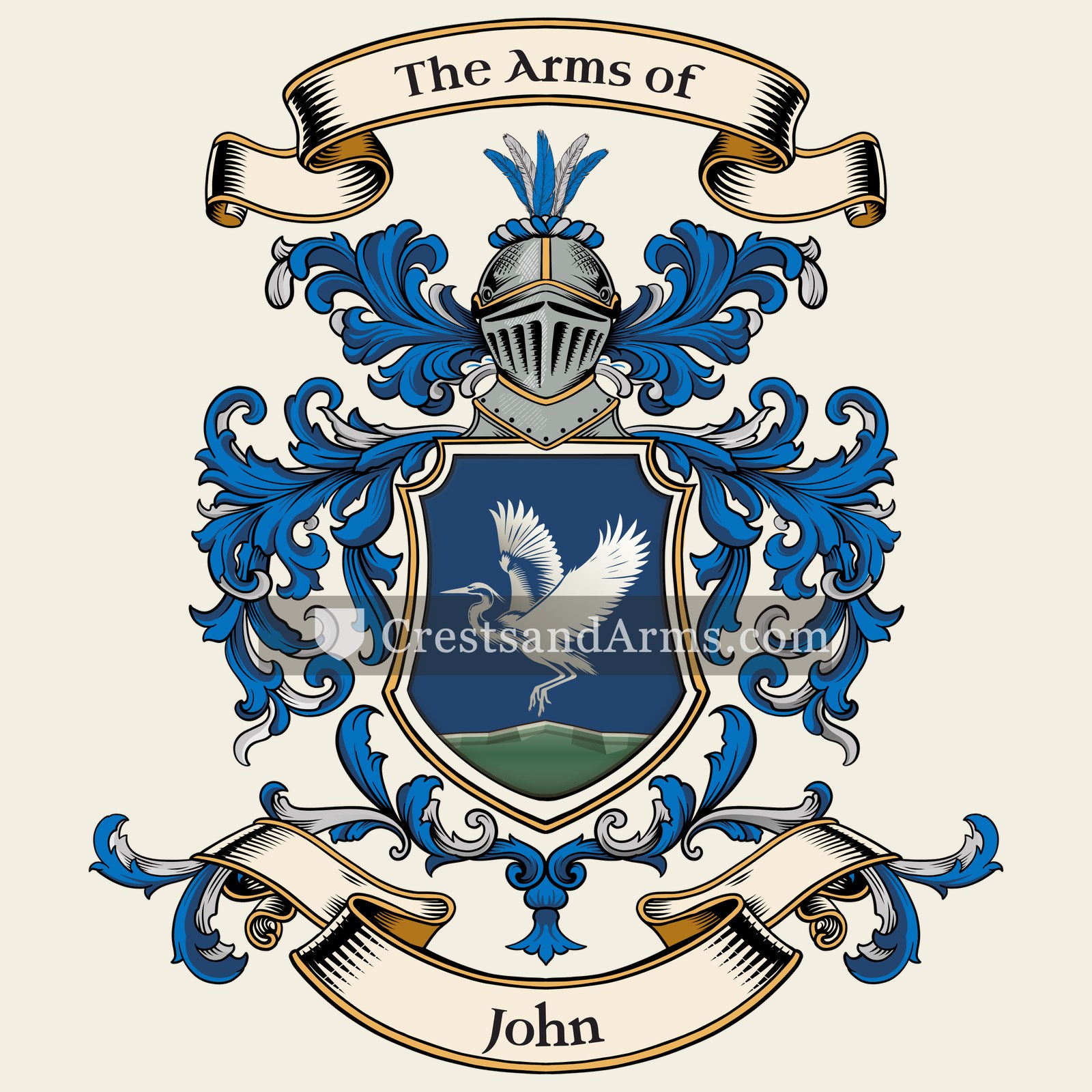
mountThe ground held, and steadfastness upon it
heronPatience and quiet watchfulness
Colours
Blue (Azure)Means: Loyalty and truth
Green (Vert)Means: Hope
Historical info
Source
J. B. Rietstap, Armorial Général, Gouda: G. B. van Goor Zonen, 1884–87
Blazon (the actual original written record)
“D'azur à une cigogne au nat., posée sur une terrasse de sin., tenant de sa patte dextre levée une pierre et en son bec un serpent. Cq. cour. C.: un Hongrois iss., hab. de gu. à brandebourgs d'or, coiffé d'un colbac de sa., tenant de sa main dextre un sabre, la sen. appuyée sur sa hanche. L. d'or et d'azur.”
Austriac. 1765
Digital archive packCoat of arms PNG, gold border print PDF, vector SVG and the certificate of authenticity. Sent to your email in minutes.
Map of Austria showing where the John arms are recorded
The John arms were recorded in Austria, c. 1765.
Arms such as these were typically recorded in Tyrol.
Tyrol was mountain country in western Austria, where the valleys were held by families who had been there a very long time. Old tenure counted for more than money, and old families carried arms.
This is where the arms were entered in the register. Families often moved to other parts of the country, so the same name can turn up in more than one region.
Region
Tyrol
First recorded
1765
Granting Authority for the John Arms
Imperial and Royal chancery
Sodacan · CC BY-SA 3.0
The body that granted and recorded arms in Austria in this period.
Francis I, Holy Roman Emperor
Sovereign of the period
Francis I, Holy Roman Emperor
1745–1765
Reigning in Germany when the John arms are first recorded.
How Arms Worked in Austria
Austrian coats of arms were often linked directly to noble titles granted by the Emperor. These symbols belonged to the entire family line rather than just one individual. When a family grew, new branches kept the original design without needing to change it. This system allowed all members of a noble house to share the same identity across many generations.
Granting authority
The Imperial and Royal chancery managed all heraldic matters and controlled the official granting of arms throughout the Austrian lands.
How they got arms
Families typically received their arms through a formal imperial decree that often accompanied the elevation of a person to noble status.
Where arms were recorded
Official records of these grants were kept in the Imperial Register of Nobility which began its formal documentation process in 1453.
The family's standing
Recorded among the armigerous families of Austria.
Origin & History of the John Family in Austria
The family name John has deep roots in the Alpine region of Tyrol, where members of the family were documented as early as 1765. In this mountainous area, the name likely evolved from the personal name Johannes, which was a common choice for families due to its religious significance. During the eighteenth century, Tyrol served as a vital crossroads for trade and migration between the German-speaking lands and Italy. Families living in this region often held positions as local landowners, craftsmen, or officials who helped manage the rugged landscape. As the family established their presence in the valley, they became part of the local social fabric that defined Tyrolean life. The survival of these early records suggests that the family was well-integrated into the community, contributing to the agricultural and administrative growth of the province during a time of significant change under the Habsburg monarchy.
Coat of Arms & Family Crest Details
Symbols on this shield
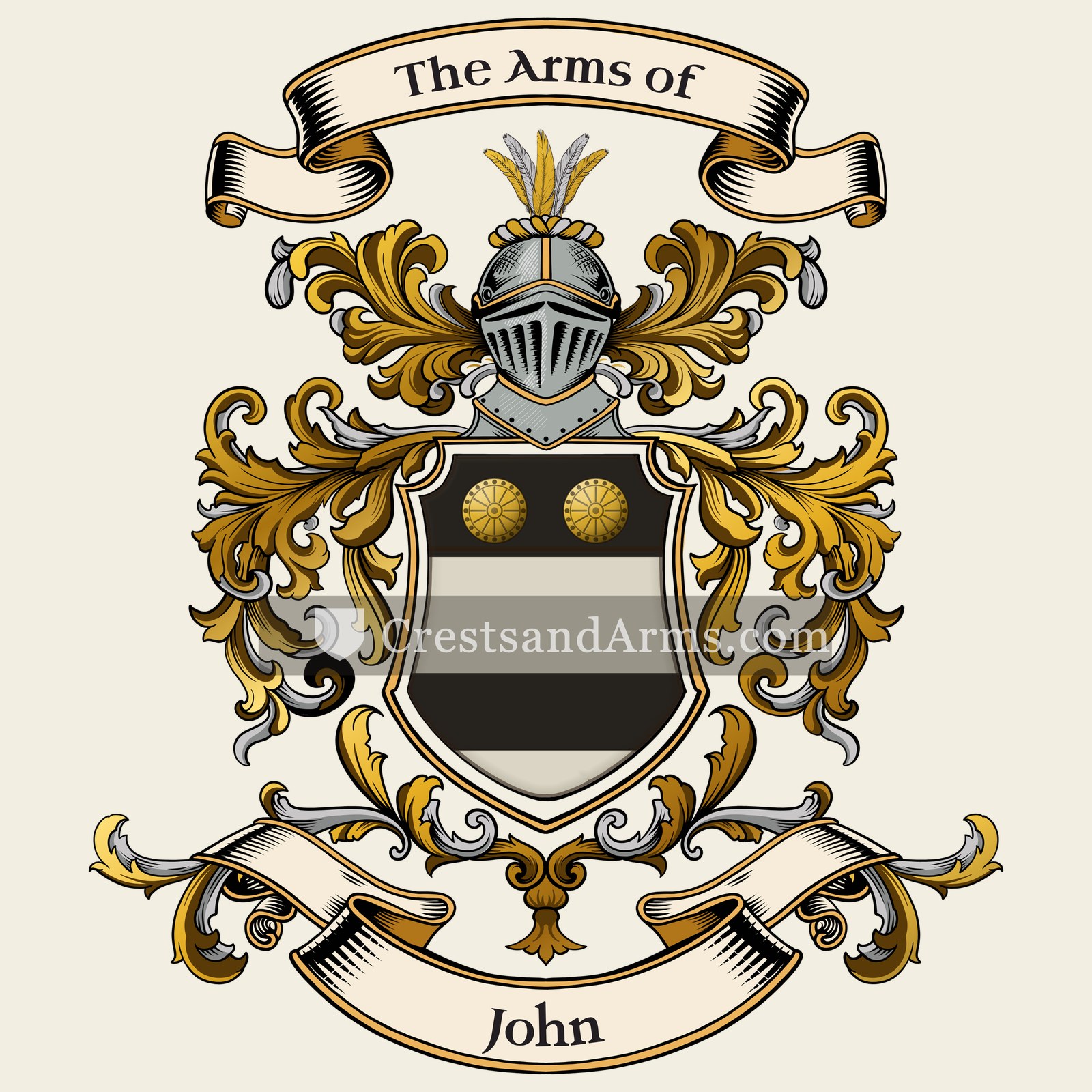
chiefAuthority, wisdom and dominion
roundelA coin, and one who has been to the crusades
Colours
Silver (Argent)Means: Peace and sincerity
Black (Sable)Means: Constancy
Gold (Or)Means: Generosity
Historical info
Source
Sir Bernard Burke, The General Armory of England, Scotland, Ireland and Wales, London: Harrison & Sons, 1884
Blazon (the actual original written record)
“Ar. two bars sa. on a chief of the last as many bezants”
CornwallPenzance · Cornwall, c. 1620
Digital archive packCoat of arms PNG, gold border print PDF, vector SVG and the certificate of authenticity. Sent to your email in minutes.
Map of England showing where the John arms are recorded
The John arms were recorded in Cornwall, c. 1620.
Cornwall was a county apart, with its own language and its own tight-knit gentry. Tin and the sea made money there, and families who made it bought land, which is what brought arms with it.
This is where the arms were entered in the register. Families often moved to other parts of the country, so the same name can turn up in more than one region.
The body that granted and recorded arms in England in this period.
James VI and I
Sovereign of the period
James VI and I
1603–1625
Reigning in Germany when the John arms are first recorded.
How Arms Worked in England
English heraldry allowed arms to be shared by all legitimate descendants of the original owner. These symbols were treated as personal property that moved through the generations to all children. While the eldest son kept the original design, other family members could use the same shield without needing to change it or register their own unique versions.
Granting authority
The College of Arms in London has regulated the use of coats of arms throughout England and Wales since 1484.
How they got arms
Families typically obtained their coats of arms through a formal grant from the Crown or by proving their ancient right to them.
Where arms were recorded
All official coats of arms are recorded in the registers kept at the College of Arms, which date back to the fifteenth century.
The family's standing
Recorded among the armigerous families of Cornwall.
Origin & History of the John Family in England
The surname John originated as a patronymic, meaning it was derived from the given name of a father or ancestor. In medieval England, people often identified themselves by adding their father’s name to their own, and John was one of the most popular names in the country due to its religious significance. Over time, as permanent surnames became a requirement for legal and tax purposes, families who had long been known as the sons or descendants of a man named John adopted the name as their official family identifier. By the early 17th century, the name was well-established across various regions, including Cornwall. The presence of the John family in Cornwall by 1620 suggests that they were part of the local community during a time when surnames had become fixed and hereditary. These early families were likely farmers, tradespeople, or laborers who helped shape the local economy and social structure of the Cornish peninsula.
John Meaning & Related Branches
Root word
Yochanan
Hebrew for God is gracious
This name
JohnA German surname derived from the biblical name meaning God is gracious.
also spelled
Jonn
Jon
Jhon
Jhone
Related arms
Berryrecorded with John, same area
Mandernerecorded with John, same area
Oxnamrecorded with John, same area
Pearcerecorded with John, same area
Documented Sources
J. B. Rietstap, Armorial Général, Gouda: G. B. van Goor Zonen, 1884–87
Bahlow, Hans, Deutsches Namenlexikon: Familien- und Vornamen nach Ursprung und Sinn erklärt, 1967
Heintze, Albert, Die deutschen Familien-Namen: geschichtlich, geographisch, sprachlich, 1903
State Archive in Wrocław (Archiwum Państwowe we Wrocławiu), Akta miasta Wrocławia (Records of the City of Breslau), 1607
Digital archive packCoat of arms PNG, gold border print PDF, vector SVG and the certificate of authenticity. Sent to your email in minutes.


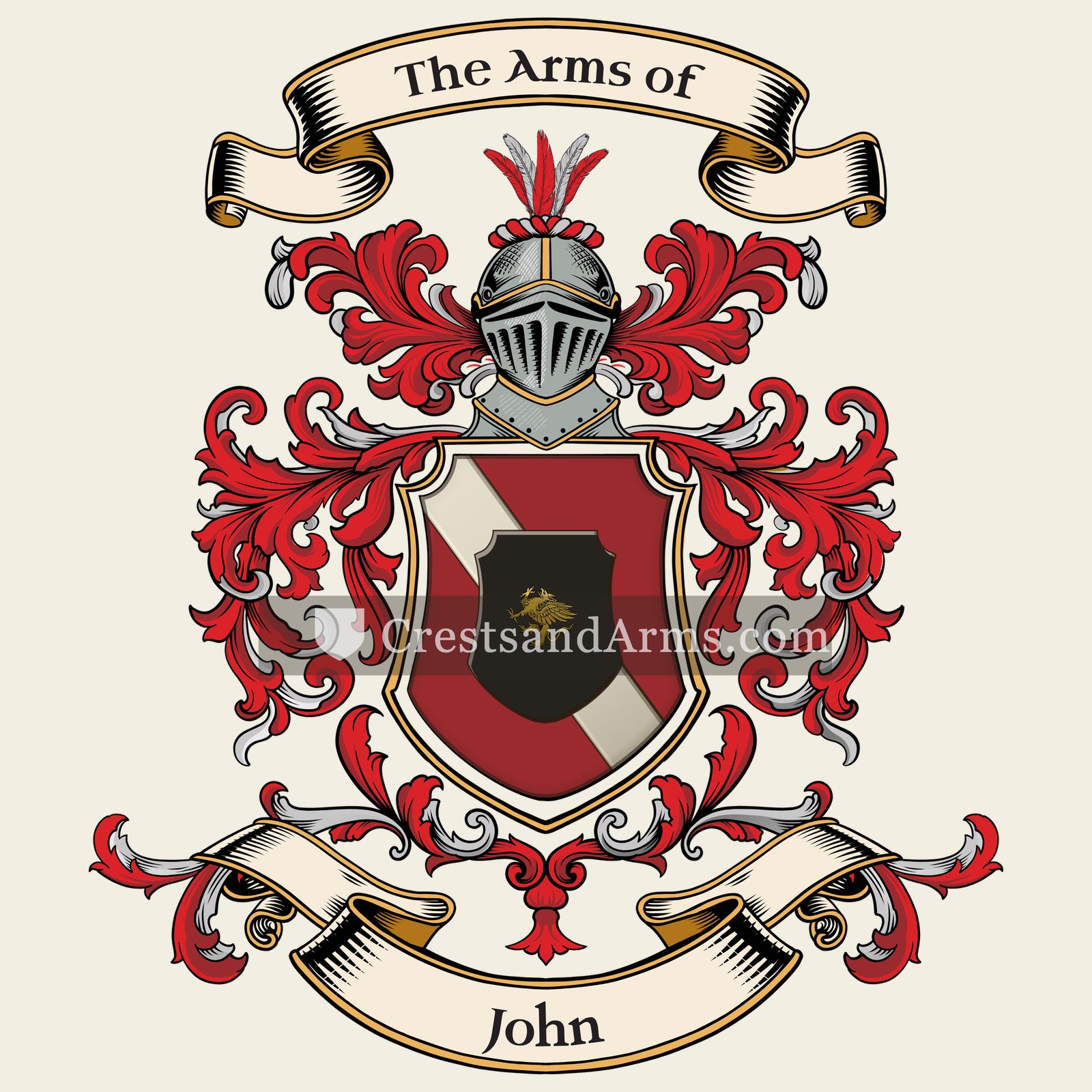
 bendDefence, and the scarf of a commander
 griffinValour and vigilance, guarding great treasure
 bendDefence, and the scarf of a commander
 griffinValour and vigilance, guarding great treasure


 mountThe ground held, and steadfastness upon it
 heronPatience and quiet watchfulness


 chiefAuthority, wisdom and dominion
 roundelA coin, and one who has been to the crusades