Map of Belgium showing where the Joris arms are recorded
The Joris arms were recorded in Gand, c. 1737.
This is where the arms were entered in the register. Families often moved to other parts of the country, so the same name can turn up in more than one region.
The body that granted and recorded arms in Belgium in this period.
Charles VI, Holy Roman Emperor
Sovereign of the period
Charles VI, Holy Roman Emperor
1711–1740
Reigning in Belgium when the Joris arms are first recorded.
How Arms Worked in Belgium
In Belgium, a coat of arms is considered personal property that is passed down through the male line to legitimate descendants. Families often use the same shield design across generations to show their shared heritage. If a branch of the family wants to change the design, they must apply for an official update to their specific version of the arms.
Granting authority
The Conseil héraldique is the official body that regulates and approves all coats of arms in Belgium.
How they got arms
Families obtain their coats of arms through formal royal grants or by confirming their historical right to use existing designs.
Where arms were recorded
All approved coats of arms are officially recorded in the public registers of the Conseil héraldique since 1844.
The family's standing
Recorded among the armigerous families of Belgium.
Origin & History of the Joris Family in Belgium
The family name Joris finds its roots in the medieval period as a patronymic, meaning it was derived from the given name George. In the Dutch-speaking regions of Belgium, the name evolved from the Greek name Georgios, which signifies a worker of the earth or a farmer. By the time members of the family were documented in the city of Ghent in 1737, the name was already well-established among the local population. During the eighteenth century, Ghent was a major center for the textile industry and trade, and families bearing the name Joris were often integrated into the urban fabric of this bustling city. These early ancestors likely lived through a time of significant social change as the region transitioned under various European powers. Their presence in the city records suggests they were part of the hardworking middle or laboring classes who helped shape the identity of Flanders. The name persists today as a testament to these early generations who navigated the complex history of the Low Countries.
Coat of Arms & Family Crest Details
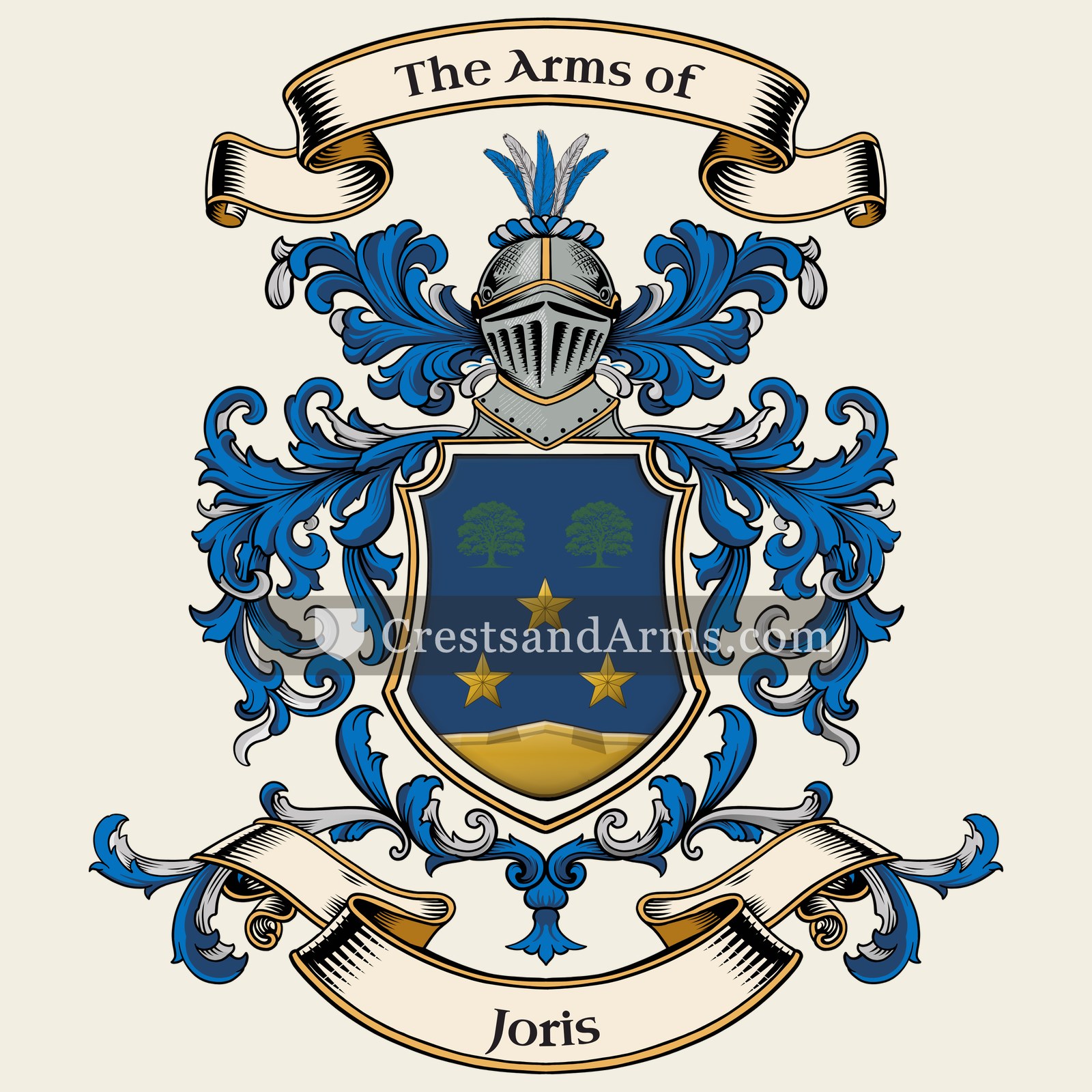
Symbols on this shield
mountThe ground held, and steadfastness upon it
treeLife, endurance and deep roots
mulletThe third son, and a divine quality from above
Colours
Blue (Azure)Means: Loyalty and truth
Gold (Or)Means: Generosity
Green (Vert)Means: Hope
Historical info
Source
J. B. Rietstap, Armorial Général, Gouda: G. B. van Goor Zonen, 1884–87
Blazon (the actual original written record)
“D'azur à un mont de six coupeaux d'or, mouv. de la p., les deux coupeaux extérieurs du bas sommés chacun d'un peuplier de sin.; le tout acc. de trois étoiles (5) mal-ordonnées d'or.”
SwitzerlandValais, c. 1745
Digital archive packCoat of arms PNG, gold border print PDF, vector SVG and the certificate of authenticity. Sent to your email in minutes.
Map of Switzerland showing where the Joris arms are recorded
The Joris arms were recorded in Valais, c. 1745.
This is where the arms were entered in the register. Families often moved to other parts of the country, so the same name can turn up in more than one region.
The body that granted and recorded arms in Switzerland in this period.
How Arms Worked in Switzerland
In Switzerland, coats of arms were not restricted to the nobility and were often adopted by common citizens and families. These symbols were passed down through generations to show family identity. When branches of a family grew, they often changed small details of the design to distinguish their own line from the original group.
Granting authority
Cantonal and civic authorities managed the use of coats of arms within their specific regions and local jurisdictions.
How they got arms
Families typically assumed their own coats of arms based on local custom rather than receiving them from a central monarch.
Where arms were recorded
Arms were recorded in various cantonal and civic registers starting from the fourteenth century throughout the Swiss region.
The family's standing
Recorded among the armigerous families of Switzerland.
Origin & History of the Joris Family in Switzerland
The family name Joris has deep roots in the rugged landscape of the Swiss canton of Valais, where the name was firmly established by the mid-eighteenth century. The name itself is a regional variation of George, which was a popular choice across Europe due to its association with Saint George and the protection he was believed to offer. In the high mountain valleys of Valais, families like the Joris clan often lived in small, tight-knit communities that relied on alpine farming and trade routes through the mountain passes. By 1745, records confirm that members of the Joris family were active participants in the local social and economic life of the region. These early ancestors were likely shaped by the challenging climate and the unique political structure of the Valais, which functioned as a collection of independent districts. Over time, the family became a recognized part of the local population, contributing to the development of the distinct culture and traditions found in the Swiss Alps.
Related Branches & Arms
Root word
Georgios
Ancient Greek term meaning worker of the earth or farmer.
This name
JorisA Dutch and Belgian form of George, signifying one who works the land.
also spelled
Joryss
Joriss
Jorisz
Yoris
Documented Sources
J. B. Rietstap, Armorial Général, Gouda: G. B. van Goor Zonen, 1884–87
Debrabandere, Frans. Woordenboek van de familienamen in België en Noord-Frankrijk. 1993
State Archives in Belgium (Rijksarchief te Gent), Parochieregisters van Gent
Digital archive packCoat of arms PNG, gold border print PDF, vector SVG and the certificate of authenticity. Sent to your email in minutes.


 chevronProtection, and faithful service completed
 billetThe sealed letter, and a message delivered
 lionCourage, strength and royalty
 chevronProtection, and faithful service completed
 billetThe sealed letter, and a message delivered
 lionCourage, strength and royalty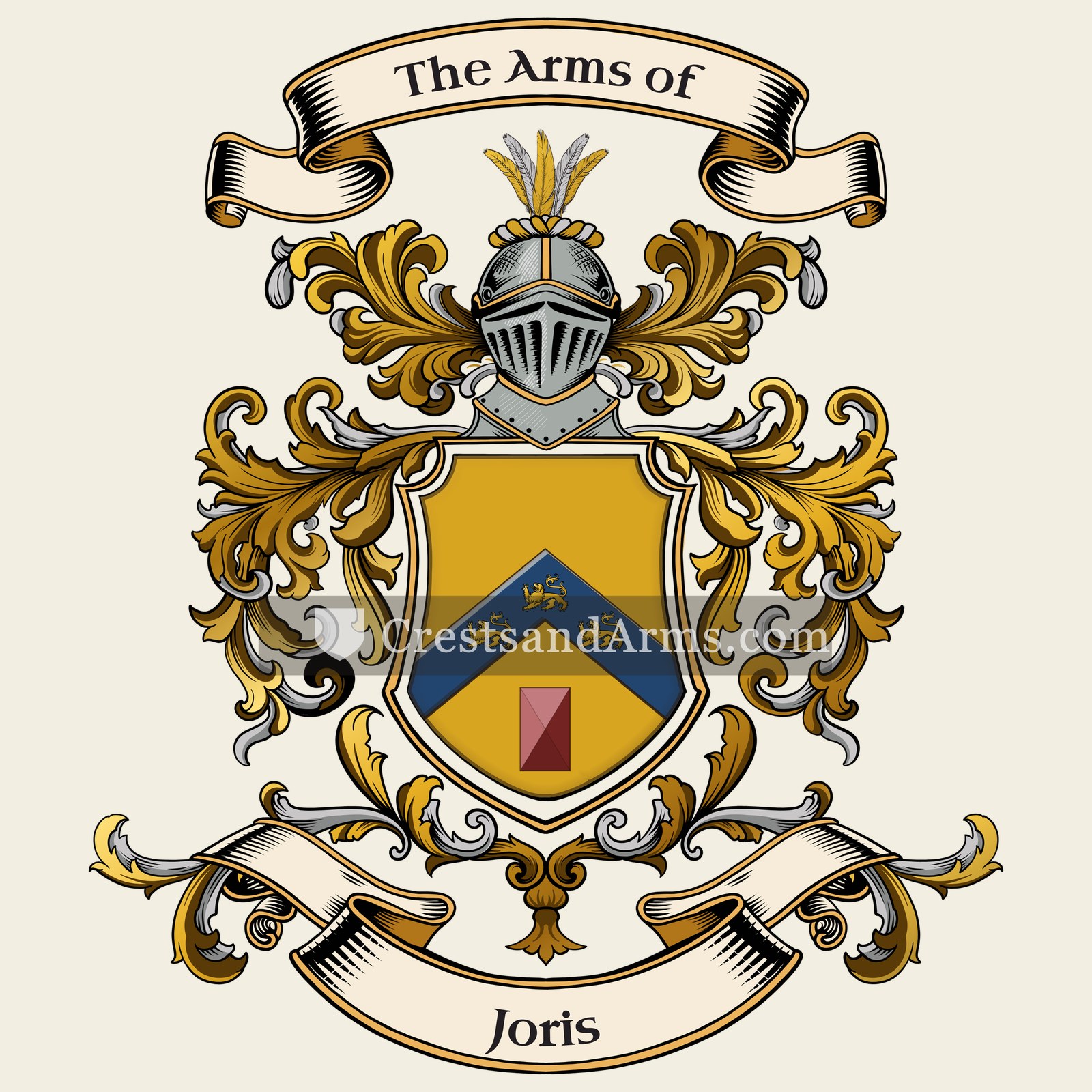


 mountThe ground held, and steadfastness upon it
 treeLife, endurance and deep roots
 mulletThe third son, and a divine quality from above