Map of Belgium showing where the Joseph arms are recorded
The Joseph arms were recorded in Tournai, c. 1737.
This is where the arms were entered in the register. Families often moved to other parts of the country, so the same name can turn up in more than one region.
The body that granted and recorded arms in Belgium in this period.
Charles VI, Holy Roman Emperor
Sovereign of the period
Charles VI, Holy Roman Emperor
1711–1740
Reigning in Belgium when the Joseph arms are first recorded.
How Arms Worked in Belgium
In Belgium, a coat of arms is considered personal property that is passed down through the male line to legitimate descendants. Families often use the same shield design across generations to show their shared heritage. If a branch of the family wants to change the design, they must apply for an official update to their specific version of the arms.
Granting authority
The Conseil héraldique is the official body that regulates and approves all coats of arms in Belgium.
How they got arms
Families obtain their coats of arms through formal royal grants or by confirming their historical right to use existing designs.
Where arms were recorded
All approved coats of arms are officially recorded in the public registers of the Conseil héraldique since 1844.
The family's standing
Recorded among the armigerous families of Belgium.
Origin & History of the Joseph Family in Belgium
The history of the Joseph family in Belgium is deeply rooted in the cultural landscape of the eighteenth century, particularly within the historic city of Tournai. By 1737, records confirm that members of the family were already established residents in this region, which was then a significant center for trade and religious life under the Austrian Netherlands. The name Joseph itself reflects the strong influence of biblical naming traditions that were common among families in the Walloon provinces during this era. As the family navigated life in Tournai, they lived through a period of transition where the city served as a vital link between local artisan traditions and broader European administrative changes. Their presence in the city archives suggests that they were part of the stable urban population that contributed to the economic and social fabric of the region during the mid-1700s.
Coat of Arms & Family Crest Details
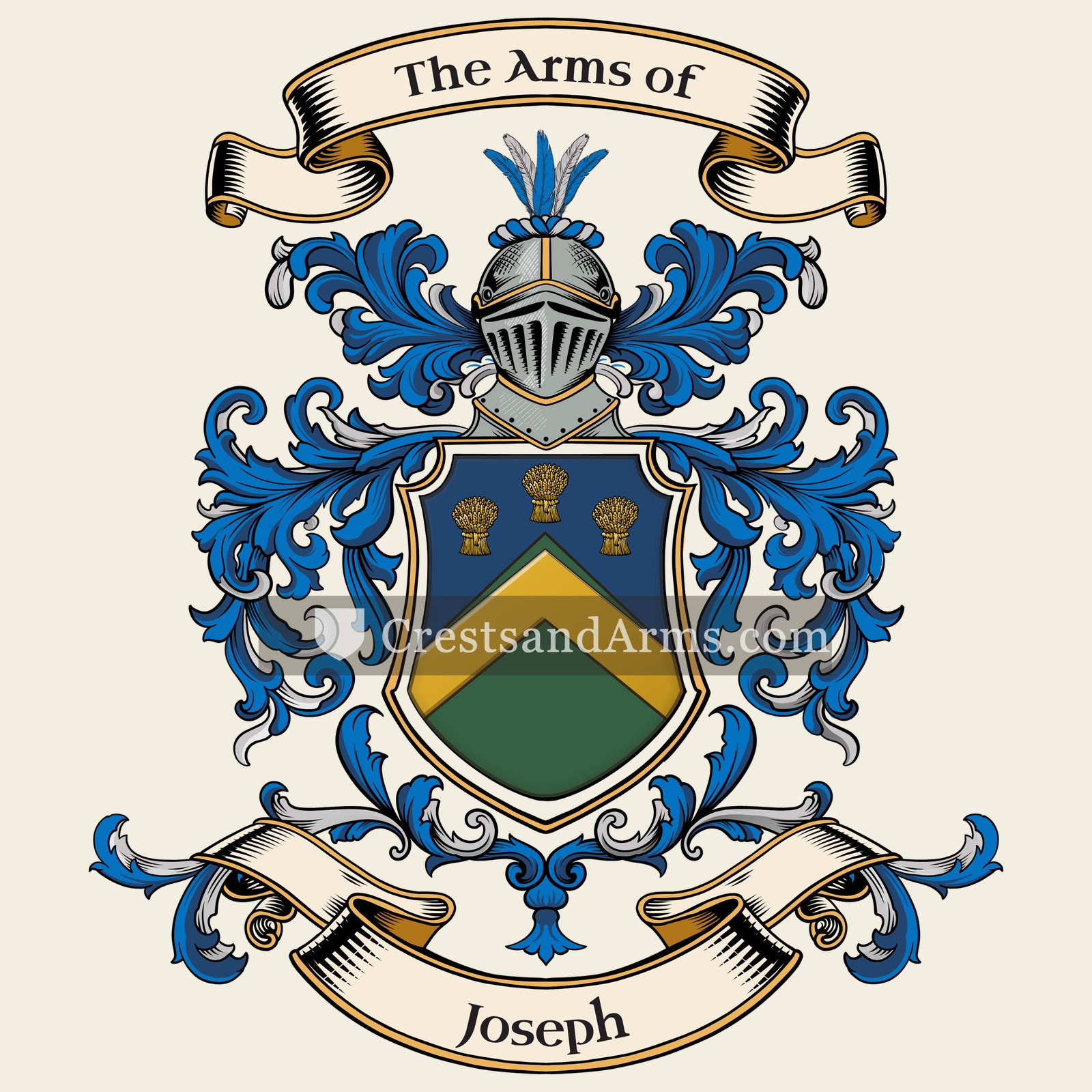
Symbols on this shield
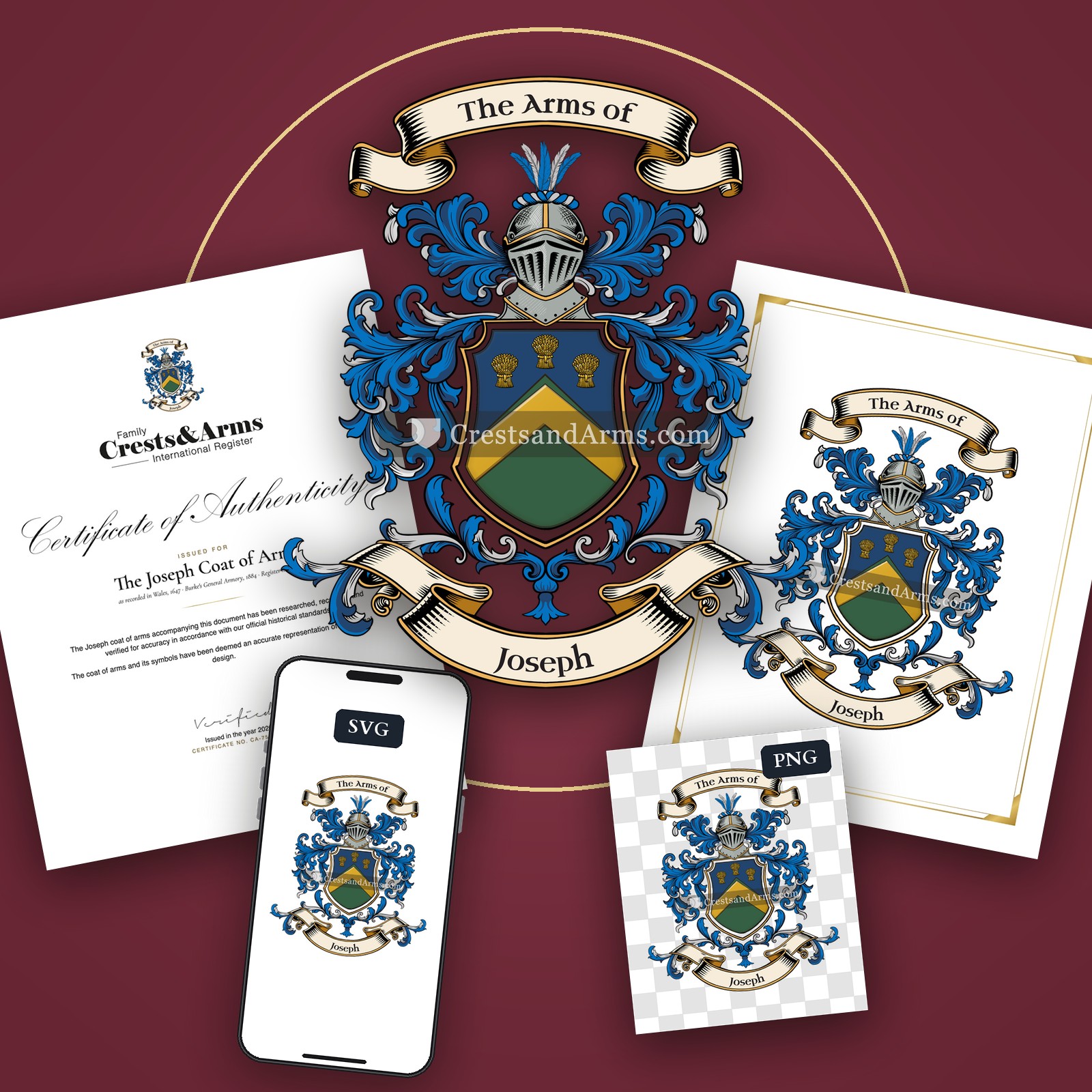
chevronProtection, and faithful service completed
wheatsheafPlenty, and the harvest of one's own labour
Colours
Blue (Azure)Means: Loyalty and truth
Green (Vert)Means: Hope
Gold (Or)Means: Generosity
Historical info
Source
Sir Bernard Burke, The General Armory of England, Scotland, Ireland and Wales, London: Harrison & Sons, 1884
Blazon (the actual original written record)
“Per chev. az. and vert, in chief three garbs, and in base two chevronels or”
BreconBrecon, c. 1647
Digital archive packCoat of arms PNG, gold border print PDF, vector SVG and the certificate of authenticity. Sent to your email in minutes.
Map of Wales showing where the Joseph arms are recorded
The Joseph arms were recorded in Brecon, c. 1647.
Brecon was mid-Welsh hill country, held in small estates by families who stayed for generations. Land was worth less than in the lowlands, but holding it still brought arms.
This is where the arms were entered in the register. Families often moved to other parts of the country, so the same name can turn up in more than one region.
The body that granted and recorded arms in Wales in this period.
Charles I of England
Sovereign of the period
Charles I of England
1625–1649
Reigning in Belgium when the Joseph arms are first recorded.
How Arms Worked in Wales
English heraldry allowed arms to be shared by all legitimate descendants of the original owner. These symbols were treated as personal property that moved through the generations to all children. While the eldest son kept the original design, other family members could use the same shield without needing to change it or register their own unique versions.
Granting authority
The College of Arms in London has regulated the use of coats of arms throughout England and Wales since 1484.
How they got arms
Families typically obtained their coats of arms through a formal grant from the Crown or by proving their ancient right to them.
Where arms were recorded
All official coats of arms are recorded in the registers kept at the College of Arms, which date back to the fifteenth century.
The family's standing
Recorded among the armigerous families of Brecon.
Origin & History of the Joseph Family in Wales
The history of the Joseph name in Wales is deeply rooted in the cultural shifts of the seventeenth century, particularly within the historic county of Breconshire. While the name Joseph originated as a biblical given name, it gradually transitioned into a hereditary surname as families began to adopt fixed identifiers for legal and tax purposes. By 1647, records confirm that members of the Joseph family were established residents in the town of Brecon. During this period, Brecon served as a vital market hub and a center for administrative life in South Wales. Families living in this region often navigated the transition from the traditional Welsh patronymic system, where names changed every generation, to the more permanent English-style surname system. The presence of the Joseph family in Brecon suggests they were part of this evolving social structure, likely participating in the local trade or agricultural life that defined the economy of the Usk Valley. Their settled status by the mid-seventeenth century reflects a broader pattern of families establishing deep roots in the Welsh landscape during a time of significant political and social change.
Joseph Meaning & Related Branches
Root word
Yosef
Hebrew verb meaning to add or increase.
This name
JosephGod shall add or God will increase.
also spelled
Josep
Jozef
Documented Sources
J. B. Rietstap, Armorial Général, Gouda: G. B. van Goor Zonen, 1884–87
Archives de l'État à Tournai, Registres paroissiaux de la ville de Tournai (1737)
Desmazières, Émile, Histoire de Tournai, 1864
Pirenne, Henri, Histoire de Belgique, 1902
Digital archive packCoat of arms PNG, gold border print PDF, vector SVG and the certificate of authenticity. Sent to your email in minutes.


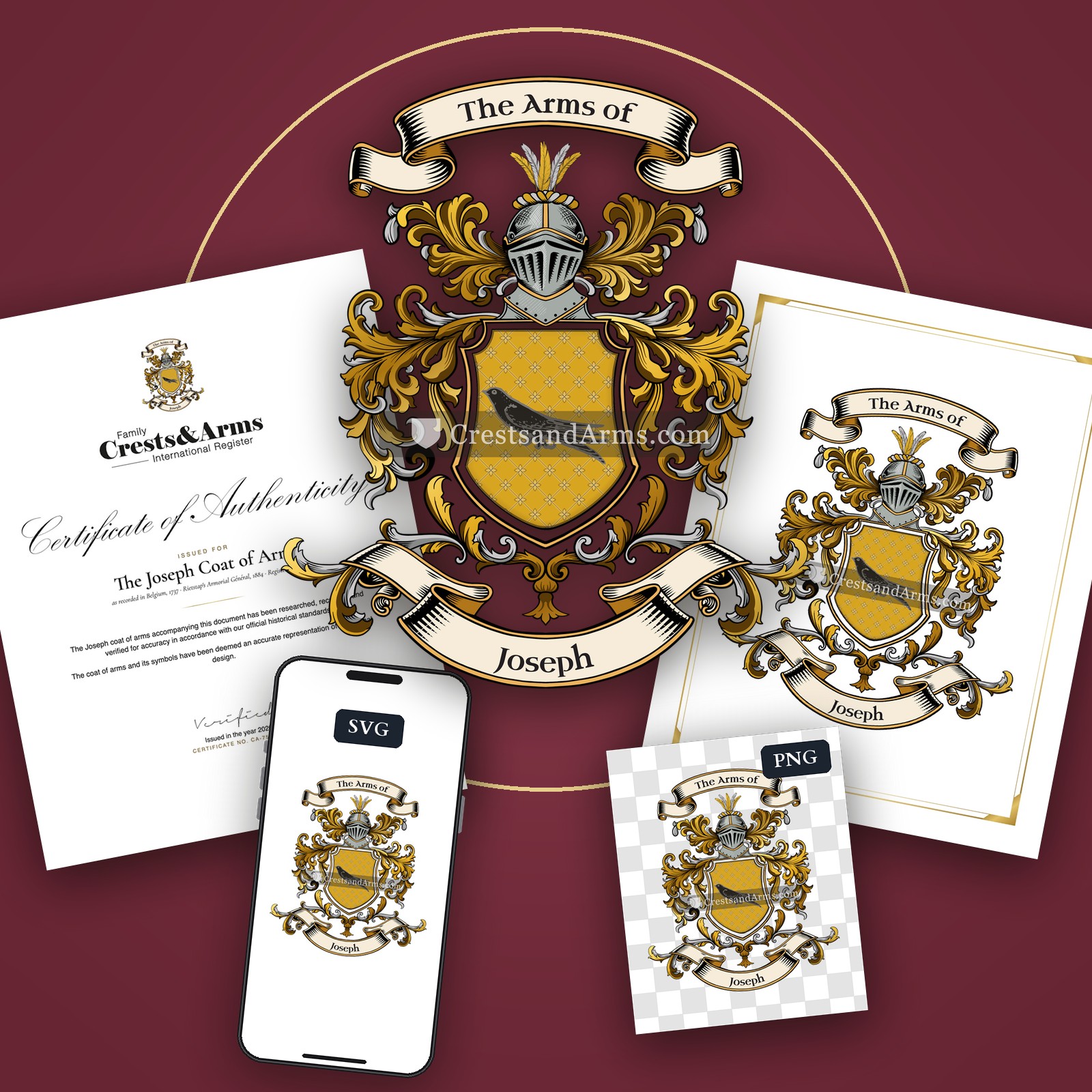
 martletA younger son, who must win his own land
 martletA younger son, who must win his own land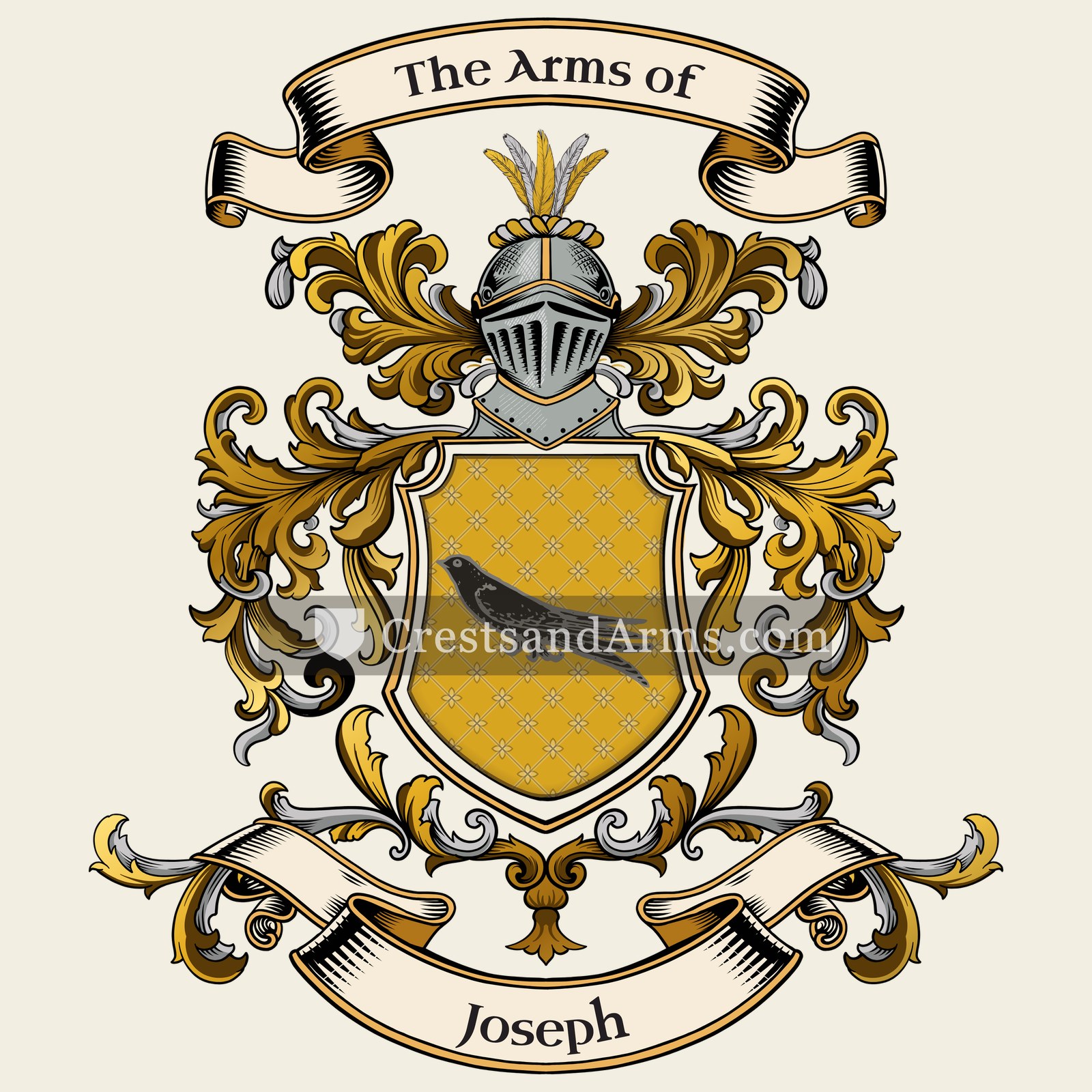


 chevronProtection, and faithful service completed
 wheatsheafPlenty, and the harvest of one's own labour