Map of Germany showing where the Kaiser arms are recorded
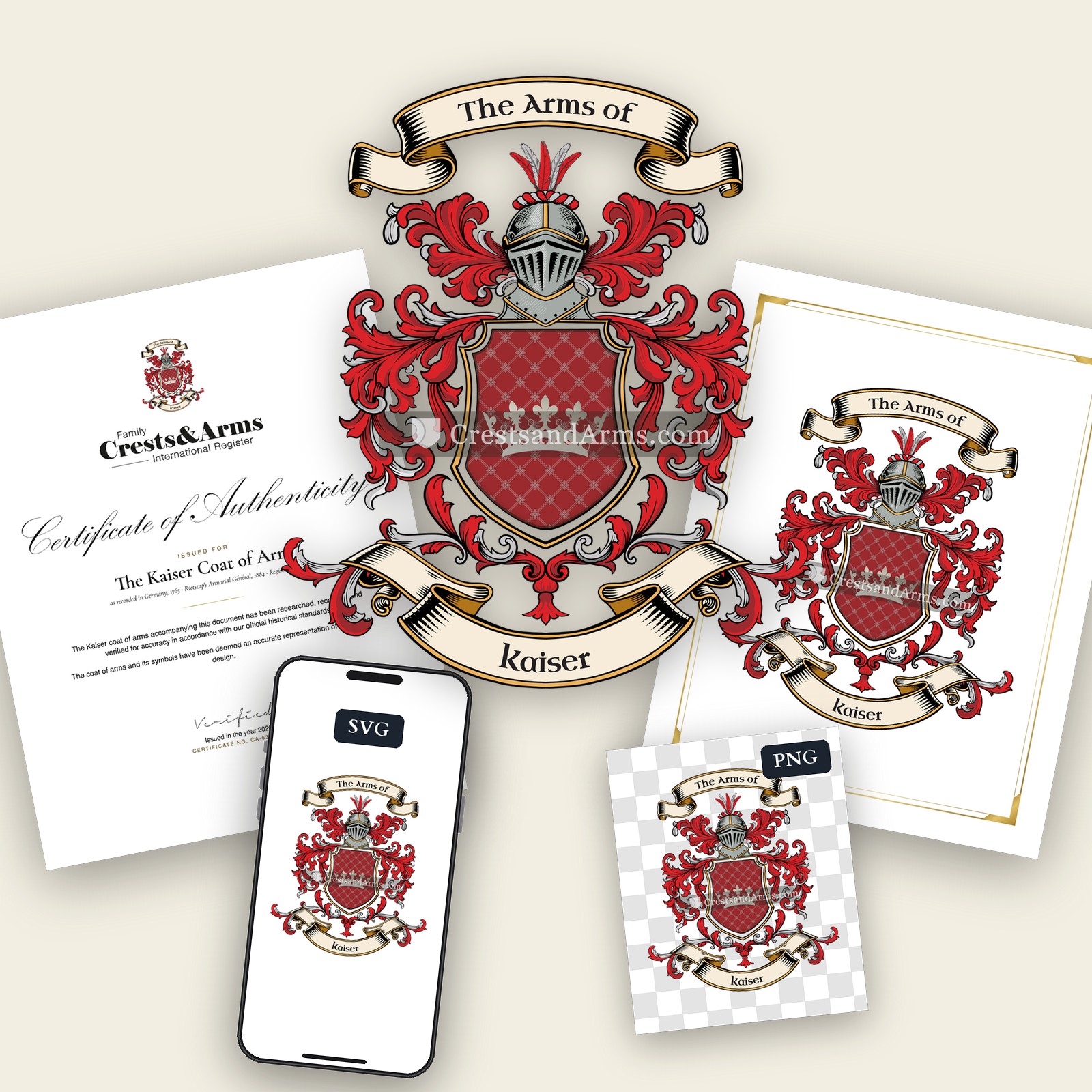
The Kaiser arms were recorded in Nuremberg, c. 1765.
This is where the arms were entered in the register. Families often moved to other parts of the country, so the same name can turn up in more than one region.
The body that granted and recorded arms in Germany in this period.
Francis I, Holy Roman Emperor
Sovereign of the period
Francis I, Holy Roman Emperor
1745–1765
Reigning in Germany when the Kaiser arms are first recorded.
How Arms Worked in Germany
In the Holy Roman Empire, coats of arms were often granted to individuals by the Emperor or his representatives. These arms were then passed down through the generations to all legitimate descendants of the original holder. Younger branches of a family usually kept the same shield design without needing to change it, as the arms belonged to the entire lineage.
Granting authority
The Holy Roman Emperor held the sole power to grant new coats of arms throughout his vast imperial territories.
How they got arms
Families typically obtained their coats of arms through a formal imperial grant or by proving their noble status to the authorities.
Where arms were recorded
These grants were officially recorded in the Imperial Chancery registers, which began keeping formal records of such honors during the Middle Ages.
The family's standing
Recorded among the armigerous families of Germany.
Origin & History of the Kaiser Family in Germany
The surname Kaiser originates from the Middle High German word *keiser*, which translates directly to emperor. During the Middle Ages, this name was often given as a nickname to someone who acted in a regal or authoritative manner, or perhaps to a person who played the role of an emperor in local village plays and festivities. By the time the family was firmly established in Nuremberg in 1765, the city served as a major hub for trade and craftsmanship within the Holy Roman Empire. Families living in Nuremberg during this era were often part of a highly organized society where surnames helped distinguish individuals within the bustling urban guilds. Because Nuremberg was a center of political and economic power, the name Kaiser carried a sense of civic pride and connection to the long history of the region. Over generations, the name transitioned from a descriptive nickname into a permanent family identifier that linked its members to the cultural identity of German-speaking lands.
Coat of Arms & Family Crest Details
Symbols on this shield
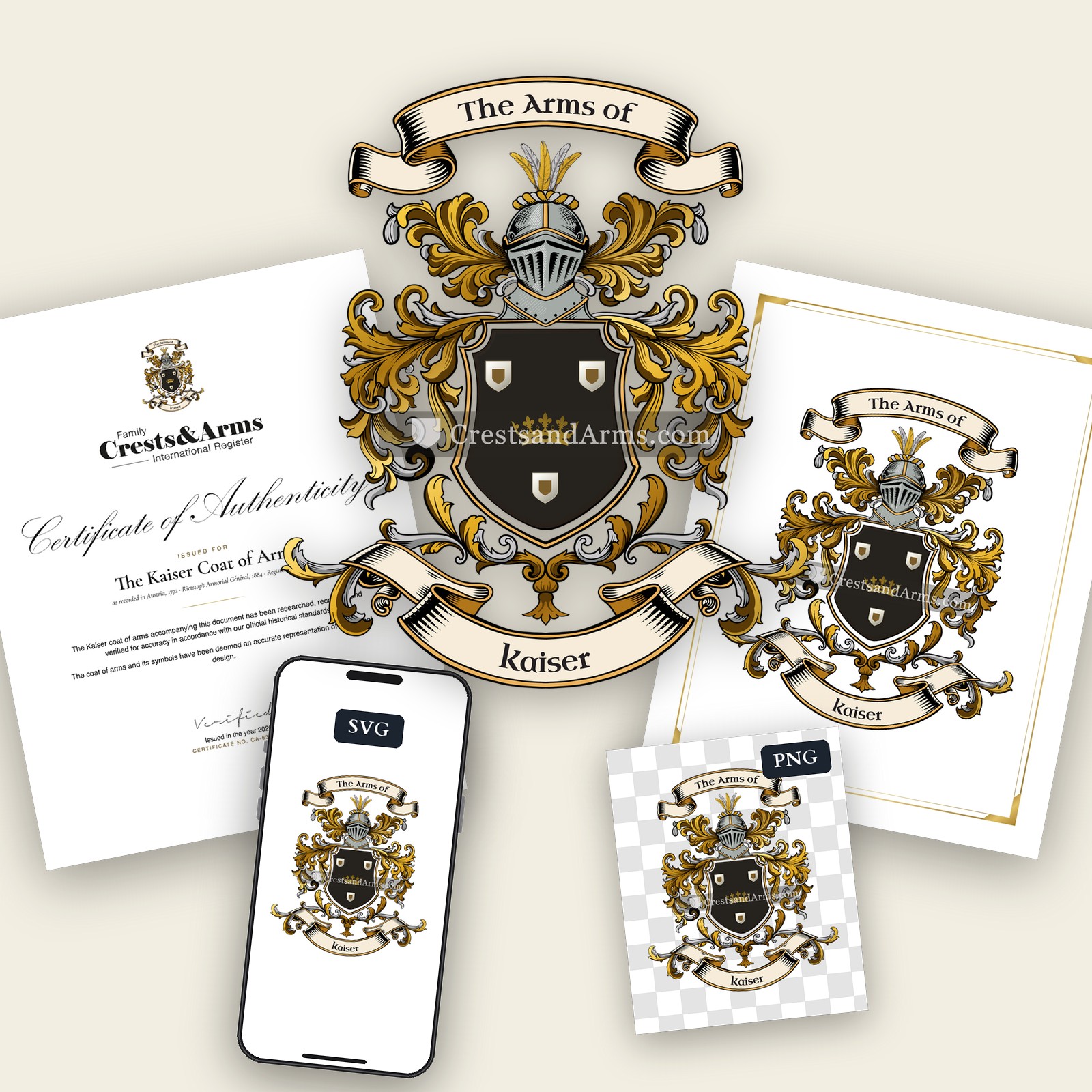
crownSovereignty, authority and just reward
escutcheonA shield within a shield, and a claim inherited
Colours
Black (Sable)Means: Constancy
Gold (Or)Means: Generosity
Silver (Argent)Means: Peace and sincerity
Historical info
Source
J. B. Rietstap, Armorial Général, Gouda: G. B. van Goor Zonen, 1884–87
Blazon (the actual original written record)
“De sa. à une couronne impériale d'or, acc. de trois écussons d'arg.”
AustriaLinz Aut, c. 1772
Digital archive packCoat of arms PNG, gold border print PDF, vector SVG and the certificate of authenticity. Sent to your email in minutes.
Map of Austria showing where the Kaiser arms are recorded
The Kaiser arms were recorded in Linz Aut, c. 1772.
This is where the arms were entered in the register. Families often moved to other parts of the country, so the same name can turn up in more than one region.
Region
Linz
Town
Linz Aut
First recorded
1772
Granting Authority for the Kaiser Arms
Imperial and Royal chancery
Sodacan · CC BY-SA 3.0
The body that granted and recorded arms in Austria in this period.
Joseph II, Holy Roman Emperor
Sovereign of the period
Joseph II, Holy Roman Emperor
1765–1790
Reigning in Germany when the Kaiser arms are first recorded.
How Arms Worked in Austria
Austrian coats of arms were often linked directly to noble titles granted by the Emperor. These symbols belonged to the entire family line rather than just one individual. When a family grew, new branches kept the original design without needing to change it. This system allowed all members of a noble house to share the same identity across many generations.
Granting authority
The Imperial and Royal chancery managed all heraldic matters and controlled the official granting of arms throughout the Austrian lands.
How they got arms
Families typically received their arms through a formal imperial decree that often accompanied the elevation of a person to noble status.
Where arms were recorded
Official records of these grants were kept in the Imperial Register of Nobility which began its formal documentation process in 1453.
The family's standing
Recorded among the armigerous families of Austria.
Origin & History of the Kaiser Family in Austria
The surname Kaiser originates from the Middle High German word *keiser*, which translates to emperor. In the context of the Holy Roman Empire, this name was often bestowed as a nickname or a title for someone who acted with authority or played the role of a ruler in local village plays. By the time your ancestors were documented in Linz in 1772, the name had become a well-established family identifier within the Austrian territories. During the eighteenth century, Linz served as a vital hub for trade along the Danube River, and families like yours were often part of the growing middle class of artisans or merchants who helped the city thrive. Because the name was tied to the prestige of the imperial office, it carried a sense of civic duty and local prominence. Your family members in Linz were likely integrated into the social and economic fabric of the city, living through a period of significant administrative reform under the rule of Empress Maria Theresa.
Coat of Arms & Family Crest Details
Symbols on this shield
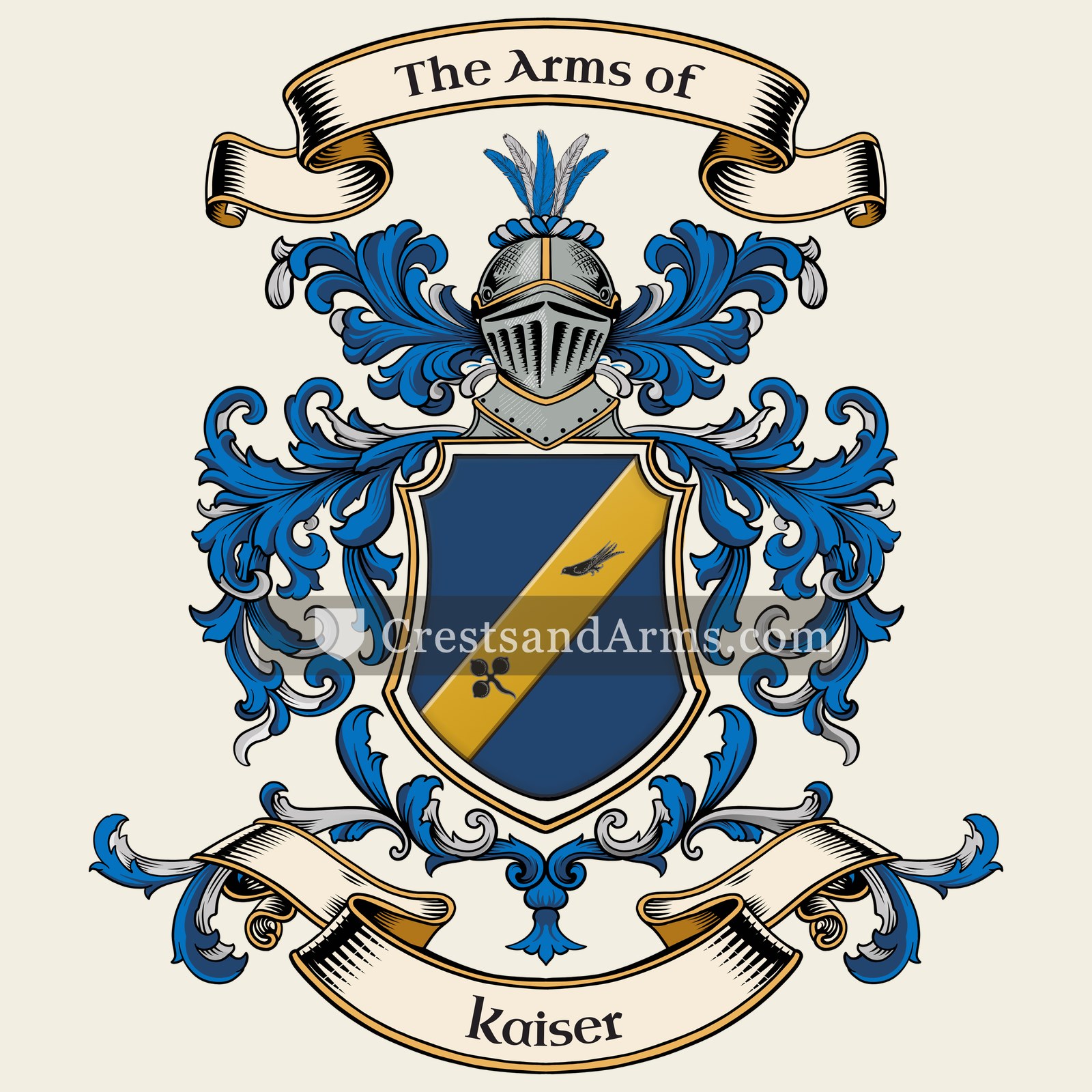
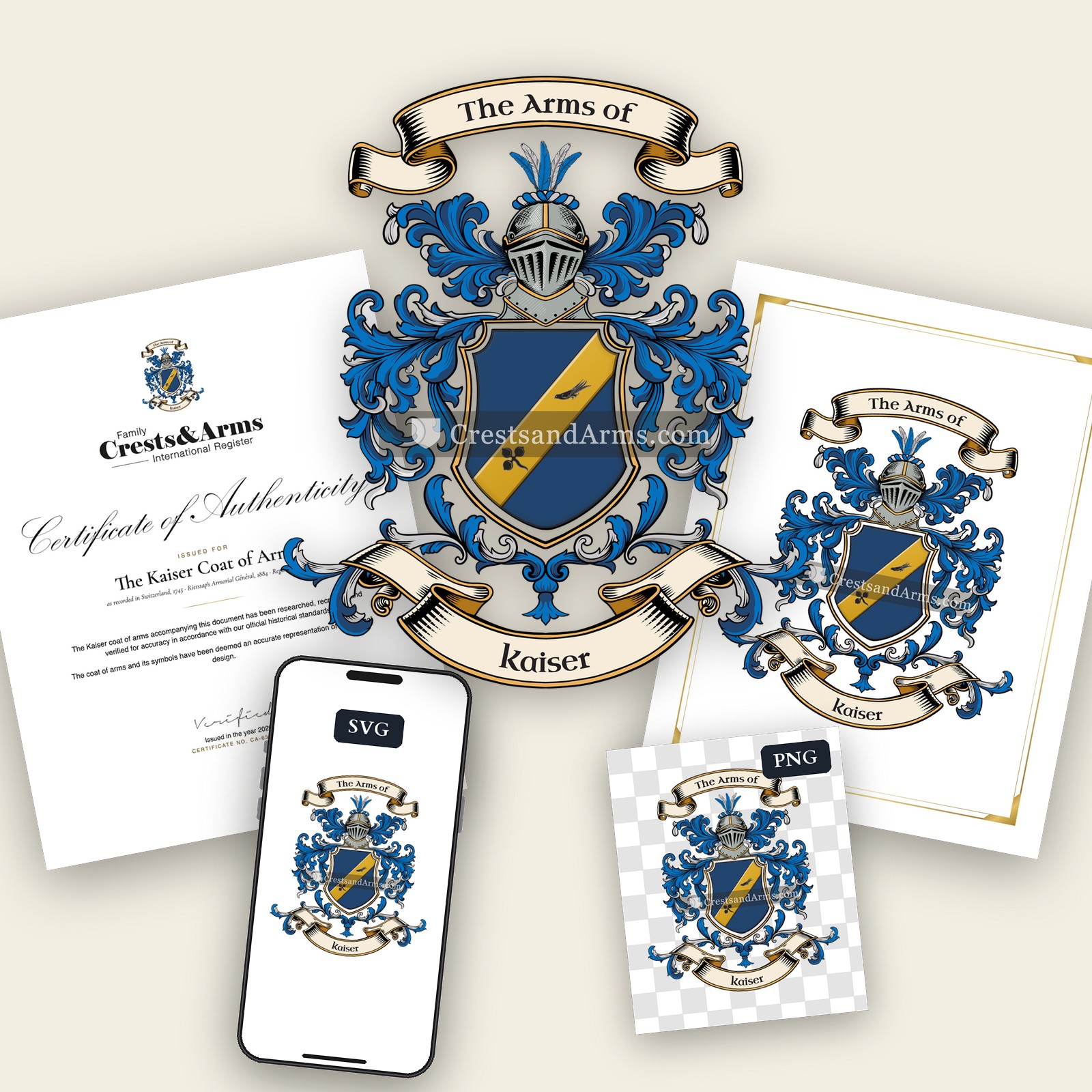
martletA younger son, who must win his own land
trefoilPerpetuity, and the Trinity
Colours
Blue (Azure)Means: Loyalty and truth
Gold (Or)Means: Generosity
Black (Sable)Means: Constancy
Historical info
Source
J. B. Rietstap, Armorial Général, Gouda: G. B. van Goor Zonen, 1884–87
Blazon (the actual original written record)
“D'azur à la barre d'or, ch. d'un oiseau cont. de sa. et cotoyé en p. d'un trèfle du sec., la tige en bas. C.: un demi-vol aux armes de l'écu, moins le trèfle. L. à dextre d'or et d'azur, à sen. d'azur et de sa.”
SwitzerlandSoleure, c. 1745
Digital archive packCoat of arms PNG, gold border print PDF, vector SVG and the certificate of authenticity. Sent to your email in minutes.
Map of Switzerland showing where the Kaiser arms are recorded
The Kaiser arms were recorded in Soleure, c. 1745.
This is where the arms were entered in the register. Families often moved to other parts of the country, so the same name can turn up in more than one region.
The body that granted and recorded arms in Switzerland in this period.
How Arms Worked in Switzerland
In Switzerland, coats of arms were not restricted to the nobility and were often adopted by common citizens and families. These symbols were passed down through generations to show family identity. When branches of a family grew, they often changed small details of the design to distinguish their own line from the original group.
Granting authority
Cantonal and civic authorities managed the use of coats of arms within their specific regions and local jurisdictions.
How they got arms
Families typically assumed their own coats of arms based on local custom rather than receiving them from a central monarch.
Where arms were recorded
Arms were recorded in various cantonal and civic registers starting from the fourteenth century throughout the Swiss region.
The family's standing
Recorded among the armigerous families of Switzerland.
Origin & History of the Kaiser Family in Switzerland
The surname Kaiser is deeply rooted in the German-speaking regions of Europe, functioning originally as a descriptive title rather than a simple family name. In the context of Switzerland, the name emerged as a way to identify individuals who either served the imperial administration or perhaps performed in plays depicting royalty during local festivals. By the time members of the family were documented in the canton of Solothurn in 1745, the name had become a stable hereditary marker for families integrated into the local Swiss social structure. These early settlers in Solothurn were likely part of the agrarian or artisan classes that formed the backbone of the region during the eighteenth century. As they established their lives in this Swiss territory, the name transitioned from its grand historical associations to represent the specific lineage and community standing of those living within the borders of the Old Swiss Confederacy.
Kaiser Meaning & Related Branches
Root word
Caesar
Latin title derived from the Roman cognomen of Julius Caesar.
This name
KaiserA German occupational or status-based surname denoting an emperor or a ruler.
also spelled
Kayser
Kaizer
Kizer
Related arms
Caflischsimilar arms
Dreisssimilar arms
Dugas de Chassagnysimilar arms
Kayservariant spelling
Documented Sources
J. B. Rietstap, Armorial Général, Gouda: G. B. van Goor Zonen, 1884–87
Bahlow, Hans. Deutsches Namenlexikon: Familien- und Vornamen nach Ursprung und Sinn erklärt. 1967
Heintze, Albert. Die deutschen Familiennamen: geschichtlich, geographisch, sprachlich. 1903
Stadtarchiv Nürnberg. Bürgerbücher der Stadt Nürnberg. 1765
Digital archive packCoat of arms PNG, gold border print PDF, vector SVG and the certificate of authenticity. Sent to your email in minutes.


 crownSovereignty, authority and just reward
 crownSovereignty, authority and just reward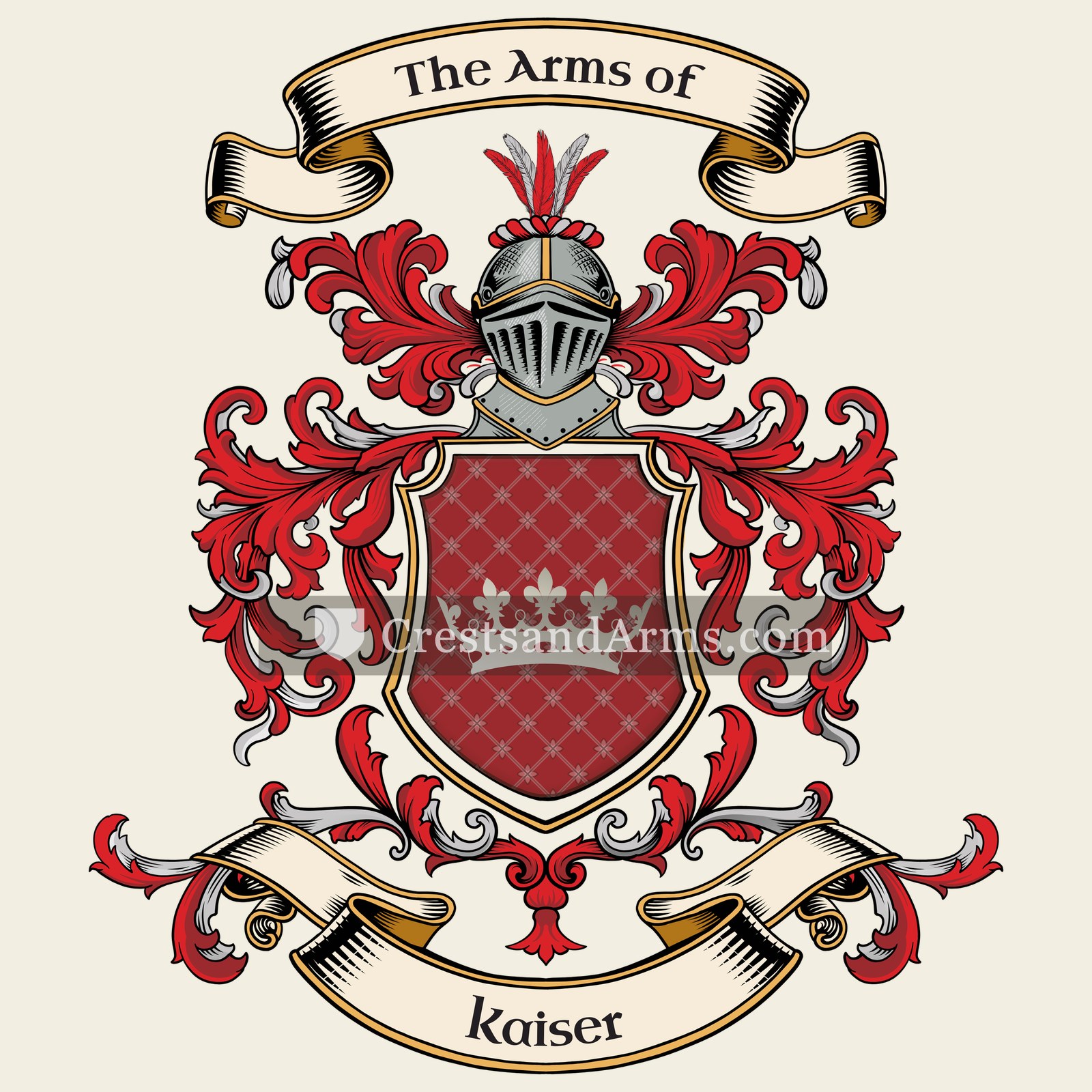


 escutcheonA shield within a shield, and a claim inherited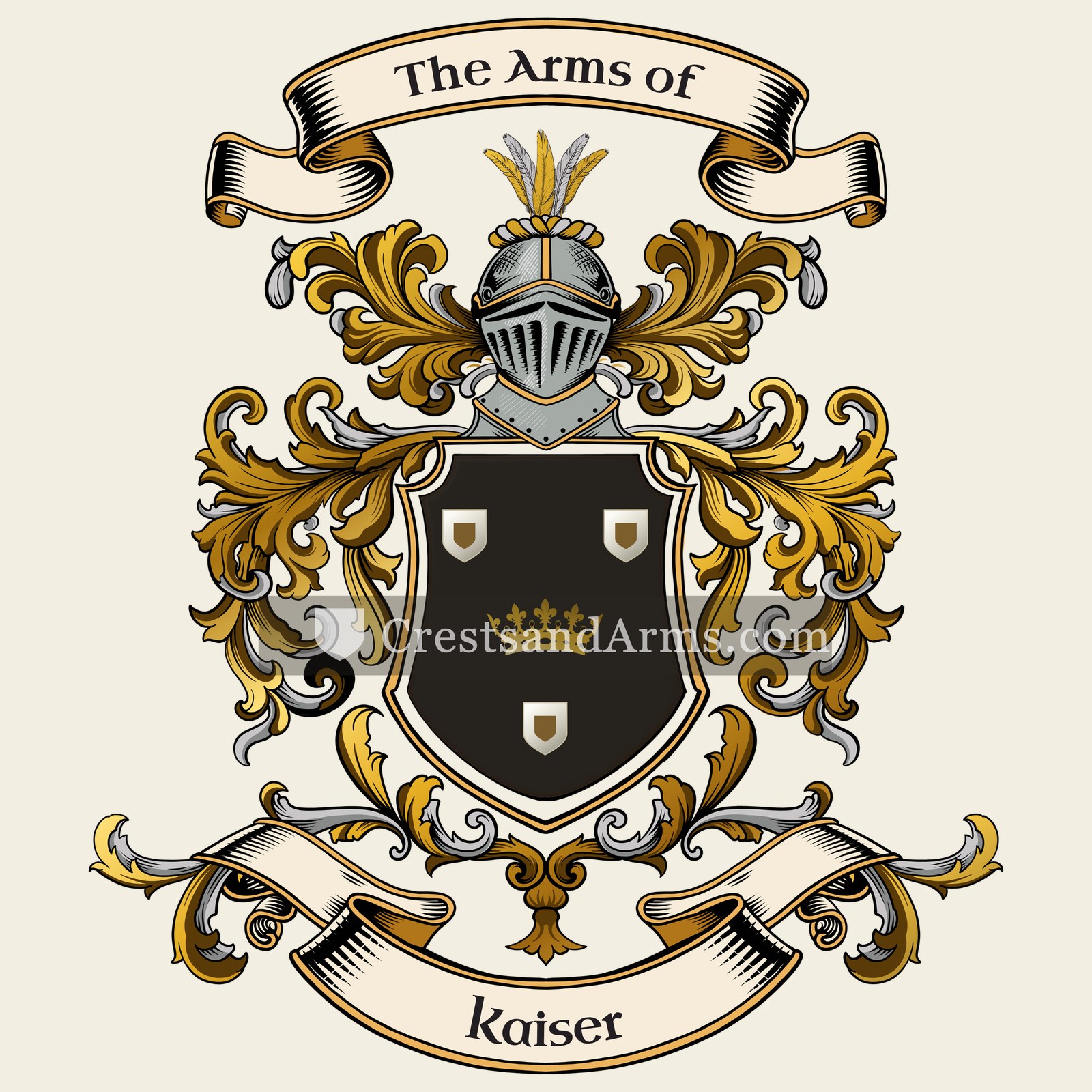


 martletA younger son, who must win his own land
 trefoilPerpetuity, and the Trinity