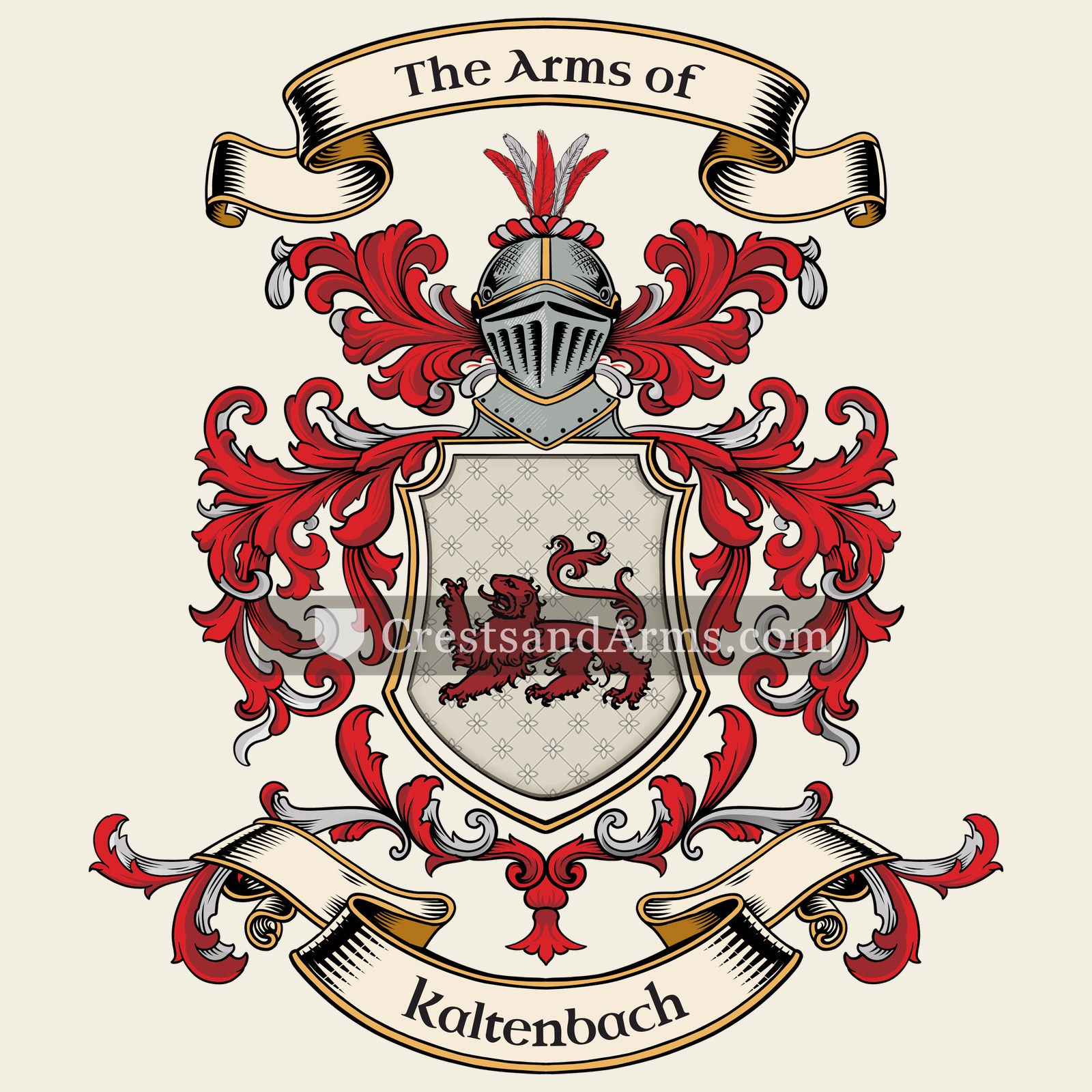
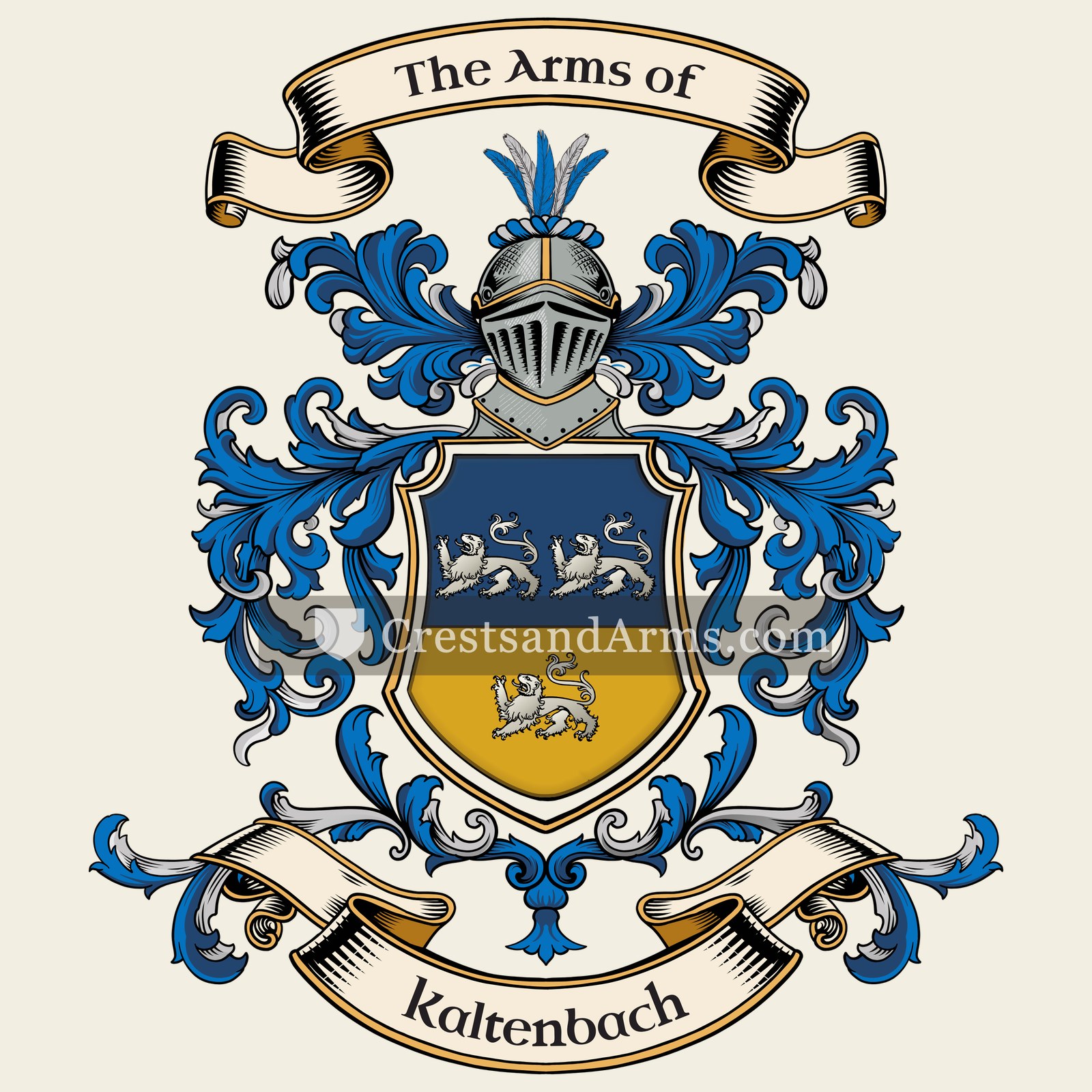
Map of France showing where the Kaltenbach arms are recorded
The Kaltenbach arms were recorded in France, c. 1663.
Arms such as these were typically recorded in Bretagne.
More families held coats of arms in Bretagne than anywhere else in France. The land was divided into many small estates rather than a few large ones, so far more households counted as gentry, and each needed a shield of its own to be told apart.
This is where the arms were entered in the register. Families often moved to other parts of the country, so the same name can turn up in more than one region.
The body that granted and recorded arms in France in this period.
Louis XIV of France
Sovereign of the period
Louis XIV of France
1643–1715
Reigning in France when the Kaltenbach arms are first recorded.
How Arms Worked in France
In France, a coat of arms was a mark of honor that passed down through the male line to all legitimate descendants. Families often used the same shield without changes to show their shared heritage. If a branch wanted to stand out, they could add a small mark to their shield to show their specific place in the family tree.
Granting authority
The Juge d'armes de France acted as the official authority that regulated and verified coats of arms across the country.
How they got arms
Families typically inherited their arms from ancestors, though they could also receive them through royal grants or by proving their noble status.
Where arms were recorded
Coats of arms were officially recorded in the Armorial Général de France, which began its main collection in the year 1696.
The family's standing
Recorded among the armigerous families of France.
Origin & History of the Kaltenbach Family in France
The name Kaltenbach carries a history that reflects the movement of people across European borders during the seventeenth century. While the name is Germanic in origin, meaning cold brook, its presence in the French region of Bretagne by 1663 suggests that the family was part of a broader pattern of migration and settlement. During this period, families often moved to find new opportunities or to escape the instability caused by regional conflicts. By settling in western France, the early members of the Kaltenbach family integrated into the local social fabric, likely adapting their trade or craft to the unique maritime and agricultural environment of the Breton peninsula. Their arrival in 1663 marks a significant point in the family narrative, showing how a name rooted in the geography of the German-speaking lands became a permanent part of the diverse cultural landscape of France.
Coat of Arms & Family Crest Details
Symbols on this shield
lionCourage, strength and royalty
Colours
Blue (Azure)Means: Loyalty and truth
Gold (Or)Means: Generosity
Silver (Argent)Means: Peace and sincerity
Historical info
Source
J. B. Rietstap, Armorial Général, Gouda: G. B. van Goor Zonen, 1884–87
Blazon (the actual original written record)
“Coupé d'azur sur or; à trois lions ramp. d'arg., rangés en fasce, br. sur le coupé. C.: un vol, coupé d'azur sur or.”
WestphaliaWestphalia, c. 1765
Digital archive packCoat of arms PNG, gold border print PDF, vector SVG and the certificate of authenticity. Sent to your email in minutes.
Map of Germany showing where the Kaltenbach arms are recorded
The Kaltenbach arms were recorded in Westphalia, c. 1765.
Westphalia was a land of small estates and fortified farmhouses in western Germany. Its families were numerous and not especially rich, but each held its own ground, and holding ground was what brought arms.
This is where the arms were entered in the register. Families often moved to other parts of the country, so the same name can turn up in more than one region.
The body that granted and recorded arms in Germany in this period.
Francis I, Holy Roman Emperor
Sovereign of the period
Francis I, Holy Roman Emperor
1745–1765
Reigning in France when the Kaltenbach arms are first recorded.
How Arms Worked in Germany
In the Holy Roman Empire, coats of arms were often granted to individuals by the Emperor or his representatives. These arms were then passed down through the generations to all legitimate descendants of the original holder. Younger branches of a family usually kept the same shield design without needing to change it, as the arms belonged to the entire lineage.
Granting authority
The Holy Roman Emperor held the sole power to grant new coats of arms throughout his vast imperial territories.
How they got arms
Families typically obtained their coats of arms through a formal imperial grant or by proving their noble status to the authorities.
Where arms were recorded
These grants were officially recorded in the Imperial Chancery registers, which began keeping formal records of such honors during the Middle Ages.
The family's standing
Recorded among the armigerous families of Westphalia.
Origin & History of the Kaltenbach Family in Germany
The surname Kaltenbach is a topographical name that originated in the German-speaking regions, specifically referring to those who lived near a "cold brook" or *kalter Bach*. By the mid-18th century, the family had established a notable presence in the Westphalia region, where records confirm their residence by 1765. During this era, families often identified themselves by the unique features of the landscape surrounding their homes, which helped distinguish them in growing rural communities. As the Kaltenbach family settled into the Westphalian countryside, they became part of the local agricultural and social fabric that defined the region during the late 1700s. Their history reflects the broader movement of families across German lands who relied on the natural geography of their surroundings to create a lasting identity that would be passed down through generations.
Related Branches & Arms
Root word
kalt and bach
Germanic words meaning cold and stream or brook.
This name
KaltenbachRefers to someone who lived near a cold stream or brook.
also spelled
Kaldenback
Kaldenbacher
Kaldenbak
Documented Sources
J. B. Rietstap, Armorial Général, Gouda: G. B. van Goor Zonen, 1884–87
Archives départementales d'Ille-et-Vilaine, Série B: Cours et juridictions
Mollat, Michel, Histoire de la Bretagne, 1993
Poirier, Jean, Histoire des noms de famille, 1985
Digital archive packCoat of arms PNG, gold border print PDF, vector SVG and the certificate of authenticity. Sent to your email in minutes.


 lionCourage, strength and royalty
 lionCourage, strength and royalty