Map of Spain showing where the Kamara arms are recorded
The Kamara arms were recorded in Castile, c. 1722.
Castile was the heart of Spain and the source of most of its noble families. Land won in the long wars against the Moors was granted out to fighting men, and a man granted land was granted arms along with it.
This is where the arms were entered in the register. Families often moved to other parts of the country, so the same name can turn up in more than one region.
The body that granted and recorded arms in Spain in this period.
Philip V of Spain
Sovereign of the period
Philip V of Spain
1714–1724
Reigning in Spain when the Kamara arms are first recorded.
How Arms Worked in Spain
In Spain, a coat of arms was considered a form of property that belonged to the entire family line. These arms were passed down from a father to all his children equally. Younger branches of the family usually kept the original design without needing to add any special marks to distinguish their specific line.
Granting authority
The Cronista Rey de Armas was the official body that regulated and granted coats of arms throughout Spain.
How they got arms
Families often obtained their arms through royal grants or by proving their noble status to the official heraldic authority.
Where arms were recorded
Coats of arms were officially recorded in the registers of the Cronista Rey de Armas starting in 1496.
The family's standing
Recorded among the armigerous families of Castile.
Origin & History of the Kamara Family in Spain
The history of the Kamara name in Spain is deeply tied to the social shifts occurring in the region of Castile during the early eighteenth century. By 1722, records confirm that members of the family were established residents within this central Spanish territory. During this era, Castile served as a major hub for administration and trade, which likely influenced how families settled and integrated into local communities. The name itself reflects the movement of people across diverse linguistic and cultural landscapes, as it appears in administrative documents that tracked residency and tax obligations. These early ancestors were part of a broader population that navigated the transition between traditional rural life and the evolving bureaucratic structures of the Spanish crown. Their presence in Castile suggests that they were active participants in the regional economy, helping to anchor the family name in the historical record of the Iberian Peninsula.
Meaning of the Kamara family crest colors & symbols
Symbols on this shield
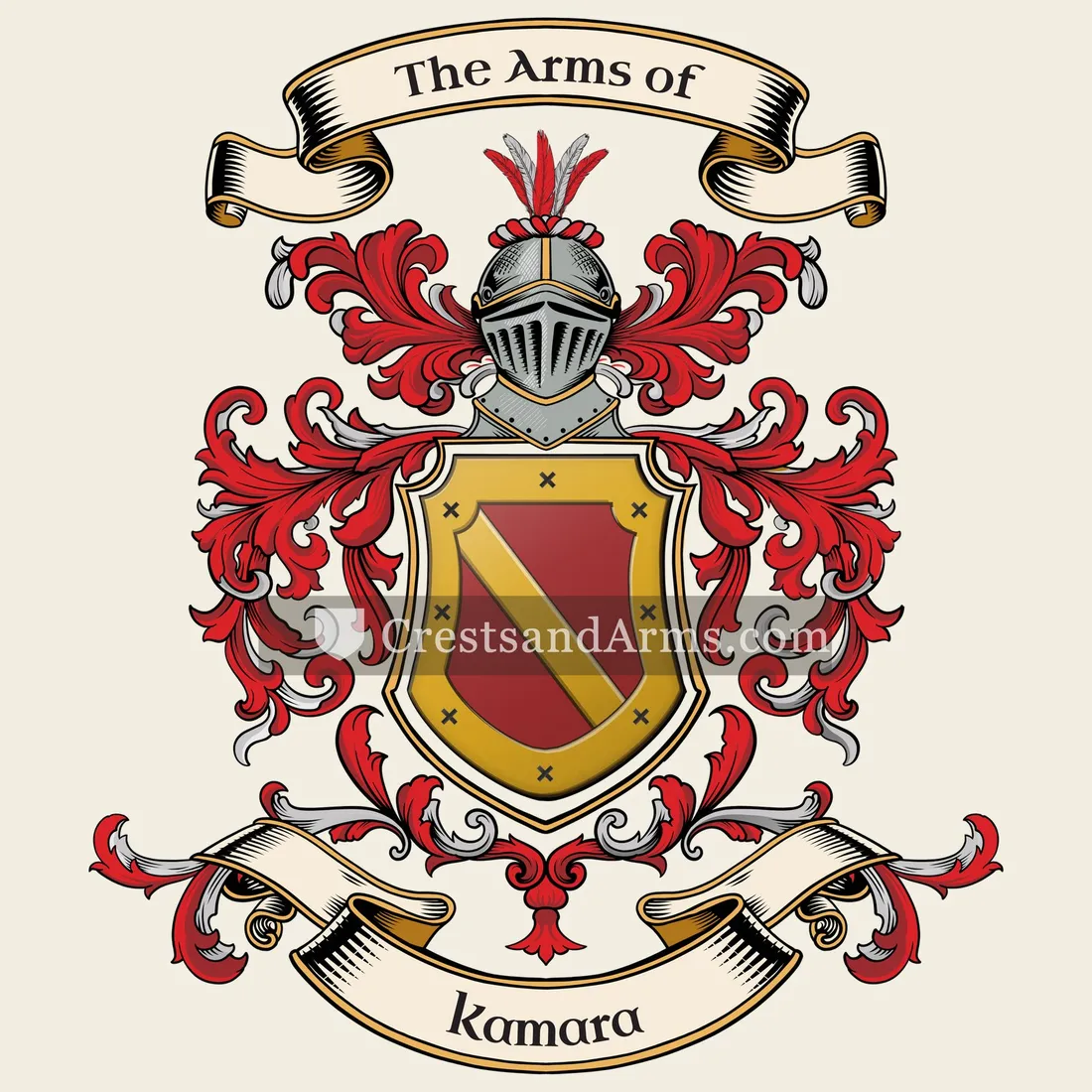
heartSincerity, charity and true affection
arrowReadiness for battle, and affliction endured
Colours
Gold (Or)Means: Generosity
Red (Gules)Means: Military strength
Historical info
Source
J. B. Rietstap, Armorial Général, Gouda: G. B. van Goor Zonen, 1884–87
Blazon (the actual original written record)
“D'or à un coeur de gu., traversé d'une flèche au nat. en barre, la pointe en bas, cant. de quatre contours de fenêtre carrés”
Austriac. 1772
Digital archive packCoat of arms PNG, gold border print PDF, vector SVG and the certificate of authenticity. Sent to your email in minutes.
Map of Austria showing where the Kamara arms are recorded
The Kamara arms were recorded in Austria, c. 1772.
Arms such as these were typically recorded in Tyrol.
Tyrol was mountain country in western Austria, where the valleys were held by families who had been there a very long time. Old tenure counted for more than money, and old families carried arms.
This is where the arms were entered in the register. Families often moved to other parts of the country, so the same name can turn up in more than one region.
Region
Tyrol
First recorded
1772
Granting Authority for the Kamara Arms
Imperial and Royal chancery
Sodacan · CC BY-SA 3.0
The body that granted and recorded arms in Austria in this period.
Joseph II, Holy Roman Emperor
Sovereign of the period
Joseph II, Holy Roman Emperor
1765–1790
Reigning in Spain when the Kamara arms are first recorded.
How Arms Worked in Austria
Austrian coats of arms were often linked directly to noble titles granted by the Emperor. These symbols belonged to the entire family line rather than just one individual. When a family grew, new branches kept the original design without needing to change it. This system allowed all members of a noble house to share the same identity across many generations.
Granting authority
The Imperial and Royal chancery managed all heraldic matters and controlled the official granting of arms throughout the Austrian lands.
How they got arms
Families typically received their arms through a formal imperial decree that often accompanied the elevation of a person to noble status.
Where arms were recorded
Official records of these grants were kept in the Imperial Register of Nobility which began its formal documentation process in 1453.
The family's standing
Recorded among the armigerous families of Austria.
Origin & History of the Kamara Family in Austria
The history of the Kamara family in Austria is deeply rooted in the mountainous landscape of Tyrol, where records confirm their presence as early as 1772. During this period, the name was closely associated with the social and economic structures of the Alpine region, often appearing in local parish registers and land administration documents. Families like the Kamaras were typically integrated into the agrarian life of the valleys, contributing to the development of small mountain communities through trade and craftsmanship. Because Tyrol served as a vital crossroads for travel between northern and southern Europe, the family likely benefited from the movement of goods and ideas through the mountain passes. Their long-standing presence in these records suggests that they were established members of the local population who navigated the challenges of life in the high Alps for generations.
Meaning of the Kamara family crest colors & symbols
Symbols on this shield
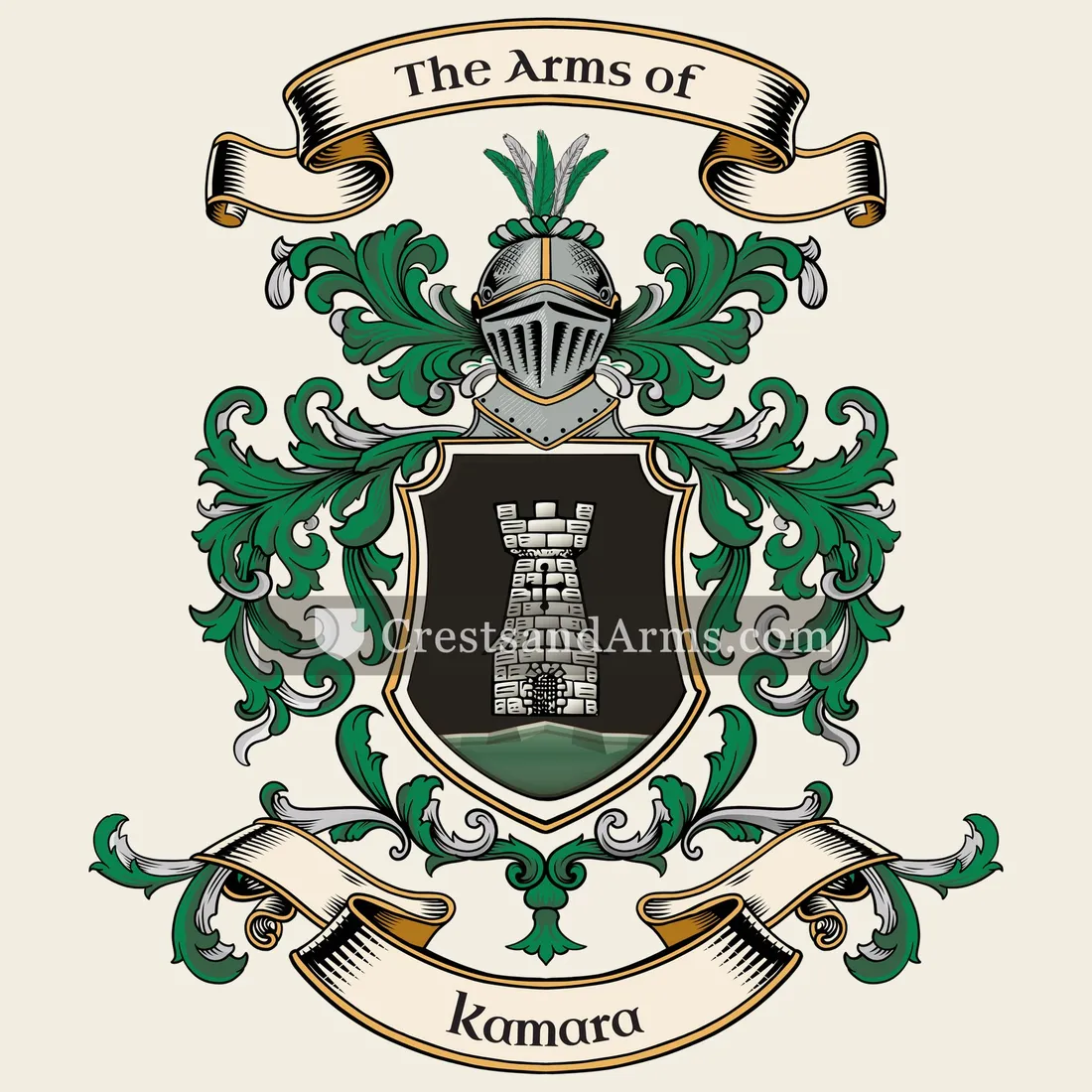
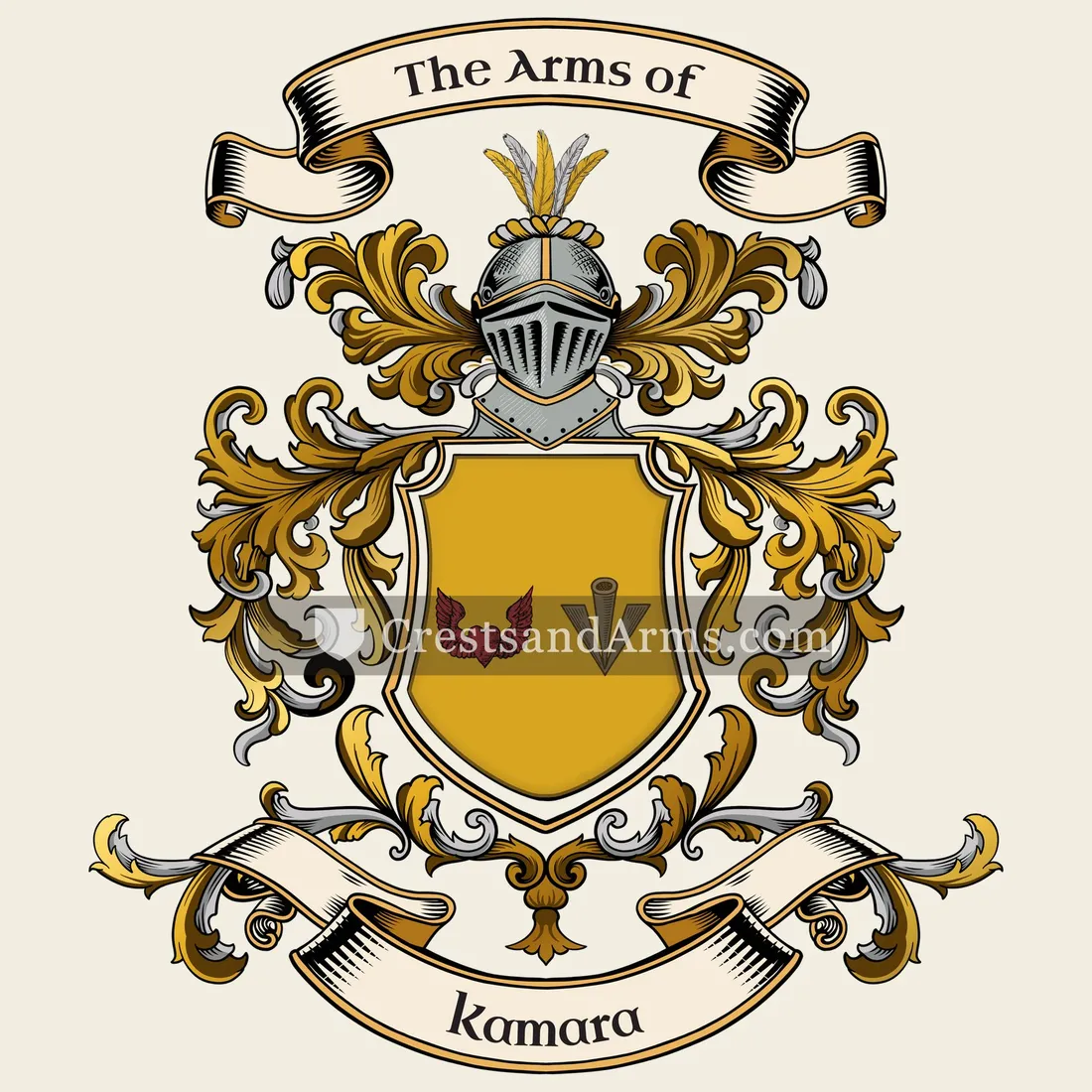
mountThe ground held, and steadfastness upon it
towerGrandeur and solidity, and a stronghold defended
Colours
Black (Sable)Means: Constancy
Silver (Argent)Means: Peace and sincerity
Historical info
Source
J. B. Rietstap, Armorial Général, Gouda: G. B. van Goor Zonen, 1884–87
Blazon (the actual original written record)
“De sa. à une tour sommée d'une tourelle d'arg., accostée de deux lévriers affr. du même, ramp. contre la tour, le tout soutenu d'une terrasse de sin.”
Portugalc. 1706
Digital archive packCoat of arms PNG, gold border print PDF, vector SVG and the certificate of authenticity. Sent to your email in minutes.
Map of Portugal showing where the Kamara arms are recorded
The Kamara arms were recorded in Portugal, c. 1706.
Arms such as these were typically recorded in Lisboa.
Lisbon was the seat of the Portuguese crown and the port its wealth came through. Families made rich by trade and by service to the king took arms, and the crown's heralds recorded them there.
This is where the arms were entered in the register. Families often moved to other parts of the country, so the same name can turn up in more than one region.
The body that granted and recorded arms in Portugal in this period.
Peter II of Portugal
Sovereign of the period
Peter II of Portugal
1683–1706
Reigning in Spain when the Kamara arms are first recorded.
How Arms Worked in Portugal
In Portugal, a coat of arms was a family possession that passed from a father to his children. Every legitimate descendant had the right to use the family shield without needing to change it. Younger branches of the family kept the original design, though they sometimes added small symbols to distinguish their specific line from the main branch.
Granting authority
The Cartório da Nobreza acted as the official body that managed and regulated noble titles and coats of arms in Portugal.
How they got arms
Families typically inherited their arms through bloodline, though they could also receive new grants from the crown for distinguished service.
Where arms were recorded
Coats of arms were officially recorded in the books of the Cartório da Nobreza starting in the year 1512.
The family's standing
Recorded among the armigerous families of Portugal.
Origin & History of the Kamara Family in Portugal
The history of the Kamara name in Portugal is deeply connected to the vibrant, multicultural environment of Lisbon during the early eighteenth century. By 1706, members of the family were already established residents of the city, living within a capital that served as a central hub for global trade and maritime exchange. During this era, Lisbon was a melting pot where merchants, sailors, and travelers from across the Atlantic world converged, and the presence of the Kamara family reflects this period of intense international movement. While the name carries deep roots in West African linguistic traditions, its appearance in Portuguese records from this time highlights the family's integration into the urban fabric of Lisbon. They lived among a diverse population of artisans and traders, contributing to the social and economic life of a city that was rapidly expanding its reach across the globe. This early documented presence suggests that the family was part of the essential network of people who navigated the complex cultural and commercial landscapes of the Portuguese Empire.
Kamara Meaning & Related Branches
Root word
Camara
Latin term for a vaulted chamber or arched roof.
This name
KamaraRefers to a person who lived near a vaulted structure or worked in a chamber.
also spelled
Kamara
Documented Sources
J. B. Rietstap, Armorial Général, Gouda: G. B. van Goor Zonen, 1884–87
Archivo General de Simancas, Registro del Sello de Corte, 1722
Archivo Histórico Nacional, Consejos, Libro de Asientos de Vecindad, 1722
Ladero Quesada, Miguel Ángel, La población de Castilla en el siglo XVIII, 1995
Digital archive packCoat of arms PNG, gold border print PDF, vector SVG and the certificate of authenticity. Sent to your email in minutes.


 saltire coupedResolution, and the cross of St Andrew
 saltire coupedResolution, and the cross of St Andrew


 heartSincerity, charity and true affection
 arrowReadiness for battle, and affliction endured


 mountThe ground held, and steadfastness upon it
 towerGrandeur and solidity, and a stronghold defended