Map of Sweden showing where the Kåse arms are recorded
The Kåse arms were recorded in Sweden, c. 1700.
Arms such as these were typically recorded in Stockholm.
Stockholm held the Swedish court and the House of Nobility, where every noble family's arms were entered and kept. Families ennobled for service registered there, which is why so many are recorded around the city.
This is where the arms were entered in the register. Families often moved to other parts of the country, so the same name can turn up in more than one region.
The body that granted and recorded arms in Sweden in this period.
Carl XII of Sweden
Sovereign of the period
Carl XII of Sweden
1697–1718
Reigning in Sweden when the Kåse arms are first recorded.
How Arms Worked in Sweden
In Sweden, a coat of arms belonged to a noble family as a whole rather than just one individual. These arms were passed down through the generations to all legitimate descendants. Younger branches of the family used the same shield without needing to change it. This system ensured that the entire lineage shared the same identity and status under the law.
Granting authority
The Riddarhuset, or House of Nobility, regulated all noble coats of arms in Sweden under royal authority.
How they got arms
Families received their coats of arms through royal grants of nobility which were then officially registered with the House.
Where arms were recorded
Coats of arms were officially recorded in the Swedish House of Nobility register starting in the year 1626.
The family's standing
Recorded among the armigerous families of Sweden.
Origin & History of the Kåse Family in Sweden
The name Kåse carries a distinct history rooted in the social landscape of eighteenth-century Sweden. By the year 1700, members of the family were already established in Stockholm, which was a bustling center of trade and administration during the Swedish Empire. The name itself is thought to be linked to old Scandinavian terms describing a person who was either bold or perhaps held a specific role in local community life. During this era, families living in the capital often held positions as craftsmen, merchants, or civil servants, helping to build the infrastructure of a growing city. As the family navigated life in Stockholm, they became part of the urban fabric that defined the Swedish capital during a time of significant political and cultural change. Their presence in the city records from this period suggests they were active participants in the professional and social development of early modern Sweden.
Kåse Meaning & Related Branches
Root word
kase
Old Norse term for a cheese or a round lump.
This name
KåseRefers to a person who made or sold cheese, or someone with a round physical appearance.
also spelled
Kaase
Kasee
Documented Sources
J. B. Rietstap, Armorial Général, Gouda: G. B. van Goor Zonen, 1884–87
Stockholm City Archive (Stockholms stadsarkiv), Mantalslängder (Tax Census Records)
National Archives of Sweden (Riksarkivet), Kyrkoarkiv (Parish Records)
Hellquist, Elof, Svensk etymologisk ordbok, 1922
Lundkvist, Sven, Stockholms historia, 1967
Digital archive packCoat of arms PNG, gold border print PDF, vector SVG and the certificate of authenticity. Sent to your email in minutes.


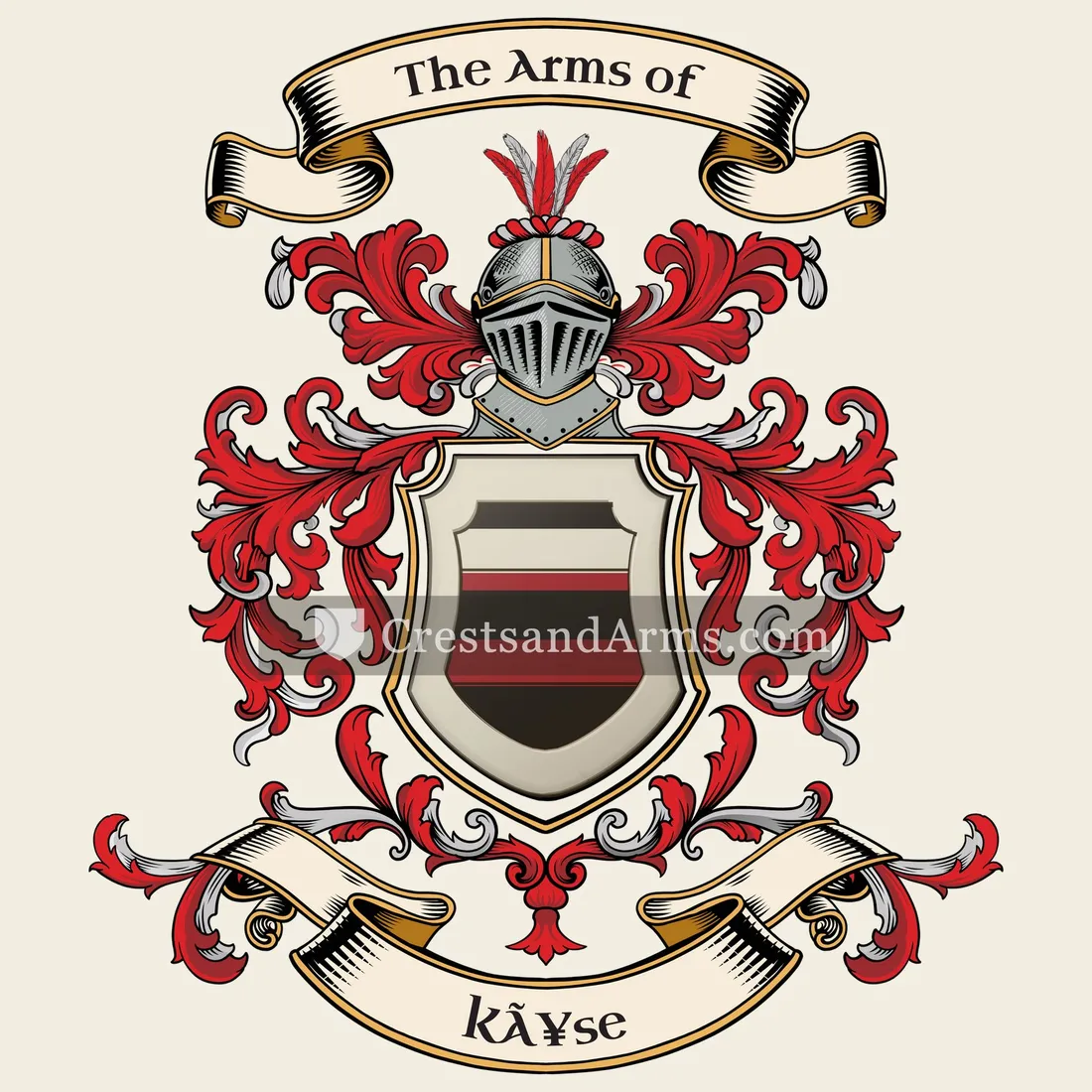
 fessThe military belt, and readiness to serve
 fessThe military belt, and readiness to serve