Map of Netherlands showing where the Keef arms are recorded
The Keef arms were recorded in Netherlands, c. 1815.
Arms such as these were typically recorded in Friesland.
Friesland was low, wet country on the northern coast of the Netherlands, farmed by families who had held the same land for centuries. Free landholders were unusually common there, and a free landholder could carry arms.
This is where the arms were entered in the register. Families often moved to other parts of the country, so the same name can turn up in more than one region.
Region
Friesland
First recorded
1815
Granting Authority for the Keef Arms
Hoge Raad van Adel
Photograph made by me · CC BY-SA 3.0
The body that granted and recorded arms in Netherlands in this period.
William I of the Netherlands
Sovereign of the period
William I of the Netherlands
1815–1840
Reigning in Netherlands when the Keef arms are first recorded.
How Arms Worked in Netherlands
In the Netherlands, coats of arms were often used by noble families and those who held specific public offices. These arms were passed down through the generations to legitimate descendants. Younger branches of a family usually kept the original design without needing to add special marks. This system ensured that the family identity remained clear and consistent over many years.
Granting authority
The Hoge Raad van Adel is the official body that regulates and manages noble titles and coats of arms in the Netherlands.
How they got arms
Families typically obtained their coats of arms through official royal grants or by proving their long-standing historical use of the symbols.
Where arms were recorded
Coats of arms are officially recorded in the registers held by the Hoge Raad van Adel, which began its work in 1814.
The family's standing
Recorded among the armigerous families of Netherlands.
Origin & History of the Keef Family in Netherlands
The family name Keef, while often associated with broader Germanic or Celtic roots, maintains a distinct historical footprint within the northern provinces of the Netherlands. By the early 19th century, records confirm that members of the family were established in the province of Friesland. During this period, the region was undergoing significant social changes following the end of the Napoleonic era and the formation of the United Kingdom of the Netherlands. Families like the Keefs were often involved in the agricultural and maritime trades that defined Frisian life, living in a landscape shaped by strict water management and communal land rights. Because Friesland historically maintained its own unique Frisian language and legal customs, families living there often held a strong sense of local identity that persisted even as the Dutch state began to centralize its administrative records. These early 1815 records serve as a vital anchor, showing that the family was part of the steady population growth and economic transition that characterized the Dutch countryside at the dawn of the modern era.
Meaning of the Keef family crest colors & symbols
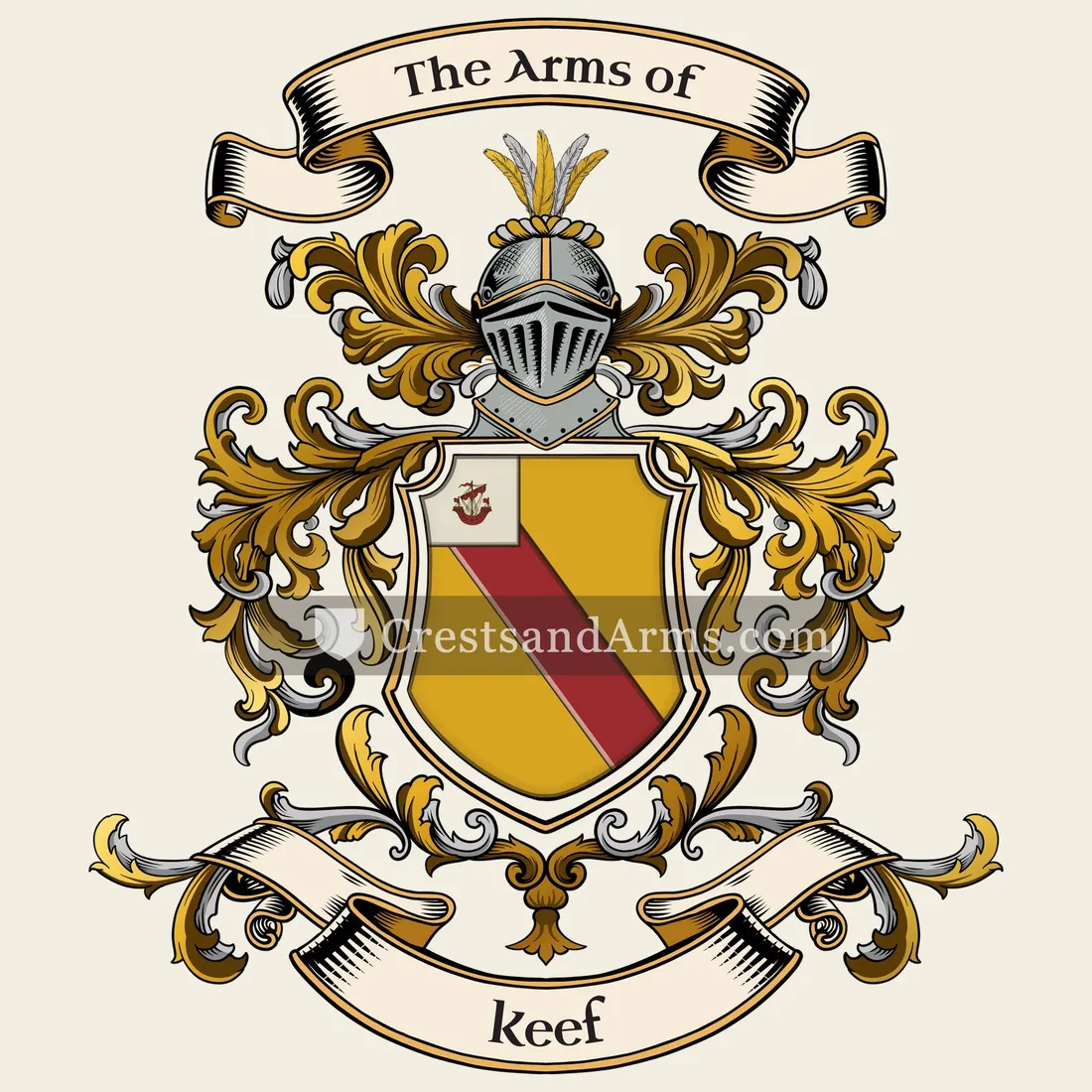
Symbols on this shield
bendDefence, and the scarf of a commander
cantonA mark of honour granted by the sovereign
shipEnterprise, and a great voyage undertaken
Colours
Gold (Or)Means: Generosity
Red (Gules)Means: Military strength
Silver (Argent)Means: Peace and sincerity
Historical info
Source
Sir Bernard Burke, The General Armory of England, Scotland, Ireland and Wales, London: Harrison & Sons, 1884
Blazon (the actual original written record)
“Or, a bend gu. on a canton ar. a galley, her oars in action, of the second”
Englandc. 1620
Digital archive packCoat of arms PNG, gold border print PDF, vector SVG and the certificate of authenticity. Sent to your email in minutes.
Map of England showing where the Keef arms are recorded
The Keef arms were recorded in England, c. 1620.
Arms such as these were typically recorded in York.
Yorkshire is the largest of the English counties, and it held more gentry families than any other. Land there was split among a great many households rather than a few, so a great many of them carried arms.
This is where the arms were entered in the register. Families often moved to other parts of the country, so the same name can turn up in more than one region.
The body that granted and recorded arms in England in this period.
James VI and I
Sovereign of the period
James VI and I
1603–1625
Reigning in Netherlands when the Keef arms are first recorded.
How Arms Worked in England
English heraldry allowed arms to be shared by all legitimate descendants of the original owner. These symbols were treated as personal property that moved through the generations to all children. While the eldest son kept the original design, other family members could use the same shield without needing to change it or register their own unique versions.
Granting authority
The College of Arms in London has regulated the use of coats of arms throughout England and Wales since 1484.
How they got arms
Families typically obtained their coats of arms through a formal grant from the Crown or by proving their ancient right to them.
Where arms were recorded
All official coats of arms are recorded in the registers kept at the College of Arms, which date back to the fifteenth century.
The family's standing
Recorded among the armigerous families of England.
Origin & History of the Keef Family in England
The family name Keef, often appearing in historical records as a variation of names like O'Keeffe or Keefe, established a notable presence in the city of York by the early 17th century. During this period, York served as a vital northern hub for trade and administration, attracting families who were often involved in local commerce or skilled craftsmanship. Records indicate that members of the family were settled in the region by 1620, placing them in England during a time of significant social and religious transition. As residents of a historic walled city, these early ancestors likely navigated the complexities of urban life in a society defined by parish registers and guild memberships. Their presence in York suggests a transition from their ancestral roots toward a more settled life in the English heartland, where they contributed to the local community as laborers, merchants, or tradespeople during the reign of King James I.
Keef Meaning & Related Branches
Root word
Kief
A Dutch term referring to a small, sharp, or pointed object.
This name
KeefA topographic name for someone who lived near a sharp point of land or a pointed hill.
also spelled
Kepe
Keppe
Documented Sources
J. B. Rietstap, Armorial Général, Gouda: G. B. van Goor Zonen, 1884–87
Tresoar (Fries Historisch en Letterkundig Centrum), Bevolkingsregisters van Friesland
Netherlands National Archives (Nationaal Archief), Burgerlijke Stand van de provincie Friesland
Digital archive packCoat of arms PNG, gold border print PDF, vector SVG and the certificate of authenticity. Sent to your email in minutes.


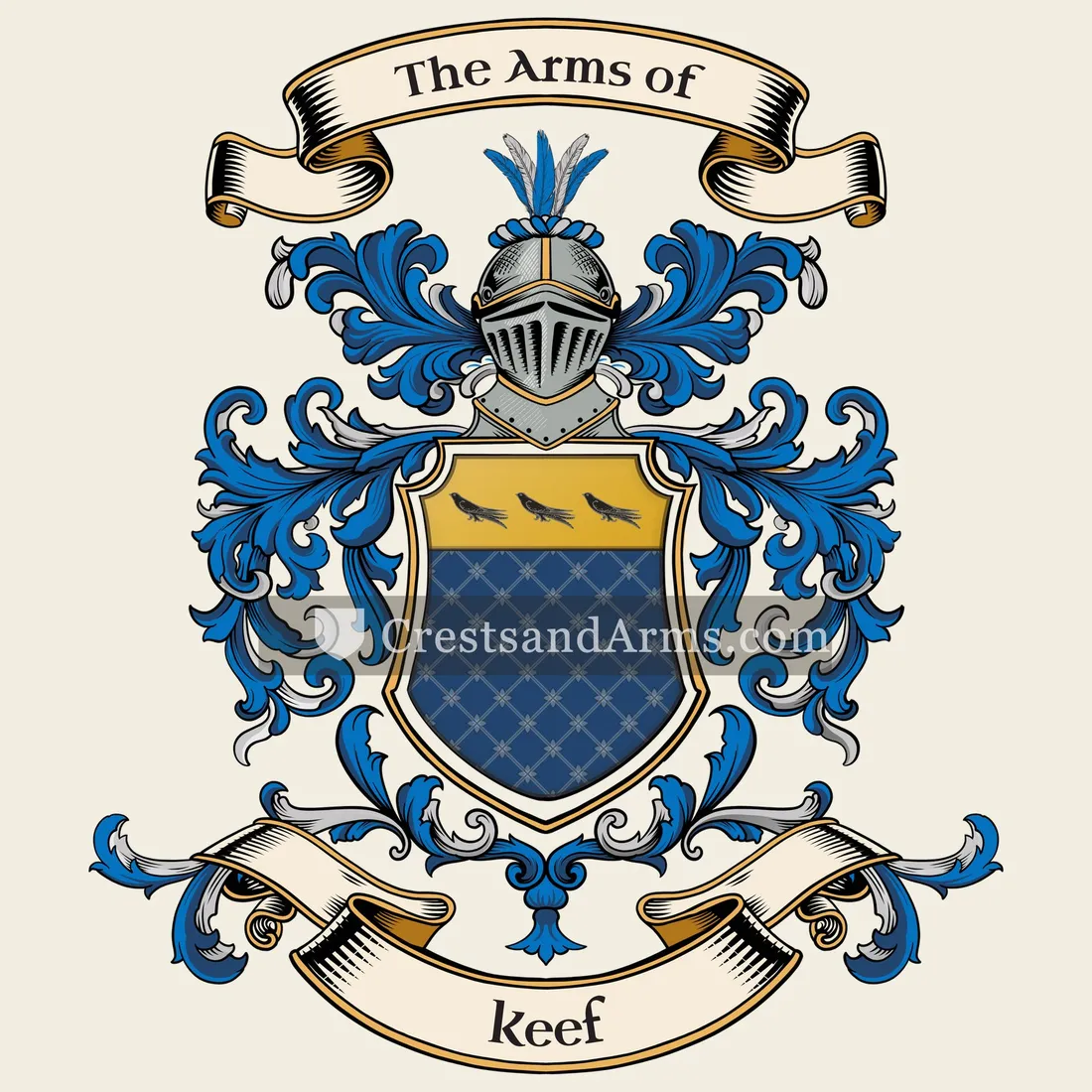
 chiefAuthority, wisdom and dominion
 martletA younger son, who must win his own land
 chiefAuthority, wisdom and dominion
 martletA younger son, who must win his own land


 bendDefence, and the scarf of a commander
 cantonA mark of honour granted by the sovereign
 shipEnterprise, and a great voyage undertaken