Map of Germany showing where the Keith arms are recorded
The Keith arms were recorded in Germany, c. 1793.
Arms such as these were typically recorded in Bavaria.
Bavaria was a country of old landed families and walled market towns. Estates passed down the same line for centuries, and both the landowners and the leading townsmen kept arms, which is why so many Bavarian names sit in the registers.
This is where the arms were entered in the register. Families often moved to other parts of the country, so the same name can turn up in more than one region.
The body that granted and recorded arms in Germany in this period.
Francis II, Holy Roman Emperor
Sovereign of the period
Francis II, Holy Roman Emperor
1792–1806
Reigning in Germany when the Keith arms are first recorded.
How Arms Worked in Germany
In the Holy Roman Empire, coats of arms were often granted to individuals by the Emperor or his representatives. These arms were then passed down through the generations to all legitimate descendants of the original holder. Younger branches of a family usually kept the same shield design without needing to change it, as the arms belonged to the entire lineage.
Granting authority
The Holy Roman Emperor held the sole power to grant new coats of arms throughout his vast imperial territories.
How they got arms
Families typically obtained their coats of arms through a formal imperial grant or by proving their noble status to the authorities.
Where arms were recorded
These grants were officially recorded in the Imperial Chancery registers, which began keeping formal records of such honors during the Middle Ages.
The family's standing
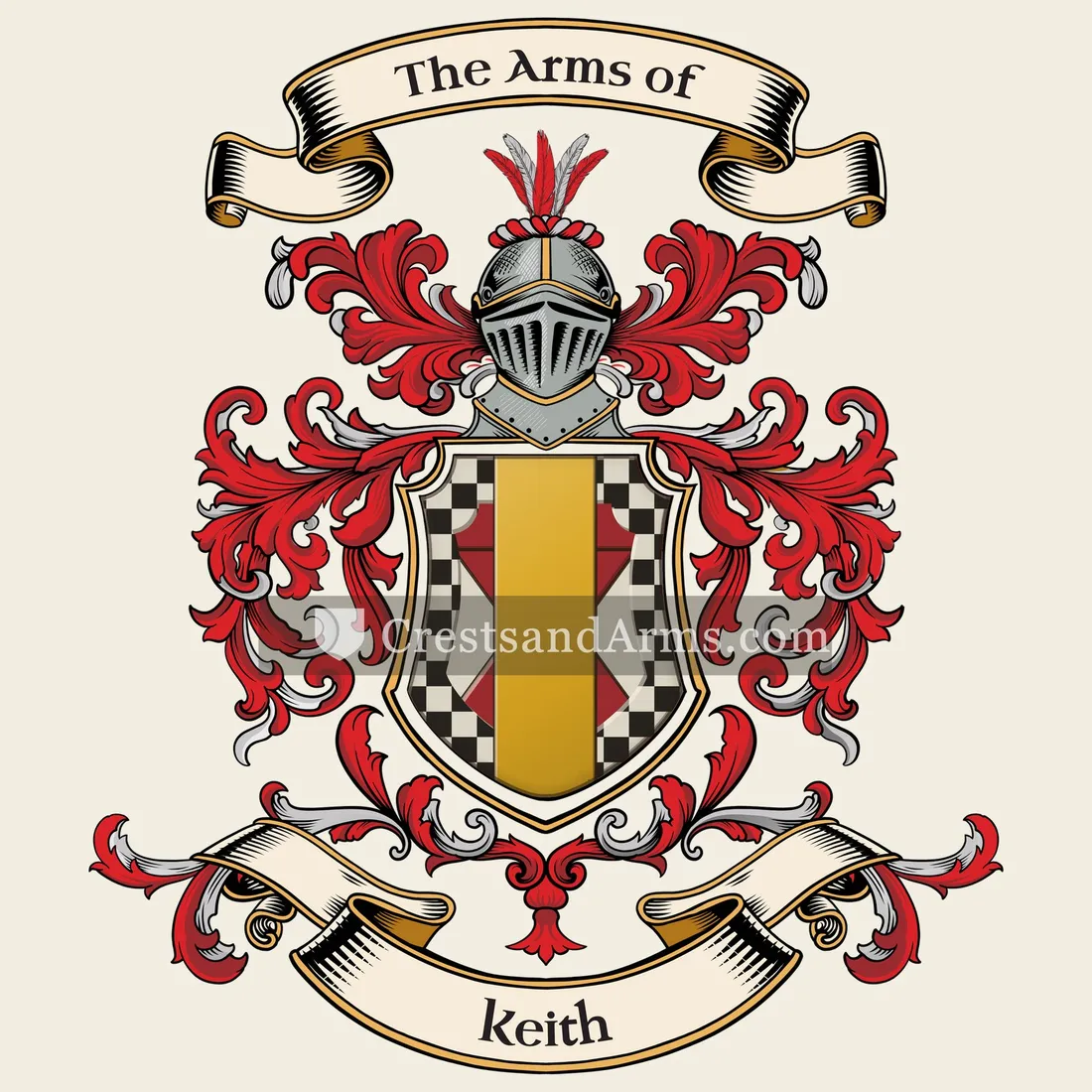
Recorded among the armigerous families of Germany.
Origin & History of the Keith Family in Germany
The history of the Keith family in Germany is deeply rooted in the cultural landscape of Bavaria, where records confirm their presence by 1793. During this period, the name was often associated with families living in rural areas or small villages, where surnames frequently evolved from local geography or specific occupations. In the late 18th century, Bavaria was undergoing significant social changes as it transitioned through the Napoleonic era and the reorganization of the Holy Roman Empire. Families like the Keiths were often tied to the land, working as farmers or local tradespeople who contributed to the stability of their communities. As the region moved into the 19th century, these families often maintained strong ties to their local parishes, which served as the primary centers for recording births, marriages, and deaths. This era of German history highlights a time when the identity of a family was closely linked to their specific town and the regional traditions of southern Germany.
Meaning of the Keith family crest colors & symbols
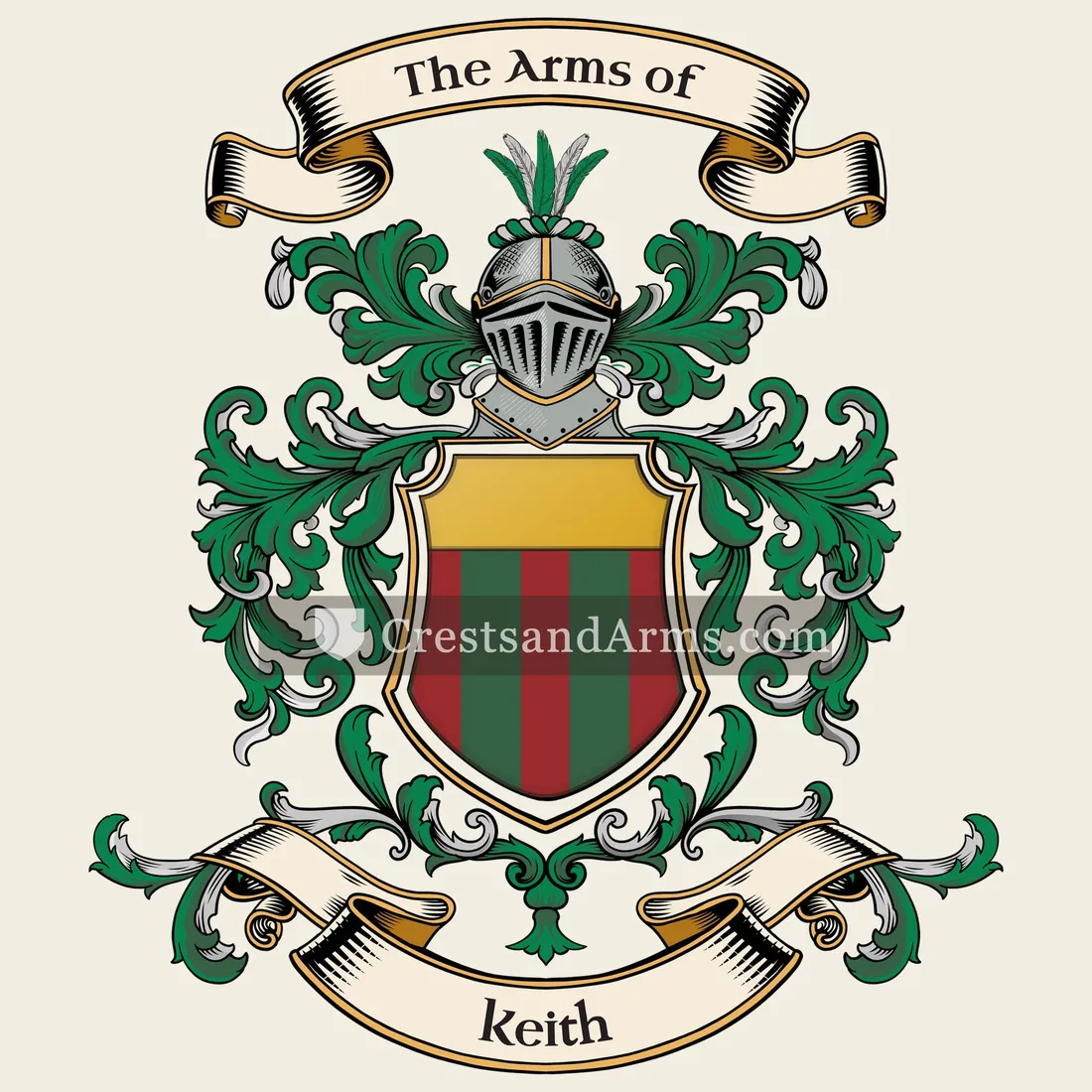
Symbols on this shield
saltireResolution, and St Andrew's cross
chiefAuthority, wisdom and dominion
paleMilitary strength, and a fortified defence
Colours
Gold (Or)Means: Generosity
Silver (Argent)Means: Peace and sincerity
Red (Gules)Means: Military strength
Historical info
Source
J. B. Rietstap, Armorial Général, Gouda: G. B. van Goor Zonen, 1884–87
Blazon (the actual original written record)
“Ec.: aux 1 et 4 d'or au saut. de gu.; au chef du même; aux 2 et 3 d'arg., au chef de gu. ch. de trois pals d'or. C.: un rocher au nat. S.: à dextre une licorne d'arg., accornée et onglée d'or; à sen. un cerf au nat. D.: WATCH THE TEMPTATION.”
Britainc. 1700
Digital archive packCoat of arms PNG, gold border print PDF, vector SVG and the certificate of authenticity. Sent to your email in minutes.
Map of Britain showing where the Keith arms are recorded
The Keith arms were recorded in Britain, c. 1700.
Arms such as these were typically recorded in Kent.
Kent sits between London and the short crossing to Europe, and the trade passing through made it wealthy. Merchant families bought land with that money, and it was landowners who took coats of arms.
This is where the arms were entered in the register. Families often moved to other parts of the country, so the same name can turn up in more than one region.
The body that granted and recorded arms in Britain in this period.
William III of England
Sovereign of the period
William III of England
1694–1702
Reigning in Germany when the Keith arms are first recorded.
How Arms Worked in Britain
English heraldry allowed arms to be shared by all legitimate descendants of the original owner. These symbols were treated as personal property that moved through the generations to all children. While the eldest son kept the original design, other family members could use the same shield without needing to change it or register their own unique versions.
Granting authority
The College of Arms in London has regulated the use of coats of arms throughout England and Wales since 1484.
How they got arms
Families typically obtained their coats of arms through a formal grant from the Crown or by proving their ancient right to them.
Where arms were recorded
All official coats of arms are recorded in the registers kept at the College of Arms, which date back to the fifteenth century.
The family's standing
Recorded among the armigerous families of Britain.
Origin & History of the Keith Family in Britain
The surname Keith originates from a place name in East Lothian, Scotland, where the local landscape featured a prominent woodland or valley. During the medieval period, the name became associated with a powerful noble family that served as the Great Marischals of Scotland, a position responsible for protecting the royal regalia. As the family grew in influence, members migrated across the British Isles for trade, military service, and land management. By the year 1700, records confirm that individuals bearing the name had established a presence in Kent. This migration suggests that the family was moving away from their northern roots to integrate into the growing commercial and social networks of southern England. This shift reflects a broader trend of families moving toward the capital and its surrounding counties to seek new opportunities during the early modern era.
Meaning of the Keith family crest colors & symbols
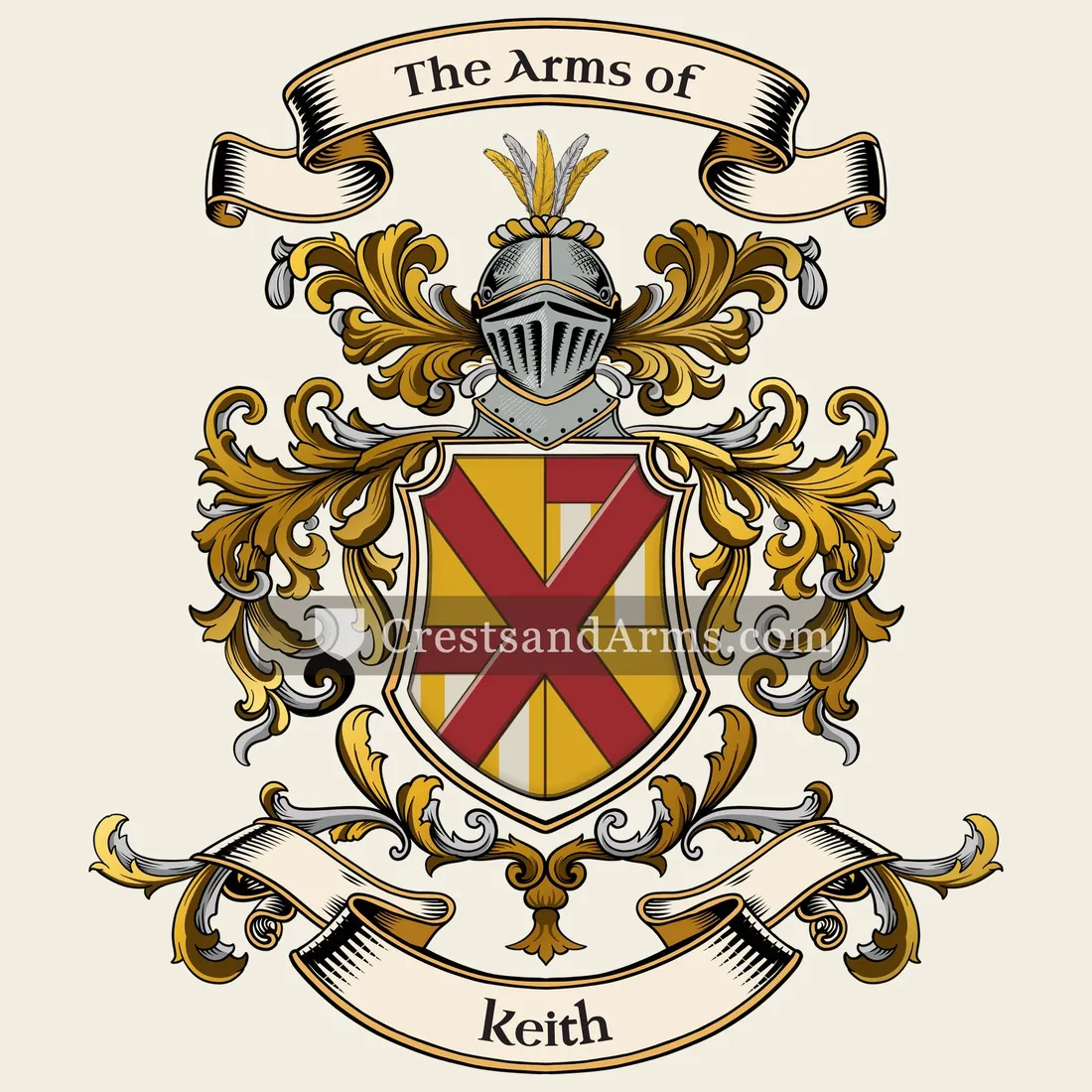
Symbols on this shield
saltireResolution, and St Andrew's cross
chiefAuthority, wisdom and dominion
paleMilitary strength, and a fortified defence
bordureA difference between branches of one family
Colours
Silver (Argent)Means: Peace and sincerity
Red (Gules)Means: Military strength
Gold (Or)Means: Generosity
Historical info
Source
Sir Bernard Burke, The General Armory of England, Scotland, Ireland and Wales, London: Harrison & Sons, 1884
Blazon (the actual original written record)
“Ar. a saltire gu. on a chief of the last three palets or, all within a bordure compony az. and of the first”
KincardineArthur House · Kincardine, c. 1672
Digital archive packCoat of arms PNG, gold border print PDF, vector SVG and the certificate of authenticity. Sent to your email in minutes.
Map of Scotland showing where the Keith arms are recorded
The Keith arms were recorded in Kincardine, c. 1672.
Kincardineshire was a narrow strip of farmland between the hills and the North Sea. Its landed families were few but very long-settled, and long settlement brought arms.
This is where the arms were entered in the register. Families often moved to other parts of the country, so the same name can turn up in more than one region.
The body that granted and recorded arms in Scotland in this period.
Charles II of England
Sovereign of the period
Charles II of England
1660–1685
Reigning in Germany when the Keith arms are first recorded.
How Arms Worked in Scotland
Scottish heraldry is unique because it treats a coat of arms as a piece of personal property protected by law. Only one person can own a specific design at any given time. When a family grows, the head keeps the original shield while other relatives must apply for their own distinct version with slight changes to prove their specific identity.
Granting authority
The Court of the Lord Lyon acts as the official body that regulates and controls all heraldic matters throughout Scotland.
How they got arms
Individuals obtain a legal right to their arms through a formal petition process that confirms their identity and family connection.
Where arms were recorded
All valid coats of arms are officially entered into the Public Register of All Arms and Bearings starting from 1672.
The family's standing
Recorded among the armigerous families of Kincardine.
Origin & History of the Keith Family in Scotland
The history of the Keith family is deeply rooted in the rugged landscape of northeastern Scotland. The name itself is linked to the lands of Keith in East Lothian, which were granted to a nobleman named Hervey de Keith in the twelfth century. Over the following generations, the family expanded their influence significantly, eventually becoming the Great Marischals of Scotland. This prestigious role made them responsible for the protection of the royal regalia and the safety of the monarch during parliamentary sessions. By the late seventeenth century, members of the family had established a firm presence in Kincardine, as evidenced by records from 1672. This period marked a time when the family transitioned from their medieval origins as royal officials to becoming prominent landowners and local figures within the Scottish social structure. Their long history reflects the broader patterns of Scottish development, moving from the feudal era of land grants to the more settled administrative life of the seventeenth century.
Keith Meaning & Related Branches
Root word
Ceiteach
Derived from the Gaelic word for wind or wood.
This name
KeithRefers to a person who lived near a forest or a place exposed to the wind.
also spelled
Keeth
Keth
Kyth
Related arms
Leithsame arms
Kethevariant spelling
Cheynerecorded with Keith, same area
Fordrecorded with Keith, same area
Documented Sources
J. B. Rietstap, Armorial Général, Gouda: G. B. van Goor Zonen, 1884–87
Bayerisches Hauptstaatsarchiv, Kirchenbücher der Pfarrei (Parish Registers), 1793
Bayerisches Staatsministerium für Wissenschaft und Kunst, Handbuch der bayerischen Geschichte, 1971
Kohl, Wilhelm, Geschichte der deutschen Länder, 1994
Digital archive packCoat of arms PNG, gold border print PDF, vector SVG and the certificate of authenticity. Sent to your email in minutes.


 chiefAuthority, wisdom and dominion
 paleMilitary strength, and a fortified defence
 chiefAuthority, wisdom and dominion
 paleMilitary strength, and a fortified defence


 saltireResolution, and St Andrew's cross


 bordureA difference between branches of one family