Map of France showing where the Kellar arms are recorded
The Kellar arms were recorded in France, c. 1663.
Arms such as these were typically recorded in Bretagne.
More families held coats of arms in Bretagne than anywhere else in France. The land was divided into many small estates rather than a few large ones, so far more households counted as gentry, and each needed a shield of its own to be told apart.
This is where the arms were entered in the register. Families often moved to other parts of the country, so the same name can turn up in more than one region.
The body that granted and recorded arms in France in this period.
Louis XIV of France
Sovereign of the period
Louis XIV of France
1643–1715
Reigning in France when the Kellar arms are first recorded.
How Arms Worked in France
In France, a coat of arms was a mark of honor that passed down through the male line to all legitimate descendants. Families often used the same shield without changes to show their shared heritage. If a branch wanted to stand out, they could add a small mark to their shield to show their specific place in the family tree.
Granting authority
The Juge d'armes de France acted as the official authority that regulated and verified coats of arms across the country.
How they got arms
Families typically inherited their arms from ancestors, though they could also receive them through royal grants or by proving their noble status.
Where arms were recorded
Coats of arms were officially recorded in the Armorial Général de France, which began its main collection in the year 1696.
The family's standing
Recorded among the armigerous families of France.
Origin & History of the Kellar Family in France
The family name Kellar, often found in the historical records of Bretagne, carries a legacy deeply rooted in the social landscape of seventeenth-century France. By 1663, members of the family were established in this northwestern region, a time when the area was known for its distinct cultural identity and strong ties to maritime trade. Families in this part of France often lived in close-knit rural communities where local parish registers tracked births, marriages, and deaths with great care. Because the name appears in these official documents during the mid-1600s, it suggests that the family was well-integrated into the local administrative life of the province. During this era, life in Bretagne was defined by the influence of the Catholic Church and the evolving laws of the French monarchy, which governed how families recorded their lineage and property. The presence of the Kellar name in these early archives provides a clear link to the hardworking people who helped shape the history of the Breton countryside long before the modern era.
Meaning of the Kellar family crest colors & symbols
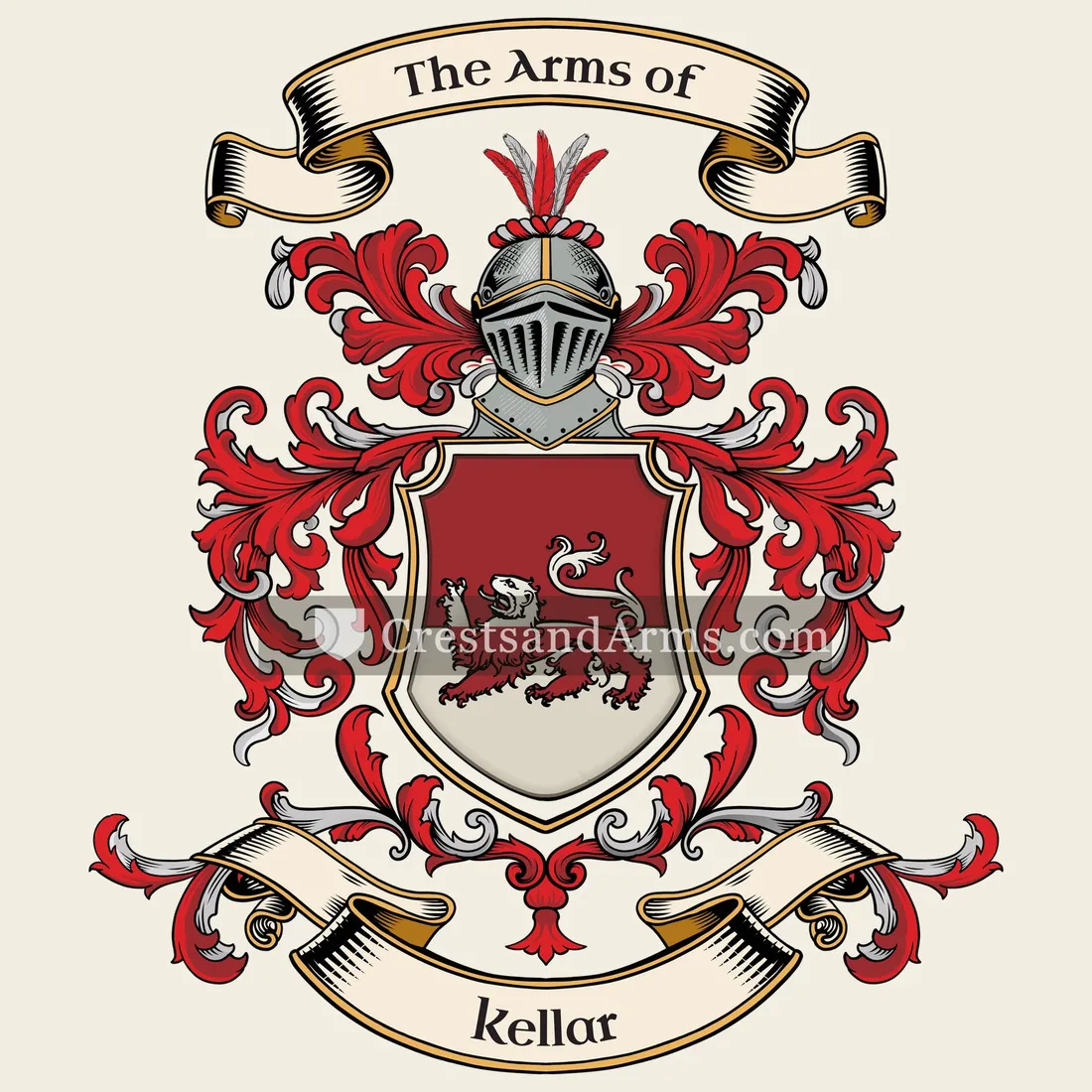
Symbols on this shield
lionCourage, strength and royalty
Colours
Red (Gules)Means: Military strength
Silver (Argent)Means: Peace and sincerity
Historical info
Source
J. B. Rietstap, Armorial Général, Gouda: G. B. van Goor Zonen, 1884–87
Blazon (the actual original written record)
“Coupé de gu. sur arg.; au lion de l'un en l'autre, tenant de ses pattes une clé d'or en pal. C.: un homme iss., tenant la clé.”
BavariaBavaria, c. 1578
Digital archive packCoat of arms PNG, gold border print PDF, vector SVG and the certificate of authenticity. Sent to your email in minutes.
Map of Germany showing where the Kellar arms are recorded
The Kellar arms were recorded in Bavaria, c. 1578.
Bavaria was a country of old landed families and walled market towns. Estates passed down the same line for centuries, and both the landowners and the leading townsmen kept arms, which is why so many Bavarian names sit in the registers.
This is where the arms were entered in the register. Families often moved to other parts of the country, so the same name can turn up in more than one region.
The body that granted and recorded arms in Germany in this period.
Emperor Rudolf II
Sovereign of the period
Emperor Rudolf II
1576–1612
Reigning in France when the Kellar arms are first recorded.
How Arms Worked in Germany
In the Holy Roman Empire, coats of arms were often granted to individuals by the Emperor or his representatives. These arms were then passed down through the generations to all legitimate descendants of the original holder. Younger branches of a family usually kept the same shield design without needing to change it, as the arms belonged to the entire lineage.
Granting authority
The Holy Roman Emperor held the sole power to grant new coats of arms throughout his vast imperial territories.
How they got arms
Families typically obtained their coats of arms through a formal imperial grant or by proving their noble status to the authorities.
Where arms were recorded
These grants were officially recorded in the Imperial Chancery registers, which began keeping formal records of such honors during the Middle Ages.
The family's standing
Recorded among the armigerous families of Bavaria.
Origin & History of the Kellar Family in Germany
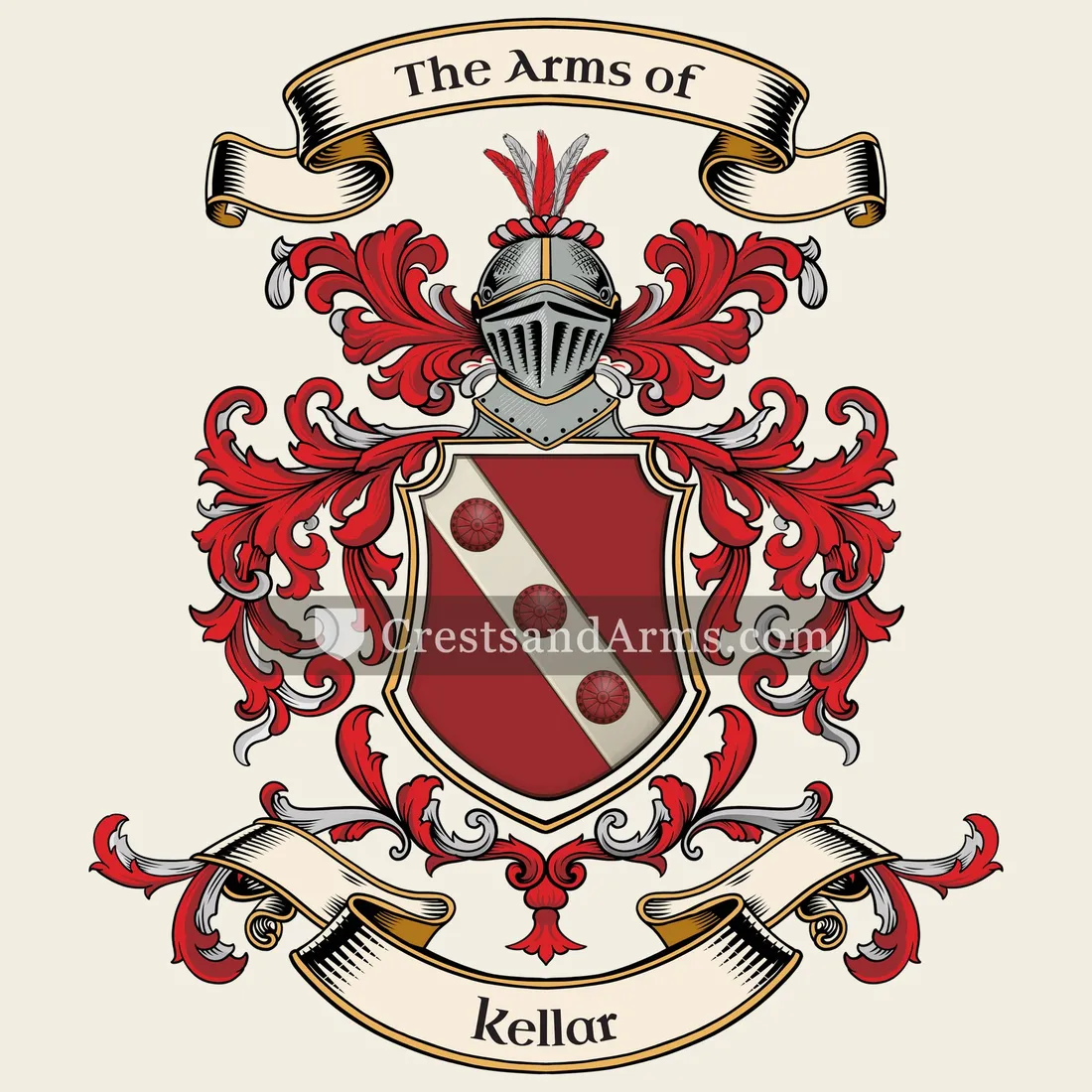
The name Kellar finds its roots in the German language, where it originated as a descriptive occupational surname. It is derived from the Middle High German word *kellære*, which referred to a person in charge of a cellar, a pantry, or the storage of wine and provisions. In the structured society of the sixteenth century, this title often belonged to someone who held a position of trust within a castle, a monastery, or the household of a wealthy merchant. By 1578, records confirm that families bearing this name were well-established in the region of Bavaria. During this period, these individuals were likely integrated into the local agricultural or administrative systems of the Bavarian countryside. As the family grew, they moved through the various social layers of the Holy Roman Empire, transitioning from specialized household managers to independent landowners and tradespeople who helped shape the local economy of southern Germany.
Meaning of the Kellar family crest colors & symbols
Symbols on this shield
bendDefence, and the scarf of a commander
roundelA coin, and one who has been to the crusades
Colours
Red (Gules)Means: Military strength
Silver (Argent)Means: Peace and sincerity
Historical info
Source
J. B. Rietstap, Armorial Général, Gouda: G. B. van Goor Zonen, 1884–87
Blazon (the actual original written record)
“De gu. à la bande d'arg., ch. de trois boules du champ. C.: une corne de bouquetin d'or, ornée le long du dos de trois boules de gu., sommées chacune d'un panache de plumes de coq de sa.”
Switzerlandc. 1745
Digital archive packCoat of arms PNG, gold border print PDF, vector SVG and the certificate of authenticity. Sent to your email in minutes.
Map of Switzerland showing where the Kellar arms are recorded
The Kellar arms were recorded in Switzerland, c. 1745.
Arms such as these were typically recorded in Bern.
Bern was the largest of the Swiss cantons and ran itself, with its own council and its own courts. Its governing families held office for generations, and office of that kind carried a shield with it.
This is where the arms were entered in the register. Families often moved to other parts of the country, so the same name can turn up in more than one region.
The body that granted and recorded arms in Switzerland in this period.
How Arms Worked in Switzerland
In Switzerland, coats of arms were not restricted to the nobility and were often adopted by common citizens and families. These symbols were passed down through generations to show family identity. When branches of a family grew, they often changed small details of the design to distinguish their own line from the original group.
Granting authority
Cantonal and civic authorities managed the use of coats of arms within their specific regions and local jurisdictions.
How they got arms
Families typically assumed their own coats of arms based on local custom rather than receiving them from a central monarch.
Where arms were recorded
Arms were recorded in various cantonal and civic registers starting from the fourteenth century throughout the Swiss region.
The family's standing
Recorded among the armigerous families of Switzerland.
Origin & History of the Kellar Family in Switzerland
The family name Kellar, often spelled Keller in its original German form, has deep roots in the Swiss canton of Bern. By the mid-18th century, the name was well-established among the local population, reflecting a history tied to the skilled trades and agrarian life of the region. In the German language, the name is derived from the word for a cellar master or a person in charge of a storehouse. This suggests that early ancestors likely held positions of responsibility within the community, managing food supplies or wine cellars for local estates or the church. By 1745, families bearing this name were active participants in the social and economic fabric of Bern, often documented in parish registers as they navigated the complexities of life in a Swiss city-state. These records highlight a lineage defined by stability and local integration, as the family name became a permanent fixture in the administrative and daily life of the Bernese people.
Kellar Meaning & Related Branches
Root word
Cellarius
Latin term for a person in charge of a storeroom or cellar.
This name
KellarAn occupational surname for someone who worked as a cellarer or pantry manager.
also spelled
Kellar
Documented Sources
J. B. Rietstap, Armorial Général, Gouda: G. B. van Goor Zonen, 1884–87
Archives Départementales d'Ille-et-Vilaine, Registres paroissiaux et d'état civil
Gautier, Alain, Histoire de la Bretagne, 2010
Le Goff, Hervé, La vie quotidienne en Bretagne au XVIIe siècle, 1998
Digital archive packCoat of arms PNG, gold border print PDF, vector SVG and the certificate of authenticity. Sent to your email in minutes.


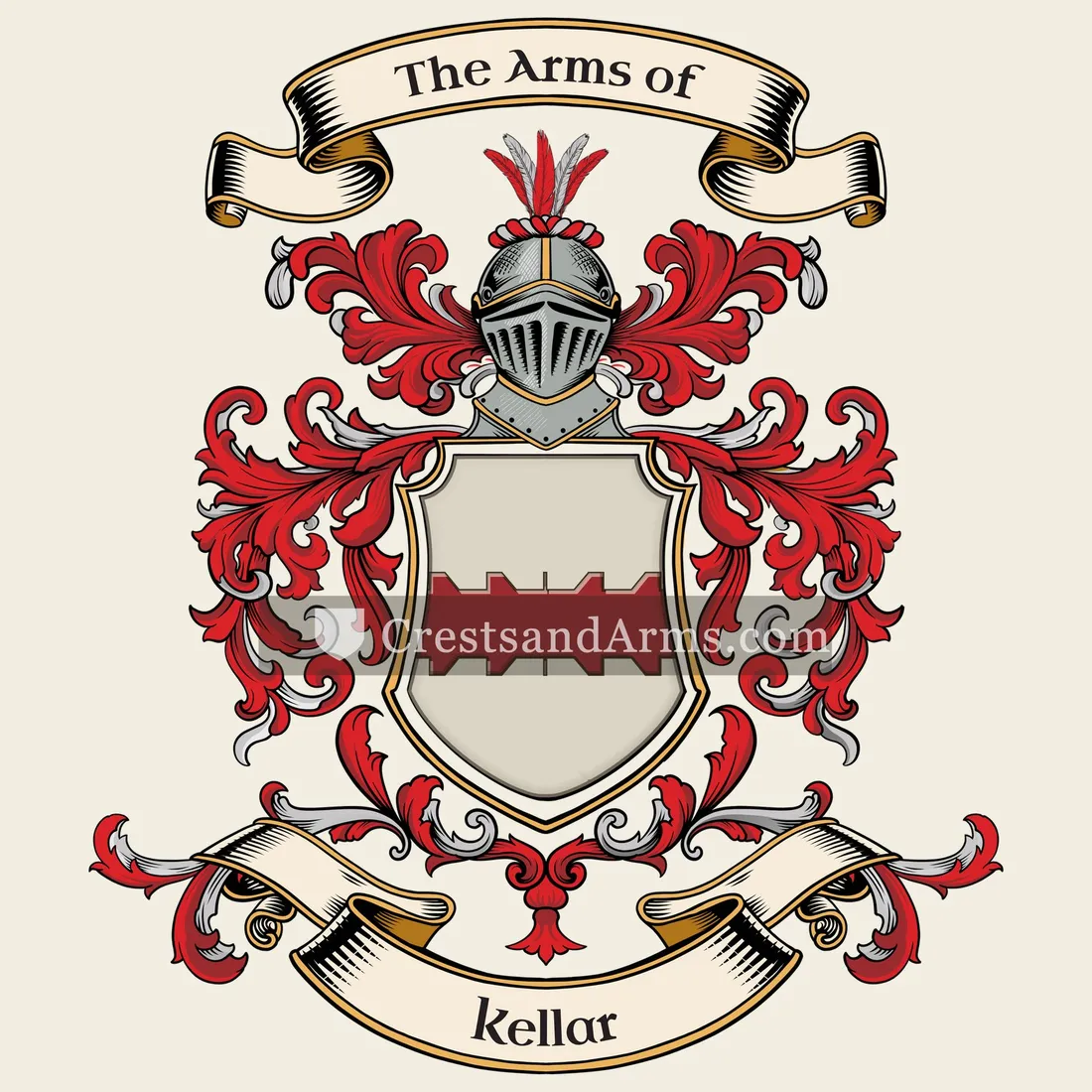
 fessThe military belt, and readiness to serve
 fessThe military belt, and readiness to serve


 lionCourage, strength and royalty


 bendDefence, and the scarf of a commander
 roundelA coin, and one who has been to the crusades