Map of Netherlands showing where the Kemp arms are recorded
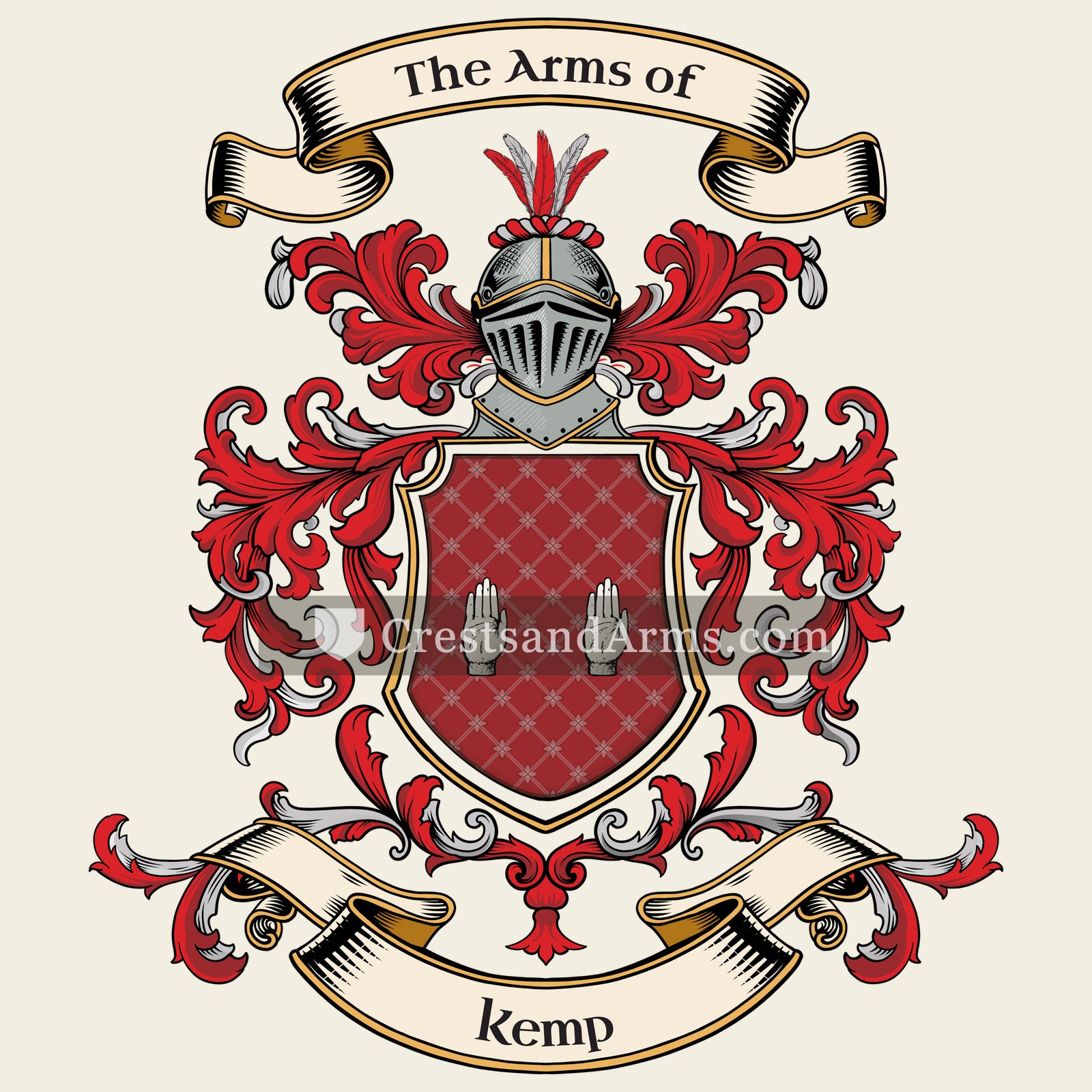
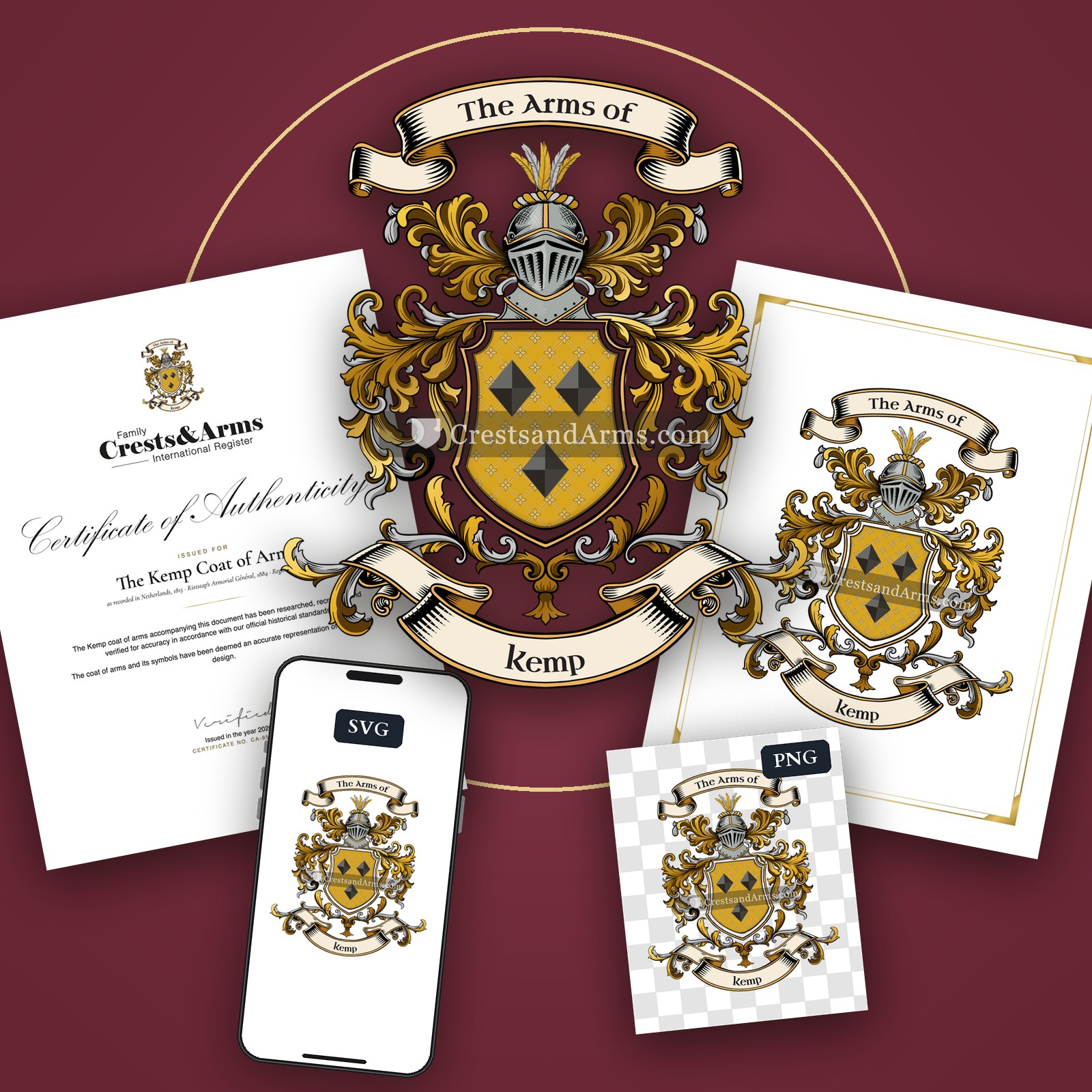
The Kemp arms were recorded in Zeeland, c. 1815.
Zeeland was a scatter of islands in the south-west of the Netherlands, living on the sea and on land reclaimed from it. Families who drained and held that land were counted among the gentry, and gentry carried arms.
This is where the arms were entered in the register. Families often moved to other parts of the country, so the same name can turn up in more than one region.
Region
Zeeland
First recorded
1815
Granting Authority for the Kemp Arms
Hoge Raad van Adel
Photograph made by me · CC BY-SA 3.0
The body that granted and recorded arms in Netherlands in this period.
William I of the Netherlands
Sovereign of the period
William I of the Netherlands
1815–1840
Reigning in Netherlands when the Kemp arms are first recorded.
How Arms Worked in Netherlands
In the Netherlands, coats of arms were often used by noble families and those who held specific public offices. These arms were passed down through the generations to legitimate descendants. Younger branches of a family usually kept the original design without needing to add special marks. This system ensured that the family identity remained clear and consistent over many years.
Granting authority
The Hoge Raad van Adel is the official body that regulates and manages noble titles and coats of arms in the Netherlands.
How they got arms
Families typically obtained their coats of arms through official royal grants or by proving their long-standing historical use of the symbols.
Where arms were recorded
Coats of arms are officially recorded in the registers held by the Hoge Raad van Adel, which began its work in 1814.
The family's standing
Recorded among the armigerous families of Zeeland.
Origin & History of the Kemp Family in Netherlands
The surname Kemp has deep roots in the Low Countries, where it functioned as a descriptive occupational name. In the Dutch language, the term "kemp" or "kempe" historically referred to a warrior or a champion, often describing someone who was physically strong or skilled in combat. By the time the family was firmly established in the province of Zeeland in 1815, the name had transitioned from a title of status to a hereditary family identifier. During this period, the Netherlands underwent significant administrative changes, including the formalization of civil registration under the Napoleonic Code. This transition required families to solidify their surnames in official records, helping to preserve the history of the Kemp line as they navigated the unique coastal landscape and maritime culture of the Zeeland islands.
Coat of Arms & Family Crest Details
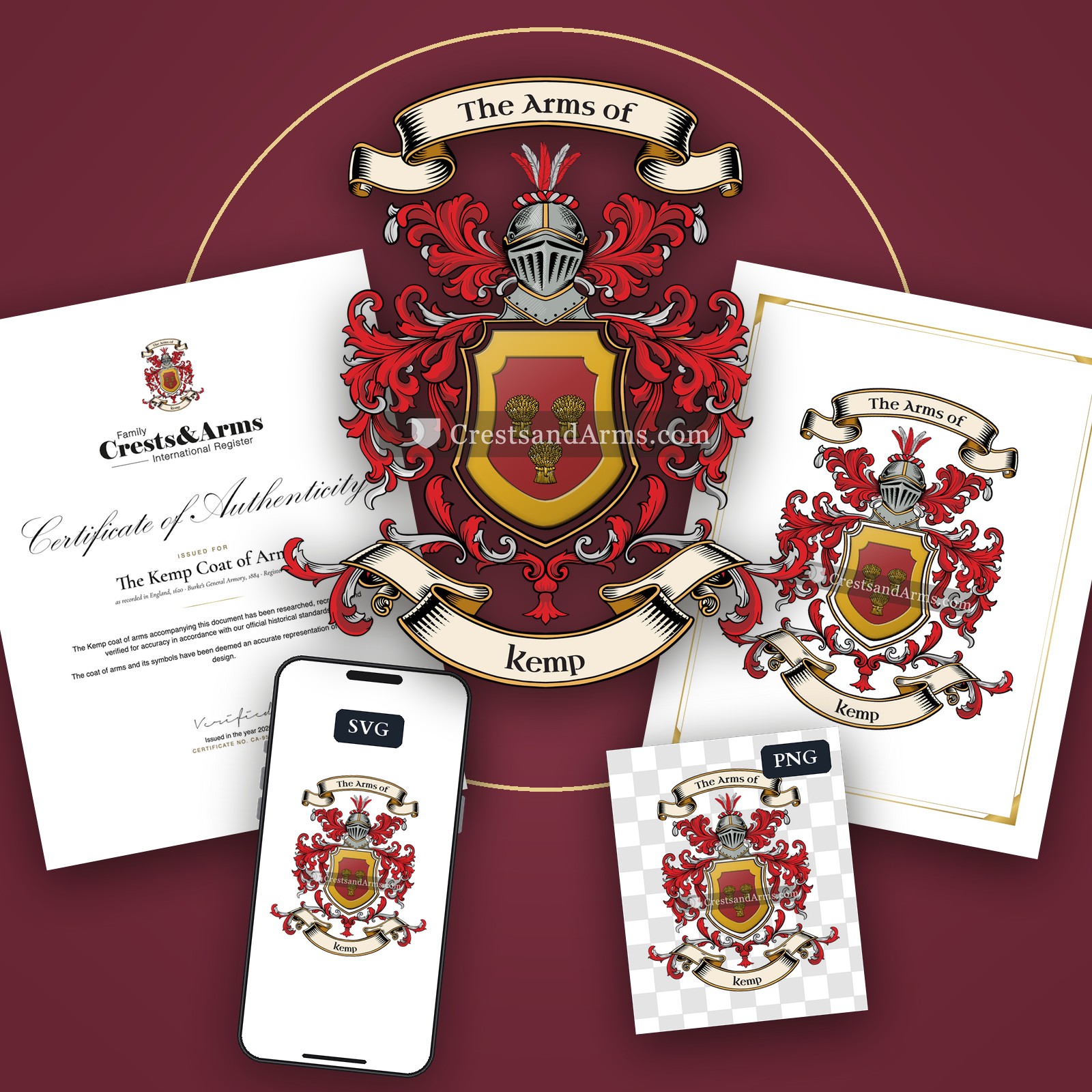
Symbols on this shield
bordureA difference between branches of one family
wheatsheafPlenty, and the harvest of one's own labour
Colours
Red (Gules)Means: Military strength
Gold (Or)Means: Generosity
Historical info
Source
Sir Bernard Burke, The General Armory of England, Scotland, Ireland and Wales, London: Harrison & Sons, 1884
Blazon (the actual original written record)
“Gu. three garbs and a border engr. or”
NorfolkGissing · Norfolk, c. 1620
Digital archive packCoat of arms PNG, gold border print PDF, vector SVG and the certificate of authenticity. Sent to your email in minutes.
Map of England showing where the Kemp arms are recorded
The Kemp arms were recorded in Norfolk, c. 1620.
Norfolk grew rich on wool and grain, and its wealth was spread among many middling families rather than a few great ones. Households of that kind bought land and took arms, and the county holds a large share of English names.
This is where the arms were entered in the register. Families often moved to other parts of the country, so the same name can turn up in more than one region.
The body that granted and recorded arms in England in this period.
James VI and I
Sovereign of the period
James VI and I
1603–1625
Reigning in Netherlands when the Kemp arms are first recorded.
How Arms Worked in England
English heraldry allowed arms to be shared by all legitimate descendants of the original owner. These symbols were treated as personal property that moved through the generations to all children. While the eldest son kept the original design, other family members could use the same shield without needing to change it or register their own unique versions.
Granting authority
The College of Arms in London has regulated the use of coats of arms throughout England and Wales since 1484.
How they got arms
Families typically obtained their coats of arms through a formal grant from the Crown or by proving their ancient right to them.
Where arms were recorded
All official coats of arms are recorded in the registers kept at the College of Arms, which date back to the fifteenth century.
The family's standing
Recorded among the armigerous families of Norfolk.
Origin & History of the Kemp Family in England
The surname Kemp has deep roots in the English landscape, originating as a descriptive occupational name during the Middle Ages. The word itself is derived from the Middle English term *kempe*, which referred to a champion, a soldier, or a skilled wrestler. By the time the name became established in Norfolk, it was already well-known across the eastern counties of England. Records confirm that the family was firmly settled in Norfolk by 1620, where they were likely involved in the region's thriving agricultural and wool trade. Because Norfolk was a major center for trade and migration during this period, families like the Kemps often played active roles in local parish life and community governance. This historical presence suggests that the family was part of the established yeomanry or merchant classes who helped shape the social and economic character of East Anglia.
Coat of Arms & Family Crest Details
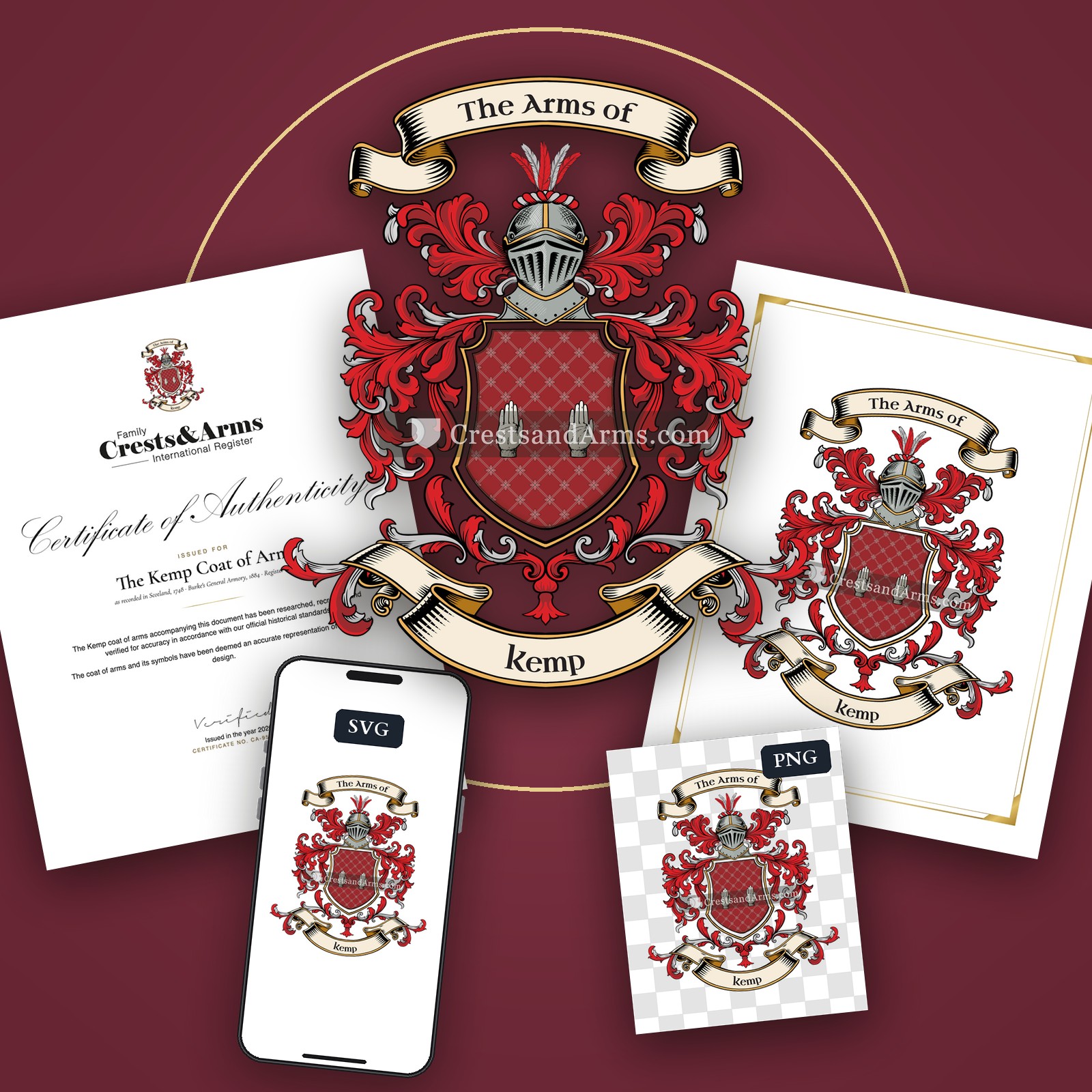
Symbols on this shield
handFaith, sincerity and justice
Colours
Red (Gules)Means: Military strength
Silver (Argent)Means: Peace and sincerity
Historical info
Source
Sir Bernard Burke, The General Armory of England, Scotland, Ireland and Wales, London: Harrison & Sons, 1884
Blazon (the actual original written record)
“Gu. two hands holding a two-handed sword in bend sinister, broken near the top ar”
ScotlandComistoun, c. 1748
Digital archive packCoat of arms PNG, gold border print PDF, vector SVG and the certificate of authenticity. Sent to your email in minutes.
Map of Scotland showing where the Kemp arms are recorded
The Kemp arms were recorded in Comistoun, c. 1748.
Arms such as these were typically recorded in Edinburgh.
Edinburgh was the seat of Scotland's government, its courts and its heralds. Families with business there settled nearby, and being close to where arms were recorded is exactly why so many of them appear.
This is where the arms were entered in the register. Families often moved to other parts of the country, so the same name can turn up in more than one region.
The body that granted and recorded arms in Scotland in this period.
George II of Great Britain
Sovereign of the period
George II of Great Britain
1727–1760
Reigning in Netherlands when the Kemp arms are first recorded.
How Arms Worked in Scotland
Scottish heraldry is unique because it treats a coat of arms as a piece of personal property protected by law. Only one person can own a specific design at any given time. When a family grows, the head keeps the original shield while other relatives must apply for their own distinct version with slight changes to prove their specific identity.
Granting authority
The Court of the Lord Lyon acts as the official body that regulates and controls all heraldic matters throughout Scotland.
How they got arms
Individuals obtain a legal right to their arms through a formal petition process that confirms their identity and family connection.
Where arms were recorded
All valid coats of arms are officially entered into the Public Register of All Arms and Bearings starting from 1672.
The family's standing
Recorded among the armigerous families of Scotland.
Origin & History of the Kemp Family in Scotland
The surname Kemp has deep roots in the British Isles, with the name likely originating as a descriptive term for a champion, a soldier, or a skilled wrestler. By the time the family established a notable presence in Edinburgh in 1748, the name had already been associated with various trades and social roles across Scotland for generations. During the eighteenth century, Edinburgh was a hub of intellectual and economic growth, and families like the Kemps were often involved in the city’s expanding merchant classes or professional guilds. While the name is widely distributed, those living in the capital during this period were part of a dynamic urban environment that helped shape the modern identity of the family. Their presence in city records from that era suggests they were well-integrated into the local community, contributing to the development of the city during a time of significant cultural change.
Kemp Meaning & Related Branches
Root word
campus
A Latin term referring to an open field or plain.
This name
KempAn occupational surname for a farmer or someone who worked on a field.
also spelled
Kempt
Kempf
Related arms
Russellsimilar arms
Harrisonrecorded with Kemp, same area
Kemor, or Kemurrecorded with Kemp, same area
Smythrecorded with Kemp, same area
Documented Sources
J. B. Rietstap, Armorial Général, Gouda: G. B. van Goor Zonen, 1884–87
Debrabandere, Frans. Woordenboek van de familienamen in België en Noord-Frankrijk, 2003
Meertens, P.J. De betekenis van de Nederlandse familienamen, 1951
Zeeuws Archief, Burgerlijke Stand Zeeland (1811-1980)
Digital archive packCoat of arms PNG, gold border print PDF, vector SVG and the certificate of authenticity. Sent to your email in minutes.


 lozengeHonour and nobility, and the arms of a woman
 lozengeHonour and nobility, and the arms of a woman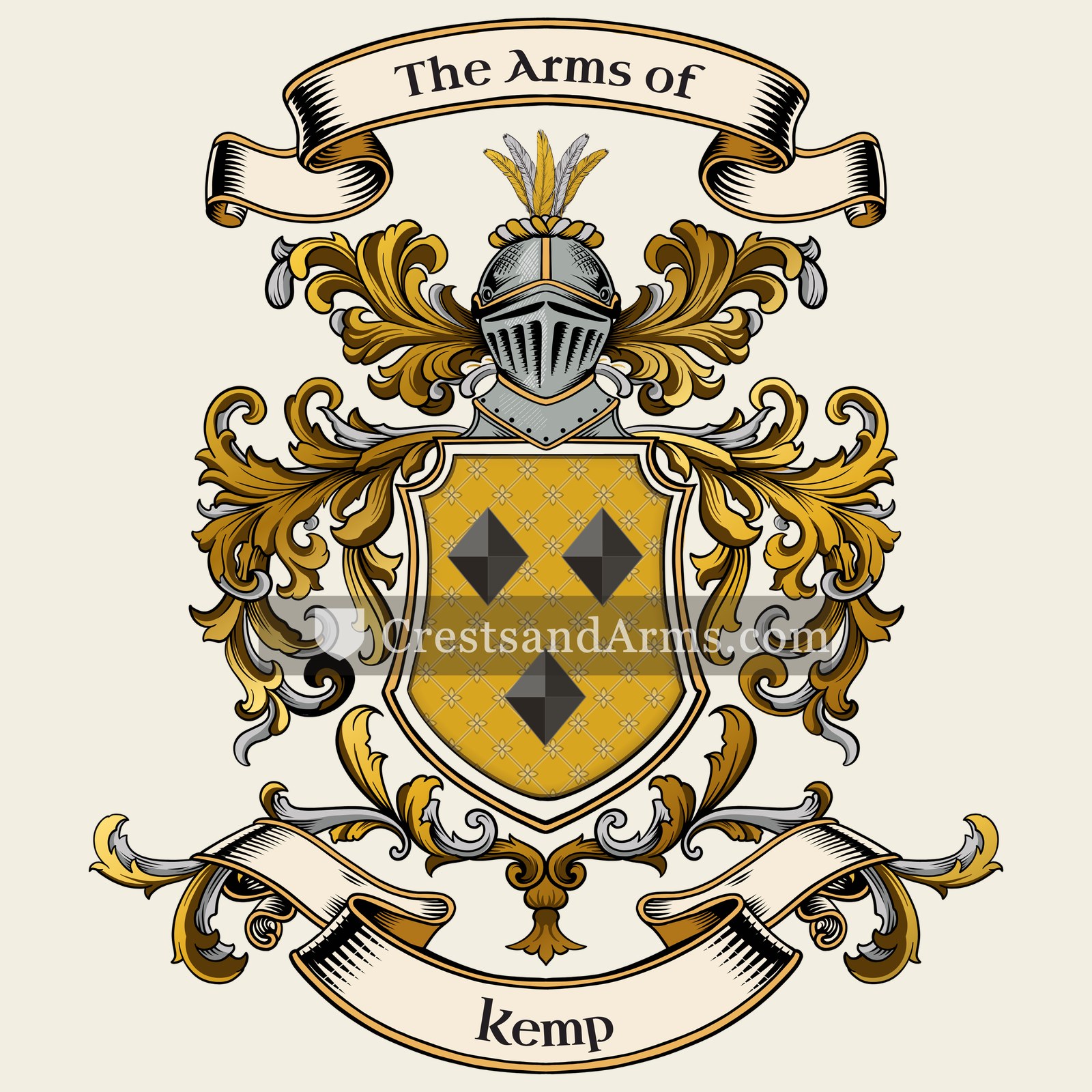


 bordureA difference between branches of one family
 wheatsheafPlenty, and the harvest of one's own labour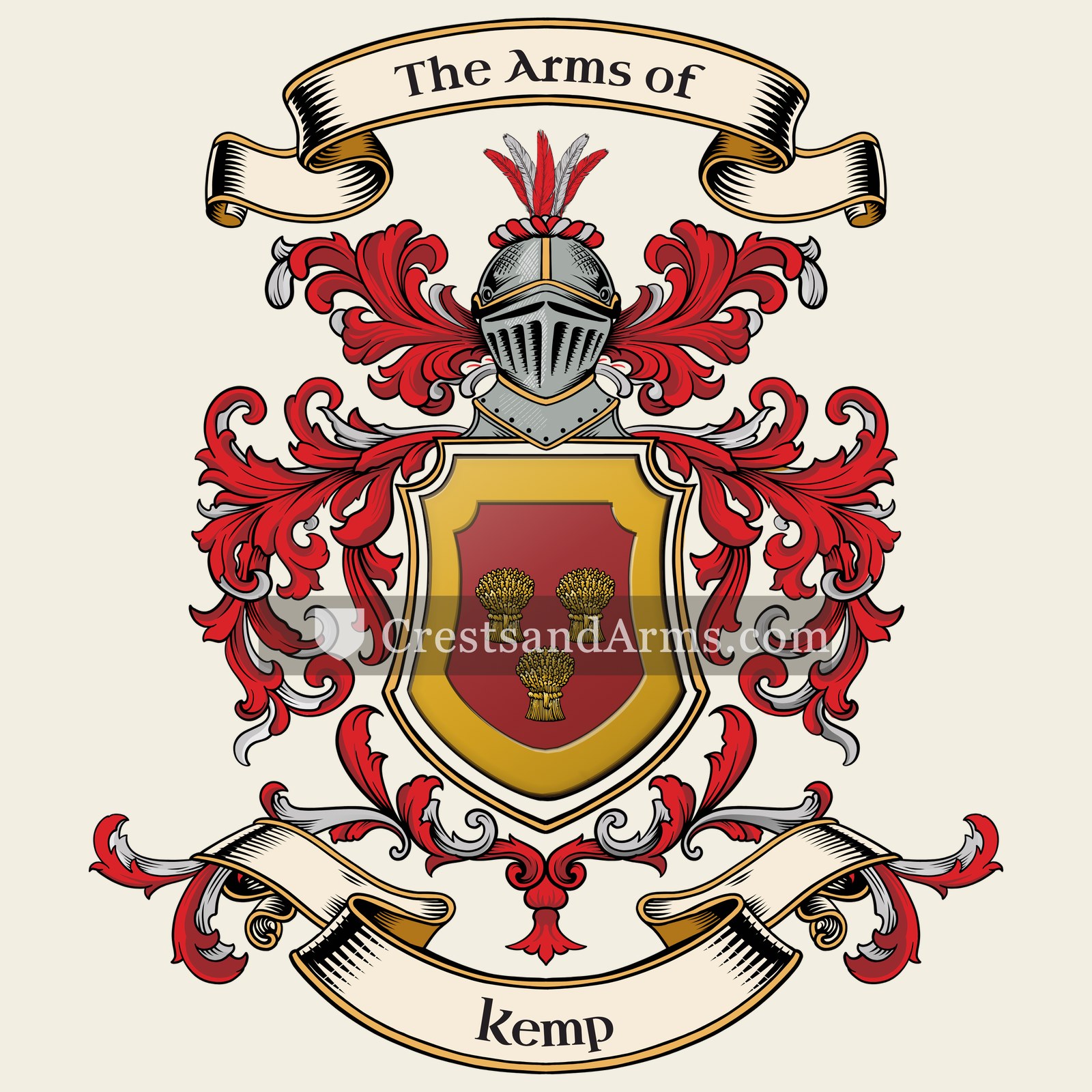


 handFaith, sincerity and justice