A record of documented arms, meaning and origin, researched for the Kenya family lines. Documented in 2 countries.
Reg. 5905 · French, J–L
Coat of Arms & Family Crest Details
Symbols on this shield
bendDefence, and the scarf of a commander
cockCourage, vigilance and readiness for battle
shipEnterprise, and a great voyage undertaken
mulletThe third son, and a divine quality from above
Colours
Gold (Or)Means: Generosity
Blue (Azure)Means: Loyalty and truth
Red (Gules)Means: Military strength
Black (Sable)Means: Constancy
Silver (Argent)Means: Peace and sincerity
Historical info
Source
J. B. Rietstap, Armorial Général, Gouda: G. B. van Goor Zonen, 1884–87
Blazon (the actual original written record)
“Ec.: au 1 d'or à trois têtes de coq de sa., crêtées et barbées de gu.; aux 2 et 3 d'azur à un vaisseau d'arg., voguant sur une mer du même; au 4 d'arg. à la bande de gu., ch. en haut d'une étoile du champ.”
FlandreFlandre, c. 1811
Digital archive packCoat of arms PNG, gold border print PDF, vector SVG and the certificate of authenticity. Sent to your email in minutes.
Map of France showing where the Kenya arms are recorded
The Kenya arms were recorded in Flandre, c. 1811.
Flandre grew rich on cloth, and its towns were among the busiest in Europe. Merchant families bought land with their profits and took arms to go with it, so trade put as many names in the registers here as land did.
This is where the arms were entered in the register. Families often moved to other parts of the country, so the same name can turn up in more than one region.
The body that granted and recorded arms in France in this period.
Napoleon
Sovereign of the period
Napoleon
1804–1814
Reigning in France when the Kenya arms are first recorded.
How Arms Worked in France
In France, a coat of arms was a mark of honor that passed down through the male line to all legitimate descendants. Families often used the same shield without changes to show their shared heritage. If a branch wanted to stand out, they could add a small mark to their shield to show their specific place in the family tree.
Granting authority
The Juge d'armes de France acted as the official authority that regulated and verified coats of arms across the country.
How they got arms
Families typically inherited their arms from ancestors, though they could also receive them through royal grants or by proving their noble status.
Where arms were recorded
Coats of arms were officially recorded in the Armorial Général de France, which began its main collection in the year 1696.
The family's standing
Recorded among the armigerous families of Flandre.
Origin & History of the Kenya Family in France
The history of the Kenya family in France begins in the northern region of Flandre during the early nineteenth century. Records from 1811 confirm the presence of family members in this area, which was a time of significant transition under the rule of Napoleon Bonaparte. During this period, the region was heavily influenced by both French administration and the industrial growth of the textile trade. Families living in Flandre often navigated complex social changes as the Napoleonic Code standardized civil registration and family naming conventions across the country. By settling in this specific part of France, the early members of the Kenya family became part of a unique cultural landscape that blended local traditions with the expanding reach of the French state. Their presence in the historical record during this time highlights how families adapted to the evolving legal and social structures of the era.
Coat of Arms & Family Crest Details
Symbols on this shield
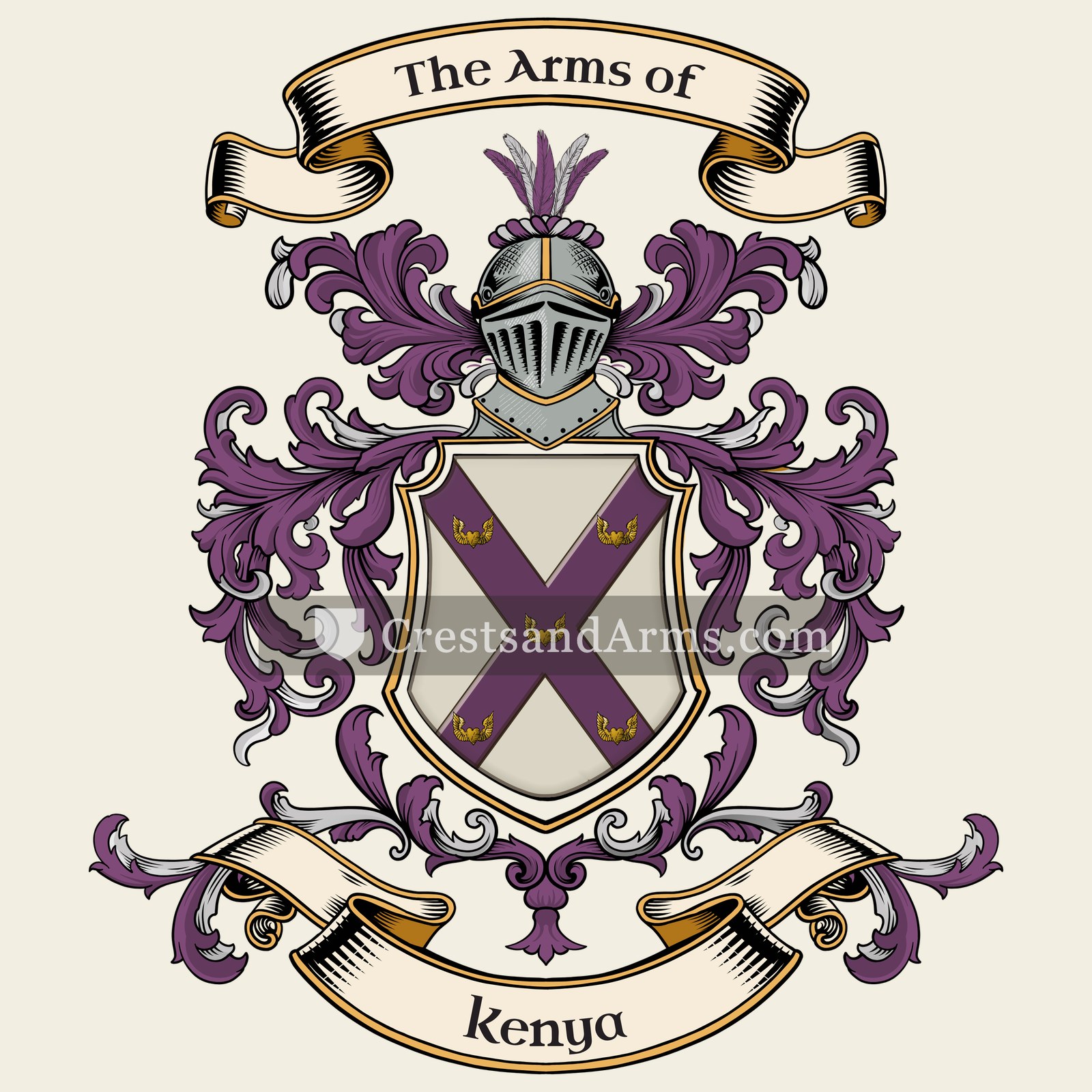
saltireResolution, and St Andrew's cross
heartSincerity, charity and true affection
Colours
Silver (Argent)Means: Peace and sincerity
Purple (Purpure)Means: Royal majesty
Gold (Or)Means: Generosity
Historical info
Source
Sir Bernard Burke, The General Armory of England, Scotland, Ireland and Wales, London: Harrison & Sons, 1884
Blazon (the actual original written record)
“Ar. on a saltire purp. five hearts or”
Irelandc. 1645
Digital archive packCoat of arms PNG, gold border print PDF, vector SVG and the certificate of authenticity. Sent to your email in minutes.
Map of Ireland showing where the Kenya arms are recorded
The Kenya arms were recorded in Ireland, c. 1645.
Arms such as these were typically recorded in Dublin.
Dublin was the seat of government in Ireland and the place where grants were sought and recorded. Families with business at the castle or the courts settled nearby, and settling there put their arms on record.
This is where the arms were entered in the register. Families often moved to other parts of the country, so the same name can turn up in more than one region.
The body that granted and recorded arms in Ireland in this period.
Charles I of England
Sovereign of the period
Charles I of England
1625–1649
Reigning in France when the Kenya arms are first recorded.
How Arms Worked in Ireland
The Ulster King of Arms granted coats of arms to individuals who proved their social standing and good character. These symbols were typically inherited by all legitimate descendants of the original holder. If a family branch wanted a unique look, they could apply for a specific change to their design through the office to ensure their identity remained distinct.
Granting authority
The Ulster King of Arms acted as the official body that regulated and issued all coats of arms throughout Ireland.
How they got arms
Families obtained their arms through formal grants issued by the office after proving their eligibility and paying the required fees.
Where arms were recorded
All official grants were recorded in the registers held by the Ulster King of Arms starting from the year 1552.
The family's standing
Recorded among the armigerous families of Ireland.
Origin & History of the Kenya Family in Ireland
The family name Kenya has a distinct presence in the historical records of seventeenth-century Ireland, particularly within the bustling urban environment of Dublin. By 1645, members of the family were already established residents in the city, a time when Dublin was a central hub for trade and political activity during a period of great social upheaval. Families living in the capital during this era often navigated a complex landscape of shifting loyalties and economic change. While the name is rare, its presence in Dublin suggests that these early ancestors were likely involved in the professional or merchant classes that helped shape the city’s growth. These records provide a vital link to the past, showing that the family was part of the fabric of Irish society long before the modern era. By studying these early inhabitants, we gain a clearer understanding of how individual families contributed to the long and storied history of Ireland’s capital.
Related Branches & Arms
Root word
Cenomanus
Ancient Gaulish tribe name meaning people of the sandy soil.
This name
KenyaA toponymic surname derived from the historical region of Maine, formerly inhabited by the Cenomani.
also spelled
Kenney
Keny
Kennis
Documented Sources
J. B. Rietstap, Armorial Général, Gouda: G. B. van Goor Zonen, 1884–87
Archives départementales du Nord, État civil de la commune de Flandre (1811)
Lebrun, François, La vie rurale en France au XIXe siècle, 1982
Lefebvre, Georges, Les paysans du Nord pendant la Révolution française, 1924
Digital archive packCoat of arms PNG, gold border print PDF, vector SVG and the certificate of authenticity. Sent to your email in minutes.


 bendDefence, and the scarf of a commander
 cockCourage, vigilance and readiness for battle
 shipEnterprise, and a great voyage undertaken
 mulletThe third son, and a divine quality from above
 bendDefence, and the scarf of a commander
 cockCourage, vigilance and readiness for battle
 shipEnterprise, and a great voyage undertaken
 mulletThe third son, and a divine quality from above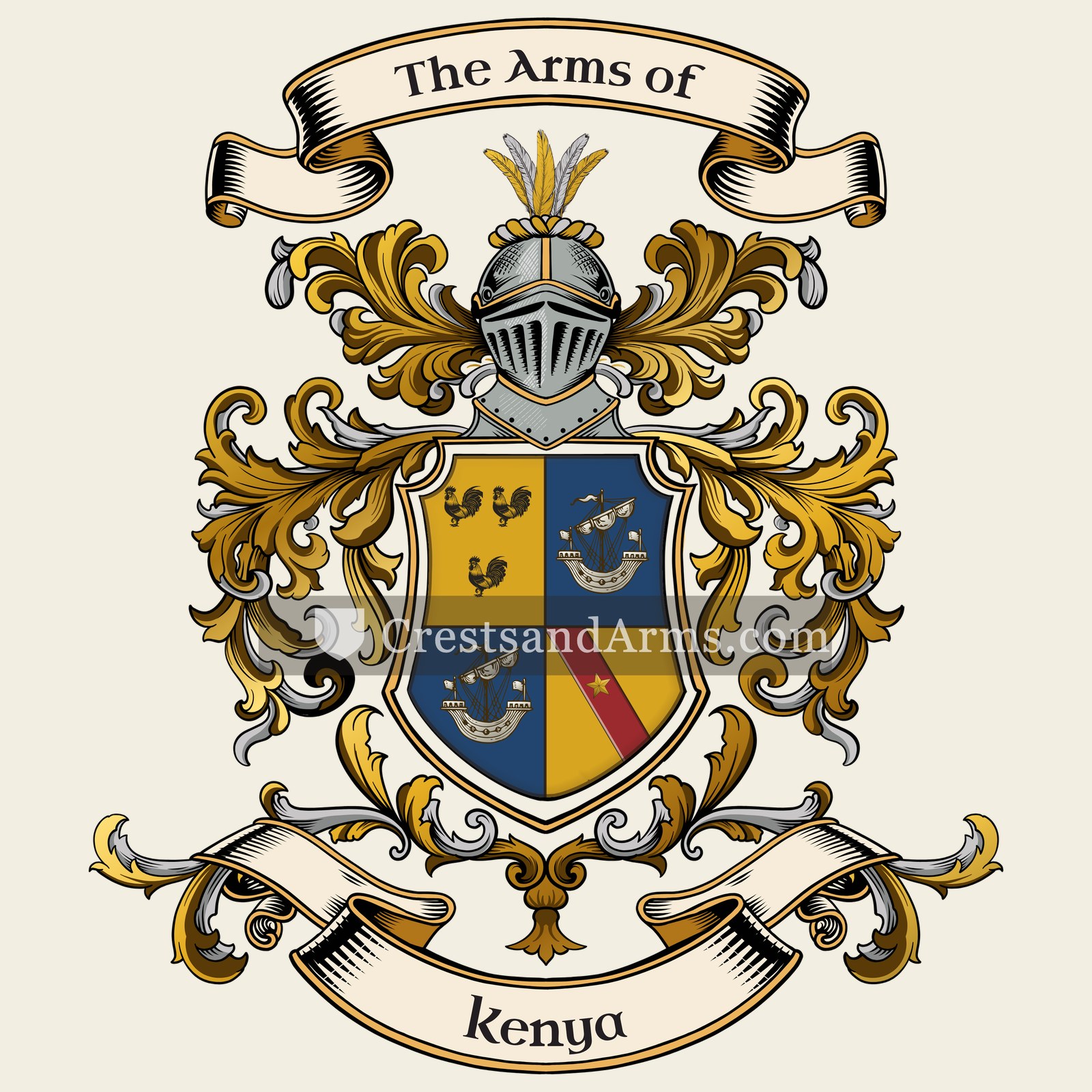


 saltireResolution, and St Andrew's cross
 heartSincerity, charity and true affection