Map of Germany showing where the Kerchner arms are recorded
The Kerchner arms were recorded in Francfort s, c. 1765.
This is where the arms were entered in the register. Families often moved to other parts of the country, so the same name can turn up in more than one region.
The body that granted and recorded arms in Germany in this period.
Francis I, Holy Roman Emperor
Sovereign of the period
Francis I, Holy Roman Emperor
1745–1765
Reigning in Germany when the Kerchner arms are first recorded.
How Arms Worked in Germany
In the Holy Roman Empire, coats of arms were often granted to individuals by the Emperor or his representatives. These arms were then passed down through the generations to all legitimate descendants of the original holder. Younger branches of a family usually kept the same shield design without needing to change it, as the arms belonged to the entire lineage.
Granting authority
The Holy Roman Emperor held the sole power to grant new coats of arms throughout his vast imperial territories.
How they got arms
Families typically obtained their coats of arms through a formal imperial grant or by proving their noble status to the authorities.
Where arms were recorded
These grants were officially recorded in the Imperial Chancery registers, which began keeping formal records of such honors during the Middle Ages.
The family's standing
Recorded among the armigerous families of Germany.
Origin & History of the Kerchner Family in Germany
The surname Kerchner finds its roots in the German-speaking regions of Central Europe, where it functioned as an occupational name. It is derived from the Middle High German word *kerchener*, which referred to a person who worked at or maintained a church, such as a sexton or a churchwarden. By the mid-18th century, the family was well-established in the bustling trade hub of Frankfurt am Main. Records confirm that members of the Kerchner family were active residents in this city by 1765, living within a society defined by guild systems and religious governance. During this era, Frankfurt served as a vital center for commerce and culture, providing a stable environment for families to build their livelihoods through skilled trades and civic service. The name reflects a deep connection to the social and religious structures that formed the backbone of German community life during the late 1700s.
Meaning of the Kerchner family crest colors & symbols
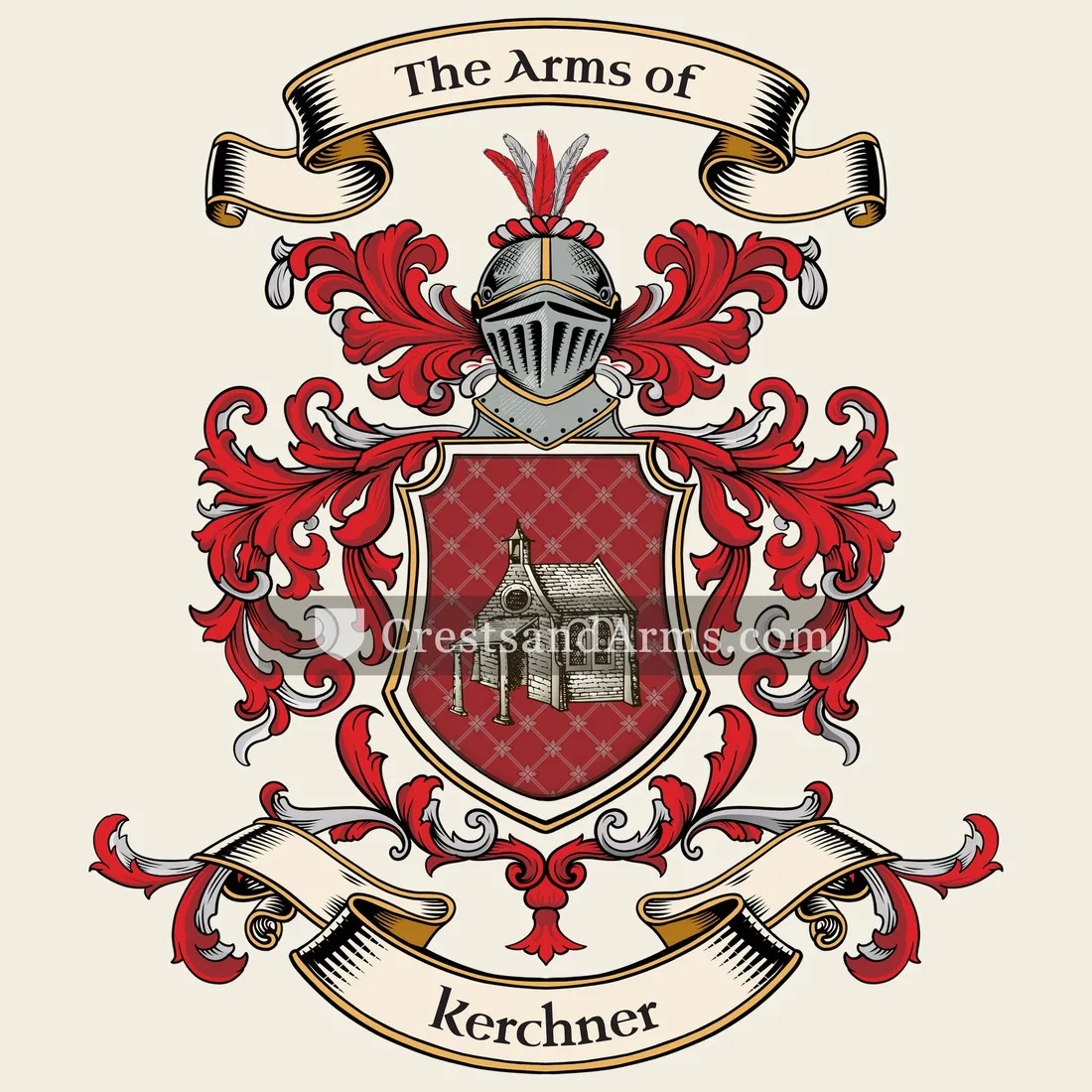
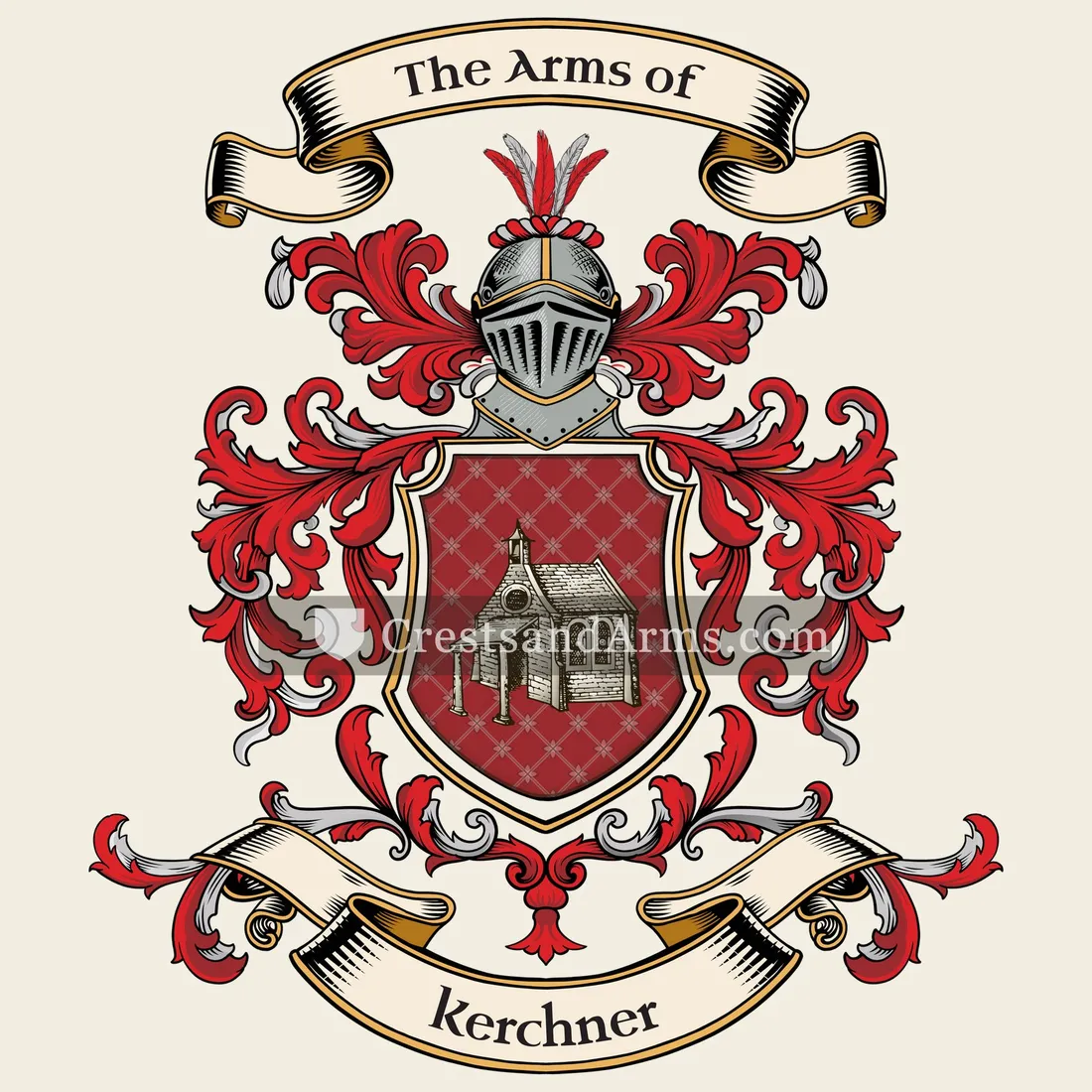
Symbols on this shield
churchFaith, and the endowment of a house of God
Colours
Red (Gules)Means: Military strength
Silver (Argent)Means: Peace and sincerity
Historical info
Source
J. B. Rietstap, Armorial Général, Gouda: G. B. van Goor Zonen, 1884–87
Blazon (the actual original written record)
“De gu. à une église d'arg., le clocher à sen. C.: un bras, arm. d'arg., brandissant un sabre du même, garni d'or; entre six épis effeuillés d'or.”
LivoniaEsthonie · Livonia, c. 1772
Digital archive packCoat of arms PNG, gold border print PDF, vector SVG and the certificate of authenticity. Sent to your email in minutes.
Map of Poland showing where the Kerchner arms are recorded
The Kerchner arms were recorded in Livonia, c. 1772.
Livonia was Baltic country held by a small number of landed families who kept their estates for centuries. Land there passed down whole rather than being divided, and long unbroken tenure is what fills a register.
This is where the arms were entered in the register. Families often moved to other parts of the country, so the same name can turn up in more than one region.
Region
Livonia
Town
Esthonie
First recorded
1772
Granting Authority for the Kerchner Arms
Ennoblement by the Sejm
Author: Olek Remesz · CC BY-SA 3.0
The body that granted and recorded arms in Poland in this period.
Stanisław August Poniatowski
Sovereign of the period
Stanisław August Poniatowski
1764–1795
Reigning in Germany when the Kerchner arms are first recorded.
How Arms Worked in Poland
Polish noble families shared a single coat of arms across many different surnames, creating large clans rather than individual designs. These symbols were held collectively by all members of the clan regardless of their specific family name. When a new family joined the nobility, they were adopted into an existing clan and began using that group's established shield.
Granting authority
The Sejm, which was the Polish parliament, held the power to grant noble status and the right to bear arms.
How they got arms
Families typically received their coat of arms through a formal act of ennoblement granted by the Sejm for distinguished service.
Where arms were recorded
These grants were officially recorded in the Crown Metrica, which served as the central archive for state documents starting in the sixteenth century.
The family's standing
Recorded among the armigerous families of Livonia.
Origin & History of the Kerchner Family in Poland
The history of the Kerchner name is deeply tied to the shifting borders of the Baltic region and the influence of German-speaking settlers in Eastern Europe. By 1772, members of the family were established in Livonia, a territory that was then part of the Polish-Lithuanian Commonwealth. During this era, the region served as a crossroads for trade and cultural exchange between German merchants and the local Polish population. Families like the Kerchners often moved into these areas to manage estates or participate in the growing administrative networks of the Commonwealth. As the political landscape changed following the partitions of Poland, these families maintained their presence by adapting to the local customs and legal systems of the time. This transition period highlights how the family name became integrated into the diverse social fabric of the borderlands, bridging the gap between their Germanic origins and their life within the Polish administrative sphere.
Kerchner Meaning & Related Branches
Root word
Kirchner
A person who serves as a church official or sexton.
This name
KerchnerAn occupational surname for someone who worked in or maintained a church building.
also spelled
Kyrchner
Documented Sources
J. B. Rietstap, Armorial Général, Gouda: G. B. van Goor Zonen, 1884–87
Bahlow, Hans, Deutsches Namenlexikon: Familien- und Vornamen nach Ursprung und Sinn erklärt, 1967
Heuss, Alfred, Frankfurt am Main im 18. Jahrhundert, 1934
Institut für Stadtgeschichte Frankfurt am Main, Bürgerbücher der Stadt Frankfurt am Main, 1765
Digital archive packCoat of arms PNG, gold border print PDF, vector SVG and the certificate of authenticity. Sent to your email in minutes.


 churchFaith, and the endowment of a house of God
 churchFaith, and the endowment of a house of God