Map of Germany showing where the Kesler arms are recorded
The Kesler arms were recorded in Francfort s, c. 1765.
This is where the arms were entered in the register. Families often moved to other parts of the country, so the same name can turn up in more than one region.
The body that granted and recorded arms in Germany in this period.
Francis I, Holy Roman Emperor
Sovereign of the period
Francis I, Holy Roman Emperor
1745–1765
Reigning in Germany when the Kesler arms are first recorded.
How Arms Worked in Germany
In the Holy Roman Empire, coats of arms were often granted to individuals by the Emperor or his representatives. These arms were then passed down through the generations to all legitimate descendants of the original holder. Younger branches of a family usually kept the same shield design without needing to change it, as the arms belonged to the entire lineage.
Granting authority
The Holy Roman Emperor held the sole power to grant new coats of arms throughout his vast imperial territories.
How they got arms
Families typically obtained their coats of arms through a formal imperial grant or by proving their noble status to the authorities.
Where arms were recorded
These grants were officially recorded in the Imperial Chancery registers, which began keeping formal records of such honors during the Middle Ages.
The family's standing
Recorded among the armigerous families of Germany.
Origin & History of the Kesler Family in Germany
The surname Kesler, often spelled Kessler in its native German, is an occupational name that originated during the Middle Ages. It is derived from the Middle High German word *kessel*, which translates to kettle or cauldron. This indicates that the earliest members of the family were likely skilled metalworkers or coppersmiths who crafted cooking vessels for their communities. By the mid-18th century, the family had established a firm presence in the region of Frankfurt. Records from 1765 confirm that individuals bearing this name were active participants in the local economy and social life of the city. As skilled tradespeople, these early ancestors contributed to the robust craft guilds that defined German urban life during the Enlightenment era. Their transition from rural artisans to city dwellers reflects the broader movement of families seeking stability and professional growth in major trade hubs like Frankfurt.
Coat of Arms & Family Crest Details
Symbols on this shield
cupFaith, office, and a trust discharged
Colours
Blue (Azure)Means: Loyalty and truth
Gold (Or)Means: Generosity
Historical info
Source
J. B. Rietstap, Armorial Général, Gouda: G. B. van Goor Zonen, 1884–87
Blazon (the actual original written record)
“D'azur à une chaudière d'or, à cornière du même. Cq. cour. C.: trois lis d'arg., tigés et feuillés de sin.; entre un vol, coupé alt. d'azur et d'or.”
LivoniaLivonia, c. 1772
Digital archive packCoat of arms PNG, gold border print PDF, vector SVG and the certificate of authenticity. Sent to your email in minutes.
Map of Poland showing where the Kesler arms are recorded
The Kesler arms were recorded in Livonia, c. 1772.
Livonia was Baltic country held by a small number of landed families who kept their estates for centuries. Land there passed down whole rather than being divided, and long unbroken tenure is what fills a register.
This is where the arms were entered in the register. Families often moved to other parts of the country, so the same name can turn up in more than one region.
Region
Livonia
First recorded
1772
Granting Authority for the Kesler Arms
Ennoblement by the Sejm
Author: Olek Remesz · CC BY-SA 3.0
The body that granted and recorded arms in Poland in this period.
Stanisław August Poniatowski
Sovereign of the period
Stanisław August Poniatowski
1764–1795
Reigning in Germany when the Kesler arms are first recorded.
How Arms Worked in Poland
Polish noble families shared a single coat of arms across many different surnames, creating large clans rather than individual designs. These symbols were held collectively by all members of the clan regardless of their specific family name. When a new family joined the nobility, they were adopted into an existing clan and began using that group's established shield.
Granting authority
The Sejm, which was the Polish parliament, held the power to grant noble status and the right to bear arms.
How they got arms
Families typically received their coat of arms through a formal act of ennoblement granted by the Sejm for distinguished service.
Where arms were recorded
These grants were officially recorded in the Crown Metrica, which served as the central archive for state documents starting in the sixteenth century.
The family's standing
Recorded among the armigerous families of Livonia.
Origin & History of the Kesler Family in Poland
The family name Kesler traces its roots to the complex cultural landscape of the Baltic region and the Polish-Lithuanian Commonwealth. By the year 1772, records confirm that members of the family were established in Livonia, a territory that was then undergoing significant political shifts due to the partitions of Poland. The name itself likely originated as an occupational surname, derived from the German word for a maker of kettles or copper vessels. As trade routes expanded across Northern Europe, families with this name moved between German-speaking lands and the diverse provinces of Poland. This migration was often driven by the search for new economic opportunities in growing urban centers. Over time, the family became integrated into the local social fabric, adapting to the linguistic and administrative changes that defined the region during the late eighteenth century.
Coat of Arms & Family Crest Details
Symbols on this shield
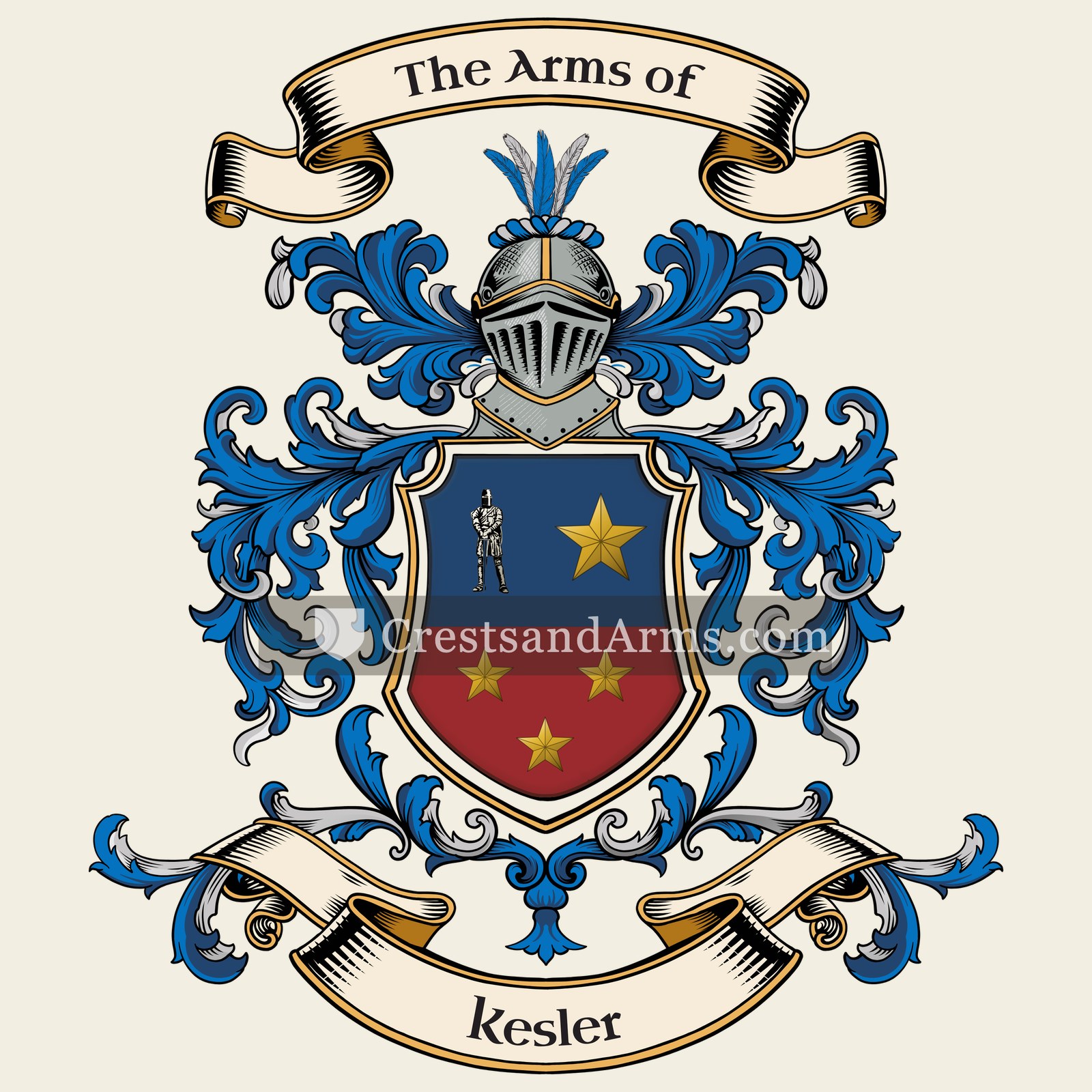
knightChivalry and service in arms
mulletThe third son, and a divine quality from above
Colours
Blue (Azure)Means: Loyalty and truth
Red (Gules)Means: Military strength
Gold (Or)Means: Generosity
Historical info
Source
J. B. Rietstap, Armorial Général, Gouda: G. B. van Goor Zonen, 1884–87
Blazon (the actual original written record)
“Coupé: au 1 d'azur à un sauvage iss. de carn., ceint et cour. de lierre, posé de front, mouv. du coupé, supp. de sa main dextre une étoile (5) d'or et de sa sen. un croiss. du même; au 2 de gu. à deux cotices d'arg., alternant avec trois étoiles (5) d'or, rangées en fasce.”
SwitzerlandFribourg, c. 1745
Digital archive packCoat of arms PNG, gold border print PDF, vector SVG and the certificate of authenticity. Sent to your email in minutes.
Map of Switzerland showing where the Kesler arms are recorded
The Kesler arms were recorded in Fribourg, c. 1745.
This is where the arms were entered in the register. Families often moved to other parts of the country, so the same name can turn up in more than one region.
The body that granted and recorded arms in Switzerland in this period.
How Arms Worked in Switzerland
In Switzerland, coats of arms were not restricted to the nobility and were often adopted by common citizens and families. These symbols were passed down through generations to show family identity. When branches of a family grew, they often changed small details of the design to distinguish their own line from the original group.
Granting authority
Cantonal and civic authorities managed the use of coats of arms within their specific regions and local jurisdictions.
How they got arms
Families typically assumed their own coats of arms based on local custom rather than receiving them from a central monarch.
Where arms were recorded
Arms were recorded in various cantonal and civic registers starting from the fourteenth century throughout the Swiss region.
The family's standing
Recorded among the armigerous families of Switzerland.
Origin & History of the Kesler Family in Switzerland
The family name Kesler, often spelled Kesseler or Kessler in historical documents, finds its roots in the Germanic linguistic tradition, where it functioned as an occupational surname for a maker or repairer of copper vessels. By the mid-18th century, the family had established a notable presence in the Swiss canton of Fribourg. During this period, Fribourg was a region defined by its complex social hierarchy and its role as a bridge between the French-speaking and German-speaking parts of Switzerland. Families like the Keslers often integrated into the local economy by practicing skilled trades, which allowed them to secure a stable position within the community. Living in Fribourg in 1745 meant navigating a society governed by strict municipal regulations and religious traditions, where family lineage was carefully documented in parish registers to track citizenship and tax obligations. These early ancestors were part of a broader movement of artisans who helped shape the local commercial landscape of the Swiss plateau during the late pre-industrial era.
Related Branches & Arms
Root word
Kessel
A Middle High German term for a large metal cooking pot.
This name
KeslerAn occupational name for a maker or seller of copper kettles and cauldrons.
also spelled
Kesseler
Kesler
Documented Sources
J. B. Rietstap, Armorial Général, Gouda: G. B. van Goor Zonen, 1884–87
Bahlow, Hans. Deutsches Namenlexikon: Familien- und Vornamen nach Ursprung und Sinn erklärt. 1967
Heintze, Albert. Die deutschen Familien-Namen: geschichtlich, geographisch, sprachlich. 1903
Digital archive packCoat of arms PNG, gold border print PDF, vector SVG and the certificate of authenticity. Sent to your email in minutes.


 eagleNobility, strength and a keen mind
 mulletThe third son, and a divine quality from above
 lionCourage, strength and royalty
 eagleNobility, strength and a keen mind
 mulletThe third son, and a divine quality from above
 lionCourage, strength and royalty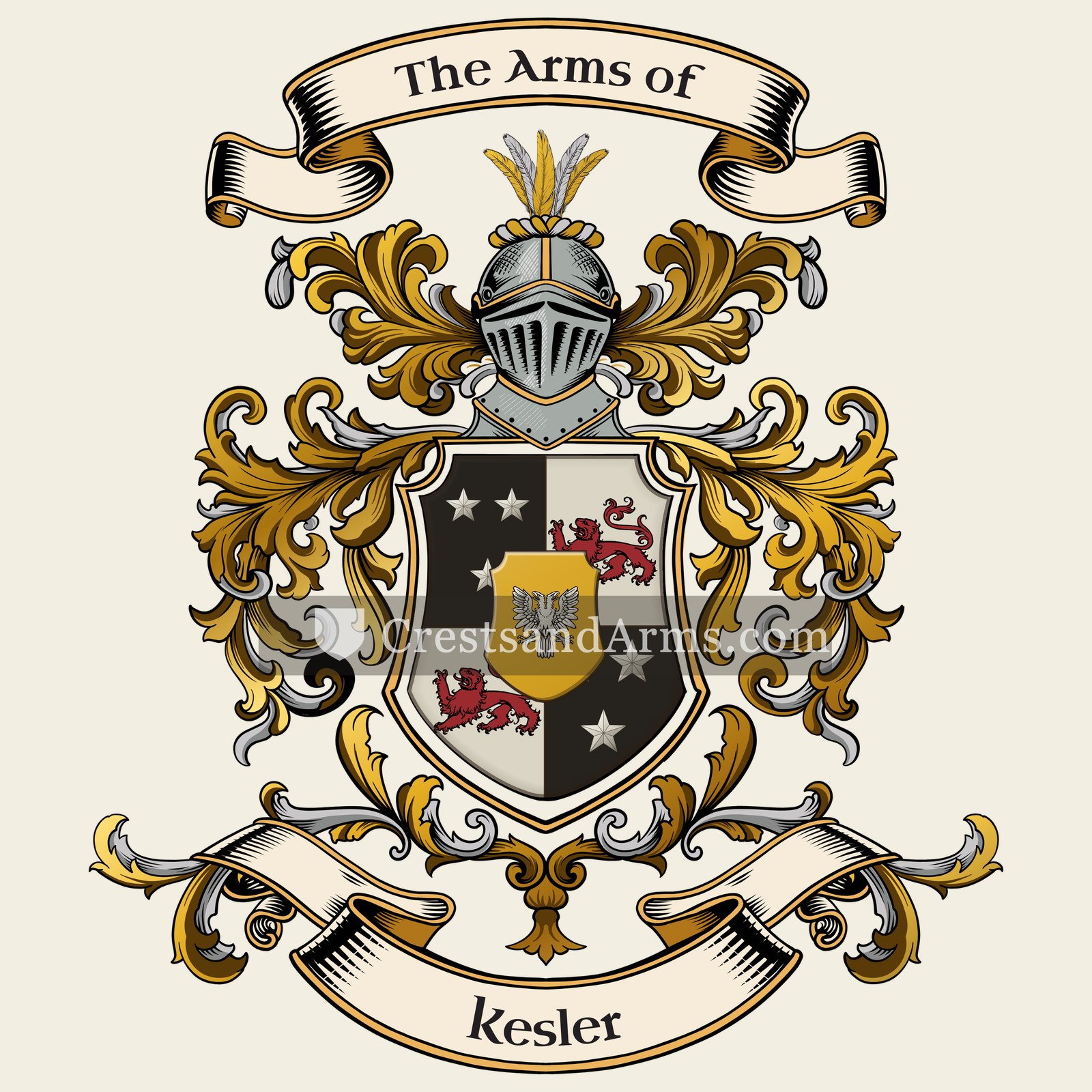


 cupFaith, office, and a trust discharged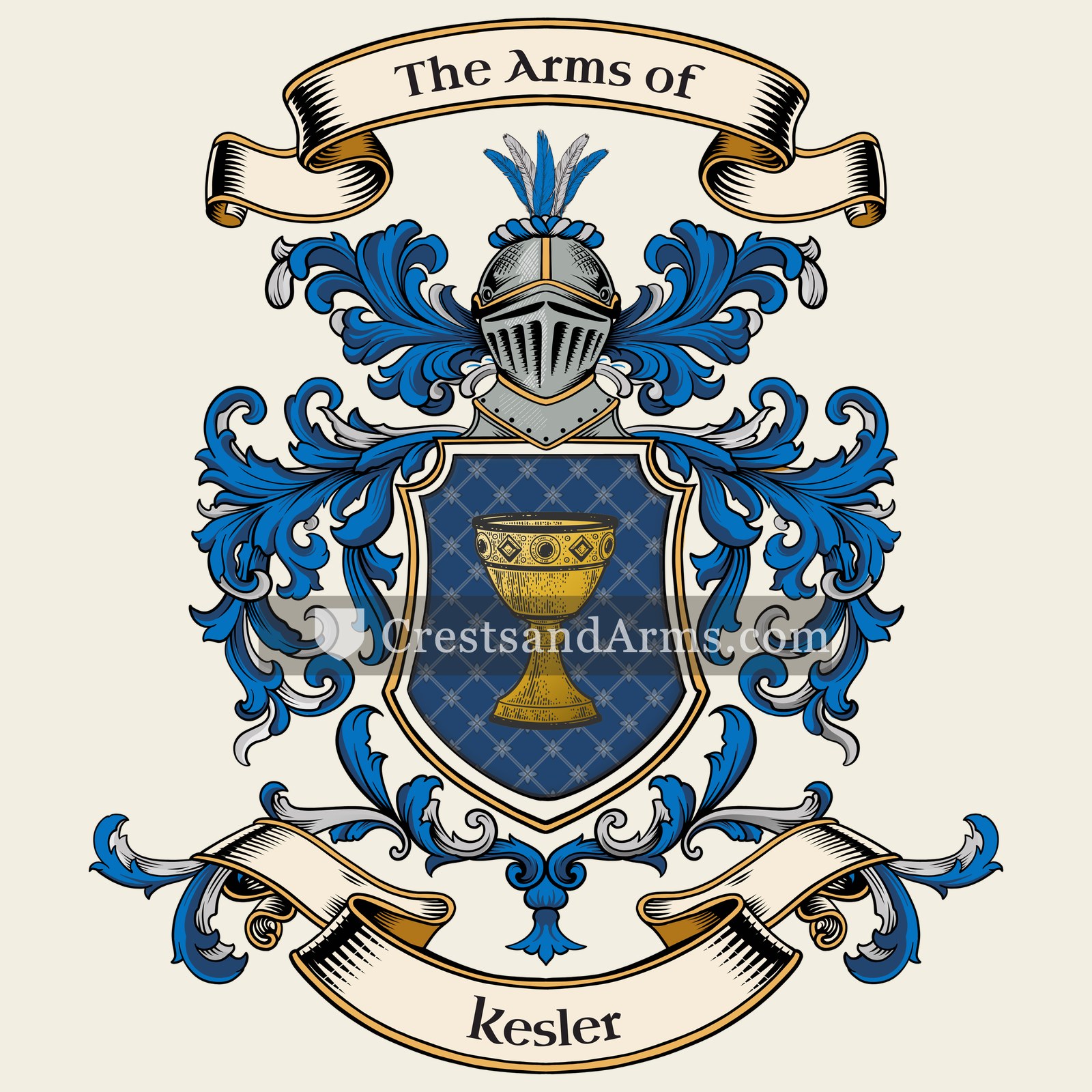


 knightChivalry and service in arms