Map of Netherlands showing where the Keyser arms are recorded
The Keyser arms were recorded in Amsterdam, c. 1815.
This is where the arms were entered in the register. Families often moved to other parts of the country, so the same name can turn up in more than one region.
Region
Amsterdam
Town
Amsterdam
First recorded
1815
Granting Authority for the Keyser Arms
Hoge Raad van Adel
Photograph made by me · CC BY-SA 3.0
The body that granted and recorded arms in Netherlands in this period.
William I of the Netherlands
Sovereign of the period
William I of the Netherlands
1815–1840
Reigning in Netherlands when the Keyser arms are first recorded.
How Arms Worked in Netherlands
In the Netherlands, coats of arms were often used by noble families and those who held specific public offices. These arms were passed down through the generations to legitimate descendants. Younger branches of a family usually kept the original design without needing to add special marks. This system ensured that the family identity remained clear and consistent over many years.
Granting authority
The Hoge Raad van Adel is the official body that regulates and manages noble titles and coats of arms in the Netherlands.
How they got arms
Families typically obtained their coats of arms through official royal grants or by proving their long-standing historical use of the symbols.
Where arms were recorded
Coats of arms are officially recorded in the registers held by the Hoge Raad van Adel, which began its work in 1814.
The family's standing
Recorded among the armigerous families of Netherlands.
Origin & History of the Keyser Family in Netherlands
The surname Keyser is rooted in the Dutch word *keizer*, which translates to emperor. During the Middle Ages, this name was often used as a nickname for someone who acted in a regal manner or perhaps played the role of an emperor in local festivals and plays. By the time the family was firmly established in Amsterdam in 1815, the name had become a common occupational or descriptive surname throughout the Netherlands. During this period, Amsterdam was a bustling center of trade and urban growth, and families like the Keysers were often involved in the city’s vibrant merchant culture. As the Netherlands moved through the early 19th century, the family name became part of the official civil registration records that were standardized under French influence. These records help track how the family integrated into the social and economic fabric of the city during a time of significant national change.
Meaning of the Keyser family crest colors & symbols
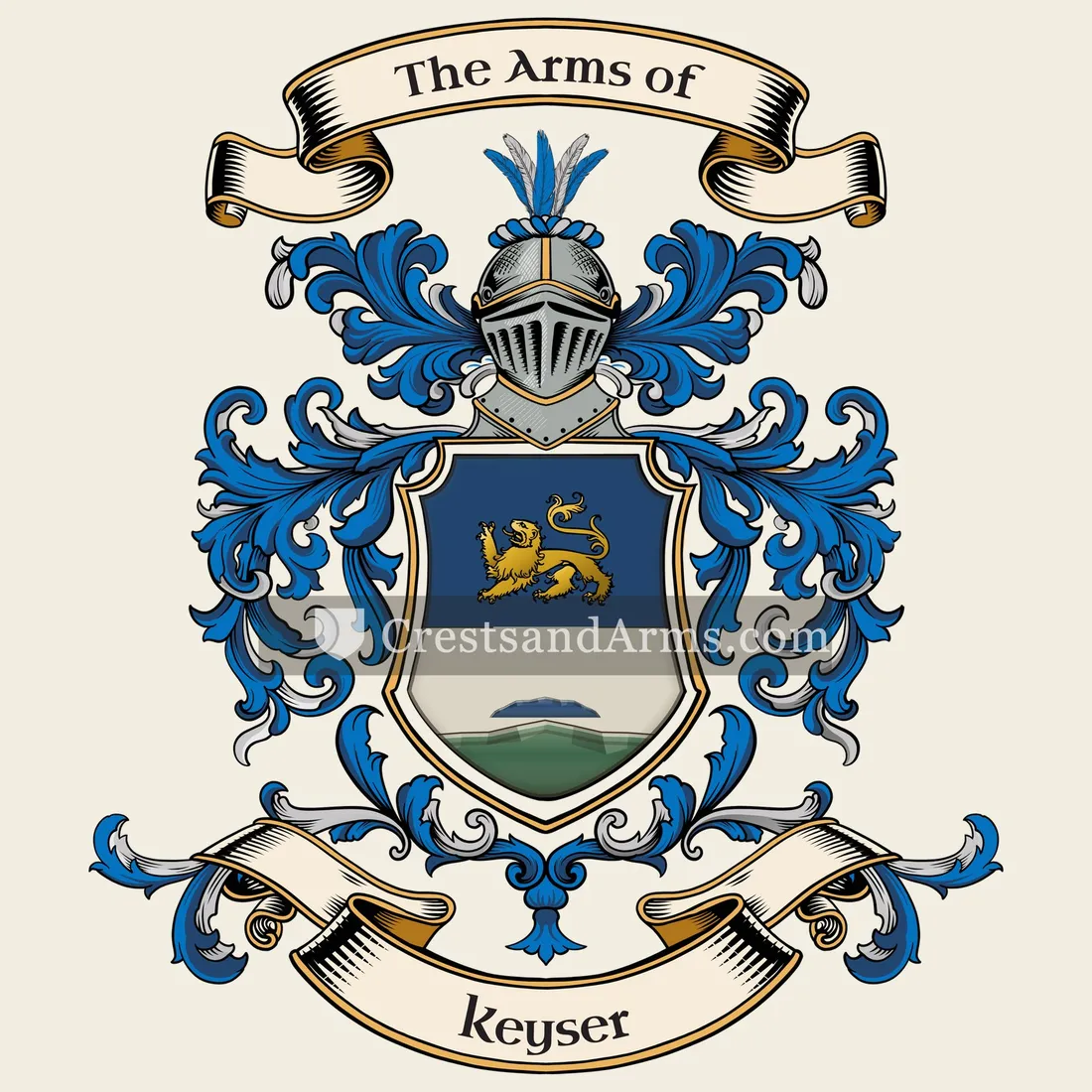
Symbols on this shield
mountThe ground held, and steadfastness upon it
lionCourage, strength and royalty
Colours
Blue (Azure)Means: Loyalty and truth
Silver (Argent)Means: Peace and sincerity
Green (Vert)Means: Hope
Gold (Or)Means: Generosity
Historical info
Source
J. B. Rietstap, Armorial Général, Gouda: G. B. van Goor Zonen, 1884–87
Blazon (the actual original written record)
“Coupé: au 1 d'azur au lion naiss. d'or, tenant de ses pattes un marteau du même; au 2 d'arg. à un tertre d'azur en p. C.: le lion iss. L. d'or et d'azur.”
FranconiaFranconia, c. 1765
Digital archive packCoat of arms PNG, gold border print PDF, vector SVG and the certificate of authenticity. Sent to your email in minutes.
Map of Germany showing where the Keyser arms are recorded
The Keyser arms were recorded in Franconia, c. 1765.
Franconia was a patchwork of small territories in central Germany, full of minor landowners and prosperous market towns. So many separate households held land there that the region produced a great many coats of arms.
This is where the arms were entered in the register. Families often moved to other parts of the country, so the same name can turn up in more than one region.
The body that granted and recorded arms in Germany in this period.
Francis I, Holy Roman Emperor
Sovereign of the period
Francis I, Holy Roman Emperor
1745–1765
Reigning in Netherlands when the Keyser arms are first recorded.
How Arms Worked in Germany
In the Holy Roman Empire, coats of arms were often granted to individuals by the Emperor or his representatives. These arms were then passed down through the generations to all legitimate descendants of the original holder. Younger branches of a family usually kept the same shield design without needing to change it, as the arms belonged to the entire lineage.
Granting authority
The Holy Roman Emperor held the sole power to grant new coats of arms throughout his vast imperial territories.
How they got arms
Families typically obtained their coats of arms through a formal imperial grant or by proving their noble status to the authorities.
Where arms were recorded
These grants were officially recorded in the Imperial Chancery registers, which began keeping formal records of such honors during the Middle Ages.
The family's standing
Recorded among the armigerous families of Franconia.
Origin & History of the Keyser Family in Germany
The surname Keyser originates from the Middle High German word *keiser*, which translates to emperor. In the medieval period, this name was often used as a nickname for someone who played the role of an emperor in local theater productions or for a person who carried themselves with a regal or haughty attitude. By the time the family was firmly established in the Franconia region of Germany in 1765, the name had become a common occupational or descriptive surname. Families living in Franconia during this era were often part of a vibrant agricultural and trade-based society. Because Franconia was a central hub for migration and commerce within the Holy Roman Empire, the Keyser name spread as families moved between villages to find work as craftsmen or farmers. This history reflects the transition of the name from a simple nickname into a formal family identifier that was passed down through generations of German ancestors.
Keyser Meaning & Related Branches
Root word
Kaiser
Derived from the Latin title Caesar meaning emperor or ruler.
This name
KeyserAn occupational surname for someone who served an emperor or acted in an imperious manner.
also spelled
Kayser
Keiser
Kizer
Kaiser
Related arms
Kayservariant spelling
Keiservariant spelling
Keyzervariant spelling
Documented Sources
J. B. Rietstap, Armorial Général, Gouda: G. B. van Goor Zonen, 1884–87
Meertens, P.J., Voornamen in Nederland, 1966
Stadsarchief Amsterdam, Bevolkingsregister 1815
Van der Schaar, J., Woordenboek van voornamen, 1964
Digital archive packCoat of arms PNG, gold border print PDF, vector SVG and the certificate of authenticity. Sent to your email in minutes.


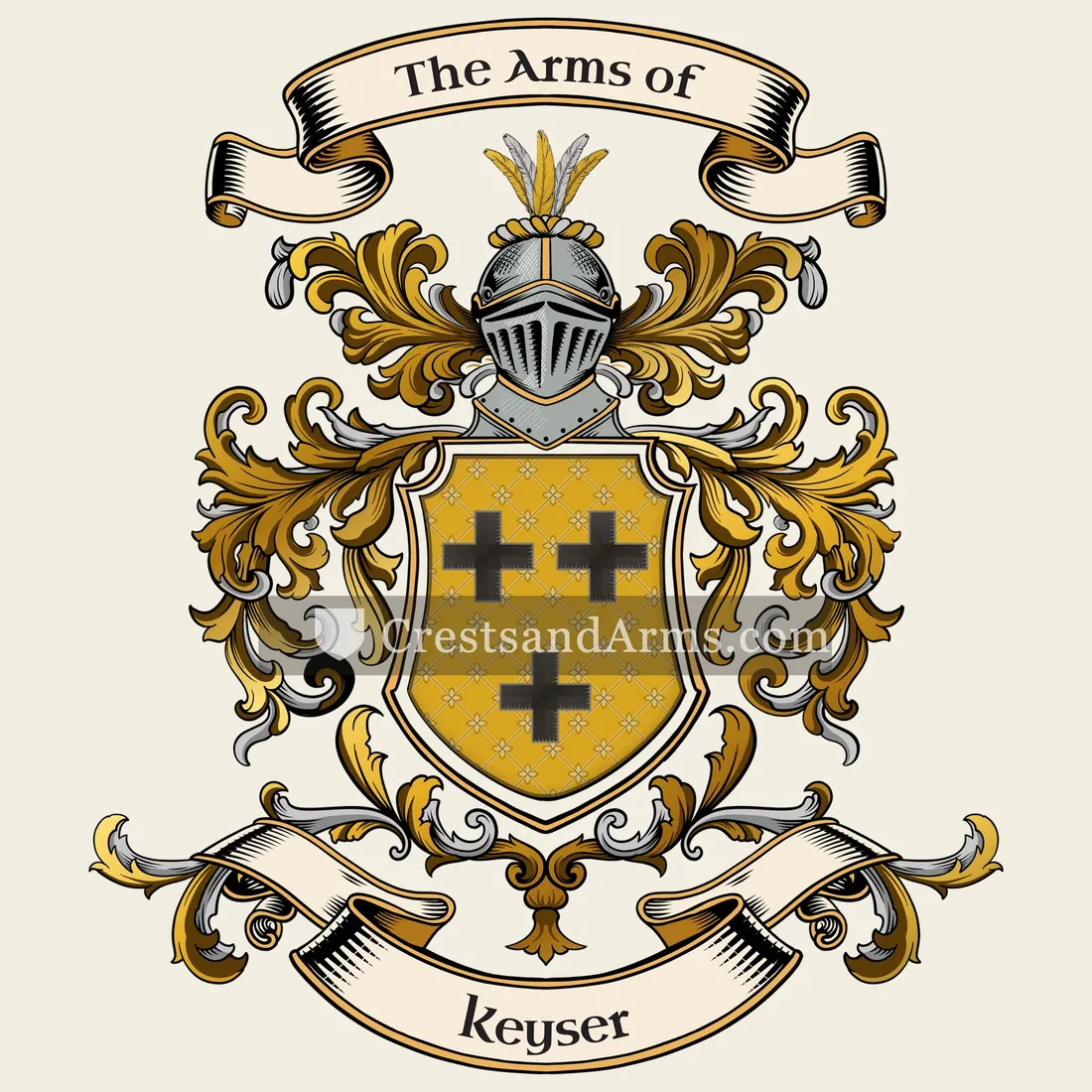
 cross symbolChristian faith and service
 cross symbolChristian faith and service


 mountThe ground held, and steadfastness upon it
 lionCourage, strength and royalty