Map of Germany showing where the Klingensmith arms are recorded
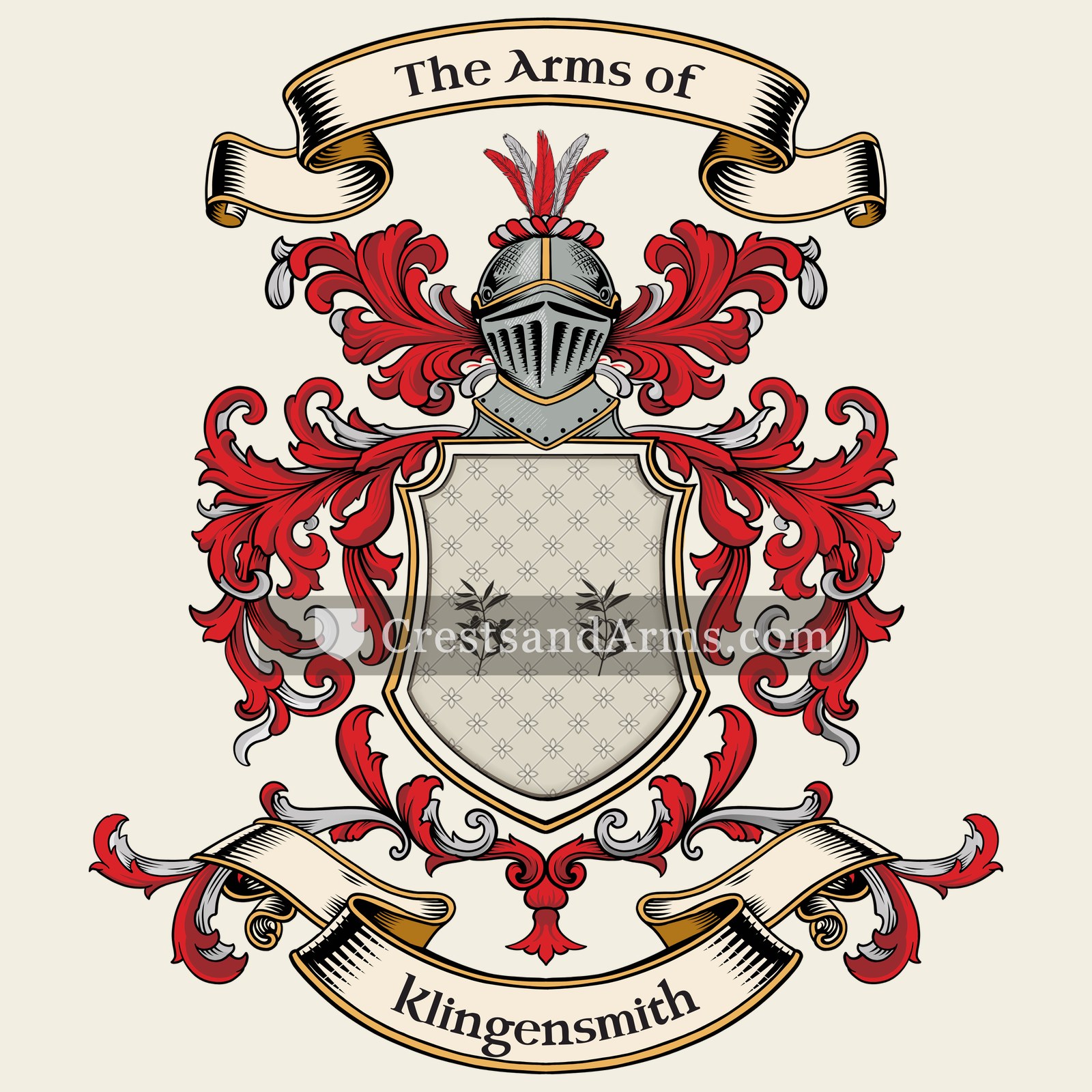
The Klingensmith arms were recorded in Germany, c. 1765.
Arms such as these were typically recorded in Bavaria.
Bavaria was a country of old landed families and walled market towns. Estates passed down the same line for centuries, and both the landowners and the leading townsmen kept arms, which is why so many Bavarian names sit in the registers.
This is where the arms were entered in the register. Families often moved to other parts of the country, so the same name can turn up in more than one region.
The body that granted and recorded arms in Germany in this period.
Francis I, Holy Roman Emperor
Sovereign of the period
Francis I, Holy Roman Emperor
1745–1765
Reigning in Germany when the Klingensmith arms are first recorded.
How Arms Worked in Germany
In the Holy Roman Empire, coats of arms were often granted to individuals by the Emperor or his representatives. These arms were then passed down through the generations to all legitimate descendants of the original holder. Younger branches of a family usually kept the same shield design without needing to change it, as the arms belonged to the entire lineage.
Granting authority
The Holy Roman Emperor held the sole power to grant new coats of arms throughout his vast imperial territories.
How they got arms
Families typically obtained their coats of arms through a formal imperial grant or by proving their noble status to the authorities.
Where arms were recorded
These grants were officially recorded in the Imperial Chancery registers, which began keeping formal records of such honors during the Middle Ages.
The family's standing
Recorded among the armigerous families of Germany.
Origin & History of the Klingensmith Family in Germany
The family name Klingensmith is an anglicized version of the German surname Klingenschmidt. This name is occupational in origin, as it combines the words for a blade or sword and a smith. In the mid-eighteenth century, the family was well-established in the region of Bavaria. During this era, the name identified a family of skilled metalworkers who likely specialized in forging blades or precision tools. Life in Bavaria in 1765 was defined by agrarian traditions and the influence of local guilds, which strictly regulated the work of craftsmen like the Klingenschmidts. As these families eventually migrated away from their ancestral homes in Germany, the spelling of the name shifted to its modern form to better suit the phonetic patterns of the English language. This transition preserved the history of the family trade while allowing the name to adapt to new cultural environments.
Klingensmith Meaning & Related Branches
Root word
Klingenschmidt
A bladesmith or a maker of swords and cutting tools.
This name
KlingensmithAn occupational surname for a craftsman who forged blades or metal cutting implements.
also spelled
Klingensteyn
Klingenstine
Documented Sources
J. B. Rietstap, Armorial Général, Gouda: G. B. van Goor Zonen, 1884–87
Bahlow, Hans, Deutsches Namenlexikon: Familien- und Vornamen nach Ursprung und Sinn erklärt, 1967
Heintze, Albert, Die deutschen Familien-Namen: geschichtlich, geographisch, sprachlich, 1903


 branchPeace, and new growth
 branchPeace, and new growth