Map of Netherlands showing where the Kluth arms are recorded
The Kluth arms were recorded in Brielle, c. 1725.
This is where the arms were entered in the register. Families often moved to other parts of the country, so the same name can turn up in more than one region.
Region
Brielle
Town
Brielle
First recorded
1725
Granting Authority for the Kluth Arms
Hoge Raad van Adel
Photograph made by me · CC BY-SA 3.0
The body that granted and recorded arms in Netherlands in this period.
How Arms Worked in Netherlands
In the Netherlands, coats of arms were often used by noble families and those who held specific public offices. These arms were passed down through the generations to legitimate descendants. Younger branches of a family usually kept the original design without needing to add special marks. This system ensured that the family identity remained clear and consistent over many years.
Granting authority
The Hoge Raad van Adel is the official body that regulates and manages noble titles and coats of arms in the Netherlands.
How they got arms
Families typically obtained their coats of arms through official royal grants or by proving their long-standing historical use of the symbols.
Where arms were recorded
Coats of arms are officially recorded in the registers held by the Hoge Raad van Adel, which began its work in 1814.
The family's standing
Recorded among the armigerous families of Netherlands.
Origin & History of the Kluth Family in Netherlands
The name Kluth has deep roots in the coastal regions of the Netherlands, with one of its earliest documented appearances occurring in the fortified town of Brielle in 1725. During the eighteenth century, Brielle served as a vital maritime hub where families often settled due to the active shipping trade and the town’s strategic importance near the mouth of the Meuse River. The name itself likely originated from Germanic linguistic roots, often associated with a person who was sturdy or perhaps worked with heavy materials. As the Kluth family established themselves in Brielle, they became part of the local social fabric, likely participating in the town’s robust merchant and artisan economy. By settling in such a prominent port, these early family members were positioned at a crossroads of European travel and commerce, which helped define their early history as a stable and integrated part of the Dutch community.
Meaning of the Kluth family crest colors & symbols
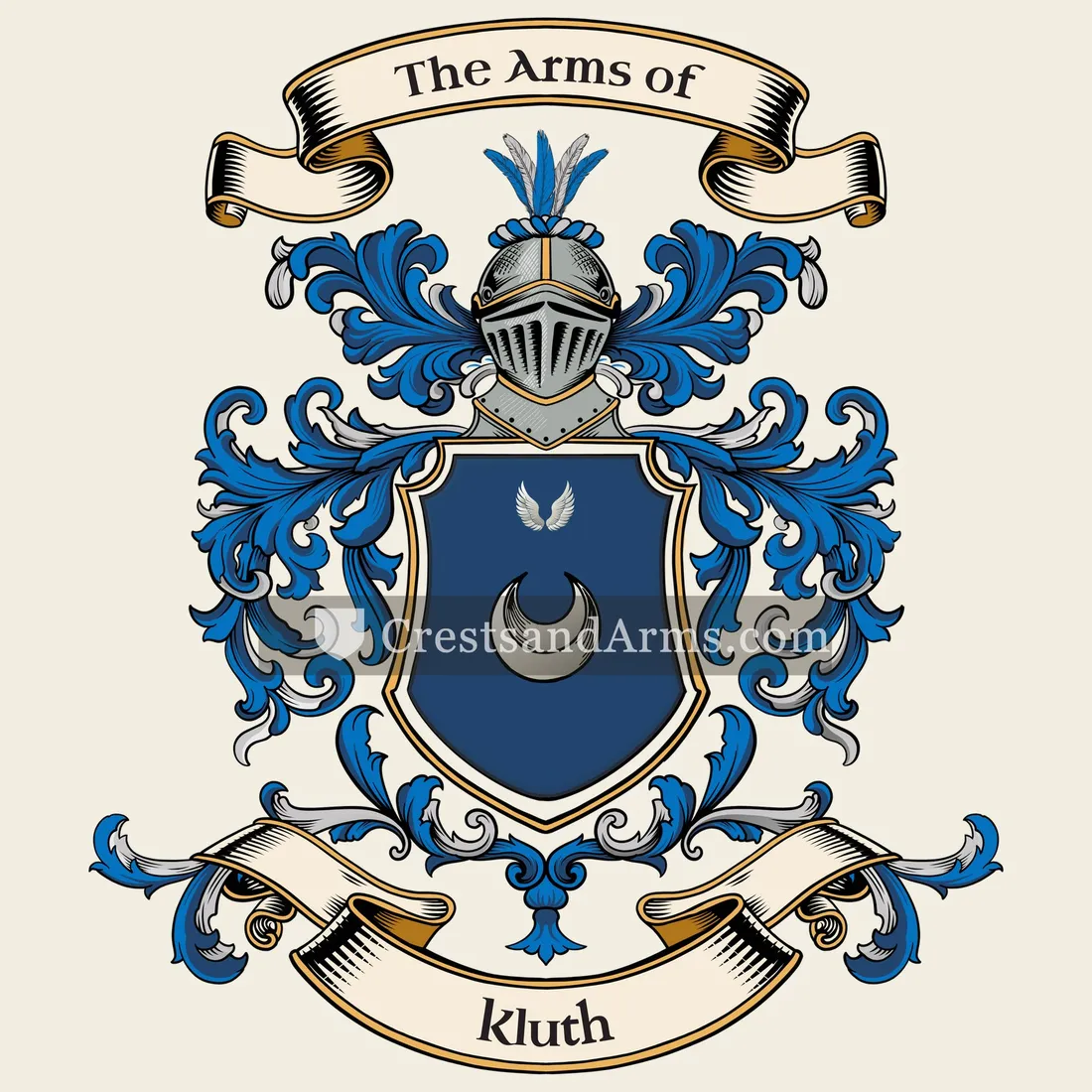
Symbols on this shield
crescentHonour by the sovereign, and the second son
vol / wingsSwiftness and protection
Colours
Blue (Azure)Means: Loyalty and truth
Silver (Argent)Means: Peace and sincerity
Historical info
Source
J. B. Rietstap, Armorial Général, Gouda: G. B. van Goor Zonen, 1884–87
Blazon (the actual original written record)
“un croiss. tourné d'arg., entre un vol du même.”
Francec. 1725
Digital archive packCoat of arms PNG, gold border print PDF, vector SVG and the certificate of authenticity. Sent to your email in minutes.
Map of France showing where the Kluth arms are recorded
The Kluth arms were recorded in France, c. 1725.
Arms such as these were typically recorded in Bretagne.
More families held coats of arms in Bretagne than anywhere else in France. The land was divided into many small estates rather than a few large ones, so far more households counted as gentry, and each needed a shield of its own to be told apart.
This is where the arms were entered in the register. Families often moved to other parts of the country, so the same name can turn up in more than one region.
The body that granted and recorded arms in France in this period.
Louis XV of France
Sovereign of the period
Louis XV of France
1715–1774
Reigning in Netherlands when the Kluth arms are first recorded.
How Arms Worked in France
In France, a coat of arms was a mark of honor that passed down through the male line to all legitimate descendants. Families often used the same shield without changes to show their shared heritage. If a branch wanted to stand out, they could add a small mark to their shield to show their specific place in the family tree.
Granting authority
The Juge d'armes de France acted as the official authority that regulated and verified coats of arms across the country.
How they got arms
Families typically inherited their arms from ancestors, though they could also receive them through royal grants or by proving their noble status.
Where arms were recorded
Coats of arms were officially recorded in the Armorial Général de France, which began its main collection in the year 1696.
The family's standing
Recorded among the armigerous families of France.
Origin & History of the Kluth Family in France
The family name Kluth has deep roots in the Brittany region of France, where records confirm members of the family were living as early as 1725. During the eighteenth century, Brittany was a distinct province with a unique cultural identity that often differed from the rest of the French kingdom. Families in this coastal area were frequently involved in maritime trade, local agriculture, or the production of sailcloth, which was a major industry for the region at the time. Because the name Kluth does not follow traditional French naming patterns, it likely arrived in Brittany through migration or trade connections with Northern Europe. Once settled in the local parishes, the family became part of the social fabric of the region, participating in the daily life and religious traditions of the Breton people. Over the decades, these early ancestors adapted to the local language and customs while maintaining their family identity within the rural communities of the province.
Kluth Meaning & Related Branches
Root word
Klute
A Middle Low German term for a clod of earth or lump.
This name
KluthA topographic name for someone who lived on or worked a clod of earth or field.
also spelled
Kluyt
Cluit
Kluite
Documented Sources
J. B. Rietstap, Armorial Général, Gouda: G. B. van Goor Zonen, 1884–87
Nationaal Archief, Doop-, trouw- en begraafregisters (DTB) van Brielle
Streekarchief Voorne-Putten, Burgerlijke Stand en Bevolkingsregisters van Brielle
Van der Aa, A.J., Biographisch Woordenboek der Nederlanden, 1852
De Beaufort, R.F.P., Geschiedenis van de stad Brielle, 1970
Digital archive packCoat of arms PNG, gold border print PDF, vector SVG and the certificate of authenticity. Sent to your email in minutes.


 crescentHonour by the sovereign, and the second son
 arrowReadiness for battle, and affliction endured
 crescentHonour by the sovereign, and the second son
 arrowReadiness for battle, and affliction endured
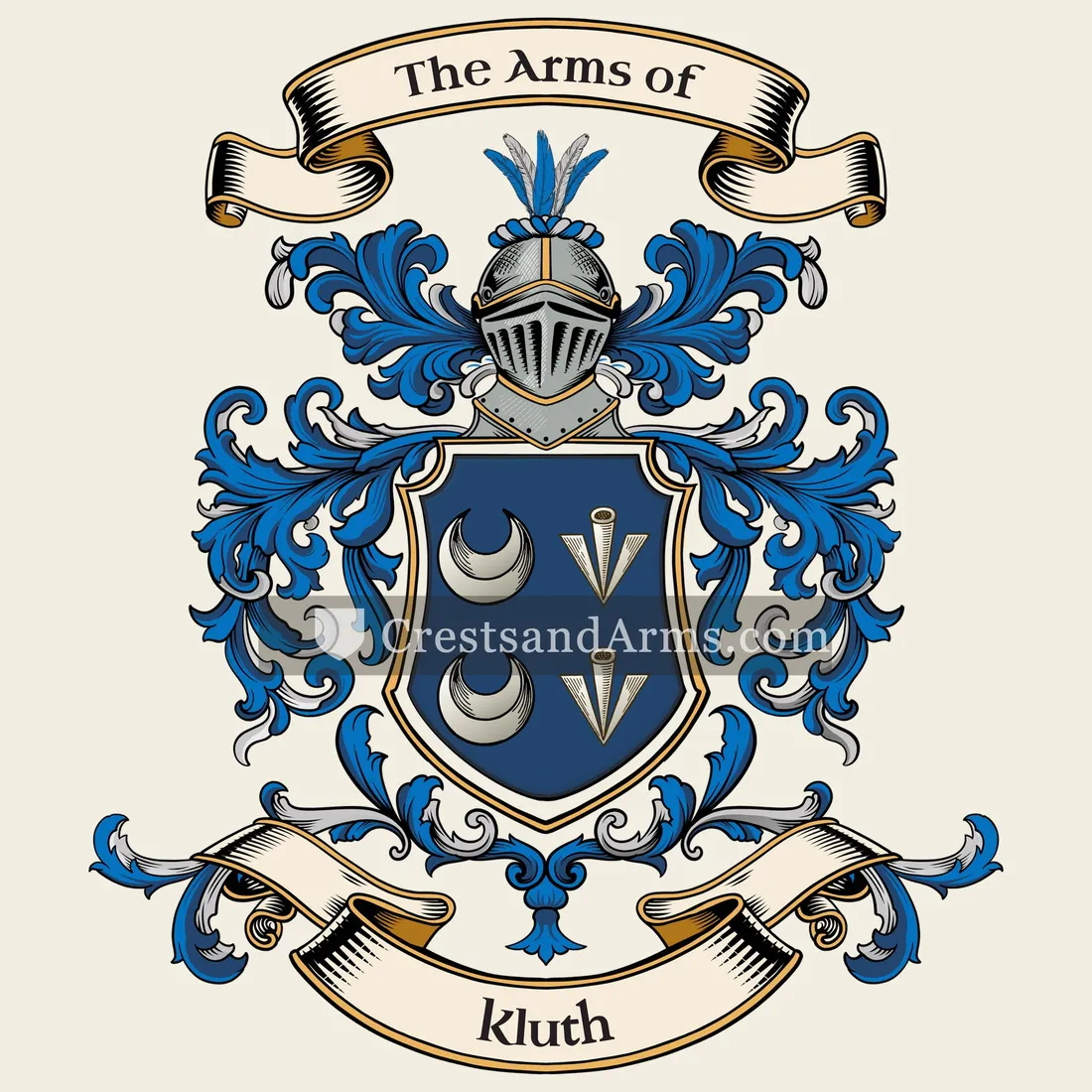

 vol / wingsSwiftness and protection