Map of France showing where the Knobloch arms are recorded
The Knobloch arms were recorded in Alsace, c. 1663.
Alsace lay between France and the German lands and belonged to both at different times. Its families held small estates and served whichever side ruled, and men who served in arms carried arms of their own.
This is where the arms were entered in the register. Families often moved to other parts of the country, so the same name can turn up in more than one region.
The body that granted and recorded arms in France in this period.
Louis XIV of France
Sovereign of the period
Louis XIV of France
1643–1715
Reigning in France when the Knobloch arms are first recorded.
How Arms Worked in France
In France, a coat of arms was a mark of honor that passed down through the male line to all legitimate descendants. Families often used the same shield without changes to show their shared heritage. If a branch wanted to stand out, they could add a small mark to their shield to show their specific place in the family tree.
Granting authority
The Juge d'armes de France acted as the official authority that regulated and verified coats of arms across the country.
How they got arms
Families typically inherited their arms from ancestors, though they could also receive them through royal grants or by proving their noble status.
Where arms were recorded
Coats of arms were officially recorded in the Armorial Général de France, which began its main collection in the year 1696.
The family's standing
Recorded among the armigerous families of Alsace.
Origin & History of the Knobloch Family in France
The family name Knobloch has deep roots in the Alsace region, a territory that has historically shifted between French and German cultural influences. By 1663, records confirm that members of the family were firmly established in this area, which was a crossroads for trade and agriculture. The name itself is derived from the Middle High German word for garlic, suggesting that the original ancestors may have been farmers, merchants, or market gardeners who earned the name through their trade. During the seventeenth century, the people of Alsace lived through significant political changes as the region was gradually integrated into the Kingdom of France. Families like the Knoblochs navigated these transitions by maintaining their local traditions while adapting to the administrative structures of the French state. Their presence in the region during this era reflects the resilience of Alsatian families who built their lives in the fertile Rhine valley despite the frequent conflicts that shaped the borderlands.
Meaning of the Knobloch family crest colors & symbols
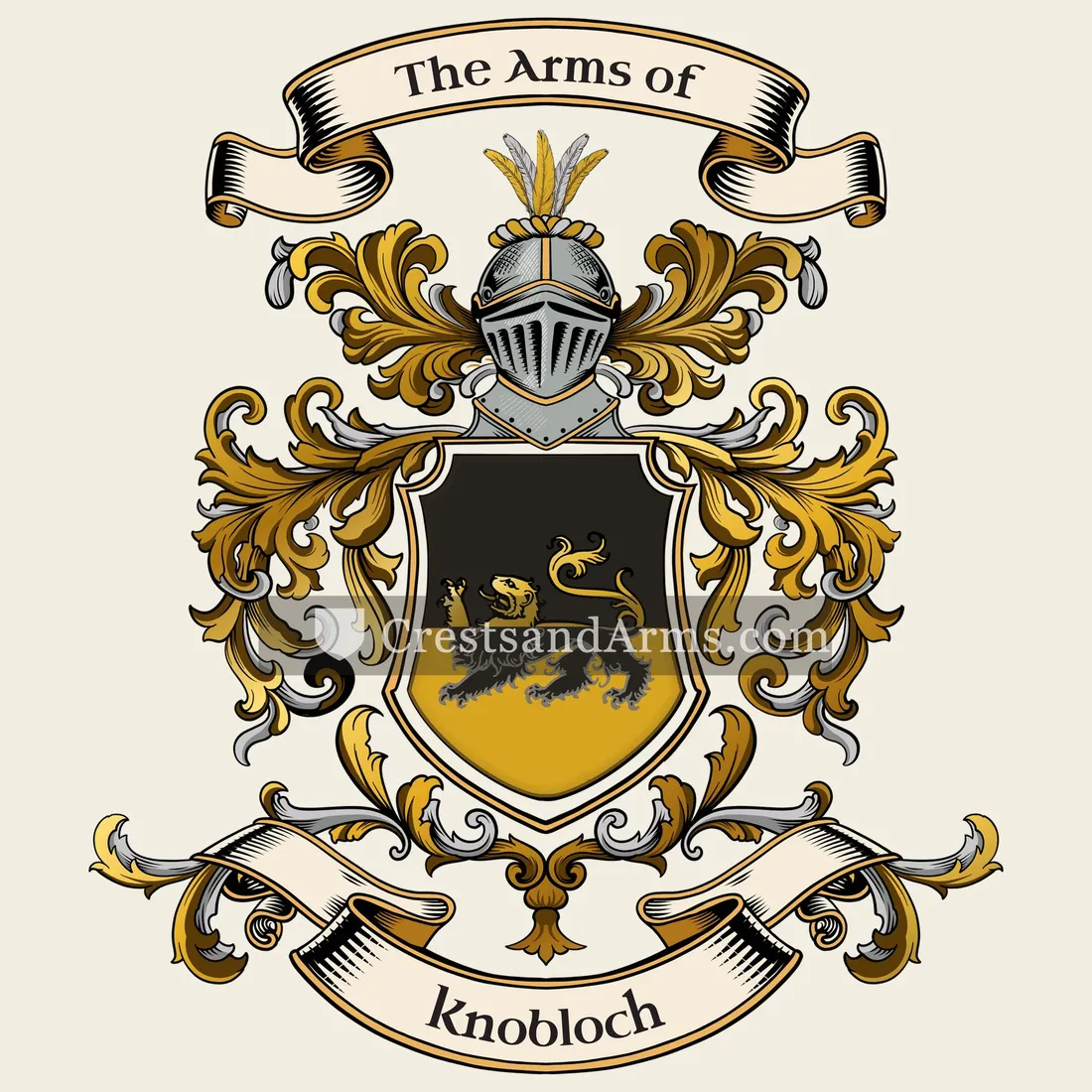
Symbols on this shield
lionCourage, strength and royalty
Colours
Black (Sable)Means: Constancy
Gold (Or)Means: Generosity
Historical info
Source
J. B. Rietstap, Armorial Général, Gouda: G. B. van Goor Zonen, 1884–87
Blazon (the actual original written record)
“Coupé de sa. sur or; au lion de l'un en l'autre, tenant un ail feuillé au nat. Cq. cour. C.: les meubles de l'écu.”
Germanyc. 1765
Digital archive packCoat of arms PNG, gold border print PDF, vector SVG and the certificate of authenticity. Sent to your email in minutes.
Map of Germany showing where the Knobloch arms are recorded
The Knobloch arms were recorded in Germany, c. 1765.
Arms such as these were typically recorded in Bavaria.
Bavaria was a country of old landed families and walled market towns. Estates passed down the same line for centuries, and both the landowners and the leading townsmen kept arms, which is why so many Bavarian names sit in the registers.
This is where the arms were entered in the register. Families often moved to other parts of the country, so the same name can turn up in more than one region.
The body that granted and recorded arms in Germany in this period.
Francis I, Holy Roman Emperor
Sovereign of the period
Francis I, Holy Roman Emperor
1745–1765
Reigning in France when the Knobloch arms are first recorded.
How Arms Worked in Germany
In the Holy Roman Empire, coats of arms were often granted to individuals by the Emperor or his representatives. These arms were then passed down through the generations to all legitimate descendants of the original holder. Younger branches of a family usually kept the same shield design without needing to change it, as the arms belonged to the entire lineage.
Granting authority
The Holy Roman Emperor held the sole power to grant new coats of arms throughout his vast imperial territories.
How they got arms
Families typically obtained their coats of arms through a formal imperial grant or by proving their noble status to the authorities.
Where arms were recorded
These grants were officially recorded in the Imperial Chancery registers, which began keeping formal records of such honors during the Middle Ages.
The family's standing
Recorded among the armigerous families of Germany.
Origin & History of the Knobloch Family in Germany
The surname Knobloch is a classic example of a German topographic or descriptive name that emerged during the Middle Ages. The word itself translates to garlic, which suggests that the original bearers of the name were likely farmers, gardeners, or traders who specialized in this specific crop. By the time historical records confirm the presence of the family in Bavaria in 1765, the name had already been established for centuries across various German-speaking regions. Families with this name often lived in rural villages where their livelihood was tied to the land and the seasonal cycles of agriculture. As the population grew and moved, the name traveled with them, eventually becoming a permanent fixture in the social and economic fabric of southern Germany. The history of the Knobloch family reflects the broader experience of many common citizens who helped build the foundations of German village life through their hard work and connection to the soil.
Meaning of the Knobloch family crest colors & symbols
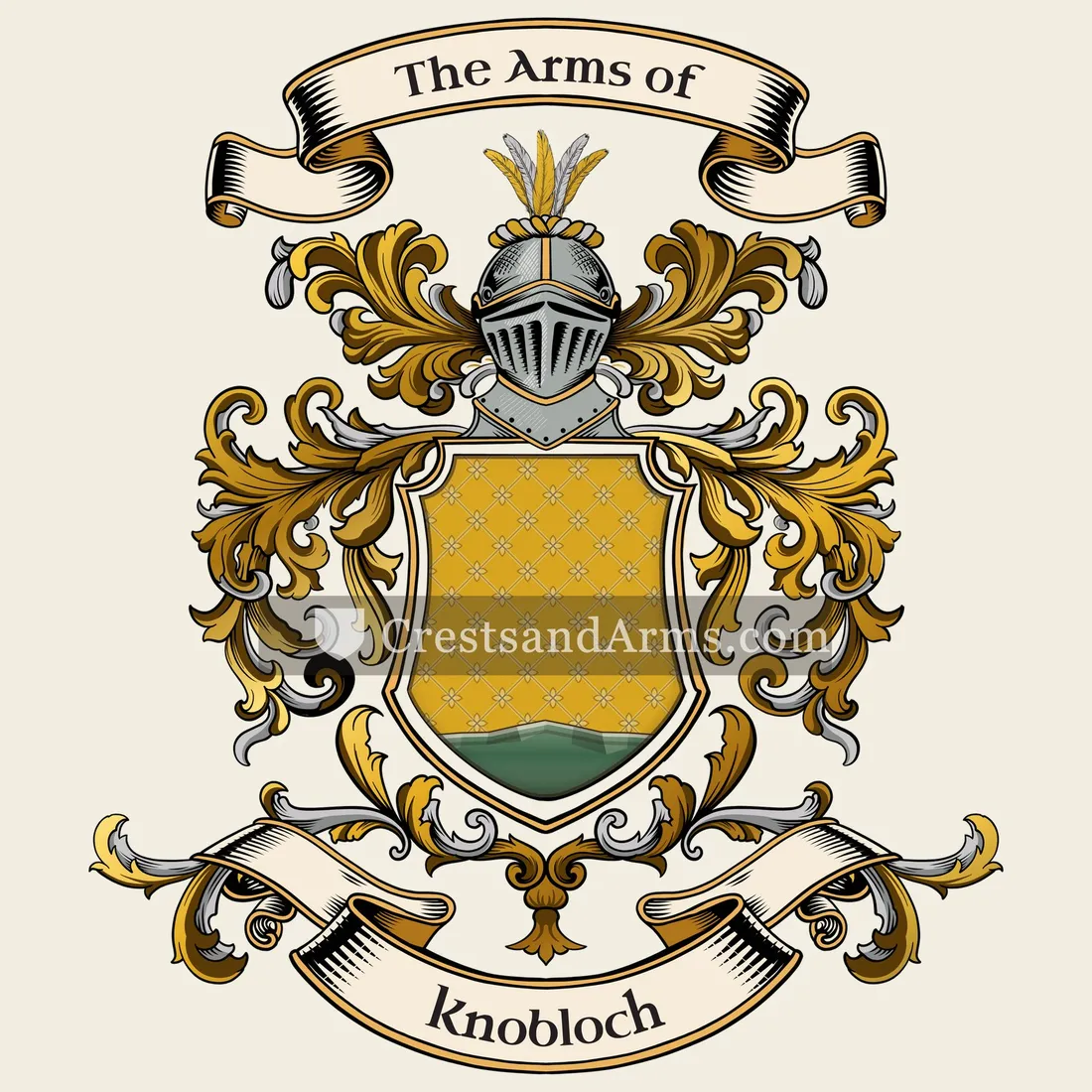
Symbols on this shield
mountThe ground held, and steadfastness upon it
Colours
Gold (Or)Means: Generosity
Green (Vert)Means: Hope
Historical info
Source
J. B. Rietstap, Armorial Général, Gouda: G. B. van Goor Zonen, 1884–87
Blazon (the actual original written record)
“D'or à une tête d'ail d'arg., feuillée de sin., soutenue d'un tertre de trois coupeaux du même. C.: les meubles de l'écu. L. d'or et de sa.”
SwitzerlandBerne, c. 1745
Digital archive packCoat of arms PNG, gold border print PDF, vector SVG and the certificate of authenticity. Sent to your email in minutes.
Map of Switzerland showing where the Knobloch arms are recorded
The Knobloch arms were recorded in Berne, c. 1745.
This is where the arms were entered in the register. Families often moved to other parts of the country, so the same name can turn up in more than one region.
The body that granted and recorded arms in Switzerland in this period.
How Arms Worked in Switzerland
In Switzerland, coats of arms were not restricted to the nobility and were often adopted by common citizens and families. These symbols were passed down through generations to show family identity. When branches of a family grew, they often changed small details of the design to distinguish their own line from the original group.
Granting authority
Cantonal and civic authorities managed the use of coats of arms within their specific regions and local jurisdictions.
How they got arms
Families typically assumed their own coats of arms based on local custom rather than receiving them from a central monarch.
Where arms were recorded
Arms were recorded in various cantonal and civic registers starting from the fourteenth century throughout the Swiss region.
The family's standing
Recorded among the armigerous families of Switzerland.
Origin & History of the Knobloch Family in Switzerland
The surname Knobloch is deeply rooted in the German-speaking regions of Europe, where it originally functioned as a descriptive name for someone who grew or sold garlic. By the middle of the 18th century, the family had established a notable presence in the city of Berne, Switzerland. Records confirm that members of the Knobloch family were active citizens in Berne by 1745. During this era, families with this name were often integrated into the local urban economy, participating in the trade guilds that defined Swiss city life. Because Berne was a center of political and commercial power, the presence of the Knobloch family there suggests they were part of the established middle class. Over time, the family adapted to the unique social structures of the Swiss cantons, maintaining their identity while contributing to the historical development of the region.
Knobloch Meaning & Related Branches
Root word
Knoblauch
German word for the garlic plant.
This name
KnoblochAn occupational name for a grower or seller of garlic.
also spelled
Knoblock
Knobloc
Related arms
Cnoblochvariant spelling
Documented Sources
J. B. Rietstap, Armorial Général, Gouda: G. B. van Goor Zonen, 1884–87
Archives Départementales du Bas-Rhin, Registres paroissiaux et d'état civil
Boehler, Jean-Michel, Une société rurale en milieu rhénan: La paysannerie de la plaine d'Alsace (1648-1789), 1994
Himly, François-Jacques, Chronologie de la Basse-Alsace, 1972
Digital archive packCoat of arms PNG, gold border print PDF, vector SVG and the certificate of authenticity. Sent to your email in minutes.


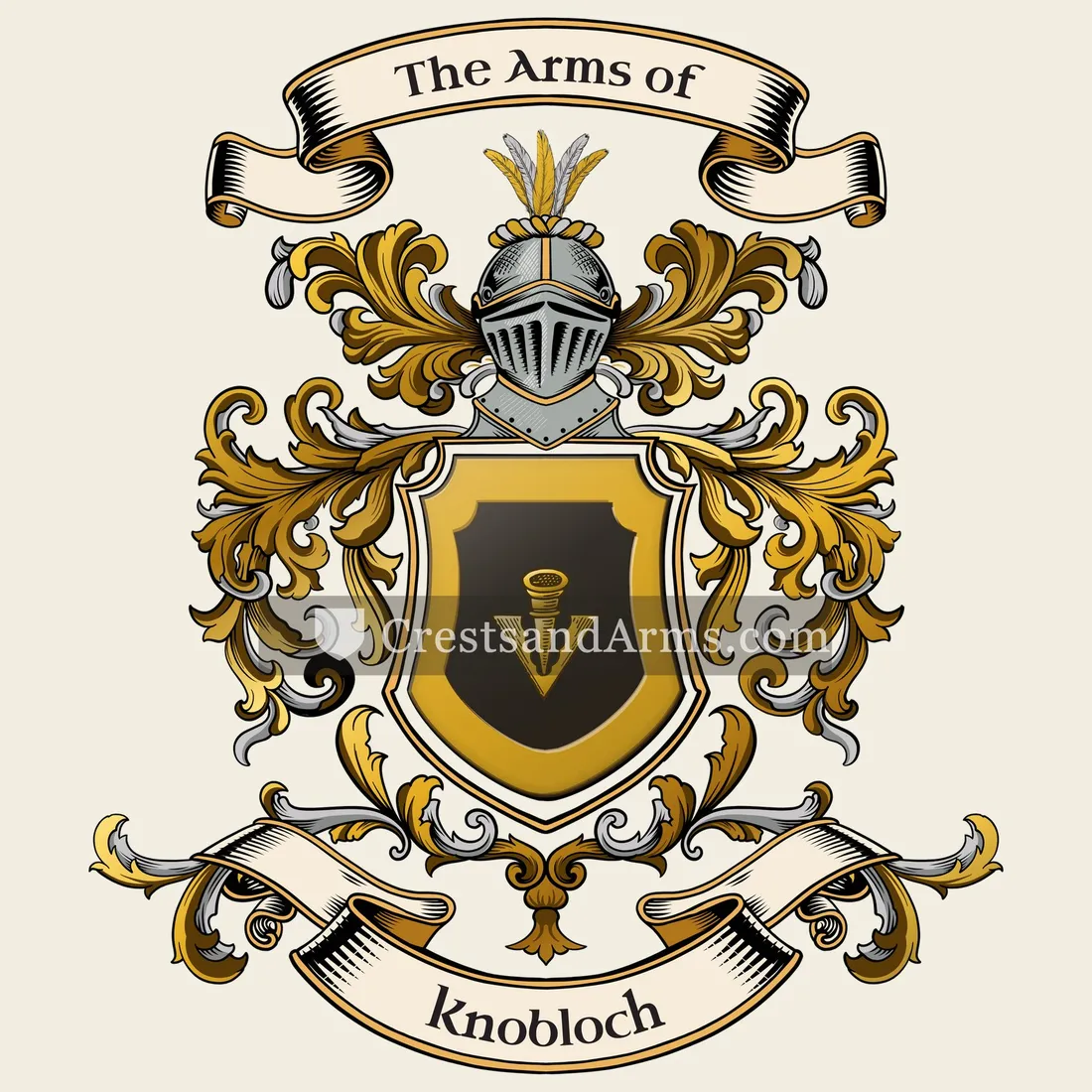
 arms pheon arrowheadReadiness for battle, and the broad arrow of the sovereign
 arms pheon arrowheadReadiness for battle, and the broad arrow of the sovereign


 lionCourage, strength and royalty


 mountThe ground held, and steadfastness upon it