Map of Netherlands showing where the Kol arms are recorded
The Kol arms were recorded in Amsterdam, c. 1815.
This is where the arms were entered in the register. Families often moved to other parts of the country, so the same name can turn up in more than one region.
Region
Amsterdam
Town
Amsterdam
First recorded
1815
Granting Authority for the Kol Arms
Hoge Raad van Adel
Photograph made by me · CC BY-SA 3.0
The body that granted and recorded arms in Netherlands in this period.
William I of the Netherlands
Sovereign of the period
William I of the Netherlands
1815–1840
Reigning in Netherlands when the Kol arms are first recorded.
How Arms Worked in Netherlands
In the Netherlands, coats of arms were often used by noble families and those who held specific public offices. These arms were passed down through the generations to legitimate descendants. Younger branches of a family usually kept the original design without needing to add special marks. This system ensured that the family identity remained clear and consistent over many years.
Granting authority
The Hoge Raad van Adel is the official body that regulates and manages noble titles and coats of arms in the Netherlands.
How they got arms
Families typically obtained their coats of arms through official royal grants or by proving their long-standing historical use of the symbols.
Where arms were recorded
Coats of arms are officially recorded in the registers held by the Hoge Raad van Adel, which began its work in 1814.
The family's standing
Recorded among the armigerous families of Netherlands.
Origin & History of the Kol Family in Netherlands
The family name Kol has deep roots in the urban landscape of the Netherlands, particularly within the bustling city of Amsterdam. By the early 19th century, members of the Kol family were already established as active participants in the city’s economic and social life. During this period, Amsterdam was transitioning into a modern center of trade and finance following the end of the Napoleonic era. Families like the Kols often lived in the dense canal districts where they worked as merchants, craftsmen, or civil servants. The name itself likely originated as a descriptive term or a shortened form of a longer occupational title, which was a common naming practice in the Low Countries. As the family grew alongside the city, they became part of the fabric of Dutch society, contributing to the growth of Amsterdam as it reclaimed its status as a global hub of commerce.
Coat of Arms & Family Crest Details
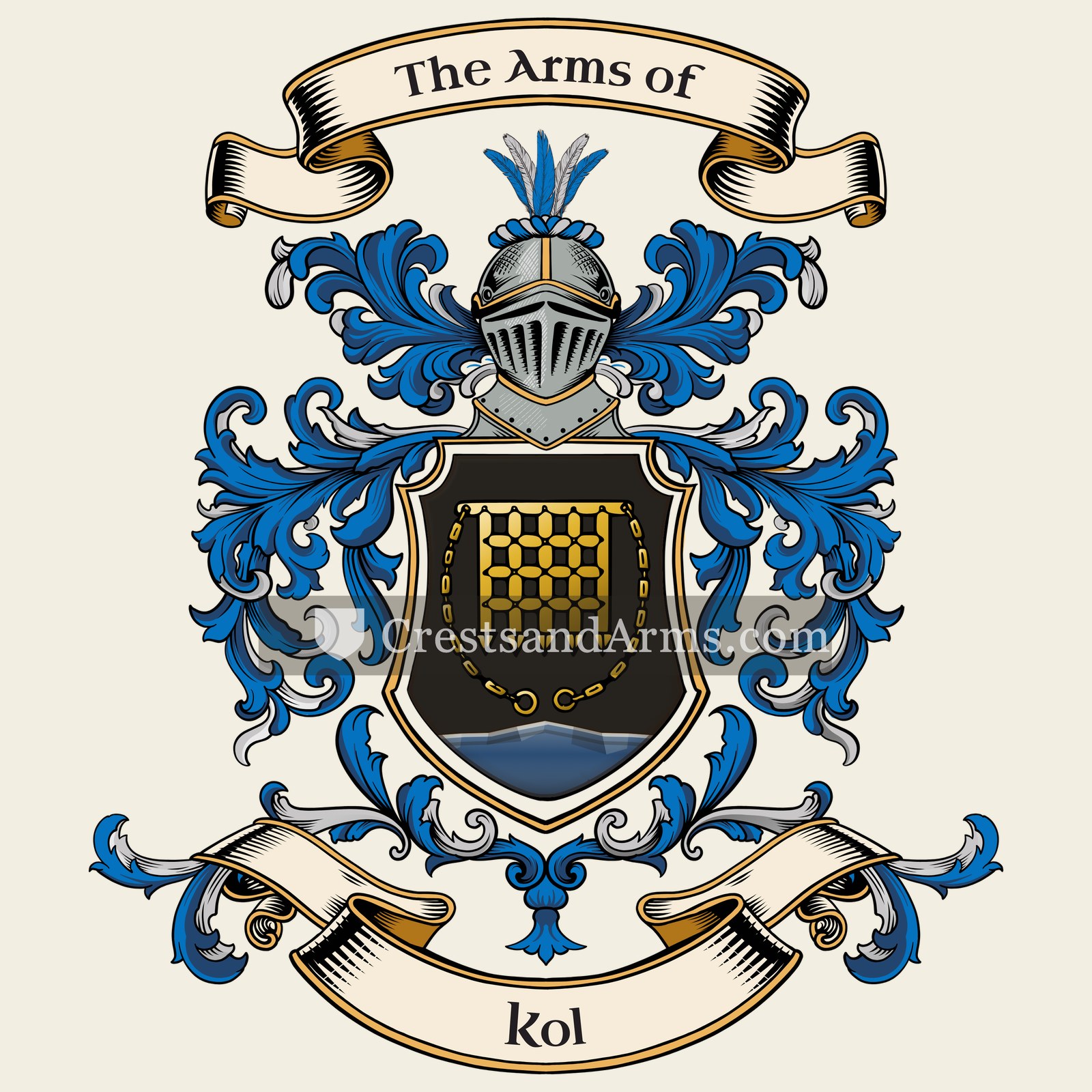
Symbols on this shield
mountThe ground held, and steadfastness upon it
portcullisProtection of the household, and the guarded gate
Colours
Black (Sable)Means: Constancy
Blue (Azure)Means: Loyalty and truth
Gold (Or)Means: Generosity
Historical info
Source
J. B. Rietstap, Armorial Général, Gouda: G. B. van Goor Zonen, 1884–87
Blazon (the actual original written record)
“De sa. à une herse sarrasine d'or, liée d'une chaîne de fer et soutenue d'un tertre d'azur. C.: une tour non-crénelée d'arg., ouv. de sa., hersée d'or, couverte d'un toit pointu d'azur, le faite supp. une étoile d'or. L.: d'or et de sa.”
GermanyLiebenzell Wurt, c. 1765
Digital archive packCoat of arms PNG, gold border print PDF, vector SVG and the certificate of authenticity. Sent to your email in minutes.
Map of Germany showing where the Kol arms are recorded
The Kol arms were recorded in Liebenzell Wurt, c. 1765.
This is where the arms were entered in the register. Families often moved to other parts of the country, so the same name can turn up in more than one region.
The body that granted and recorded arms in Germany in this period.
Francis I, Holy Roman Emperor
Sovereign of the period
Francis I, Holy Roman Emperor
1745–1765
Reigning in Netherlands when the Kol arms are first recorded.
How Arms Worked in Germany
In the Holy Roman Empire, coats of arms were often granted to individuals by the Emperor or his representatives. These arms were then passed down through the generations to all legitimate descendants of the original holder. Younger branches of a family usually kept the same shield design without needing to change it, as the arms belonged to the entire lineage.
Granting authority
The Holy Roman Emperor held the sole power to grant new coats of arms throughout his vast imperial territories.
How they got arms
Families typically obtained their coats of arms through a formal imperial grant or by proving their noble status to the authorities.
Where arms were recorded
These grants were officially recorded in the Imperial Chancery registers, which began keeping formal records of such honors during the Middle Ages.
The family's standing
Recorded among the armigerous families of Germany.
Origin & History of the Kol Family in Germany
The surname Kol is deeply rooted in the historical landscape of southwestern Germany, particularly within the region of Württemberg. By the mid-18th century, records confirm that members of the family were established in the town of Bad Liebenzell. During this era, the name likely functioned as a descriptive occupational or personal identifier, as was common for German surnames of that period. The inhabitants of Liebenzell at the time lived in a society defined by agrarian traditions and the influence of the local nobility. As the family grew, they became part of the social fabric of the Black Forest region, navigating the challenges of rural life and the shifting political boundaries of the Holy Roman Empire. Their presence in the town archives from 1765 serves as a vital anchor point for understanding how the family integrated into the local community and contributed to the regional history of the German southwest.
Related Branches & Arms
Root word
Nicolaus
Victory of the people derived from Greek elements.
This name
KolA patronymic or shortened form referring to a descendant of Nicholas.
also spelled
Kohl
Koll
Related arms
Kholvariant spelling
Kohlvariant spelling
Documented Sources
J. B. Rietstap, Armorial Général, Gouda: G. B. van Goor Zonen, 1884–87
Meertens, P.J., De betekenis van de Nederlandse familienamen, 1950
Van der Schaar, J., Woordenboek van voornamen, 1964


 fessThe military belt, and readiness to serve
 mountThe ground held, and steadfastness upon it
 fessThe military belt, and readiness to serve
 mountThe ground held, and steadfastness upon it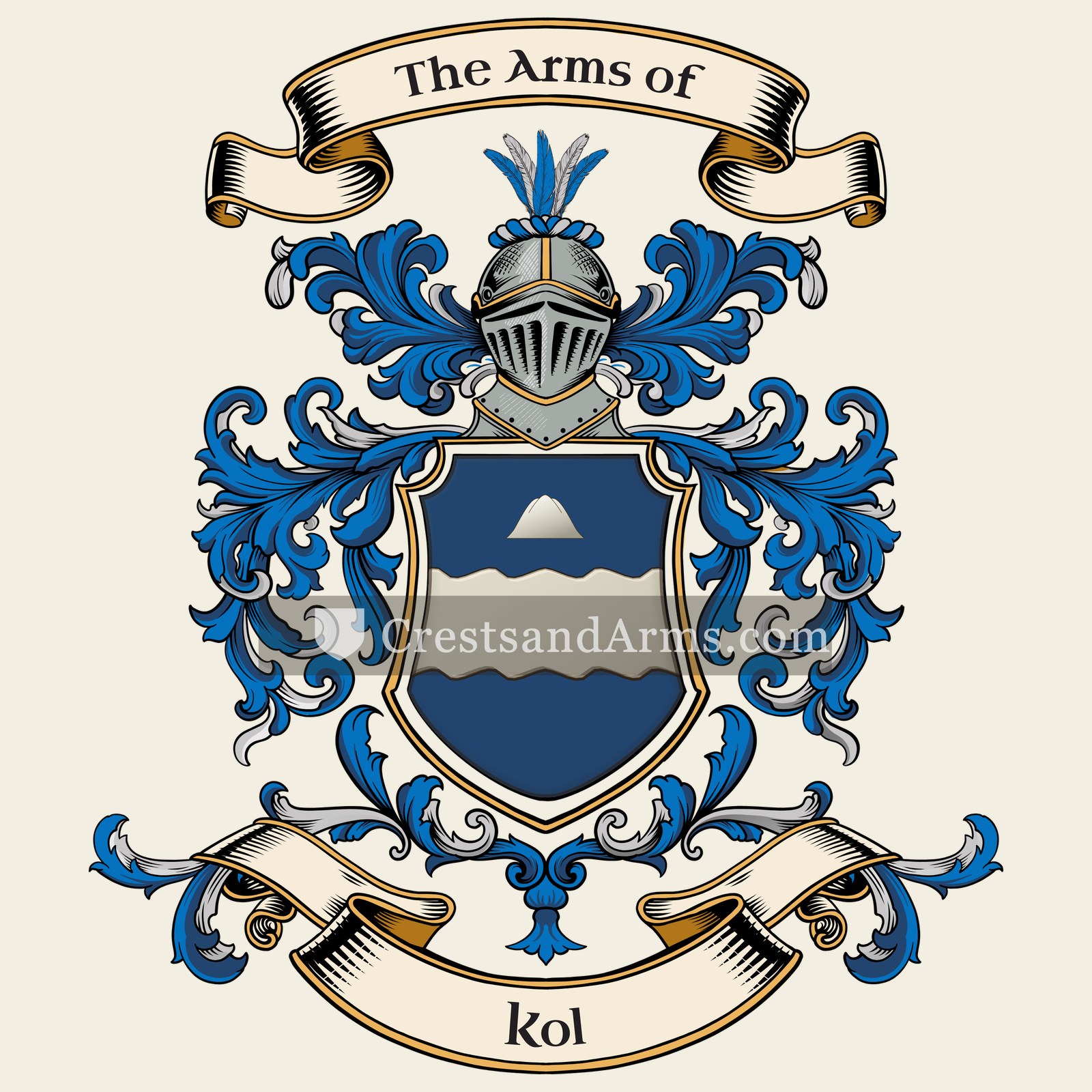


 portcullisProtection of the household, and the guarded gate