Map of Germany showing where the Kono arms are recorded
The Kono arms were recorded in Germany, c. 1765.
Arms such as these were typically recorded in Bavaria.
Bavaria was a country of old landed families and walled market towns. Estates passed down the same line for centuries, and both the landowners and the leading townsmen kept arms, which is why so many Bavarian names sit in the registers.
This is where the arms were entered in the register. Families often moved to other parts of the country, so the same name can turn up in more than one region.
The body that granted and recorded arms in Germany in this period.
Francis I, Holy Roman Emperor
Sovereign of the period
Francis I, Holy Roman Emperor
1745–1765
Reigning in Germany when the Kono arms are first recorded.
How Arms Worked in Germany
In the Holy Roman Empire, coats of arms were often granted to individuals by the Emperor or his representatives. These arms were then passed down through the generations to all legitimate descendants of the original holder. Younger branches of a family usually kept the same shield design without needing to change it, as the arms belonged to the entire lineage.
Granting authority
The Holy Roman Emperor held the sole power to grant new coats of arms throughout his vast imperial territories.
How they got arms
Families typically obtained their coats of arms through a formal imperial grant or by proving their noble status to the authorities.
Where arms were recorded
These grants were officially recorded in the Imperial Chancery registers, which began keeping formal records of such honors during the Middle Ages.
The family's standing
Recorded among the armigerous families of Germany.
Origin & History of the Kono Family in Germany
The history of the Kono family in Germany is deeply rooted in the cultural landscape of Bavaria during the eighteenth century. By 1765, records confirm that members of the family were established residents within this region, which was then a center of agricultural and craft-based traditions. During this era, surnames often evolved based on a family's specific trade, a notable geographic landmark, or a shortened version of a longer given name. The name Kono likely emerged as a localized variation of these naming customs, reflecting the unique linguistic patterns of the Bavarian dialect at the time. As the family integrated into their local communities, they participated in the daily life of the Holy Roman Empire, contributing to the social and economic fabric of their villages. Their presence in the historical record during this period highlights a transition toward more formal record-keeping, as parish registers and local administrative documents began to track families with greater consistency.
Coat of Arms & Family Crest Details
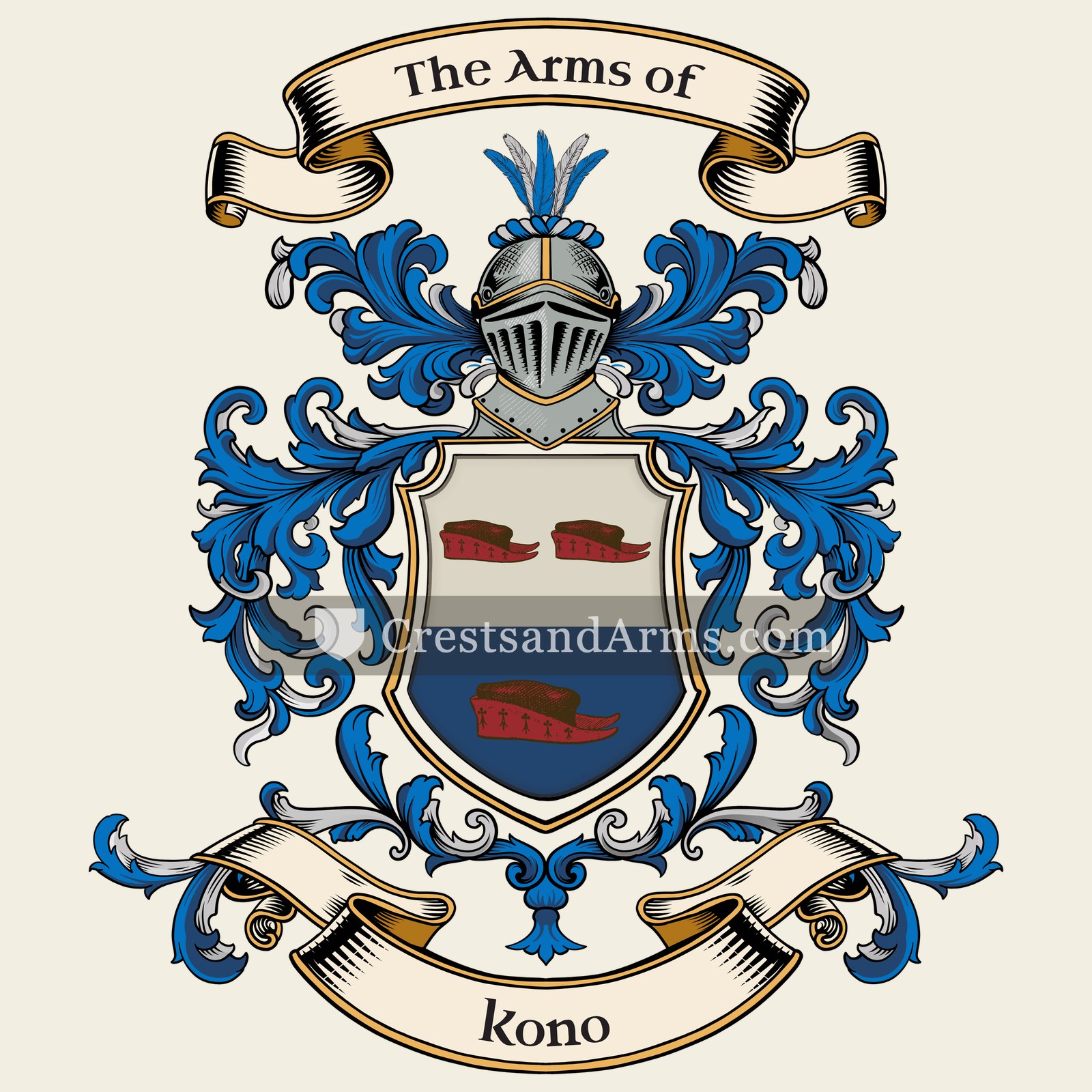
Symbols on this shield
hat or capDignity, and the honour of office
Colours
Silver (Argent)Means: Peace and sincerity
Blue (Azure)Means: Loyalty and truth
Red (Gules)Means: Military strength
Historical info
Source
J. B. Rietstap, Armorial Général, Gouda: G. B. van Goor Zonen, 1884–87
Blazon (the actual original written record)
“Coupé, d'arg. à deux bonnets albanais de gu., sur azur à un bonnet albanais”
SwedenFinlande, c. 1700
Digital archive packCoat of arms PNG, gold border print PDF, vector SVG and the certificate of authenticity. Sent to your email in minutes.
Map of Sweden showing where the Kono arms are recorded
The Kono arms were recorded in Finlande, c. 1700.
Arms such as these were typically recorded in Stockholm.
Stockholm held the Swedish court and the House of Nobility, where every noble family's arms were entered and kept. Families ennobled for service registered there, which is why so many are recorded around the city.
This is where the arms were entered in the register. Families often moved to other parts of the country, so the same name can turn up in more than one region.
The body that granted and recorded arms in Sweden in this period.
Carl XII of Sweden
Sovereign of the period
Carl XII of Sweden
1697–1718
Reigning in Germany when the Kono arms are first recorded.
How Arms Worked in Sweden
In Sweden, a coat of arms belonged to a noble family as a whole rather than just one individual. These arms were passed down through the generations to all legitimate descendants. Younger branches of the family used the same shield without needing to change it. This system ensured that the entire lineage shared the same identity and status under the law.
Granting authority
The Riddarhuset, or House of Nobility, regulated all noble coats of arms in Sweden under royal authority.
How they got arms
Families received their coats of arms through royal grants of nobility which were then officially registered with the House.
Where arms were recorded
Coats of arms were officially recorded in the Swedish House of Nobility register starting in the year 1626.
The family's standing
Recorded among the armigerous families of Sweden.
Origin & History of the Kono Family in Sweden
The history of the Kono name in Sweden begins in the bustling urban environment of Stockholm at the turn of the eighteenth century. During this period, the city served as a major hub for trade and craftsmanship, attracting individuals from various regions who sought to establish themselves in the capital. Records confirm that family members were active residents of Stockholm by 1700, living during a time when the city was transitioning into a center of administrative and economic power. Because surnames were often tied to specific occupations or geographic origins during this era, the presence of the Kono name suggests that these early ancestors were likely integrated into the professional guilds or the merchant class that defined Stockholm society. Their ability to maintain a recorded presence in the city archives indicates that they were established members of the community who participated in the legal and social life of the Swedish capital.
Related Branches & Arms
Root word
Konrad
Derived from Germanic elements meaning bold or wise counsel.
This name
KonoA patronymic surname indicating descent from an ancestor named Konrad.
also spelled
Konowe
Konau
Documented Sources
J. B. Rietstap, Armorial Général, Gouda: G. B. van Goor Zonen, 1884–87


 chiefAuthority, wisdom and dominion
 hollyTruth, and protection through winter
 crownSovereignty, authority and just reward
 chiefAuthority, wisdom and dominion
 hollyTruth, and protection through winter
 crownSovereignty, authority and just reward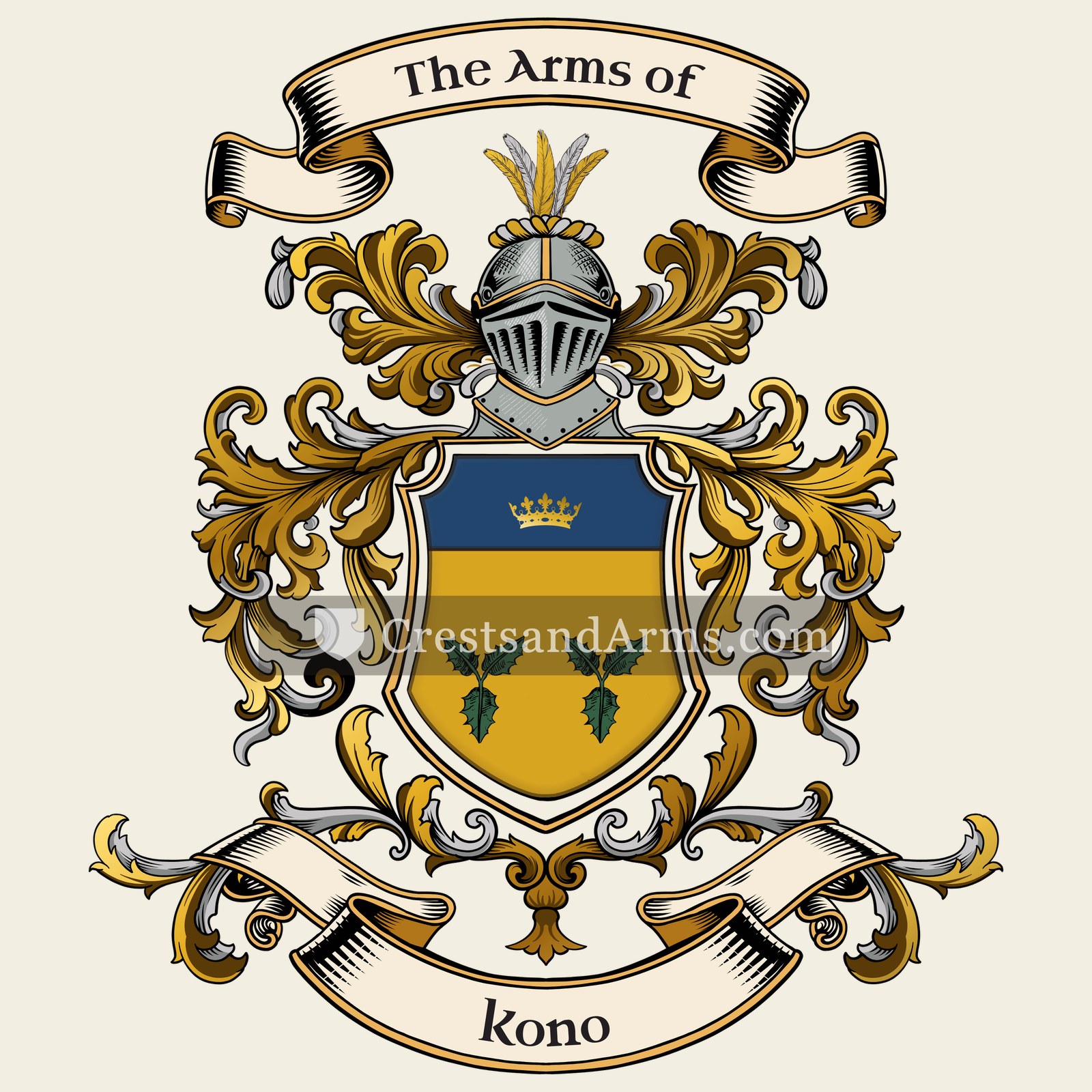


 hat or capDignity, and the honour of office