Map of Germany showing where the Korean arms are recorded
The Korean arms were recorded in Franconia, c. 1765.
Franconia was a patchwork of small territories in central Germany, full of minor landowners and prosperous market towns. So many separate households held land there that the region produced a great many coats of arms.
This is where the arms were entered in the register. Families often moved to other parts of the country, so the same name can turn up in more than one region.
The body that granted and recorded arms in Germany in this period.
Francis I, Holy Roman Emperor
Sovereign of the period
Francis I, Holy Roman Emperor
1745–1765
Reigning in Germany when the Korean arms are first recorded.
How Arms Worked in Germany
In the Holy Roman Empire, coats of arms were often granted to individuals by the Emperor or his representatives. These arms were then passed down through the generations to all legitimate descendants of the original holder. Younger branches of a family usually kept the same shield design without needing to change it, as the arms belonged to the entire lineage.
Granting authority
The Holy Roman Emperor held the sole power to grant new coats of arms throughout his vast imperial territories.
How they got arms
Families typically obtained their coats of arms through a formal imperial grant or by proving their noble status to the authorities.
Where arms were recorded
These grants were officially recorded in the Imperial Chancery registers, which began keeping formal records of such honors during the Middle Ages.
The family's standing
Recorded among the armigerous families of Franconia.
Origin & History of the Korean Family in Germany
The family name Korean traces its roots in Germany to the mid-eighteenth century, with documented evidence placing family members in the Franconia region by 1765. During this era, Franconia was a collection of smaller territories and principalities under the influence of the Holy Roman Empire, characterized by a complex social structure where surnames often reflected a person’s occupation, physical traits, or geographic origin. The presence of the family in this area suggests they were part of the rural or semi-urban population that navigated the shift from feudal agricultural life to the early stages of regional trade. Because surnames were becoming more standardized during this period for tax and census purposes, the name likely served as a formal identifier within local parish registers and administrative documents. This transition allowed families to establish a permanent record of their lineage within the tight-knit communities of the German interior, providing a foundation for their movement and growth throughout the following centuries.
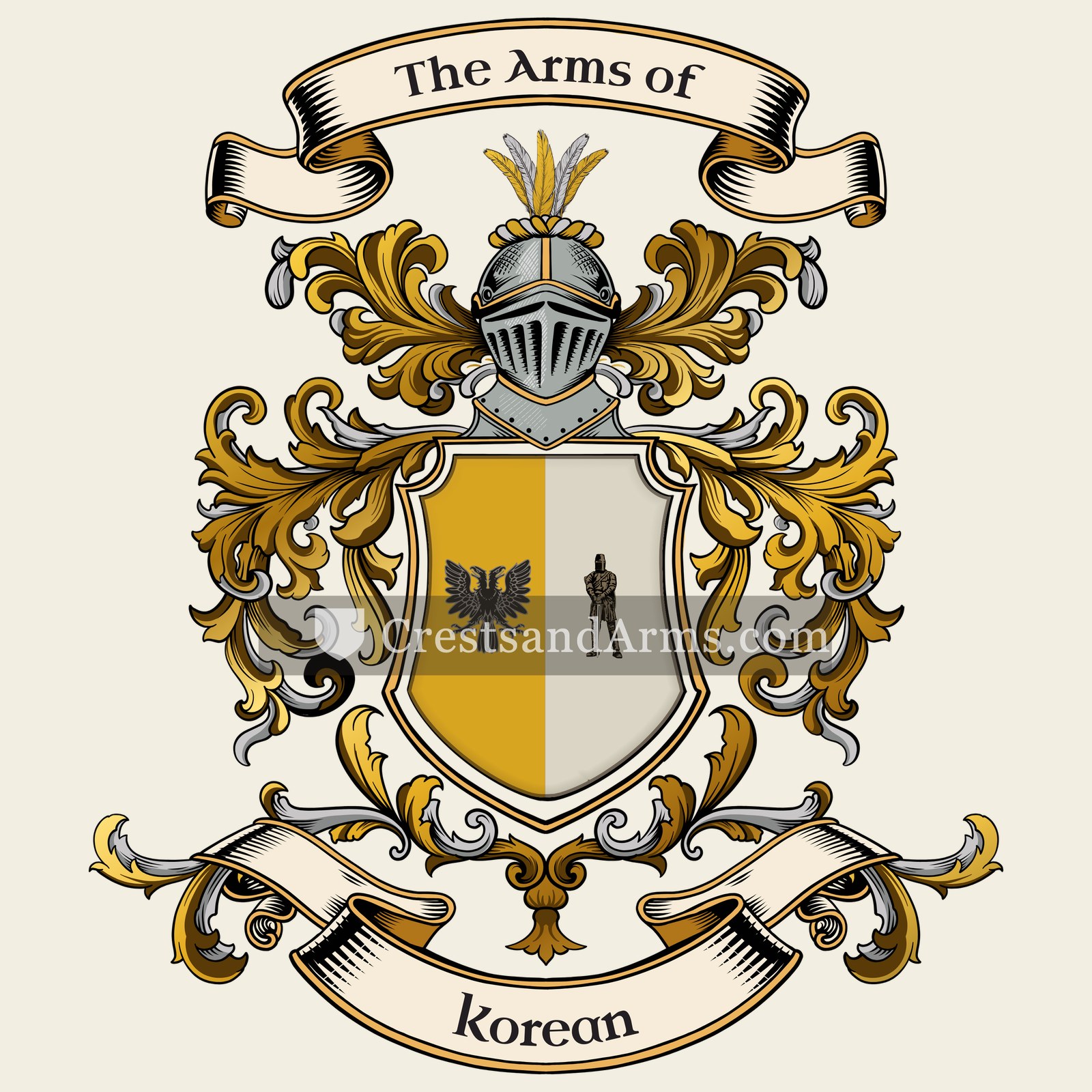
Coat of Arms & Family Crest Details
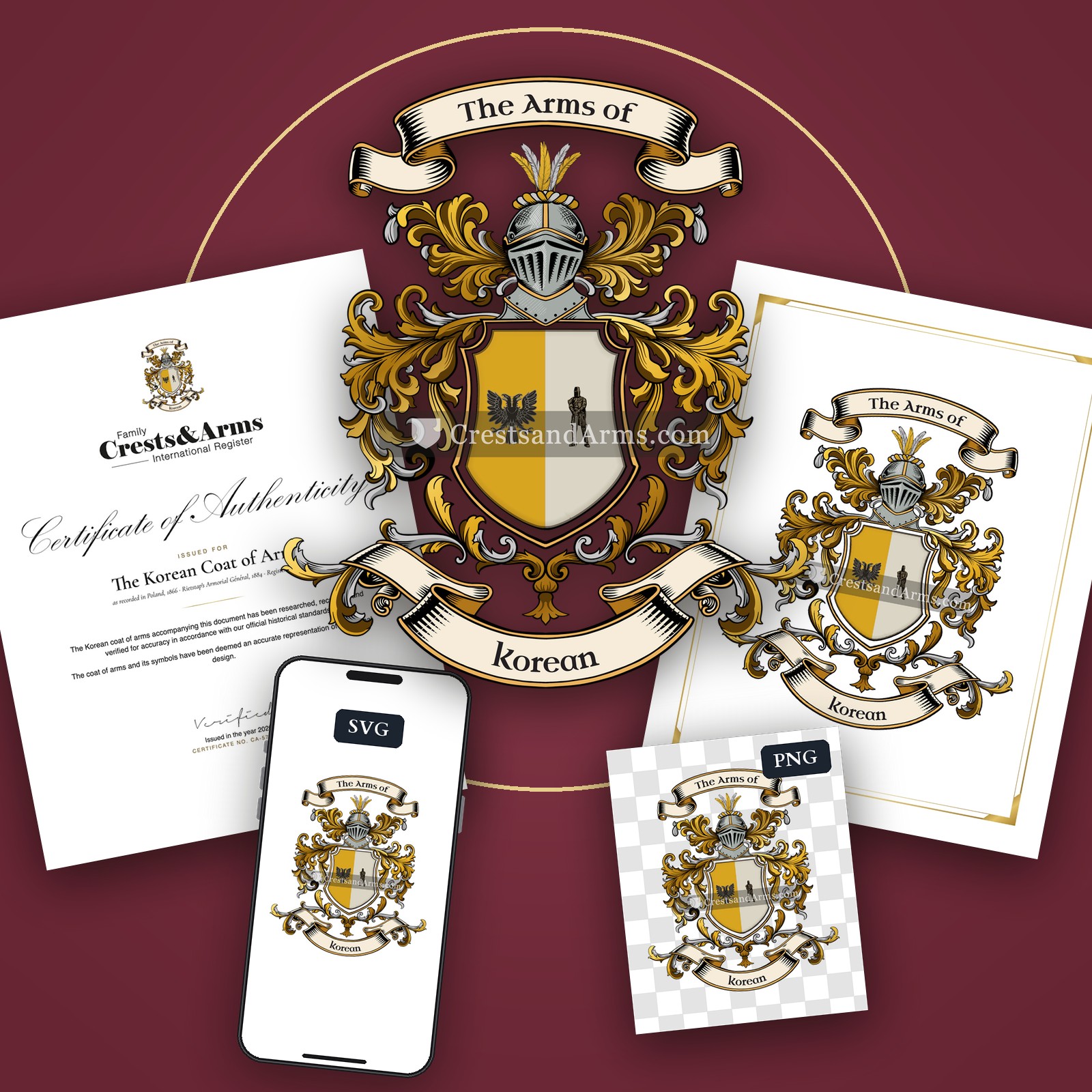
Symbols on this shield
eagleNobility, strength and a keen mind
knightChivalry and service in arms
Colours
Gold (Or)Means: Generosity
Silver (Argent)Means: Peace and sincerity
Black (Sable)Means: Constancy
Historical info
Source
J. B. Rietstap, Armorial Général, Gouda: G. B. van Goor Zonen, 1884–87
Blazon (the actual original written record)
“Parti: au 1 d'or à la demi-aigle de sa., mouv. du parti, ch. sur sa poitrine d'un croiss. d'arg.; au 2 d'arg. à un homme, hab. de gu., rebr. d'arg., au plastron du même, chaussé de souliers à bec de sa., coiffé d'un chapeau du même, tenant de sa main dextre trois épis d'or. C.: l'homme du 2, iss., entre un vol de sa. L.: à dextre d'or et de sa., à sen. d'arg. et de gu.”
PolandPosnanie, c. 1866
Digital archive packCoat of arms PNG, gold border print PDF, vector SVG and the certificate of authenticity. Sent to your email in minutes.
Map of Poland showing where the Korean arms are recorded
The Korean arms were recorded in Posnanie, c. 1866.
This is where the arms were entered in the register. Families often moved to other parts of the country, so the same name can turn up in more than one region.
Region
Posnanie
Town
Posnanie
First recorded
1866
Granting Authority for the Korean Arms
Ennoblement by the Sejm
Author: Olek Remesz · CC BY-SA 3.0
The body that granted and recorded arms in Poland in this period.
How Arms Worked in Poland
Polish noble families shared a single coat of arms across many different surnames, creating large clans rather than individual designs. These symbols were held collectively by all members of the clan regardless of their specific family name. When a new family joined the nobility, they were adopted into an existing clan and began using that group's established shield.
Granting authority
The Sejm, which was the Polish parliament, held the power to grant noble status and the right to bear arms.
How they got arms
Families typically received their coat of arms through a formal act of ennoblement granted by the Sejm for distinguished service.
Where arms were recorded
These grants were officially recorded in the Crown Metrica, which served as the central archive for state documents starting in the sixteenth century.
The family's standing
Recorded among the armigerous families of Poland.
Origin & History of the Korean Family in Poland
The history of the Korean family name in Poland is rooted in the region of Posnania, where records confirm the presence of family members as early as 1866. During this period, the Prussian-controlled territory of Greater Poland was a center of agricultural development and social change. Families living in this area often navigated a complex landscape of shifting borders and local administration. The name likely emerged within the rural communities of the province, where it was documented in parish registers and local civil records as the family established their roots in the local economy. By the mid-19th century, these individuals were part of a growing class of citizens who contributed to the regional identity of Posnania. Their presence in the historical record during this time highlights the family's long-standing connection to the social and demographic fabric of Western Poland.
Korean Meaning & Related Branches
Root word
Kore
Derived from the Greek word for maiden or young girl.
This name
KoreanA topographical surname referring to someone living near a specific geographical feature or a variant of a Germanic occupational name.
also spelled
Korne
Documented Sources
J. B. Rietstap, Armorial Général, Gouda: G. B. van Goor Zonen, 1884–87
Bauer, Karl. Die Geschichte der fränkischen Familiennamen. 1972
Staatsarchiv Bamberg, Kirchenbücher der Pfarrei Bamberg, 1765
Kunze, Konrad. dtv-Atlas Namenkunde: Vor- und Familiennamen im deutschen Sprachgebiet. 2004
Digital archive packCoat of arms PNG, gold border print PDF, vector SVG and the certificate of authenticity. Sent to your email in minutes.


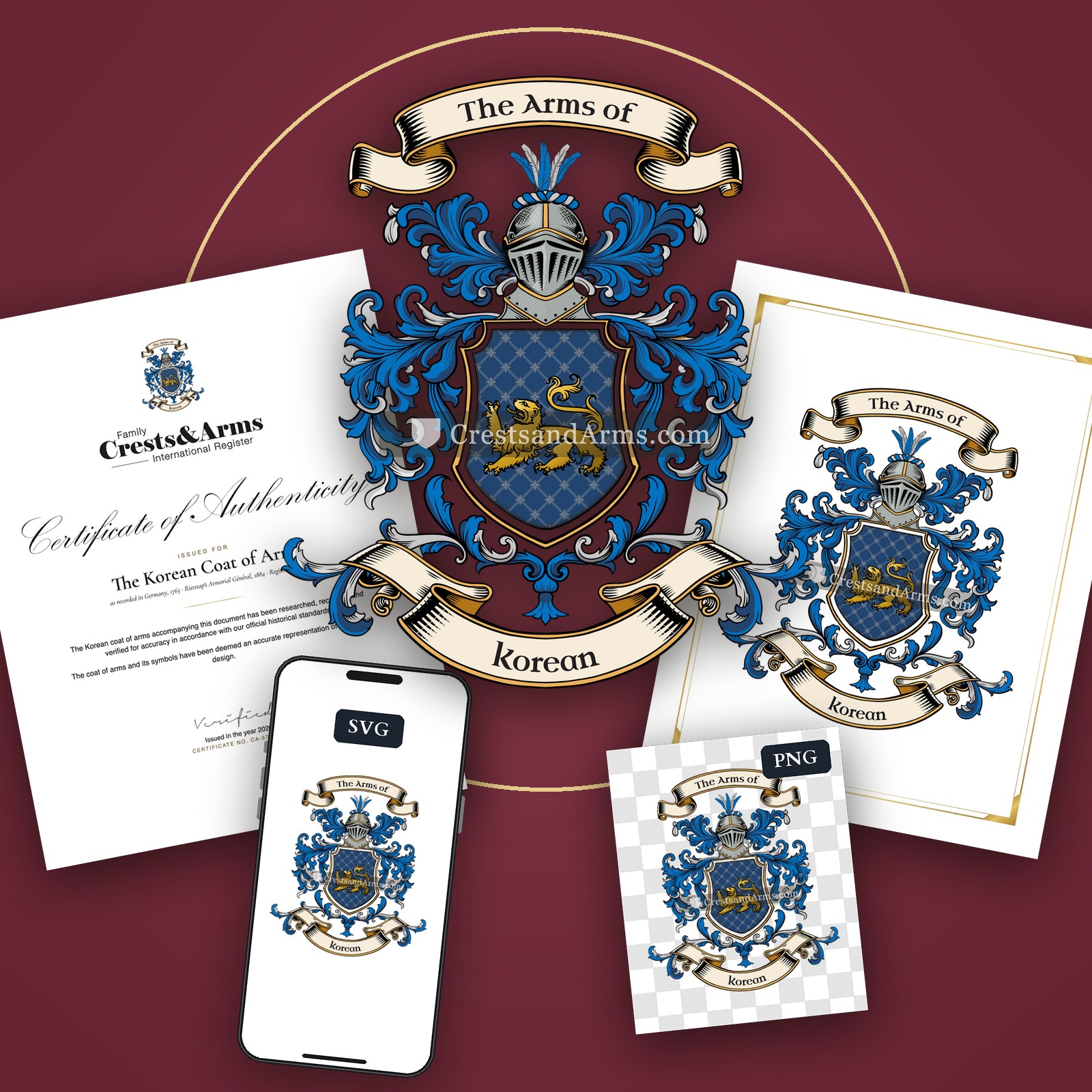
 lionCourage, strength and royalty
 lionCourage, strength and royalty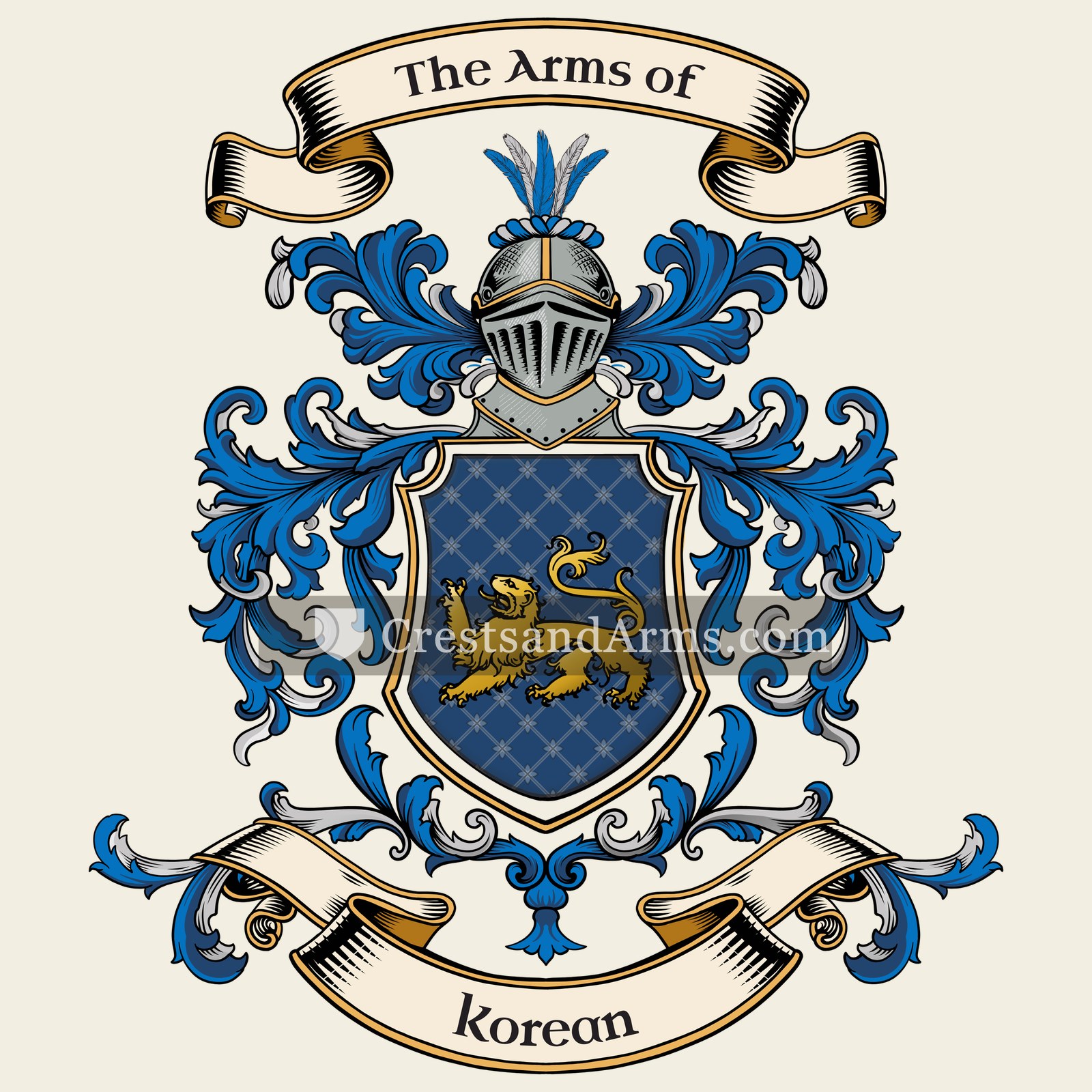


 eagleNobility, strength and a keen mind
 knightChivalry and service in arms