Map of Germany showing where the Krieger arms are recorded
The Krieger arms were recorded in Germany, c. 1765.
Arms such as these were typically recorded in Bavaria.
Bavaria was a country of old landed families and walled market towns. Estates passed down the same line for centuries, and both the landowners and the leading townsmen kept arms, which is why so many Bavarian names sit in the registers.
This is where the arms were entered in the register. Families often moved to other parts of the country, so the same name can turn up in more than one region.
The body that granted and recorded arms in Germany in this period.
Francis I, Holy Roman Emperor
Sovereign of the period
Francis I, Holy Roman Emperor
1745–1765
Reigning in Germany when the Krieger arms are first recorded.
How Arms Worked in Germany
In the Holy Roman Empire, coats of arms were often granted to individuals by the Emperor or his representatives. These arms were then passed down through the generations to all legitimate descendants of the original holder. Younger branches of a family usually kept the same shield design without needing to change it, as the arms belonged to the entire lineage.
Granting authority
The Holy Roman Emperor held the sole power to grant new coats of arms throughout his vast imperial territories.
How they got arms
Families typically obtained their coats of arms through a formal imperial grant or by proving their noble status to the authorities.
Where arms were recorded
These grants were officially recorded in the Imperial Chancery registers, which began keeping formal records of such honors during the Middle Ages.
The family's standing
Recorded among the armigerous families of Germany.
Origin & History of the Krieger Family in Germany
The surname Krieger originates from the Middle High German word *kriec*, which translates to war or struggle. In the context of medieval Germany, this name was typically bestowed as a descriptive nickname for a professional soldier, a mercenary, or perhaps someone with a notably combative or spirited personality. By the time the family was firmly established in the region of Bavaria during the mid-18th century, the name had transitioned from a simple descriptor into a hereditary family identifier. Life in 1765 Bavaria was shaped by the agricultural cycles of the Holy Roman Empire and the strict social structures of the time. Families bearing this name were often integrated into the local village life, working as farmers, tradesmen, or craftsmen. As the name spread across German-speaking lands, it reflected the common experiences of people living through a period of significant regional transition and local governance.
Meaning of the Krieger family crest colors & symbols
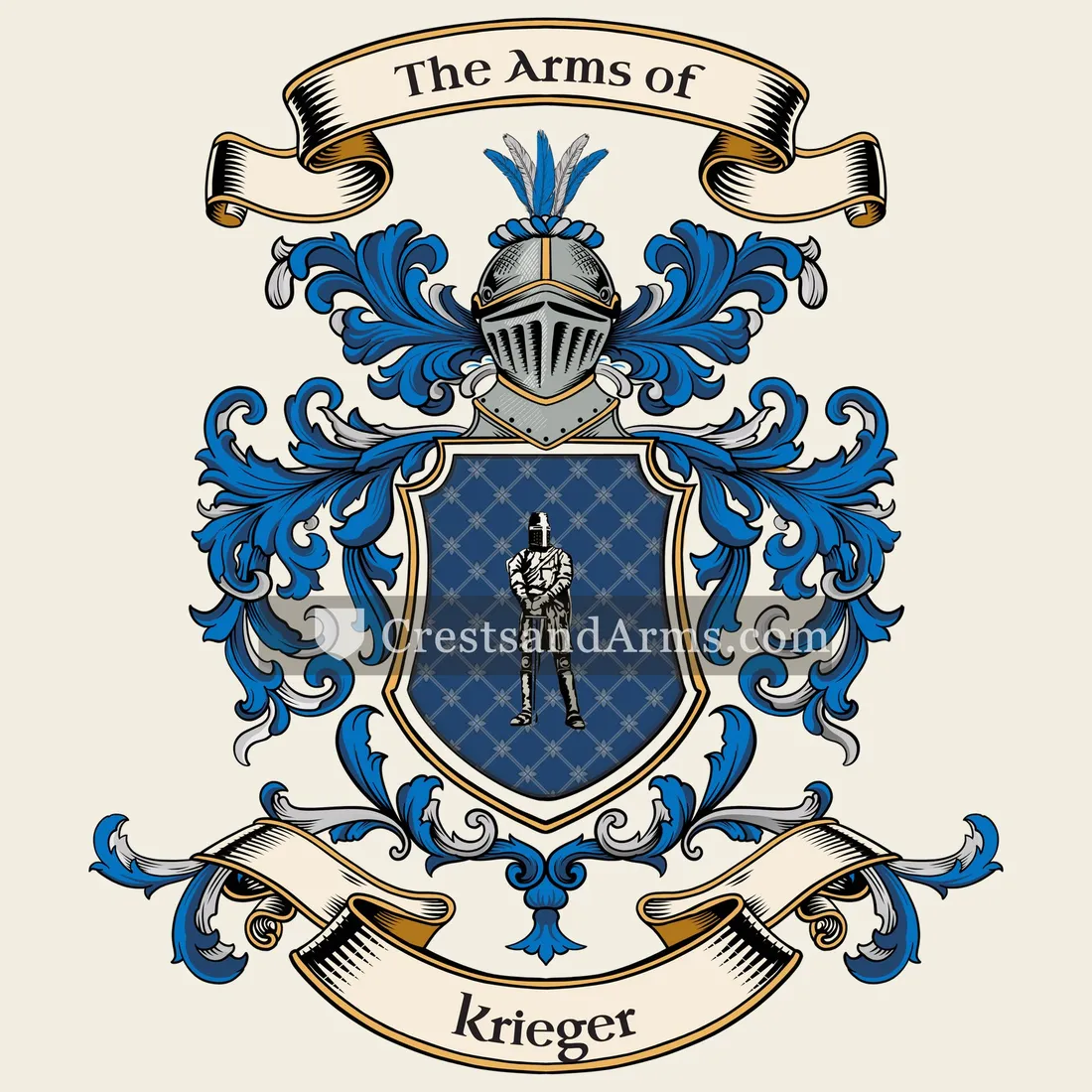
Symbols on this shield
knightChivalry and service in arms
Colours
Blue (Azure)Means: Loyalty and truth
Historical info
Source
J. B. Rietstap, Armorial Général, Gouda: G. B. van Goor Zonen, 1884–87
Blazon (the actual original written record)
“D'azur à un cheval de ...., caparaçonné et bridé de ..., monté par un chevalier arm. de toutes pièces.”
NetherlandsPays-Bas, c. 1815
Digital archive packCoat of arms PNG, gold border print PDF, vector SVG and the certificate of authenticity. Sent to your email in minutes.
Map of Netherlands showing where the Krieger arms are recorded
The Krieger arms were recorded in Pays-Bas, c. 1815.
Arms such as these were typically recorded in Friesland.
Friesland was low, wet country on the northern coast of the Netherlands, farmed by families who had held the same land for centuries. Free landholders were unusually common there, and a free landholder could carry arms.
This is where the arms were entered in the register. Families often moved to other parts of the country, so the same name can turn up in more than one region.
Region
Friesland
Town
Pays-Bas
First recorded
1815
Granting Authority for the Krieger Arms
Hoge Raad van Adel
Photograph made by me · CC BY-SA 3.0
The body that granted and recorded arms in Netherlands in this period.
William I of the Netherlands
Sovereign of the period
William I of the Netherlands
1815–1840
Reigning in Germany when the Krieger arms are first recorded.
How Arms Worked in Netherlands
In the Netherlands, coats of arms were often used by noble families and those who held specific public offices. These arms were passed down through the generations to legitimate descendants. Younger branches of a family usually kept the original design without needing to add special marks. This system ensured that the family identity remained clear and consistent over many years.
Granting authority
The Hoge Raad van Adel is the official body that regulates and manages noble titles and coats of arms in the Netherlands.
How they got arms
Families typically obtained their coats of arms through official royal grants or by proving their long-standing historical use of the symbols.
Where arms were recorded
Coats of arms are officially recorded in the registers held by the Hoge Raad van Adel, which began its work in 1814.
The family's standing
Recorded among the armigerous families of Netherlands.
Origin & History of the Krieger Family in Netherlands
The family name Krieger carries a history deeply rooted in the linguistic shifts of Northern Europe. While the name is Germanic in origin, meaning warrior or soldier, its presence in the Netherlands reflects the movement of people across borders during periods of significant social and political change. By 1815, records confirm that members of the Krieger family were established in the province of Friesland. During this era, the Netherlands underwent a transition into the United Kingdom of the Netherlands following the Napoleonic Wars. The formal registration of surnames became increasingly standardized during this time, often requiring families to solidify their identities in official civil registries. For the Krieger family in Friesland, this period marked a shift from local community recognition to formal documentation within the Dutch state, anchoring their lineage in the region during a pivotal moment in Dutch history.
Meaning of the Krieger family crest colors & symbols
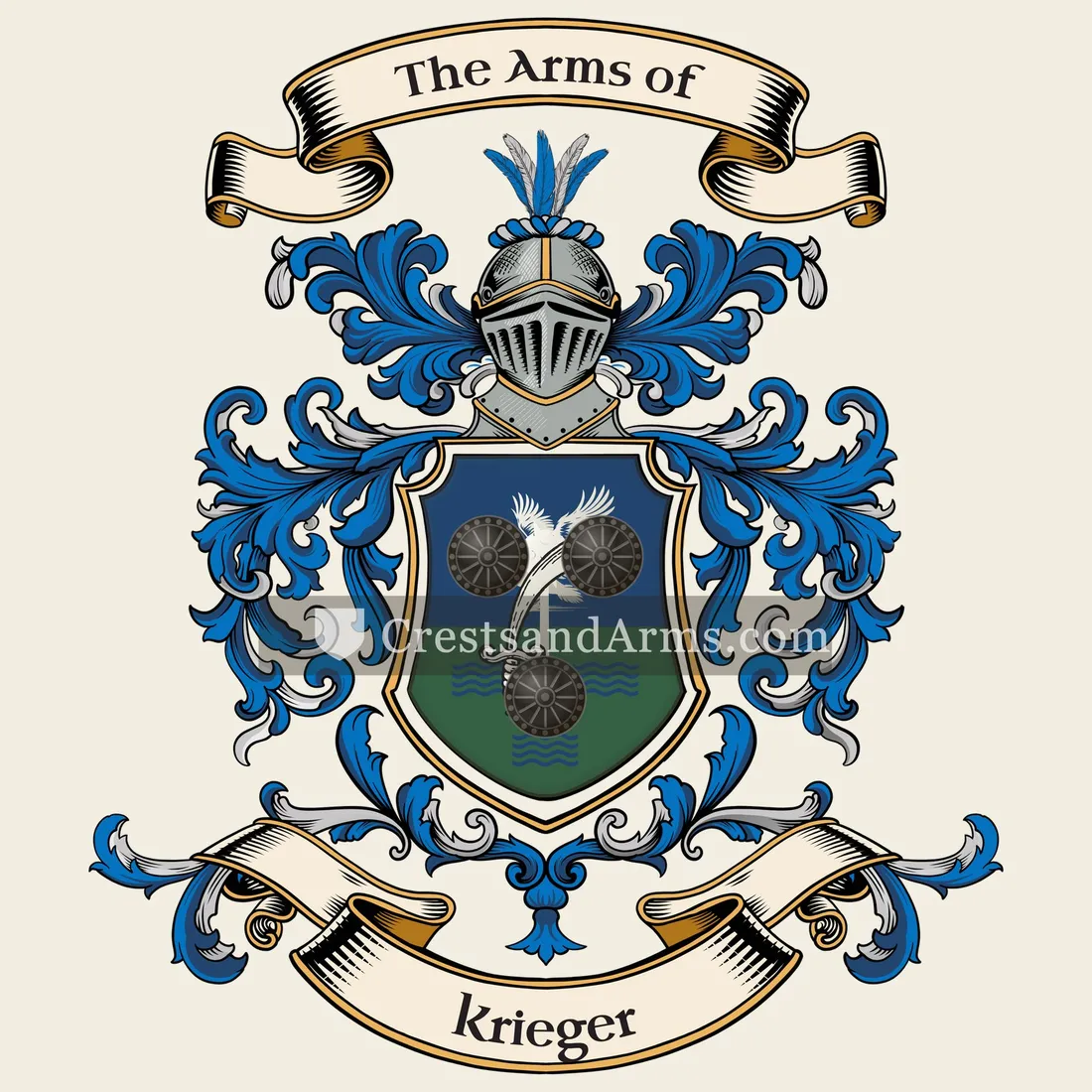
Symbols on this shield
maceAuthority, and the officer who bears it
swordJustice, and military honour
roundelA coin, and one who has been to the crusades
pelicanSelf-sacrifice and devotion to one's children
riverThe bounds of a land, and life carried through it
Colours
Blue (Azure)Means: Loyalty and truth
Green (Vert)Means: Hope
Black (Sable)Means: Constancy
Historical info
Source
J. B. Rietstap, Armorial Général, Gouda: G. B. van Goor Zonen, 1884–87
Blazon (the actual original written record)
“Coupé: au 1 parti: a. d'azur à un pélican pass. au nat., tenant de sa patte dextre un boulet de fer; b. d'arg. à trois rivières en bandes d'azur; au 2 de sin. à une massue et une épée au nat., passées en saut., acc. de trois boulets de fer, 1 en chef et 2 en flancs. C.: un trident, accosté de drapeaux danois.”
Denmarkc. 1797
Digital archive packCoat of arms PNG, gold border print PDF, vector SVG and the certificate of authenticity. Sent to your email in minutes.
Map of Denmark showing where the Krieger arms are recorded
The Krieger arms were recorded in Denmark, c. 1797.
Arms such as these were typically recorded in Sjaælland.
Zealand held the Danish court, the crown's offices and Copenhagen itself. Families who served the king kept estates within reach of it, and royal service was the ordinary route to a coat of arms.
This is where the arms were entered in the register. Families often moved to other parts of the country, so the same name can turn up in more than one region.
The body that granted and recorded arms in Denmark in this period.
Christian VII of Denmark
Sovereign of the period
Christian VII of Denmark
1766–1808
Reigning in Germany when the Krieger arms are first recorded.
How Arms Worked in Denmark
Danish heraldry during this period was closely tied to noble status and royal favor rather than being open to all citizens. Arms were typically granted by the monarch to individuals, and these symbols were then shared by all members of the noble house. If a family line died out, the right to use those specific arms ended with them.
Granting authority
The Danish royal chancery held the power to issue and regulate official coats of arms for the kingdom.
How they got arms
Families usually received their arms through a formal royal grant that confirmed their noble status and rights.
Where arms were recorded
These grants were officially recorded in the Danish Royal Chancery records starting in the sixteenth century.
The family's standing
Recorded among the armigerous families of Denmark.
Origin & History of the Krieger Family in Denmark
The surname Krieger has deep roots in the military and administrative history of Denmark, reflecting a family that rose to prominence through service to the Danish state. While the name itself is of German origin and translates to warrior or soldier, members of the family established a significant presence on the island of Sjælland by the late 18th century. By 1797, the family was already well-integrated into the social and professional fabric of the region, often holding positions of authority within the navy and civil government. This period marked a time when the family began to solidify their status among the Danish elite. Their influence grew as they took on roles that required loyalty and expertise, helping them transition from their ancestral origins into a respected Danish lineage. The history of the Krieger family in Denmark is defined by this steady climb through institutional service, which allowed them to leave a lasting mark on the history of Sjælland.
Krieger Meaning & Related Branches
Root word
Krieg
A conflict, battle, or organized armed struggle between groups.
This name
KriegerAn occupational name for a soldier or a nickname for a bellicose person.
also spelled
Kriegerr
Kriegar
Kriegere
Kreeger
Related arms
Kremersimilar arms
Documented Sources
J. B. Rietstap, Armorial Général, Gouda: G. B. van Goor Zonen, 1884–87
Bahlow, Hans. Deutsches Namenlexikon: Familien- und Vornamen nach Ursprung und Sinn erklärt. 1967
Heintze, Albert. Die deutschen Familiennamen: geschichtlich, geographisch, sprachlich. 1903


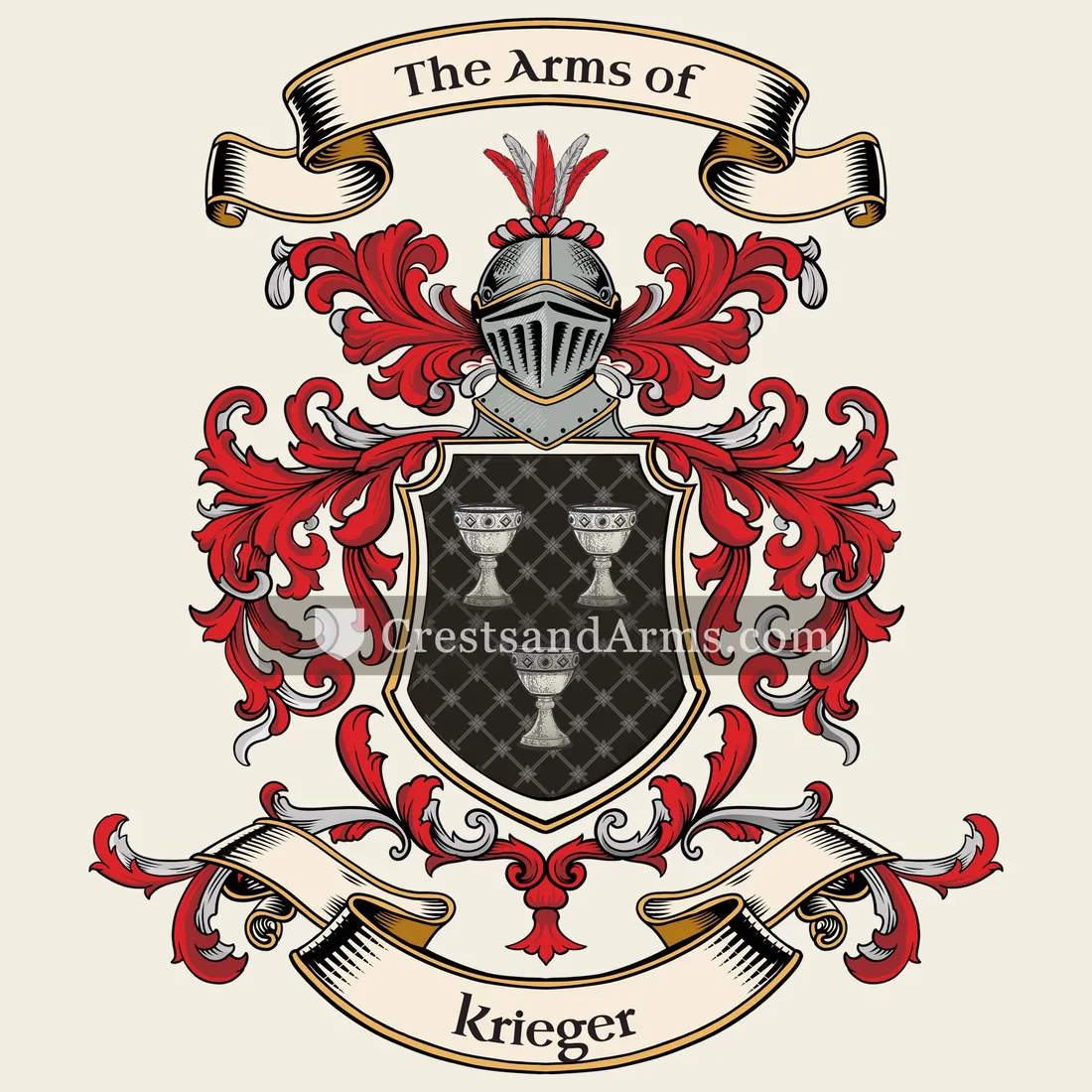
 cupFaith, office, and a trust discharged
 cupFaith, office, and a trust discharged


 knightChivalry and service in arms


 maceAuthority, and the officer who bears it
 swordJustice, and military honour
 roundelA coin, and one who has been to the crusades
 pelicanSelf-sacrifice and devotion to one's children
 riverThe bounds of a land, and life carried through it