Map of Netherlands showing where the Kupa arms are recorded
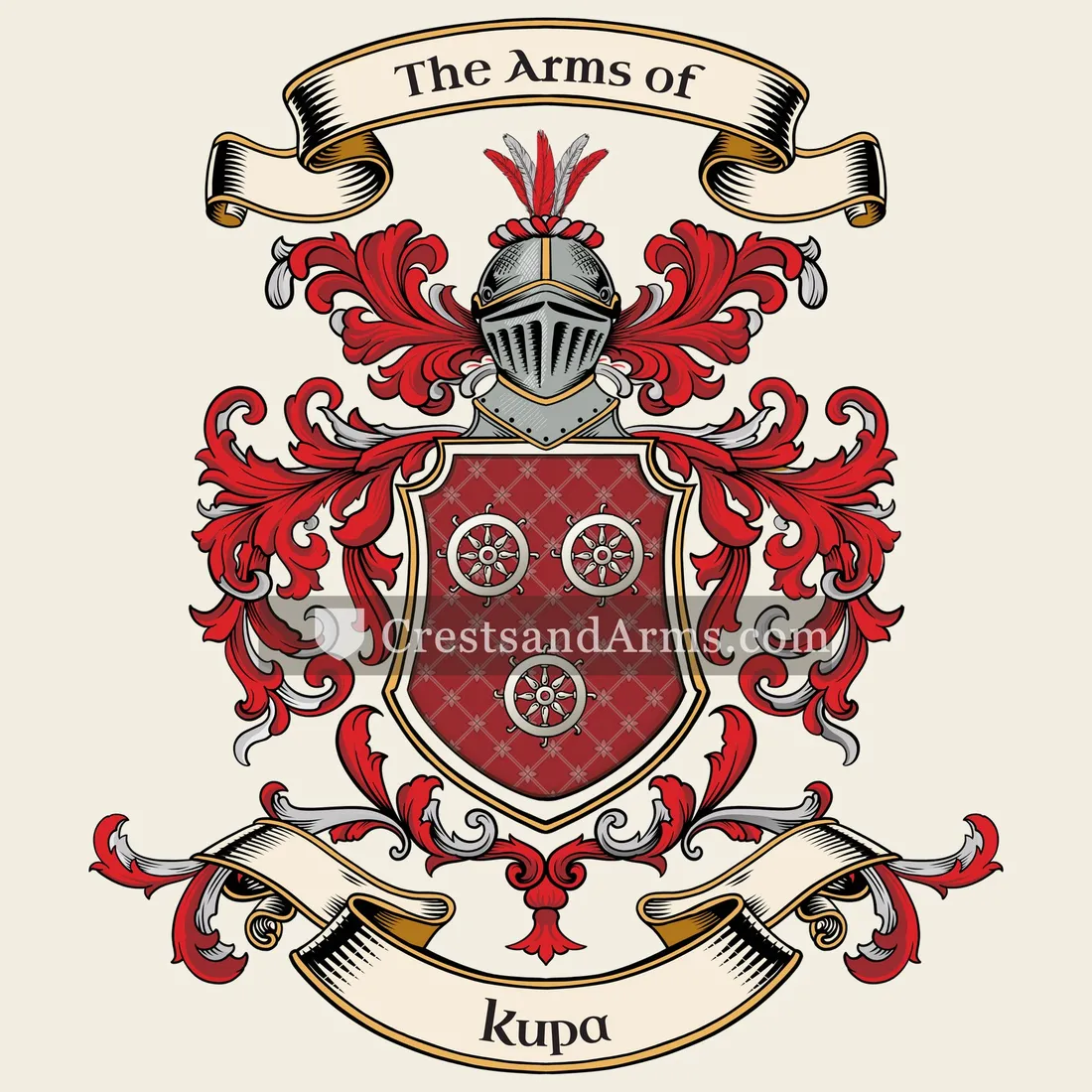
The Kupa arms were recorded in Gorinchem, c. 1725.
This is where the arms were entered in the register. Families often moved to other parts of the country, so the same name can turn up in more than one region.
Region
Gorinchem
Town
Gorinchem
First recorded
1725
Granting Authority for the Kupa Arms
Hoge Raad van Adel
Photograph made by me · CC BY-SA 3.0
The body that granted and recorded arms in Netherlands in this period.
How Arms Worked in Netherlands
In the Netherlands, coats of arms were often used by noble families and those who held specific public offices. These arms were passed down through the generations to legitimate descendants. Younger branches of a family usually kept the original design without needing to add special marks. This system ensured that the family identity remained clear and consistent over many years.
Granting authority
The Hoge Raad van Adel is the official body that regulates and manages noble titles and coats of arms in the Netherlands.
How they got arms
Families typically obtained their coats of arms through official royal grants or by proving their long-standing historical use of the symbols.
Where arms were recorded
Coats of arms are officially recorded in the registers held by the Hoge Raad van Adel, which began its work in 1814.
The family's standing
Recorded among the armigerous families of Netherlands.
Origin & History of the Kupa Family in Netherlands
The history of the Kupa family name is deeply rooted in the Dutch city of Gorinchem, where records confirm the presence of family members as early as 1725. During the eighteenth century, Gorinchem served as a vital fortified town and a bustling center for trade along the Merwede River. Families living in this region often identified themselves through their local occupations or their connection to specific neighborhoods within the city walls. The name Kupa likely emerged during this period of growth as the family established roots in the local community through craftsmanship or river-based commerce. By maintaining a presence in such a strategic location, early generations of the family became part of the long-standing social fabric of the province of South Holland. Their documented history in the city archives provides a clear link to the daily life and administrative traditions of the Netherlands during the early modern era.
Kupa Meaning & Related Branches
Root word
Jacobus
Derived from the Hebrew name Yaakov meaning supplanter or holder of heel.
This name
KupaA Dutch patronymic or occupational surname likely originating as a shortened form of Jacobus or referring to a cooper.
also spelled
Keupp
Keupe
Keub
Koyp
Documented Sources
J. B. Rietstap, Armorial Général, Gouda: G. B. van Goor Zonen, 1884–87


 wheelFortune's turning, and the carter's trade
 wheelFortune's turning, and the carter's trade