Map of Germany showing where the Kutzler arms are recorded
The Kutzler arms were recorded in Nuremberg, c. 1765.
This is where the arms were entered in the register. Families often moved to other parts of the country, so the same name can turn up in more than one region.
The body that granted and recorded arms in Germany in this period.
Francis I, Holy Roman Emperor
Sovereign of the period
Francis I, Holy Roman Emperor
1745–1765
Reigning in Germany when the Kutzler arms are first recorded.
How Arms Worked in Germany
In the Holy Roman Empire, coats of arms were often granted to individuals by the Emperor or his representatives. These arms were then passed down through the generations to all legitimate descendants of the original holder. Younger branches of a family usually kept the same shield design without needing to change it, as the arms belonged to the entire lineage.
Granting authority
The Holy Roman Emperor held the sole power to grant new coats of arms throughout his vast imperial territories.
How they got arms
Families typically obtained their coats of arms through a formal imperial grant or by proving their noble status to the authorities.
Where arms were recorded
These grants were officially recorded in the Imperial Chancery registers, which began keeping formal records of such honors during the Middle Ages.
The family's standing
Recorded among the armigerous families of Germany.
Origin & History of the Kutzler Family in Germany
The surname Kutzler is rooted in the linguistic traditions of southern Germany, where it likely originated as a descriptive name for a person’s occupation or status. In the German language, the suffix "-er" often denotes a person who performs a specific task or lives in a particular place, while the root "Kutz" is associated with historical terms for a small farm or a modest plot of land. By the middle of the 18th century, the family was well-established in the bustling imperial city of Nuremberg. During this period, Nuremberg served as a major center for trade and skilled craftsmanship, which suggests that early Kutzler family members were likely integrated into the city’s vibrant guild system. Living in such a prominent urban hub allowed the family to participate in the economic and social life of the Holy Roman Empire, providing a stable foundation for their descendants to grow and eventually spread across the region.
Coat of Arms & Family Crest Details
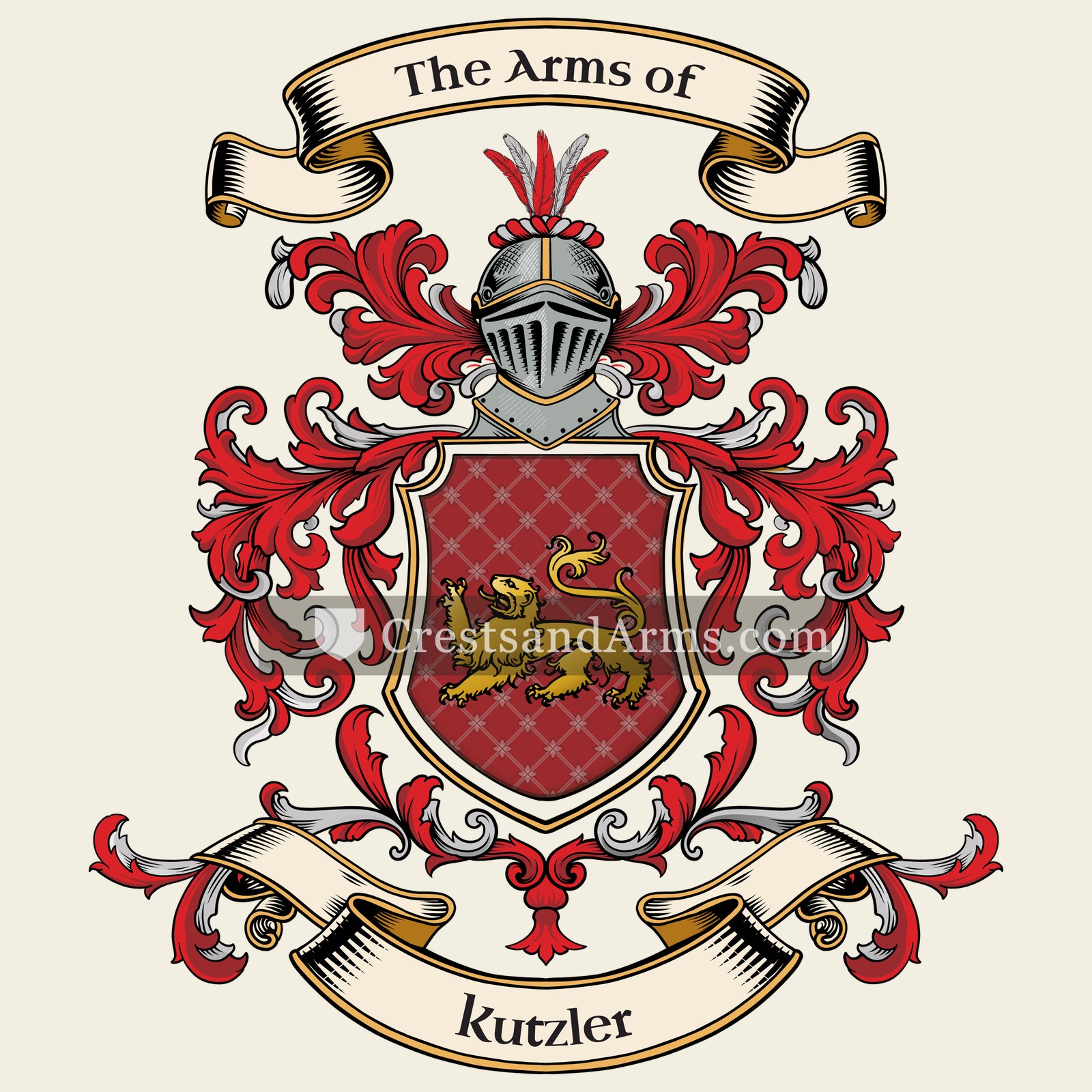
Symbols on this shield
lionCourage, strength and royalty
Colours
Red (Gules)Means: Military strength
Gold (Or)Means: Generosity
Historical info
Source
J. B. Rietstap, Armorial Général, Gouda: G. B. van Goor Zonen, 1884–87
Blazon (the actual original written record)
“De gu. au lion cour., tenant une flèche en pal, le tout d'or. Cq. cour. C.: le lion.”
Austriac. 1772
Digital archive packCoat of arms PNG, gold border print PDF, vector SVG and the certificate of authenticity. Sent to your email in minutes.
Map of Austria showing where the Kutzler arms are recorded
The Kutzler arms were recorded in Austria, c. 1772.
Arms such as these were typically recorded in Tyrol.
Tyrol was mountain country in western Austria, where the valleys were held by families who had been there a very long time. Old tenure counted for more than money, and old families carried arms.
This is where the arms were entered in the register. Families often moved to other parts of the country, so the same name can turn up in more than one region.
Region
Tyrol
First recorded
1772
Granting Authority for the Kutzler Arms
Imperial and Royal chancery
Sodacan · CC BY-SA 3.0
The body that granted and recorded arms in Austria in this period.
Joseph II, Holy Roman Emperor
Sovereign of the period
Joseph II, Holy Roman Emperor
1765–1790
Reigning in Germany when the Kutzler arms are first recorded.
How Arms Worked in Austria
Austrian coats of arms were often linked directly to noble titles granted by the Emperor. These symbols belonged to the entire family line rather than just one individual. When a family grew, new branches kept the original design without needing to change it. This system allowed all members of a noble house to share the same identity across many generations.
Granting authority
The Imperial and Royal chancery managed all heraldic matters and controlled the official granting of arms throughout the Austrian lands.
How they got arms
Families typically received their arms through a formal imperial decree that often accompanied the elevation of a person to noble status.
Where arms were recorded
Official records of these grants were kept in the Imperial Register of Nobility which began its formal documentation process in 1453.
The family's standing
Recorded among the armigerous families of Austria.
Origin & History of the Kutzler Family in Austria
The family name Kutzler finds its historical roots in the rugged landscape of the Austrian Tyrol, where records confirm the family’s presence by 1772. During this period, the region was characterized by small, isolated mountain communities where surnames often evolved from specific occupations or descriptive nicknames related to the local German dialect. The name Kutzler is likely linked to the term "Kutzer," which historically referred to a person who worked with or drove small carts or carriages. As families in the alpine valleys lived in relatively fixed locations for generations, the Kutzlers were likely part of the agrarian or transport-based workforce that kept the mountain trade routes moving. Life in the 18th-century Tyrol was defined by strict adherence to parish records and local customs, meaning that the Kutzler name was preserved through the careful documentation of births, marriages, and land holdings within the Catholic church registries of the region.
Related Branches & Arms
Root word
Kutzel
A diminutive form of the Middle High German word for a cowl.
This name
KutzlerAn occupational surname for a maker or wearer of hooded cloaks or cowls.
also spelled
Koetzler
Ketzler
Cotzler
Documented Sources
J. B. Rietstap, Armorial Général, Gouda: G. B. van Goor Zonen, 1884–87
Heintze, Albert. Die deutschen Familiennamen: geschichtlich, geographisch, sprachlich. 1882
Stadtarchiv Nürnberg. Bürgerbücher der Stadt Nürnberg. 1765
Bahlow, Hans. Deutsches Namenlexikon: Familien- und Vornamen nach Ursprung und Sinn erklärt. 1967
Digital archive packCoat of arms PNG, gold border print PDF, vector SVG and the certificate of authenticity. Sent to your email in minutes.


 treeLife, endurance and deep roots
 hunting horn stringedOne who delights in the chase
 treeLife, endurance and deep roots
 hunting horn stringedOne who delights in the chase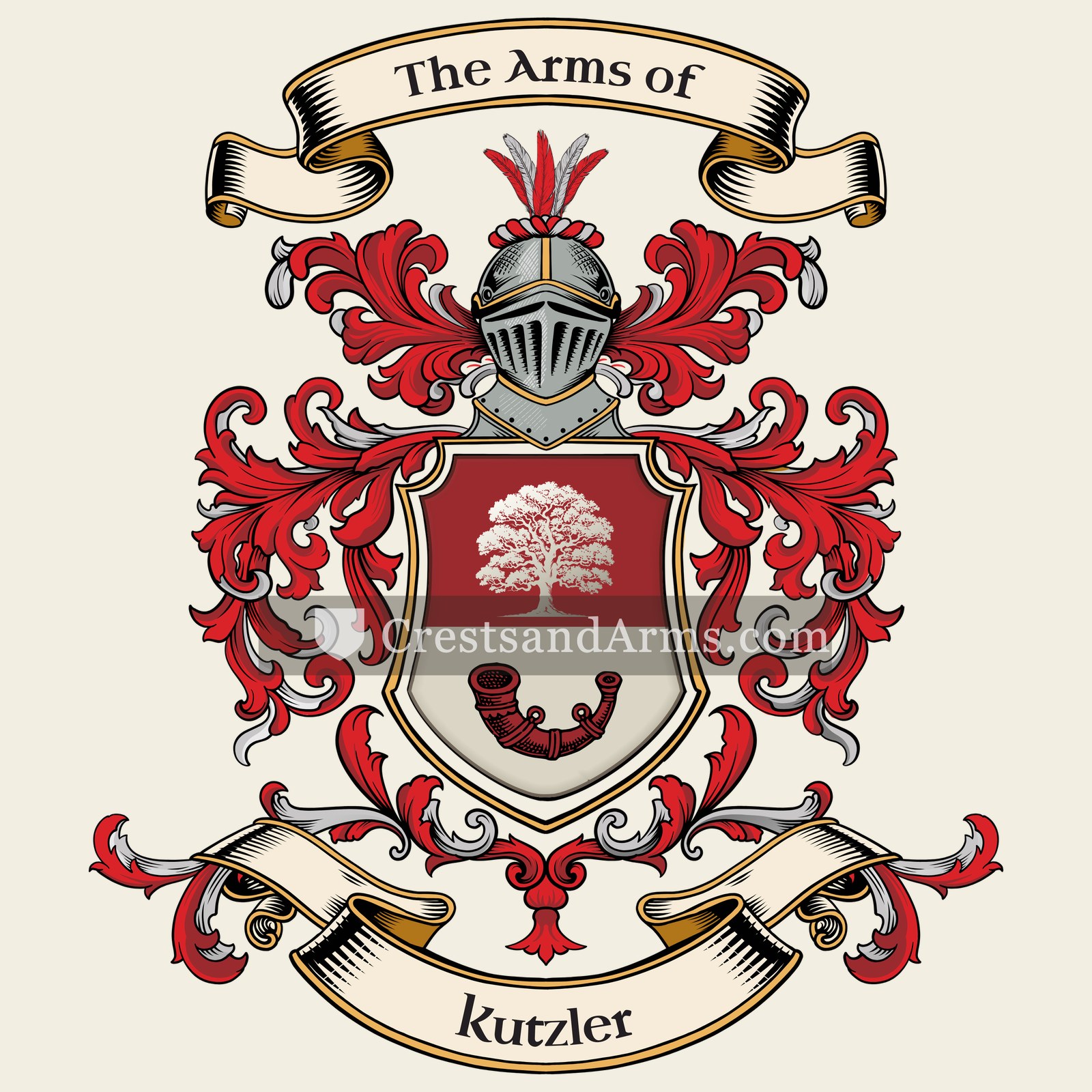


 lionCourage, strength and royalty