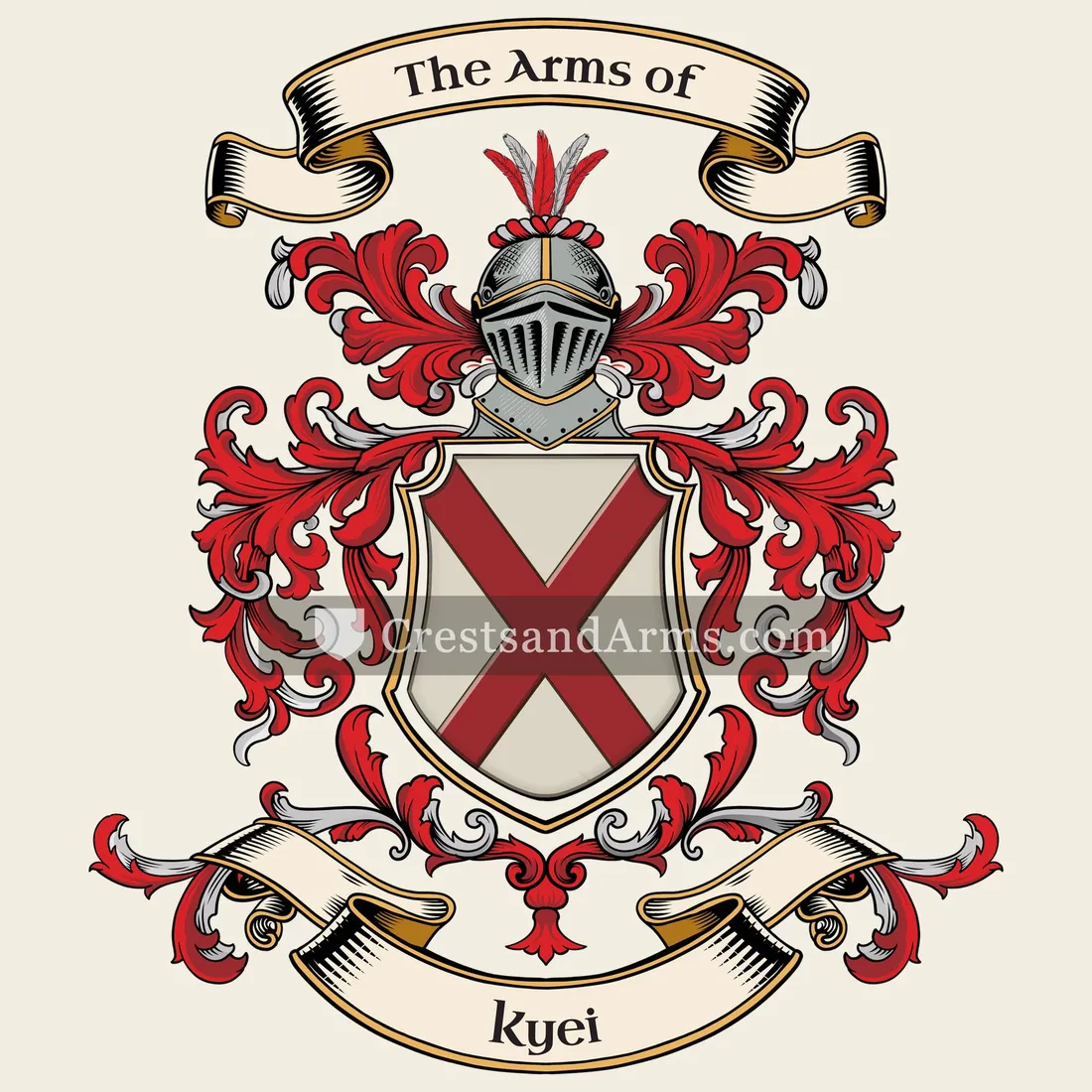
Map of Netherlands showing where the Kyei arms are recorded
The Kyei arms were recorded in Netherlands, c. 1815.
Arms such as these were typically recorded in Friesland.
Friesland was low, wet country on the northern coast of the Netherlands, farmed by families who had held the same land for centuries. Free landholders were unusually common there, and a free landholder could carry arms.
This is where the arms were entered in the register. Families often moved to other parts of the country, so the same name can turn up in more than one region.
Region
Friesland
First recorded
1815
Granting Authority for the Kyei Arms
Hoge Raad van Adel
Photograph made by me · CC BY-SA 3.0
The body that granted and recorded arms in Netherlands in this period.
William I of the Netherlands
Sovereign of the period
William I of the Netherlands
1815–1840
Reigning in Netherlands when the Kyei arms are first recorded.
How Arms Worked in Netherlands
In the Netherlands, coats of arms were often used by noble families and those who held specific public offices. These arms were passed down through the generations to legitimate descendants. Younger branches of a family usually kept the original design without needing to add special marks. This system ensured that the family identity remained clear and consistent over many years.
Granting authority
The Hoge Raad van Adel is the official body that regulates and manages noble titles and coats of arms in the Netherlands.
How they got arms
Families typically obtained their coats of arms through official royal grants or by proving their long-standing historical use of the symbols.
Where arms were recorded
Coats of arms are officially recorded in the registers held by the Hoge Raad van Adel, which began its work in 1814.
The family's standing
Recorded among the armigerous families of Netherlands.
Origin & History of the Kyei Family in Netherlands
The history of the Kyei name in the Netherlands begins in the northern province of Friesland, where records confirm the family was established by 1815. During this period, the Netherlands was undergoing significant social changes following the end of French rule and the establishment of the United Kingdom of the Netherlands. The Kyei family likely integrated into the Frisian community during a time when the government began formalizing civil registration and standardized naming practices for all citizens. Because Friesland has a unique linguistic and cultural identity compared to the rest of the country, the presence of the family there suggests they were part of a localized population that navigated the transition into a modern administrative state. While the name itself carries roots that extend beyond Dutch borders, its appearance in the 1815 Frisian records marks a pivotal moment where the family became officially documented within the Dutch national identity.
Meaning of the Kyei family crest colors & symbols
Colours
Silver (Argent)Means: Peace and sincerity
Historical info
Source
Sir Bernard Burke, The General Armory of England, Scotland, Ireland and Wales, London: Harrison & Sons, 1884
Blazon (the actual original written record)
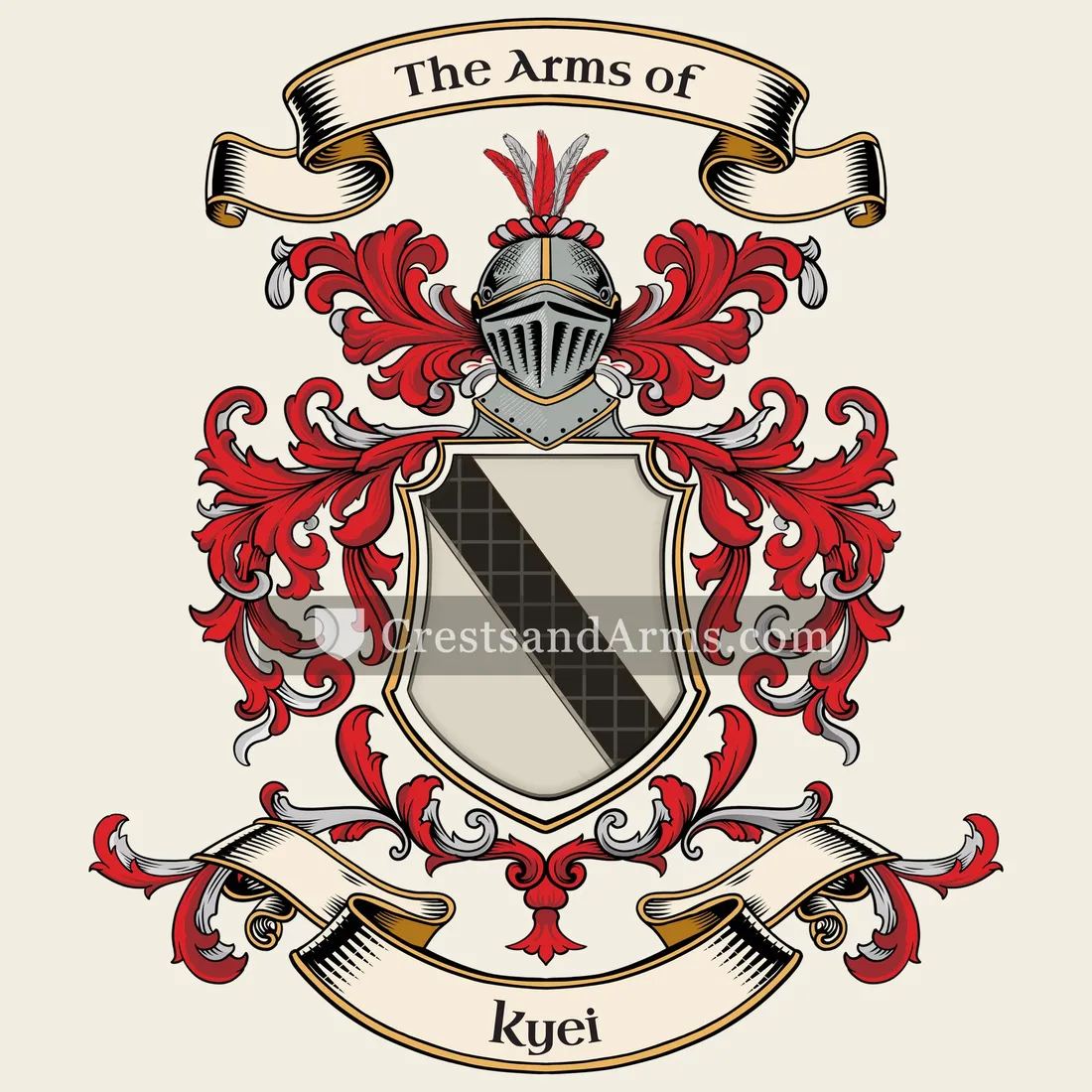
“Ar. two bendlets”
OxfordMilcomb · Oxford, c. 1688
Digital archive packCoat of arms PNG, gold border print PDF, vector SVG and the certificate of authenticity. Sent to your email in minutes.
Map of England showing where the Kyei arms are recorded
The Kyei arms were recorded in Oxford, c. 1688.
Oxfordshire was farming country with the university at its centre, and both produced families of standing. Scholars and lawyers who did well bought manors nearby, and holding a manor was the ordinary route to a coat of arms.
This is where the arms were entered in the register. Families often moved to other parts of the country, so the same name can turn up in more than one region.
The body that granted and recorded arms in England in this period.
James II of England
Sovereign of the period
James II of England
1685–1688
Reigning in Netherlands when the Kyei arms are first recorded.
How Arms Worked in England
English heraldry allowed arms to be shared by all legitimate descendants of the original owner. These symbols were treated as personal property that moved through the generations to all children. While the eldest son kept the original design, other family members could use the same shield without needing to change it or register their own unique versions.
Granting authority
The College of Arms in London has regulated the use of coats of arms throughout England and Wales since 1484.
How they got arms
Families typically obtained their coats of arms through a formal grant from the Crown or by proving their ancient right to them.
Where arms were recorded
All official coats of arms are recorded in the registers kept at the College of Arms, which date back to the fifteenth century.
The family's standing
Recorded among the armigerous families of Oxford.
Origin & History of the Kyei Family in England
The history of the Kyei name in England is deeply rooted in the academic and social landscape of late seventeenth-century Oxford. By 1688, members of the family were already established within the city, a time when Oxford served as a major intellectual hub for the entire country. During this era, the city was a place where people from diverse backgrounds converged to participate in university life and local trade. The presence of the Kyei family in such a prominent location suggests they were part of the growing network of families who contributed to the city's unique cultural character. While the name itself carries deep historical resonance, its early appearance in Oxford records highlights a long-standing connection to one of England’s most historic centers of learning and community development.
Kyei Meaning & Related Branches
Root word
Akan
An ethnic group from West Africa primarily located in Ghana.
This name
KyeiA surname derived from the Akan language, often associated with individuals of Ghanaian heritage.
also spelled
Keyen
Keyes
Key
Kay
Keys
Documented Sources
J. B. Rietstap, Armorial Général, Gouda: G. B. van Goor Zonen, 1884–87
Tresoar (Fries Historisch en Letterkundig Centrum), Burgerlijke Stand van Friesland
Netherlands National Archives (Nationaal Archief), Registers van de Burgerlijke Stand
Digital archive packCoat of arms PNG, gold border print PDF, vector SVG and the certificate of authenticity. Sent to your email in minutes.


 saltireResolution, and St Andrew's cross
 saltireResolution, and St Andrew's cross