Map of France showing where the Laberge arms are recorded
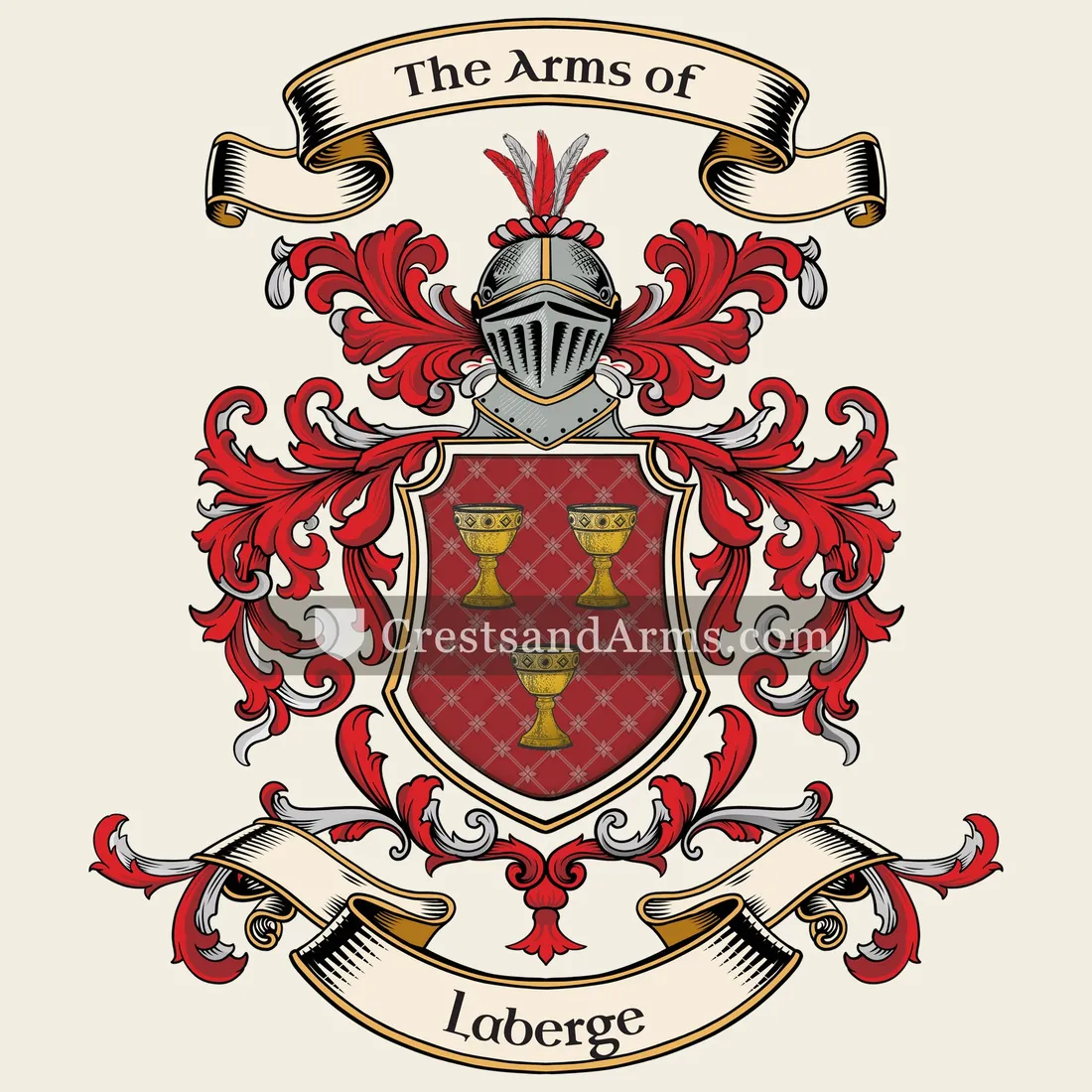
The Laberge arms were recorded in Franche-Comte, c. 1663.
Franche-Comte sat between France and the Empire and changed hands more than once. Border families held their land under arms and expected to defend it, so a shield was a practical thing rather than an ornament.
This is where the arms were entered in the register. Families often moved to other parts of the country, so the same name can turn up in more than one region.
The body that granted and recorded arms in France in this period.
Louis XIV of France
Sovereign of the period
Louis XIV of France
1643–1715
Reigning in France when the Laberge arms are first recorded.
How Arms Worked in France
In France, a coat of arms was a mark of honor that passed down through the male line to all legitimate descendants. Families often used the same shield without changes to show their shared heritage. If a branch wanted to stand out, they could add a small mark to their shield to show their specific place in the family tree.
Granting authority
The Juge d'armes de France acted as the official authority that regulated and verified coats of arms across the country.
How they got arms
Families typically inherited their arms from ancestors, though they could also receive them through royal grants or by proving their noble status.
Where arms were recorded
Coats of arms were officially recorded in the Armorial Général de France, which began its main collection in the year 1696.
The family's standing
Recorded among the armigerous families of Franche-Comte.
Origin & History of the Laberge Family in France
The family name Laberge originates from the historical region of Franche-Comté in eastern France. The name is descriptive and likely refers to someone who lived near a riverbank or a steep slope, as the word "berge" translates to a riverbank or a ledge in French. By 1663, records confirm that members of the family were established in this area before several individuals chose to emigrate to New France. Robert Laberge, who arrived in the colony during the mid-seventeenth century, is recognized as the primary ancestor of the family in North America. These early settlers were often farmers or skilled laborers who helped build the foundations of the new society along the Saint Lawrence River. Their transition from the mountainous terrain of Franche-Comté to the wilderness of Canada marked the beginning of a long history of expansion across the continent.
Laberge Meaning & Related Branches
Root word
berge
A mountain, ridge, or steep riverbank.
This name
LabergeRefers to someone who lived near a mountain or a prominent riverbank.
also spelled
Loberg
Loberges
Loberje
Loberj
Documented Sources
J. B. Rietstap, Armorial Général, Gouda: G. B. van Goor Zonen, 1884–87
Jetté, René. Dictionnaire généalogique des familles du Québec. 1983
Tanguay, Cyprien. Dictionnaire généalogique des familles canadiennes depuis la fondation de la colonie jusqu'à nos jours. 1871
Digital archive packCoat of arms PNG, gold border print PDF, vector SVG and the certificate of authenticity. Sent to your email in minutes.


 cupFaith, office, and a trust discharged
 cupFaith, office, and a trust discharged