Map of France showing where the Lac arms are recorded
The Lac arms were recorded in Beaujolais, c. 1663.
Beaujolais was wine country in eastern France, small but prosperous. Its landowners were modest and numerous, and even a single vineyard estate was enough to justify a coat of arms.
This is where the arms were entered in the register. Families often moved to other parts of the country, so the same name can turn up in more than one region.
The body that granted and recorded arms in France in this period.
Louis XIV of France
Sovereign of the period
Louis XIV of France
1643–1715
Reigning in France when the Lac arms are first recorded.
How Arms Worked in France
In France, a coat of arms was a mark of honor that passed down through the male line to all legitimate descendants. Families often used the same shield without changes to show their shared heritage. If a branch wanted to stand out, they could add a small mark to their shield to show their specific place in the family tree.
Granting authority
The Juge d'armes de France acted as the official authority that regulated and verified coats of arms across the country.
How they got arms
Families typically inherited their arms from ancestors, though they could also receive them through royal grants or by proving their noble status.
Where arms were recorded
Coats of arms were officially recorded in the Armorial Général de France, which began its main collection in the year 1696.
The family's standing
Recorded among the armigerous families of Beaujolais.
Origin & History of the Lac Family in France
The surname Lac is a classic example of a topographic name, which was common in medieval France for families living near a specific natural landmark. In the French language, the word "lac" simply means lake, suggesting that the earliest ancestors of the family likely resided near a prominent body of water or a marshy area. By 1663, historical records confirm the presence of the family in the Beaujolais region, a hilly area north of Lyon known for its vineyards and ancient rural communities. During this period, the family would have been deeply integrated into the local agrarian society, likely working as farmers or tradespeople who identified themselves by their proximity to the local landscape. Because the name is short and descriptive, it likely emerged independently in several different regions of France, though the Beaujolais branch represents a well-documented lineage that maintained deep roots in the local parish records and community life of the seventeenth century.
Meaning of the Lac family crest colors & symbols
Colours
Silver (Argent)Means: Peace and sincerity
Historical info
Source
J. B. Rietstap, Armorial Général, Gouda: G. B. van Goor Zonen, 1884–87
Blazon (the actual original written record)
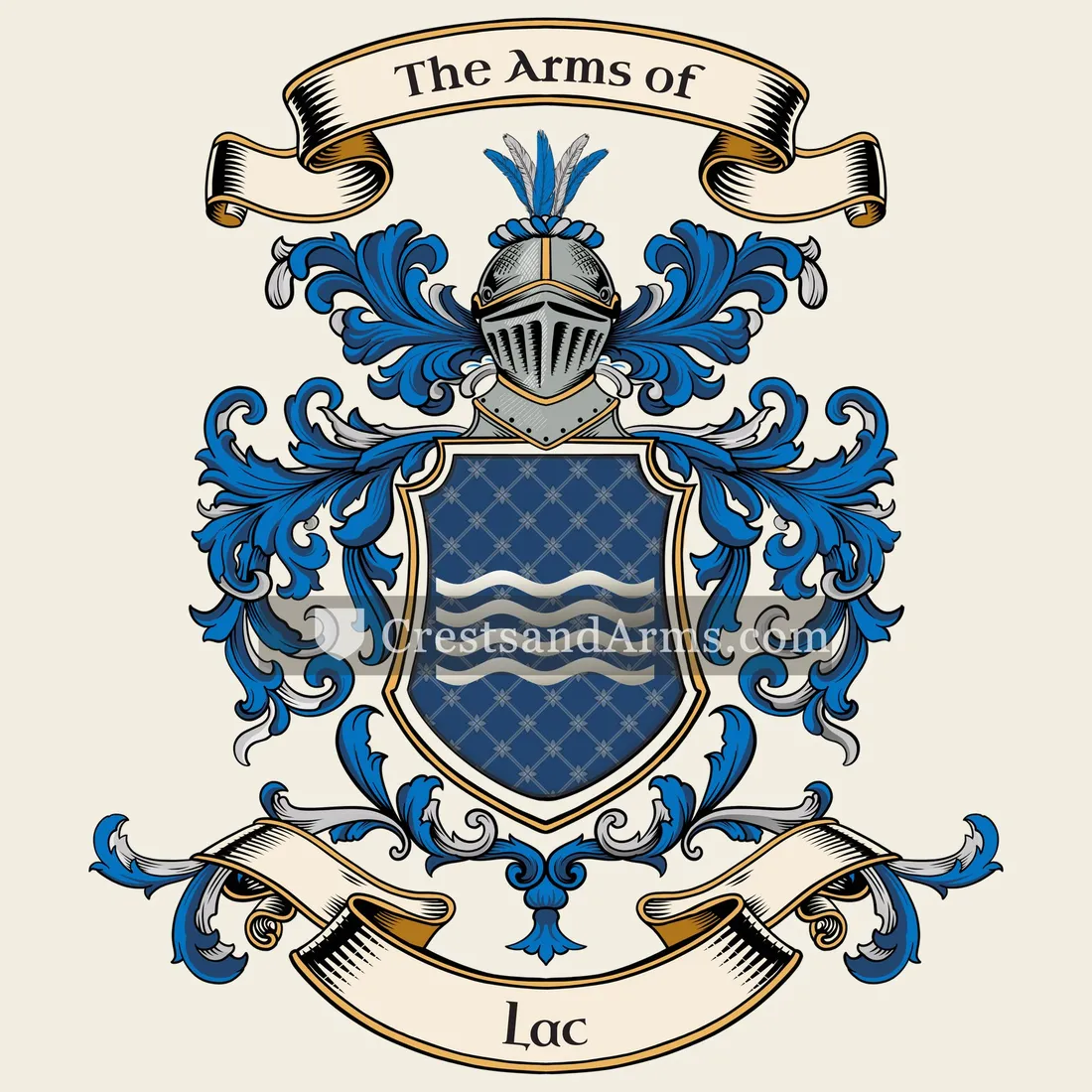
“D'arg. à trois giroflées de gu., tigées et feuillées de sin. C.: un porc-épic de sa. L. d'arg. et de gu.”
BavariaBavaria, c. 1765
Digital archive packCoat of arms PNG, gold border print PDF, vector SVG and the certificate of authenticity. Sent to your email in minutes.
Map of Germany showing where the Lac arms are recorded
The Lac arms were recorded in Bavaria, c. 1765.
Bavaria was a country of old landed families and walled market towns. Estates passed down the same line for centuries, and both the landowners and the leading townsmen kept arms, which is why so many Bavarian names sit in the registers.
This is where the arms were entered in the register. Families often moved to other parts of the country, so the same name can turn up in more than one region.
The body that granted and recorded arms in Germany in this period.
Francis I, Holy Roman Emperor
Sovereign of the period
Francis I, Holy Roman Emperor
1745–1765
Reigning in France when the Lac arms are first recorded.
How Arms Worked in Germany
In the Holy Roman Empire, coats of arms were often granted to individuals by the Emperor or his representatives. These arms were then passed down through the generations to all legitimate descendants of the original holder. Younger branches of a family usually kept the same shield design without needing to change it, as the arms belonged to the entire lineage.
Granting authority
The Holy Roman Emperor held the sole power to grant new coats of arms throughout his vast imperial territories.
How they got arms
Families typically obtained their coats of arms through a formal imperial grant or by proving their noble status to the authorities.
Where arms were recorded
These grants were officially recorded in the Imperial Chancery registers, which began keeping formal records of such honors during the Middle Ages.
The family's standing
Recorded among the armigerous families of Bavaria.
Origin & History of the Lac Family in Germany
The history of the Lac family in Germany is deeply rooted in the cultural landscape of Bavaria, where records confirm their presence by 1765. During this period, the name was often associated with families living in rural or forested regions, as the term itself frequently linked to local geography or specific land features. Life for families in eighteenth-century Bavaria was defined by the agricultural cycles of the region and the strict social structures of the Holy Roman Empire. As members of the community, the Lac family likely participated in the local village economy, which relied heavily on trade, craftsmanship, and farming. Over time, the family name became a permanent marker of their identity within these tight-knit Bavarian communities, reflecting the broader migration patterns and social developments that shaped southern Germany during the late Enlightenment era.
Lac Meaning & Related Branches
Root word
Lacus
Latin term referring to a lake, pool, or basin of water.
This name
LacA topographic name for someone who lived near a lake or a body of water.
also spelled
de Lac
du Lack
de Lack
Dulak
Lac
Documented Sources
J. B. Rietstap, Armorial Général, Gouda: G. B. van Goor Zonen, 1884–87
Archives départementales du Rhône, Registres paroissiaux de la commune de Beaujeu
Dauzat, Albert, Dictionnaire étymologique des noms de famille et prénoms de France, 1951
Morlet, Marie-Thérèse, Dictionnaire étymologique des noms de famille, 1991
Digital archive packCoat of arms PNG, gold border print PDF, vector SVG and the certificate of authenticity. Sent to your email in minutes.


 riverThe bounds of a land, and life carried through it
 riverThe bounds of a land, and life carried through it