A record of documented arms, meaning and origin, researched for the Laden family lines. Documented in 2 countries.
Reg. 6181 · Dutch, J–L
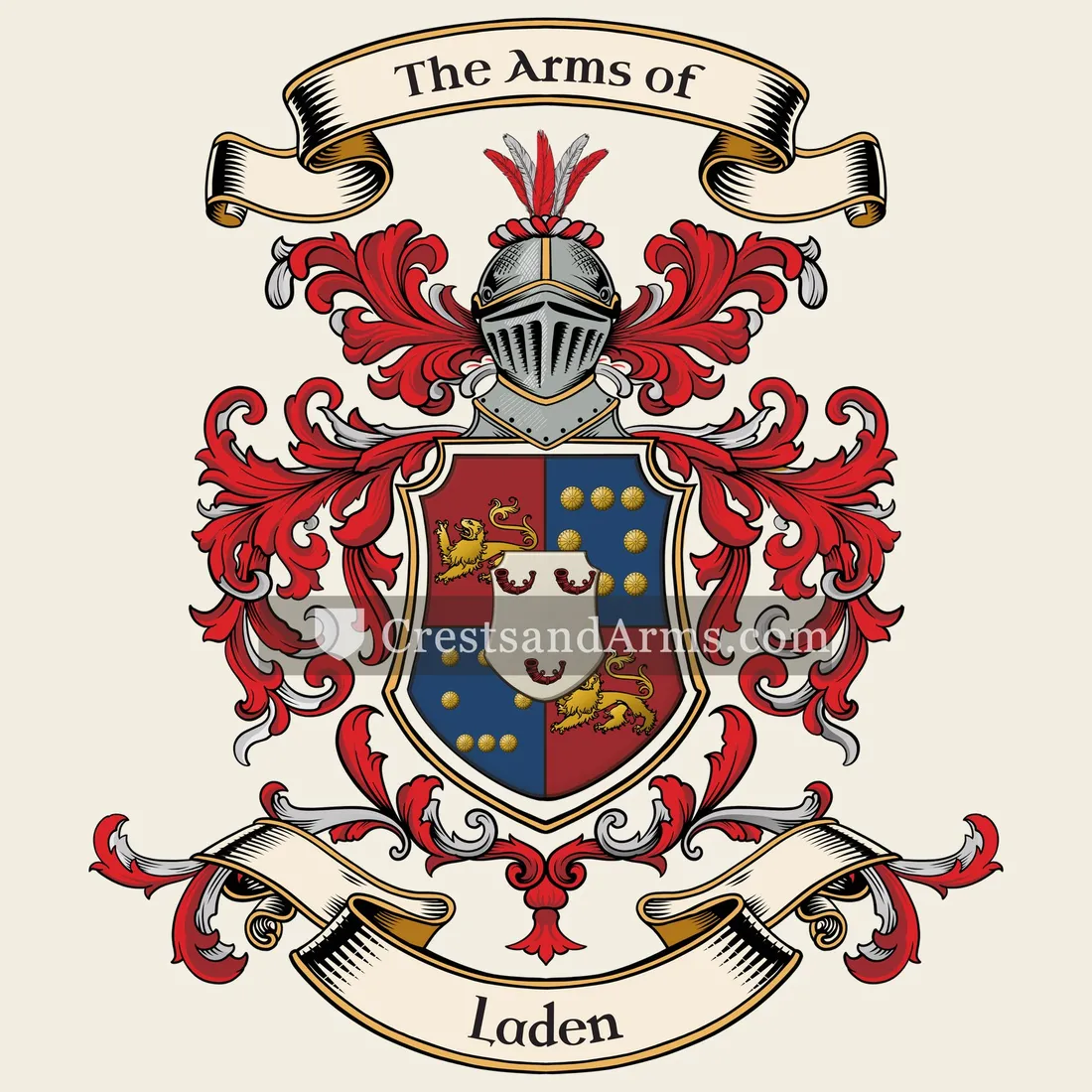
Meaning of the Laden family crest colors & symbols
Symbols on this shield
hunting horn stringedOne who delights in the chase
lionCourage, strength and royalty
roundelA coin, and one who has been to the crusades
Colours
Red (Gules)Means: Military strength
Blue (Azure)Means: Loyalty and truth
Silver (Argent)Means: Peace and sincerity
Gold (Or)Means: Generosity
Historical info
Source
J. B. Rietstap, Armorial Général, Gouda: G. B. van Goor Zonen, 1884–87
Blazon (the actual original written record)
“Ec.: aux 1 et 4 de gu. au lion d'or; aux 2 et 3 d'azur à huit bes. d'or, rangés en saut. (quatre en coeur, 2 et 2, cantonnés des quatre autres dans les angles du quartier). Sur le tout d'arg. à trois huchets de gu., vir. et eng. d'or. C.: le lion, iss., entre un vol de gu.”
NetherlandsAmsterdam, c. 1815
Digital archive packCoat of arms PNG, gold border print PDF, vector SVG and the certificate of authenticity. Sent to your email in minutes.
Map of Netherlands showing where the Laden arms are recorded
The Laden arms were recorded in Amsterdam, c. 1815.
This is where the arms were entered in the register. Families often moved to other parts of the country, so the same name can turn up in more than one region.
Region
Amsterdam
Town
Amsterdam
First recorded
1815
Granting Authority for the Laden Arms
Hoge Raad van Adel
Photograph made by me · CC BY-SA 3.0
The body that granted and recorded arms in Netherlands in this period.
William I of the Netherlands
Sovereign of the period
William I of the Netherlands
1815–1840
Reigning in Netherlands when the Laden arms are first recorded.
How Arms Worked in Netherlands
In the Netherlands, coats of arms were often used by noble families and those who held specific public offices. These arms were passed down through the generations to legitimate descendants. Younger branches of a family usually kept the original design without needing to add special marks. This system ensured that the family identity remained clear and consistent over many years.
Granting authority
The Hoge Raad van Adel is the official body that regulates and manages noble titles and coats of arms in the Netherlands.
How they got arms
Families typically obtained their coats of arms through official royal grants or by proving their long-standing historical use of the symbols.
Where arms were recorded
Coats of arms are officially recorded in the registers held by the Hoge Raad van Adel, which began its work in 1814.
The family's standing
Recorded among the armigerous families of Netherlands.
Origin & History of the Laden Family in Netherlands
The history of the Laden family in the Netherlands centers on the bustling urban environment of Amsterdam during the early nineteenth century. By 1815, the name appeared in official records within the city, a time when the Netherlands was transitioning into the United Kingdom of the Netherlands following the Napoleonic era. During this period, families often settled in Amsterdam to participate in the city's recovery as a major center for trade and craftsmanship. The name likely reflects the linguistic patterns of the region, where surnames were frequently derived from occupational roles or specific geographic markers. As the family established their roots in the capital, they became part of the growing urban population that navigated the social and economic shifts of a newly independent nation. Their presence in the city archives from this era suggests they were integrated into the local community during a pivotal time in Dutch history.
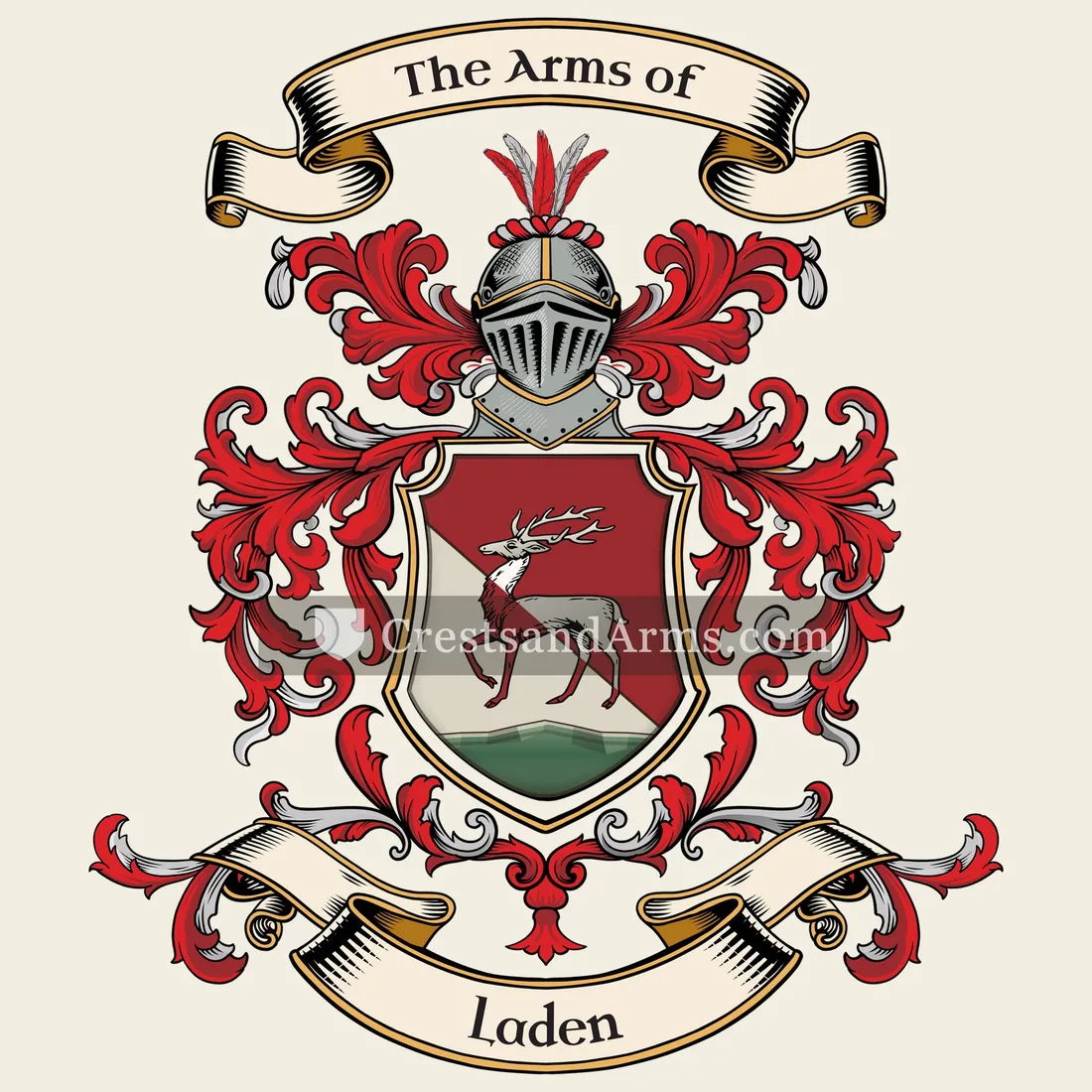
Meaning of the Laden family crest colors & symbols
Symbols on this shield
mountThe ground held, and steadfastness upon it
stagPeace and harmony, and one who will not fight unprovoked
Colours
Silver (Argent)Means: Peace and sincerity
Red (Gules)Means: Military strength
Green (Vert)Means: Hope
Historical info
Source
J. B. Rietstap, Armorial Général, Gouda: G. B. van Goor Zonen, 1884–87
Blazon (the actual original written record)
“Taillé d'arg. sur gu.; à un cerf ramp. de l'un en l'autre, soutenu d'un tertre de sin. Cq. cour. C.: un homme iss., hab. d'un parti d'arg. et de gu., coiffé d'un bonnet albanais de gu., tenant de chaque main une demi-ramure de cerf du même.”
FranconiaFranconia, c. 1765
Digital archive packCoat of arms PNG, gold border print PDF, vector SVG and the certificate of authenticity. Sent to your email in minutes.
Map of Germany showing where the Laden arms are recorded
The Laden arms were recorded in Franconia, c. 1765.
Franconia was a patchwork of small territories in central Germany, full of minor landowners and prosperous market towns. So many separate households held land there that the region produced a great many coats of arms.
This is where the arms were entered in the register. Families often moved to other parts of the country, so the same name can turn up in more than one region.
The body that granted and recorded arms in Germany in this period.
Francis I, Holy Roman Emperor
Sovereign of the period
Francis I, Holy Roman Emperor
1745–1765
Reigning in Netherlands when the Laden arms are first recorded.
How Arms Worked in Germany
In the Holy Roman Empire, coats of arms were often granted to individuals by the Emperor or his representatives. These arms were then passed down through the generations to all legitimate descendants of the original holder. Younger branches of a family usually kept the same shield design without needing to change it, as the arms belonged to the entire lineage.
Granting authority
The Holy Roman Emperor held the sole power to grant new coats of arms throughout his vast imperial territories.
How they got arms
Families typically obtained their coats of arms through a formal imperial grant or by proving their noble status to the authorities.
Where arms were recorded
These grants were officially recorded in the Imperial Chancery registers, which began keeping formal records of such honors during the Middle Ages.
The family's standing
Recorded among the armigerous families of Franconia.
Origin & History of the Laden Family in Germany
The family name Laden finds its historical roots in the region of Franconia, a cultural area in southern Germany known for its distinct dialects and long-standing traditions. By 1765, records confirm that members of the family were established in this territory, which was then a patchwork of small principalities and ecclesiastical states. The name itself likely originated as a topographical or occupational descriptor, as the German word "Laden" refers to a shop, a shutter, or a wooden board. In the context of 18th-century village life, such a name often identified an ancestor who worked as a merchant, a carpenter, or someone who lived near a prominent storefront. These early family members were part of a stable, agrarian society where surnames were becoming increasingly fixed to help local officials track taxes and parish records. Living in Franconia during this era meant navigating the complex social structures of the Holy Roman Empire, where the family likely contributed to the local economy through skilled craftsmanship or trade.
Laden Meaning & Related Branches
Root word
Lade
A Dutch term referring to a drawer, chest, or a watercourse.
This name
LadenLikely originated as a topographic name for someone living near a canal or a maker of chests.
also spelled
Lueden
Luddens
Documented Sources
J. B. Rietstap, Armorial Général, Gouda: G. B. van Goor Zonen, 1884–87
Stadsarchief Amsterdam, Burgerlijke Stand (Civil Registry) 1811–1815
Nationaal Archief, Bevolkingsregisters van Amsterdam
Fokkens, A., Geschiedenis van Amsterdam, 2005
Van Driel, L., Nederlandse Familienamen in de 19e Eeuw, 1998
Digital archive packCoat of arms PNG, gold border print PDF, vector SVG and the certificate of authenticity. Sent to your email in minutes.


 hunting horn stringedOne who delights in the chase
 lionCourage, strength and royalty
 roundelA coin, and one who has been to the crusades
 hunting horn stringedOne who delights in the chase
 lionCourage, strength and royalty
 roundelA coin, and one who has been to the crusades


 mountThe ground held, and steadfastness upon it
 stagPeace and harmony, and one who will not fight unprovoked