Map of Netherlands showing where the Lage arms are recorded
The Lage arms were recorded in Netherlands, c. 1815.
Arms such as these were typically recorded in Friesland.
Friesland was low, wet country on the northern coast of the Netherlands, farmed by families who had held the same land for centuries. Free landholders were unusually common there, and a free landholder could carry arms.
This is where the arms were entered in the register. Families often moved to other parts of the country, so the same name can turn up in more than one region.
Region
Friesland
First recorded
1815
Granting Authority for the Lage Arms
Hoge Raad van Adel
Photograph made by me · CC BY-SA 3.0
The body that granted and recorded arms in Netherlands in this period.
William I of the Netherlands
Sovereign of the period
William I of the Netherlands
1815–1840
Reigning in Netherlands when the Lage arms are first recorded.
How Arms Worked in Netherlands
In the Netherlands, coats of arms were often used by noble families and those who held specific public offices. These arms were passed down through the generations to legitimate descendants. Younger branches of a family usually kept the original design without needing to add special marks. This system ensured that the family identity remained clear and consistent over many years.
Granting authority
The Hoge Raad van Adel is the official body that regulates and manages noble titles and coats of arms in the Netherlands.
How they got arms
Families typically obtained their coats of arms through official royal grants or by proving their long-standing historical use of the symbols.
Where arms were recorded
Coats of arms are officially recorded in the registers held by the Hoge Raad van Adel, which began its work in 1814.
The family's standing
Recorded among the armigerous families of Netherlands.
Origin & History of the Lage Family in Netherlands
The surname Lage is rooted in the landscape of the Netherlands, where it functioned as a topographical descriptor for families living in low-lying areas. In the Dutch language, the word "lage" translates to "low," suggesting that the earliest ancestors likely resided in the flat, marshy regions characteristic of the northern provinces. By the early 19th century, records confirm that members of the family were established in the province of Friesland. This region was historically defined by its unique legal traditions and its close connection to the sea, which shaped the lives of those living on the low-lying coastal plains. As the family settled into these Frisian communities by 1815, the name served as a permanent link to the geography of their home, marking them as people of the lowlands who had integrated into the local social fabric of the Dutch countryside.
Meaning of the Lage family crest colors & symbols
Symbols on this shield
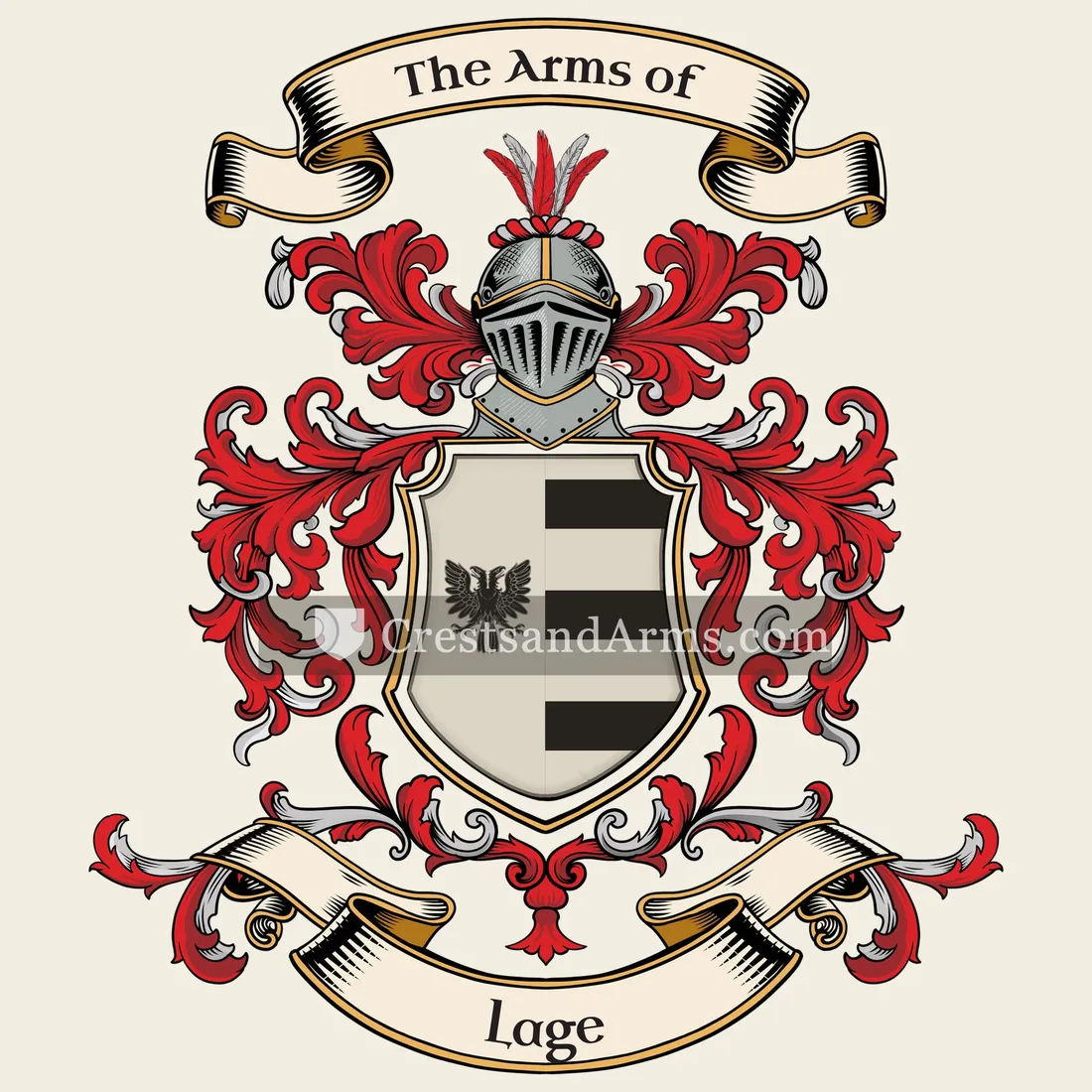
fessThe military belt, and readiness to serve
eagleNobility, strength and a keen mind
Colours
Silver (Argent)Means: Peace and sincerity
Black (Sable)Means: Constancy
Historical info
Source
J. B. Rietstap, Armorial Général, Gouda: G. B. van Goor Zonen, 1884–87
Blazon (the actual original written record)
“Parti: au 1 d'arg. à la demi-aigle de sa., bq. et m. d'or, mouv. du parti; au 2 d'arg. à trois fasces de gu. Cq. cour. C.: un demi-vol de sa. à dextre, et deux échelles d'escalade affr. de gu. à sen.”
SaxonySaxony, c. 1765
Digital archive packCoat of arms PNG, gold border print PDF, vector SVG and the certificate of authenticity. Sent to your email in minutes.
Map of Germany showing where the Lage arms are recorded
The Lage arms were recorded in Saxony, c. 1765.
Saxony had mines, trade and old landed families all at once. Silver made some fortunes and land held others, and both sorts of family kept arms, which is why Saxon names appear so often in the registers.
This is where the arms were entered in the register. Families often moved to other parts of the country, so the same name can turn up in more than one region.
The body that granted and recorded arms in Germany in this period.
Francis I, Holy Roman Emperor
Sovereign of the period
Francis I, Holy Roman Emperor
1745–1765
Reigning in Netherlands when the Lage arms are first recorded.
How Arms Worked in Germany
In the Holy Roman Empire, coats of arms were often granted to individuals by the Emperor or his representatives. These arms were then passed down through the generations to all legitimate descendants of the original holder. Younger branches of a family usually kept the same shield design without needing to change it, as the arms belonged to the entire lineage.
Granting authority
The Holy Roman Emperor held the sole power to grant new coats of arms throughout his vast imperial territories.
How they got arms
Families typically obtained their coats of arms through a formal imperial grant or by proving their noble status to the authorities.
Where arms were recorded
These grants were officially recorded in the Imperial Chancery registers, which began keeping formal records of such honors during the Middle Ages.
The family's standing
Recorded among the armigerous families of Saxony.
Origin & History of the Lage Family in Germany
The family name Lage is rooted in the northern regions of Germany, where it functioned as a topographic surname. In the German language, the word "Lage" refers to a specific location, position, or situation, often describing a settlement situated in a valley or near a distinct landscape feature. By the mid-18th century, members of the family were firmly established in the region of Saxony. During this period, Saxony was a center of agricultural and industrial growth, and families like the Lages were often tied to the land or local trade guilds. As the family grew in this area by 1765, they became part of the social fabric of rural German life, where surnames were increasingly used by officials to track taxpayers and parish members. This transition from a descriptive term for a place to a formal family name reflects the broader movement toward organized record-keeping in German society during the Enlightenment era.
Meaning of the Lage family crest colors & symbols
Symbols on this shield
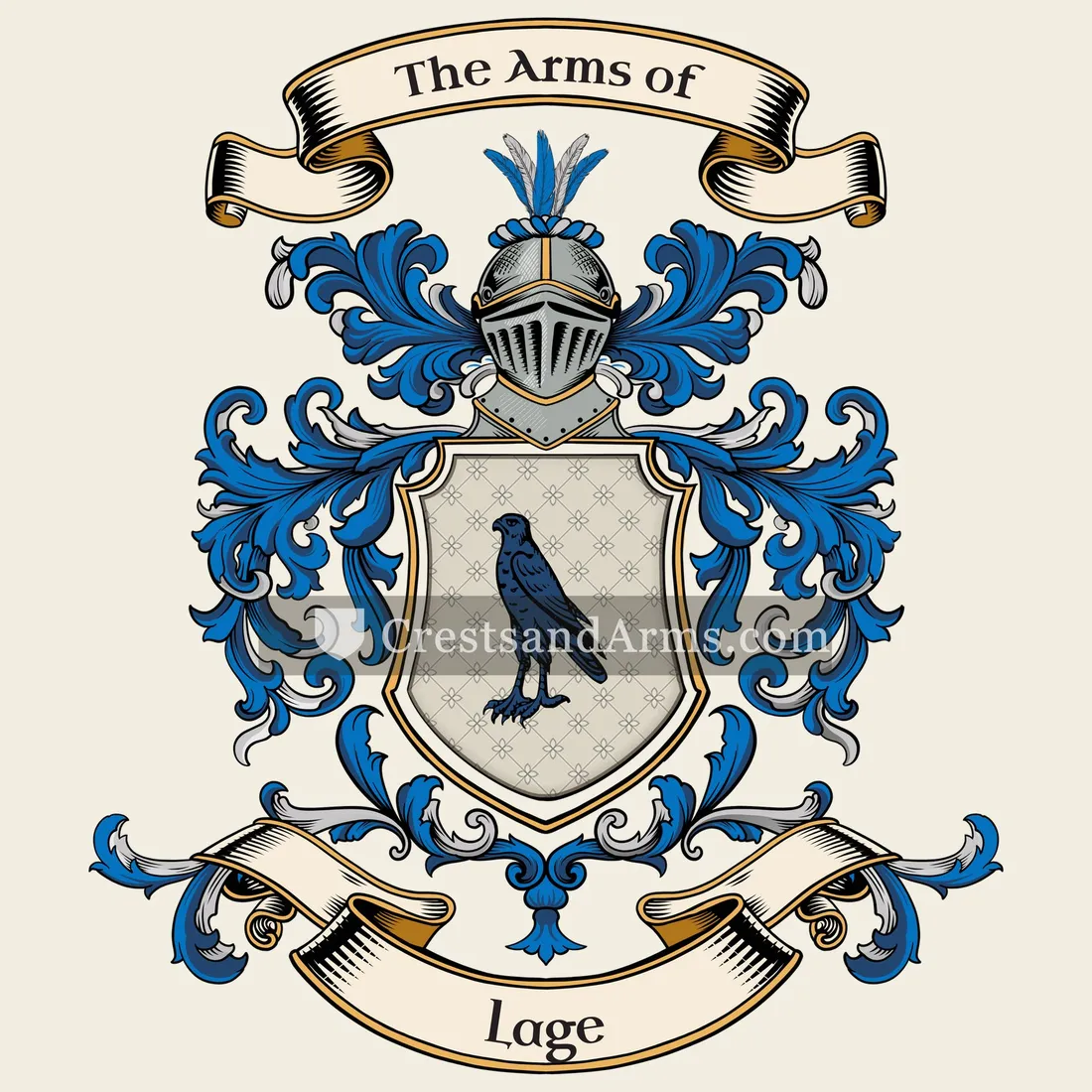
falconOne eager and quick in pursuit
Colours
Silver (Argent)Means: Peace and sincerity
Blue (Azure)Means: Loyalty and truth
Historical info
Source
J. B. Rietstap, Armorial Général, Gouda: G. B. van Goor Zonen, 1884–87
Blazon (the actual original written record)
“D'arg. à un épervier ess. d'azur, arm. et cour. d'or, tenant dans la serre dextre un poisson du même.”
AngoumoisAngoumois, c. 1663
Digital archive packCoat of arms PNG, gold border print PDF, vector SVG and the certificate of authenticity. Sent to your email in minutes.
Map of France showing where the Lage arms are recorded
The Lage arms were recorded in Angoumois, c. 1663.
Angoumois was small western French country centred on Angouleme, living on paper mills and river trade. Families who prospered bought land nearby, and land brought arms with it.
This is where the arms were entered in the register. Families often moved to other parts of the country, so the same name can turn up in more than one region.
The body that granted and recorded arms in France in this period.
Louis XIV of France
Sovereign of the period
Louis XIV of France
1643–1715
Reigning in Netherlands when the Lage arms are first recorded.
How Arms Worked in France
In France, a coat of arms was a mark of honor that passed down through the male line to all legitimate descendants. Families often used the same shield without changes to show their shared heritage. If a branch wanted to stand out, they could add a small mark to their shield to show their specific place in the family tree.
Granting authority
The Juge d'armes de France acted as the official authority that regulated and verified coats of arms across the country.
How they got arms
Families typically inherited their arms from ancestors, though they could also receive them through royal grants or by proving their noble status.
Where arms were recorded
Coats of arms were officially recorded in the Armorial Général de France, which began its main collection in the year 1696.
The family's standing
Recorded among the armigerous families of Angoumois.
Origin & History of the Lage Family in France
The surname Lage originates from the historical province of Angoumois in southwestern France, where records confirm the family was established by at least 1663. The name itself is topographical in nature, derived from the Old French word "lage" or "lagea," which was often used to describe a specific type of meadow or low-lying land near a water source. Families during this period frequently adopted surnames based on the physical features of their homesteads to distinguish themselves within rural communities. By the mid-17th century, the individuals bearing this name were deeply integrated into the local agricultural and social fabric of the Angoumois region. As they navigated the complex feudal structures of the time, the family likely maintained ties to the land through generations of farming or local trade. This connection to the geography of the Charente area provided the foundation for the family identity long before the name spread to other parts of France and beyond.
Lage Meaning & Related Branches
Root word
Lage
Derived from the Middle Dutch word for low or flat land.
This name
LageA topographic name for someone who lived in a low-lying area or valley.
also spelled
Lagee
Lagge
Lageh
Lahzh
Documented Sources
J. B. Rietstap, Armorial Général, Gouda: G. B. van Goor Zonen, 1884–87
AlleFriezen, Burgerlijke Stand Geboorteakten (1811-1910)
Nationaal Archief, Bevolkingsregisters van Friesland (1811-1850)
Berkhout, F., Nederlandse Familienamen: Herkomst en Betekenis, 1998
Van der Schaar, J., Woordenboek van voornamen en familienamen, 1988
Digital archive packCoat of arms PNG, gold border print PDF, vector SVG and the certificate of authenticity. Sent to your email in minutes.


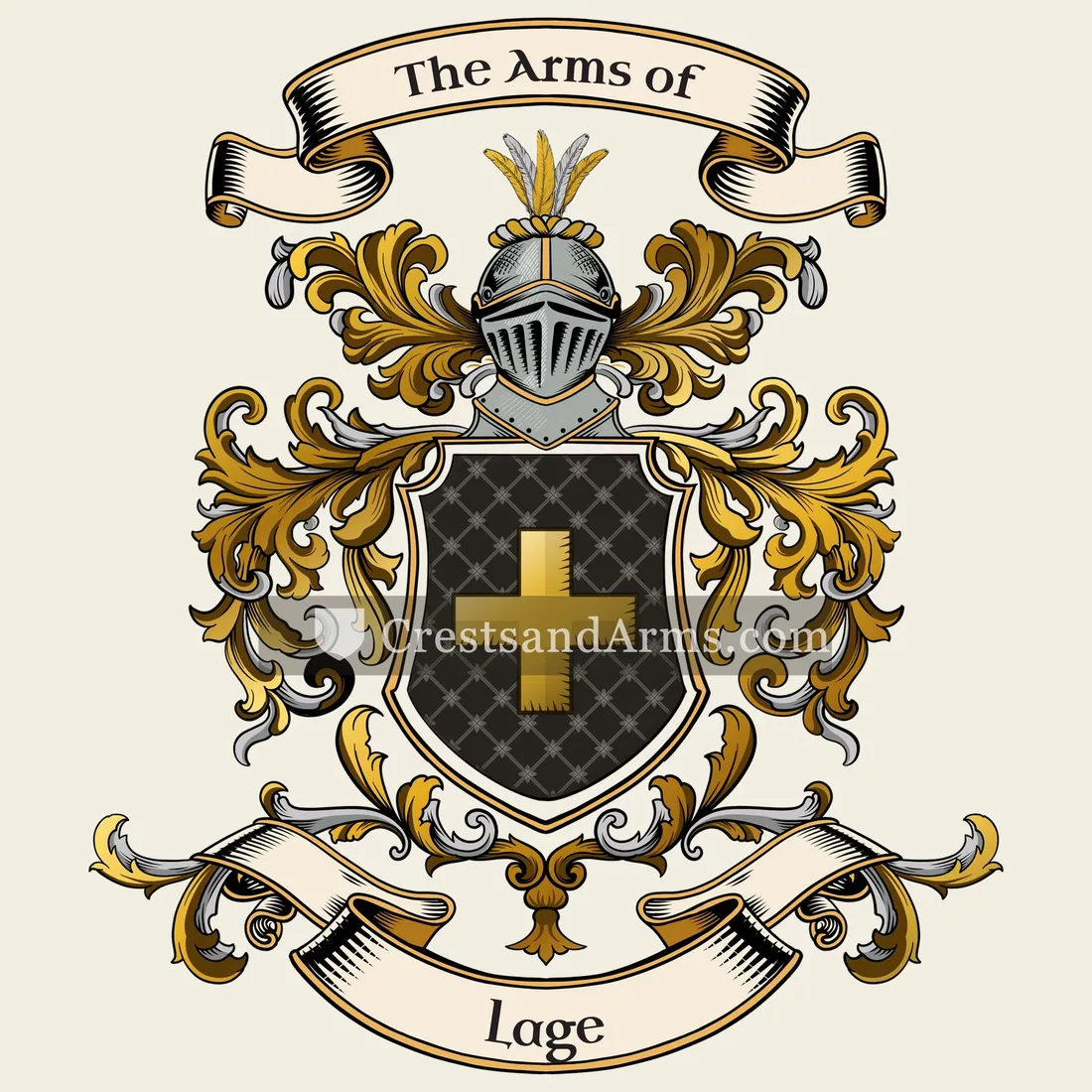
 cross symbolChristian faith and service
 cross symbolChristian faith and service


 fessThe military belt, and readiness to serve
 eagleNobility, strength and a keen mind


 falconOne eager and quick in pursuit