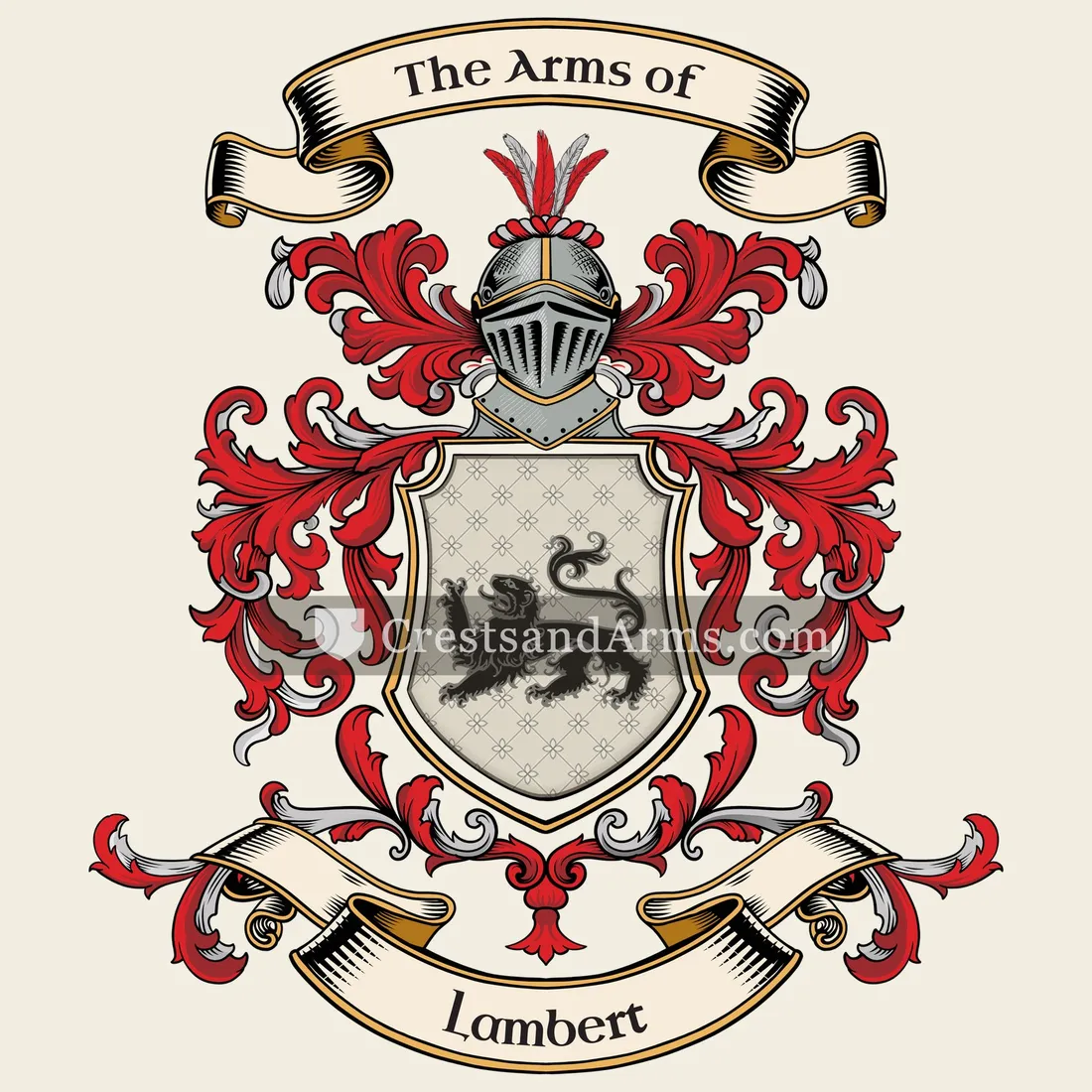
Map of France showing where the Lambert arms are recorded
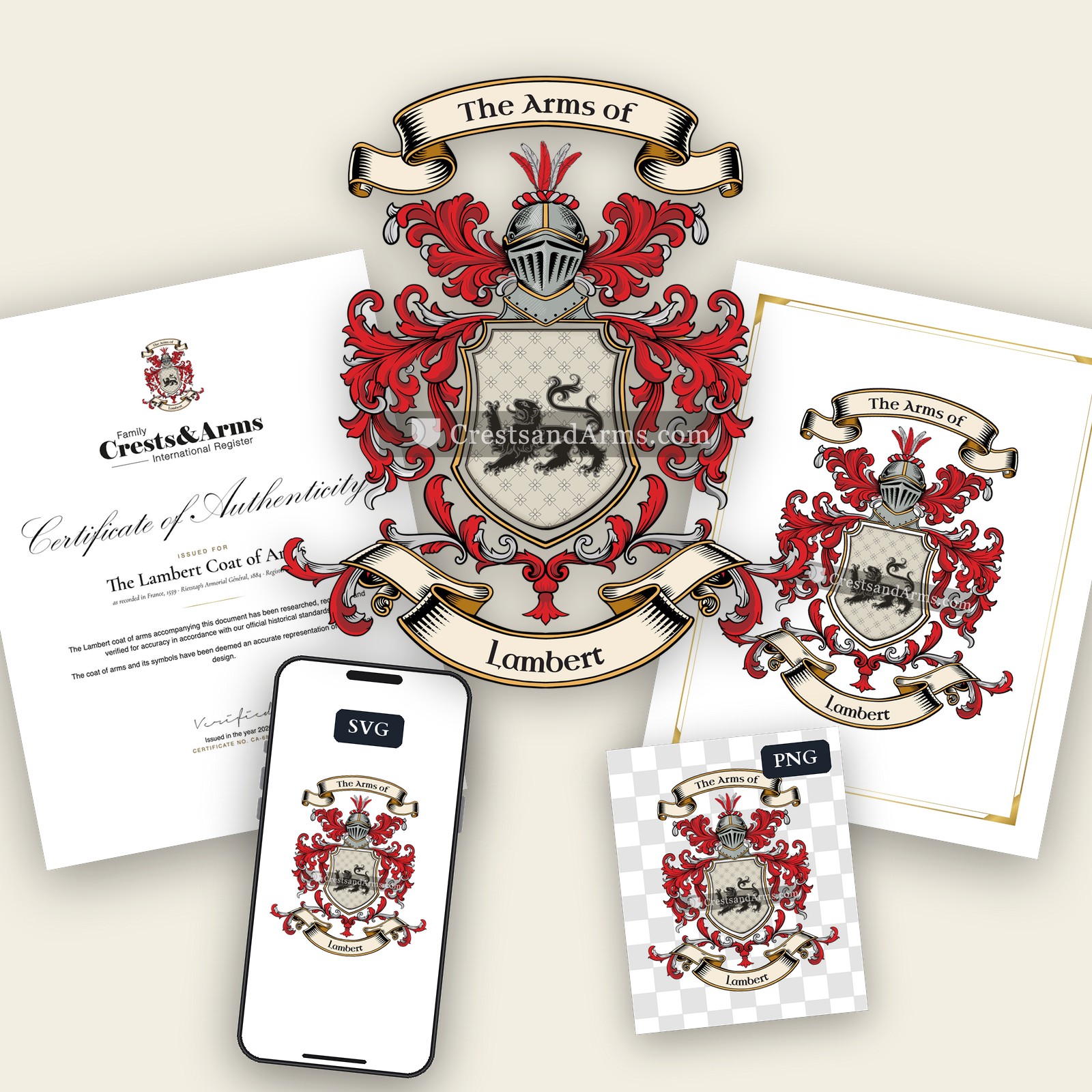
The Lambert arms were recorded in Besançon, c. 1559.
This is where the arms were entered in the register. Families often moved to other parts of the country, so the same name can turn up in more than one region.
The body that granted and recorded arms in France in this period.
Henry II of France
Sovereign of the period
Henry II of France
1547–1559
Reigning in France when the Lambert arms are first recorded.
How Arms Worked in France
In France, a coat of arms was a mark of honor that passed down through the male line to all legitimate descendants. Families often used the same shield without changes to show their shared heritage. If a branch wanted to stand out, they could add a small mark to their shield to show their specific place in the family tree.
Granting authority
The Juge d'armes de France acted as the official authority that regulated and verified coats of arms across the country.
How they got arms
Families typically inherited their arms from ancestors, though they could also receive them through royal grants or by proving their noble status.
Where arms were recorded
Coats of arms were officially recorded in the Armorial Général de France, which began its main collection in the year 1696.
The family's standing
Recorded among the armigerous families of France.
Origin & History of the Lambert Family in France
The name Lambert has deep roots in the French region of Franche-Comté, where it became well-established by the middle of the sixteenth century. By 1559, records confirm that members of the Lambert family were living in the city of Besançon, which was a significant center of trade and culture at the time. The name itself originates from the Germanic elements "land," meaning territory, and "beraht," meaning bright or famous. As the family grew, they integrated into the local social fabric of the region, often working as merchants or local administrators who helped manage the affairs of the city. Their presence in Besançon highlights how families during this era often settled in specific urban hubs to build influence and stability over several generations. This steady growth allowed the Lambert name to persist as a recognized part of the local community throughout the late Renaissance period.
Meaning of the Lambert family crest colors & symbols
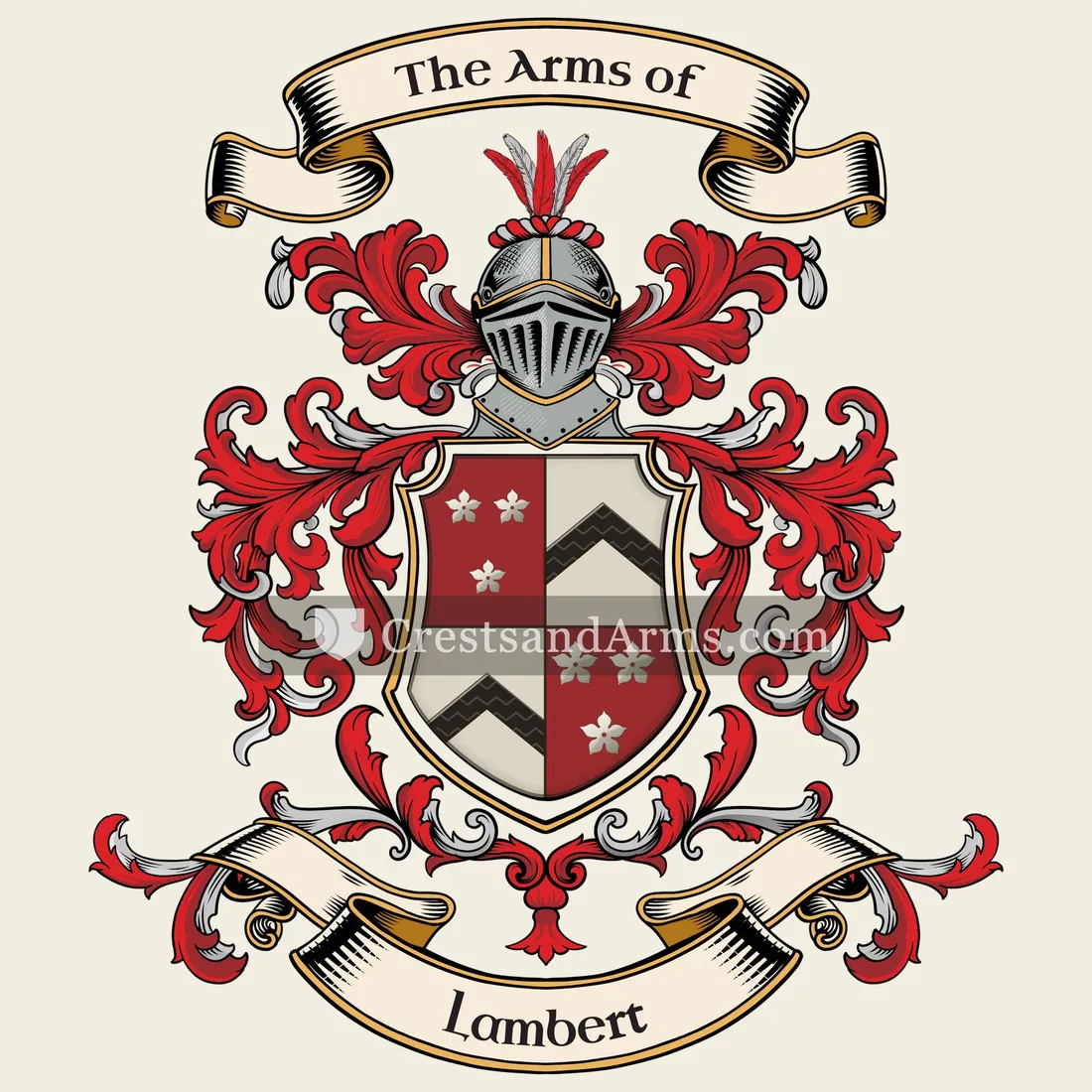
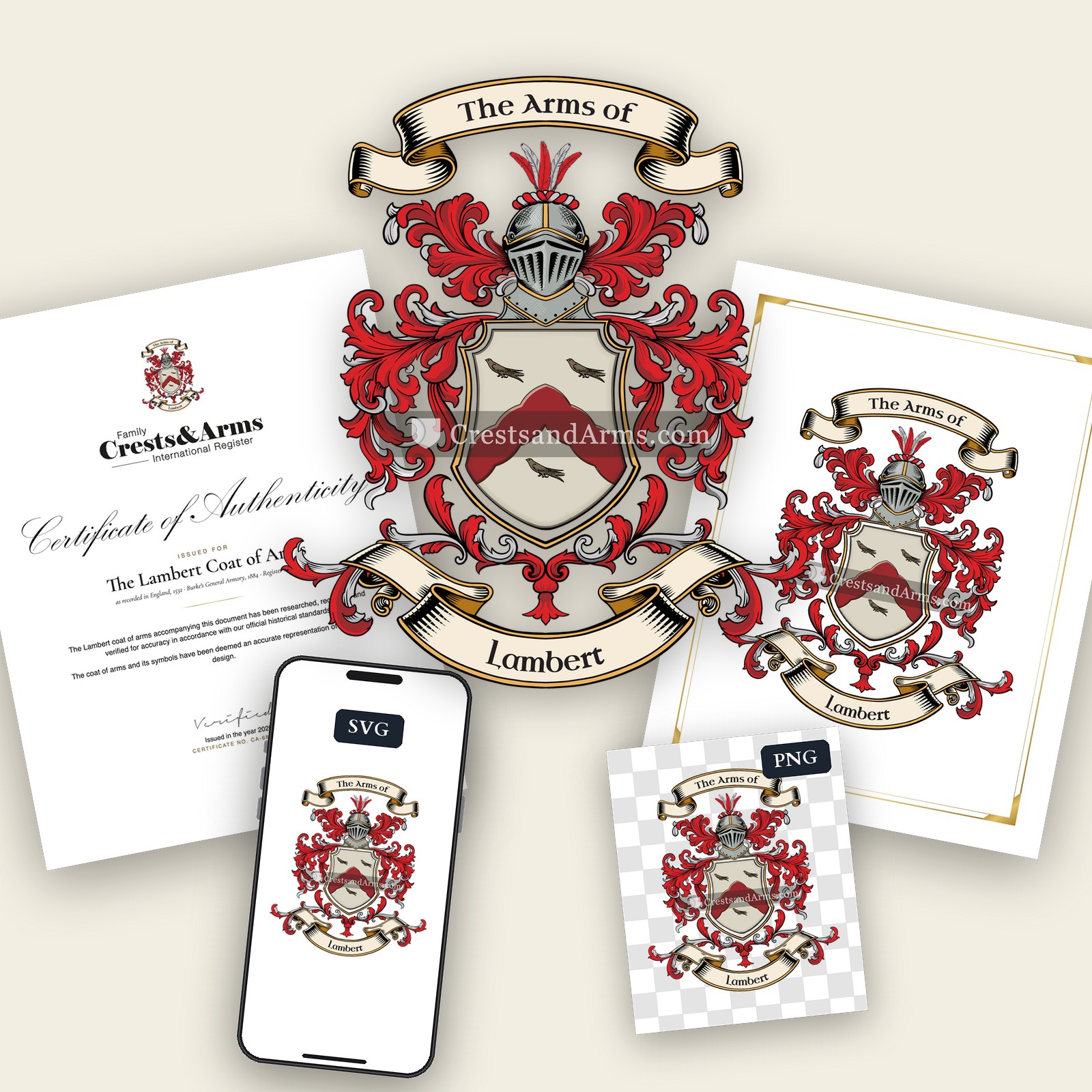
Symbols on this shield
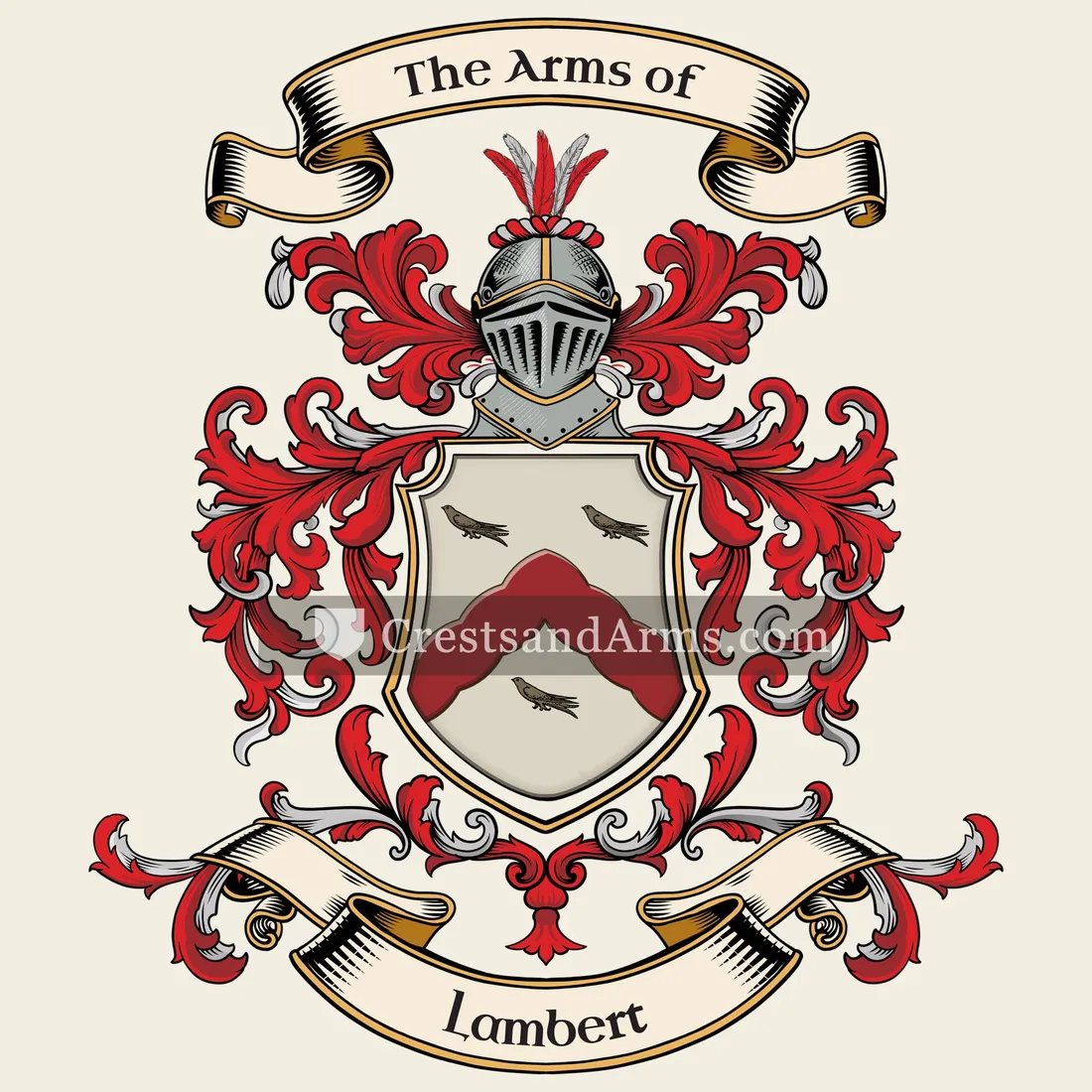
chevronProtection, and faithful service completed
martletA younger son, who must win his own land
Colours
Silver (Argent)Means: Peace and sincerity
Red (Gules)Means: Military strength
Historical info
Source
Sir Bernard Burke, The General Armory of England, Scotland, Ireland and Wales, London: Harrison & Sons, 1884
Blazon (the actual original written record)
“Ar. a chev. engr. gu. betw. three Cornish choughs ppr”
WiltsLondon · Wilts, c. 1532
Digital archive packCoat of arms PNG, gold border print PDF, vector SVG and the certificate of authenticity. Sent to your email in minutes.
Map of England showing where the Lambert arms are recorded
The Lambert arms were recorded in Wilts, c. 1532.
Wiltshire was sheep country, and wool made money steadily for hundreds of years. Families who made it bought manors on the downs, and holding a manor was the usual reason to take arms.
This is where the arms were entered in the register. Families often moved to other parts of the country, so the same name can turn up in more than one region.
The body that granted and recorded arms in England in this period.
Henry VIII of England
Sovereign of the period
Henry VIII of England
1509–1547
Reigning in France when the Lambert arms are first recorded.
How Arms Worked in England
English heraldry allowed arms to be shared by all legitimate descendants of the original owner. These symbols were treated as personal property that moved through the generations to all children. While the eldest son kept the original design, other family members could use the same shield without needing to change it or register their own unique versions.
Granting authority
The College of Arms in London has regulated the use of coats of arms throughout England and Wales since 1484.
How they got arms
Families typically obtained their coats of arms through a formal grant from the Crown or by proving their ancient right to them.
Where arms were recorded
All official coats of arms are recorded in the registers kept at the College of Arms, which date back to the fifteenth century.
The family's standing
Recorded among the armigerous families of Wilts.
Origin & History of the Lambert Family in England
The surname Lambert is rooted in the Germanic name Landebert, which combines the words for land and bright. It became popular across Europe due to the influence of Saint Lambert of Maastricht, a seventh-century bishop whose reputation helped the name spread among the general population. By the time the name became established in England, it was often used as a descriptive identifier for families living in specific rural communities. Records confirm that members of the Lambert family were settled in the county of Wiltshire by 1532, where they likely worked as farmers or tradespeople. During this period, families often lived in the same parish for generations, which allowed the name to become a permanent part of the local social fabric. These early ancestors contributed to the development of the English countryside, leaving behind a legacy that is still reflected in the regional history of the West Country.
Meaning of the Lambert family crest colors & symbols
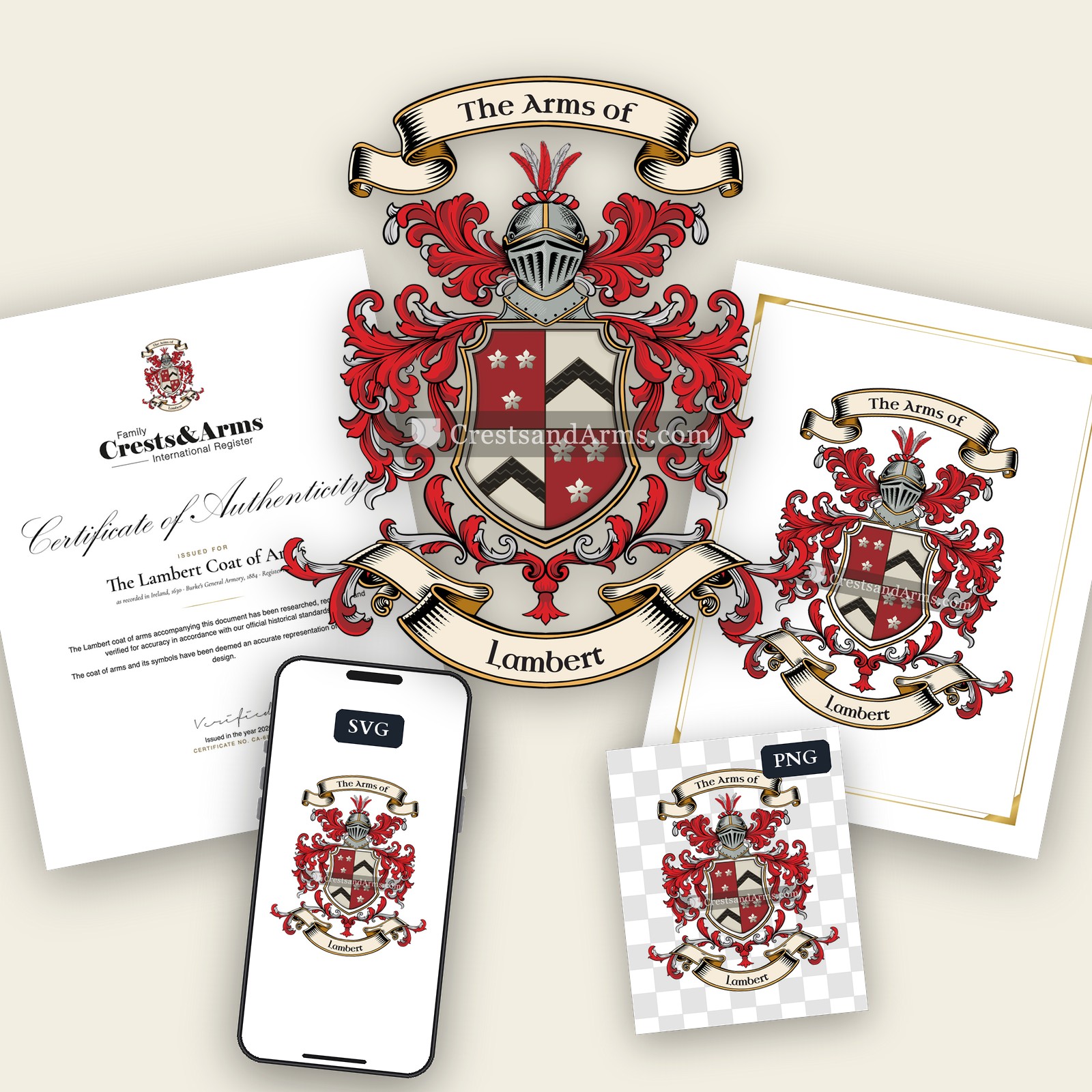
Symbols on this shield
chevronProtection, and faithful service completed
cinquefoilHope and joy
Colours
Red (Gules)Means: Military strength
Silver (Argent)Means: Peace and sincerity
Historical info
Source
Sir Bernard Burke, The General Armory of England, Scotland, Ireland and Wales, London: Harrison & Sons, 1884
Blazon (the actual original written record)
“Quarterly, 1st and 4th, gu. three cinquefoils pierced ar., for LAMBERT; 2nd and 3rd, ar. two chev. sa., for STAUNTON”
GalwayWaterdale · Galway, c. 1630
Digital archive packCoat of arms PNG, gold border print PDF, vector SVG and the certificate of authenticity. Sent to your email in minutes.
Map of Ireland showing where the Lambert arms are recorded
The Lambert arms were recorded in Galway, c. 1630.
Galway was western Irish country of poor land and a rich port. A small group of merchant families ran the town for centuries and held estates around it, and both kinds of property carried arms.
This is where the arms were entered in the register. Families often moved to other parts of the country, so the same name can turn up in more than one region.
The body that granted and recorded arms in Ireland in this period.
Charles I of England
Sovereign of the period
Charles I of England
1625–1649
Reigning in France when the Lambert arms are first recorded.
How Arms Worked in Ireland
The Ulster King of Arms granted coats of arms to individuals who proved their social standing and good character. These symbols were typically inherited by all legitimate descendants of the original holder. If a family branch wanted a unique look, they could apply for a specific change to their design through the office to ensure their identity remained distinct.
Granting authority
The Ulster King of Arms acted as the official body that regulated and issued all coats of arms throughout Ireland.
How they got arms
Families obtained their arms through formal grants issued by the office after proving their eligibility and paying the required fees.
Where arms were recorded
All official grants were recorded in the registers held by the Ulster King of Arms starting from the year 1552.
The family's standing
Recorded among the armigerous families of Galway.
Origin & History of the Lambert Family in Ireland
The Lambert family name arrived in Ireland primarily through Anglo-Norman influence, eventually establishing a significant presence in County Galway by the early seventeenth century. Records confirm that members of the family were well-settled in the region by 1630, where they integrated into the local social and political landscape. Over time, these early settlers became prominent landowners and participants in the civic life of the west of Ireland. Their history reflects the broader patterns of migration and land settlement that defined the seventeenth century, as families moved across the Irish Sea to establish roots in new territories. By securing their place in Galway, the Lamberts transitioned from newcomers to a recognized part of the local community, influencing the development of the region for generations.
Lambert Meaning & Related Branches
Root word
Land-berht
Germanic elements meaning land and bright or famous.
This name
LambertA name signifying a person who is bright or famous throughout the land.
also spelled
Lamberth
Lambertt
Lamberte
Lambart
Lamberd
Related arms
Gojansimilar arms
Hamiltonsimilar arms
Lambartvariant spelling
De Courcyrecorded with Lambert, same area
Documented Sources
J. B. Rietstap, Armorial Général, Gouda: G. B. van Goor Zonen, 1884–87
Benoît, Arthur. Recherches sur les familles de la Franche-Comté, 1885
Archives départementales du Doubs, Série B: Cours et juridictions
Digital archive packCoat of arms PNG, gold border print PDF, vector SVG and the certificate of authenticity. Sent to your email in minutes.


 lionCourage, strength and royalty
 lionCourage, strength and royalty


 chevronProtection, and faithful service completed
 martletA younger son, who must win his own land


 cinquefoilHope and joy