Map of France showing where the Lanclos arms are recorded
The Lanclos arms were recorded in Picardie, c. 1663.
Picardie lay on the northern road into France and saw armies pass through it repeatedly. Its landowners were soldiers as often as farmers, and a soldier needed a shield he could be recognised by.
This is where the arms were entered in the register. Families often moved to other parts of the country, so the same name can turn up in more than one region.
The body that granted and recorded arms in France in this period.
Louis XIV of France
Sovereign of the period
Louis XIV of France
1643–1715
Reigning in France when the Lanclos arms are first recorded.
How Arms Worked in France
In France, a coat of arms was a mark of honor that passed down through the male line to all legitimate descendants. Families often used the same shield without changes to show their shared heritage. If a branch wanted to stand out, they could add a small mark to their shield to show their specific place in the family tree.
Granting authority
The Juge d'armes de France acted as the official authority that regulated and verified coats of arms across the country.
How they got arms
Families typically inherited their arms from ancestors, though they could also receive them through royal grants or by proving their noble status.
Where arms were recorded
Coats of arms were officially recorded in the Armorial Général de France, which began its main collection in the year 1696.
The family's standing
Recorded among the armigerous families of Picardie.
Origin & History of the Lanclos Family in France
The family name Lanclos traces its early roots to the northern region of Picardie, where records confirm the presence of family members by the year 1663. During this period, Picardie served as a vital frontier zone that frequently faced the pressures of regional conflicts and shifting borders. Families living in this area were often deeply connected to the land and the local agricultural economy, which defined much of the social structure in seventeenth-century France. The name itself likely evolved as a topographic descriptor, suggesting that the earliest ancestors lived near a specific enclosure or a fenced piece of property. As the family established itself within the local community, they became part of the complex social fabric of northern France, navigating the transition from the feudal traditions of the past toward the more centralized administrative systems that defined the era of King Louis XIV.
Coat of Arms & Family Crest Details
Symbols on this shield
anchorHope, and steadfastness in trouble
Colours
Blue (Azure)Means: Loyalty and truth
Silver (Argent)Means: Peace and sincerity
Historical info
Source
J. B. Rietstap, Armorial Général, Gouda: G. B. van Goor Zonen, 1884–87
Blazon (the actual original written record)
“D'azur à une ancre d'arg. Cq. cour. C.: trois pl. d'aut. d'arg.”
BavariaBavaria, c. 1857
Digital archive packCoat of arms PNG, gold border print PDF, vector SVG and the certificate of authenticity. Sent to your email in minutes.
Map of Germany showing where the Lanclos arms are recorded
The Lanclos arms were recorded in Bavaria, c. 1857.
Bavaria was a country of old landed families and walled market towns. Estates passed down the same line for centuries, and both the landowners and the leading townsmen kept arms, which is why so many Bavarian names sit in the registers.
This is where the arms were entered in the register. Families often moved to other parts of the country, so the same name can turn up in more than one region.
The body that granted and recorded arms in Germany in this period.
Frederick William IV of Prussia
Sovereign of the period
Frederick William IV of Prussia
1840–1861
Reigning in France when the Lanclos arms are first recorded.
How Arms Worked in Germany
Prussian heraldry was strictly tied to social rank and noble status rather than being a free choice for every citizen. These symbols were treated as permanent family property that moved through the generations to all legitimate heirs. If a family branch wanted to change their design to stand out, they had to apply for official permission to alter their specific version of the shield.
Granting authority
The Prussian Heroldsamt acted as the central state office that managed and strictly controlled all noble titles and coats of arms.
How they got arms
Families usually obtained their arms through formal royal grants or by proving their long-standing noble status to the state authorities.
Where arms were recorded
All official coats of arms were kept in the rolls of the Prussian Heroldsamt, which functioned from 1706 until 1918.
The family's standing
Recorded among the armigerous families of Bavaria.
Origin & History of the Lanclos Family in Germany
The family name Lanclos carries a distinct history that reflects the movement of people across European borders during the nineteenth century. While the name possesses linguistic roots that suggest a connection to French-speaking regions, historical records confirm that members of the family were firmly established in Bavaria by 1857. During this period, Bavaria was undergoing significant social and economic shifts as it transitioned into a modern industrial state. Families like the Lanclos often settled in these areas to participate in the growing trade networks and agricultural developments of southern Germany. Their presence in Bavarian civil registries from the mid-1800s indicates that they were integrated into the local community, likely adapting their traditions to fit the cultural landscape of the German Confederation. This migration pattern highlights how families frequently crossed regional boundaries to seek new opportunities, leaving behind a trail of official documentation that marks their transition from one cultural sphere to another.
Coat of Arms & Family Crest Details
Symbols on this shield
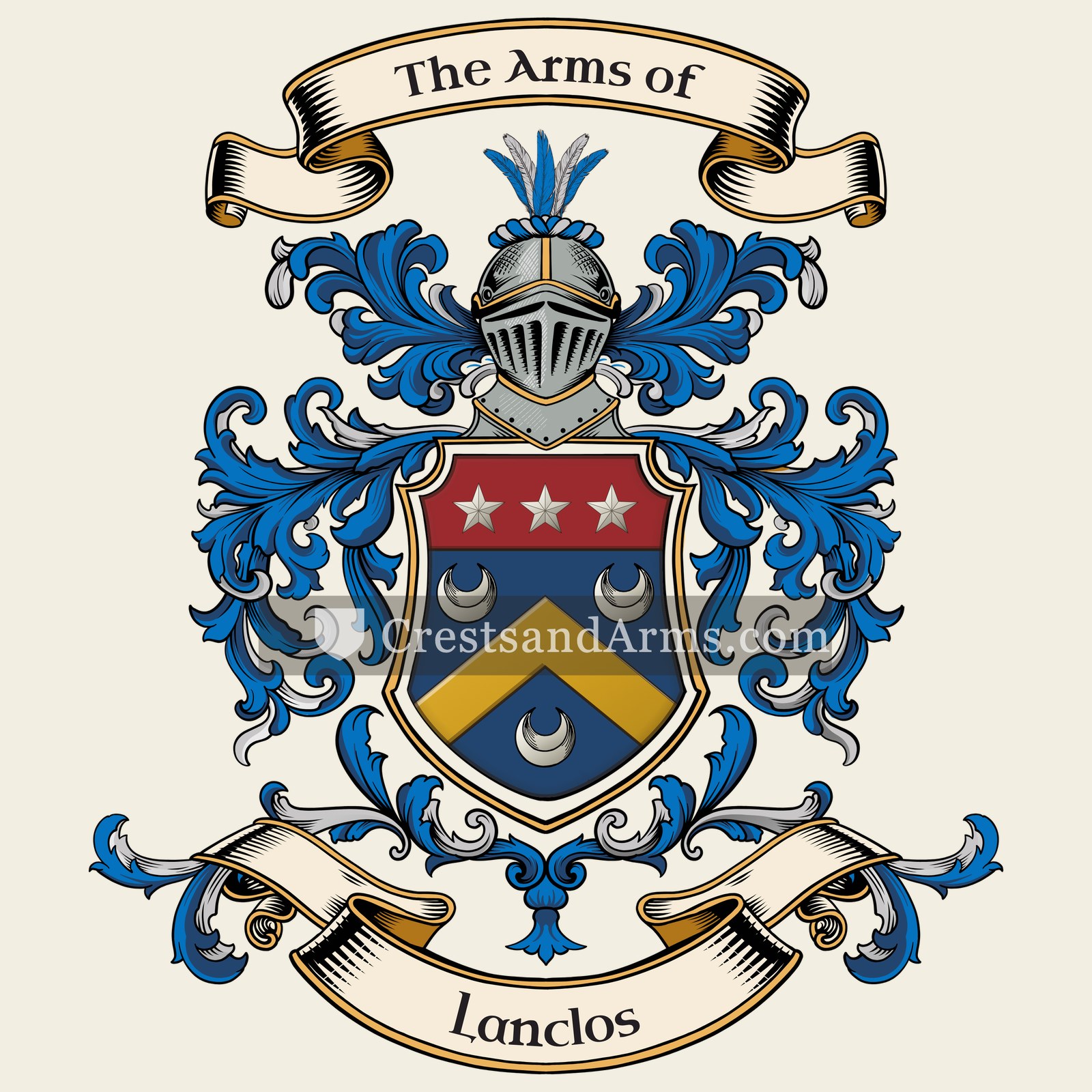
chevronProtection, and faithful service completed
chiefAuthority, wisdom and dominion
crescentHonour by the sovereign, and the second son
mulletThe third son, and a divine quality from above
Colours
Blue (Azure)Means: Loyalty and truth
Gold (Or)Means: Generosity
Red (Gules)Means: Military strength
Silver (Argent)Means: Peace and sincerity
Historical info
Source
Sir Bernard Burke, The General Armory of England, Scotland, Ireland and Wales, London: Harrison & Sons, 1884
Blazon (the actual original written record)
“Az. a chev. or, betw. three crescents ar. on a chief gu. as many mullets of six points pierced of the second”
JerseyHamptonne, c. 1688
Digital archive packCoat of arms PNG, gold border print PDF, vector SVG and the certificate of authenticity. Sent to your email in minutes.
The body that granted and recorded arms in Jersey in this period.
James II of England
Sovereign of the period
James II of England
1685–1688
Reigning in France when the Lanclos arms are first recorded.
How Arms Worked in Jersey
Arms in the Channel Islands were granted and recorded by the College of Arms in London, under the same law of arms as England. They could be used by all legitimate descendants of the original owner: the eldest son kept the original design, and other family members used the same shield without registering a version of their own.
Granting authority
The College of Arms in London has regulated the use of coats of arms for Jersey and the other Channel Islands since 1484.
How they got arms
Families typically obtained their coats of arms through a formal grant from the Crown or by proving their ancient right to them.
Where arms were recorded
All official coats of arms are recorded in the registers kept at the College of Arms, which date back to the fifteenth century.
The family's standing
Recorded among the armigerous families of Jersey.
Origin & History of the Lanclos Family in Jersey
The Lanclos family established a firm presence on the island of Jersey by the late seventeenth century, with historical records placing them at the Hamptonne estate by 1688. During this period, the family became deeply integrated into the rural life of Saint Lawrence parish, where they managed land and participated in the island's traditional agricultural society. Life in Jersey at this time was defined by a strong sense of community and a reliance on the local parish system for legal and social organization. As the Lanclos family settled into their home at Hamptonne, they contributed to the unique cultural blend of the island, which balanced Norman French traditions with growing ties to the British Crown. Their presence in these historical records highlights the importance of land ownership and family lineage in shaping the development of Jersey’s small, close-knit parishes during the seventeenth century.
Related Branches & Arms
Root word
Enclos
A piece of land enclosed by a fence or wall.
This name
LanclosRefers to a person who lived near or within an enclosed area.
also spelled
Langloys
Langloy
Langley
Documented Sources
J. B. Rietstap, Armorial Général, Gouda: G. B. van Goor Zonen, 1884–87
Archives départementales de la Somme, Registres paroissiaux et d'état civil
Boulanger, Marcel, La Picardie historique et monumentale, 1905
De La Fons-Mélicocq, Arthur, Histoire de la Picardie, 1860
Digital archive packCoat of arms PNG, gold border print PDF, vector SVG and the certificate of authenticity. Sent to your email in minutes.


 chevronProtection, and faithful service completed
 trefoilPerpetuity, and the Trinity
 chevronProtection, and faithful service completed
 trefoilPerpetuity, and the Trinity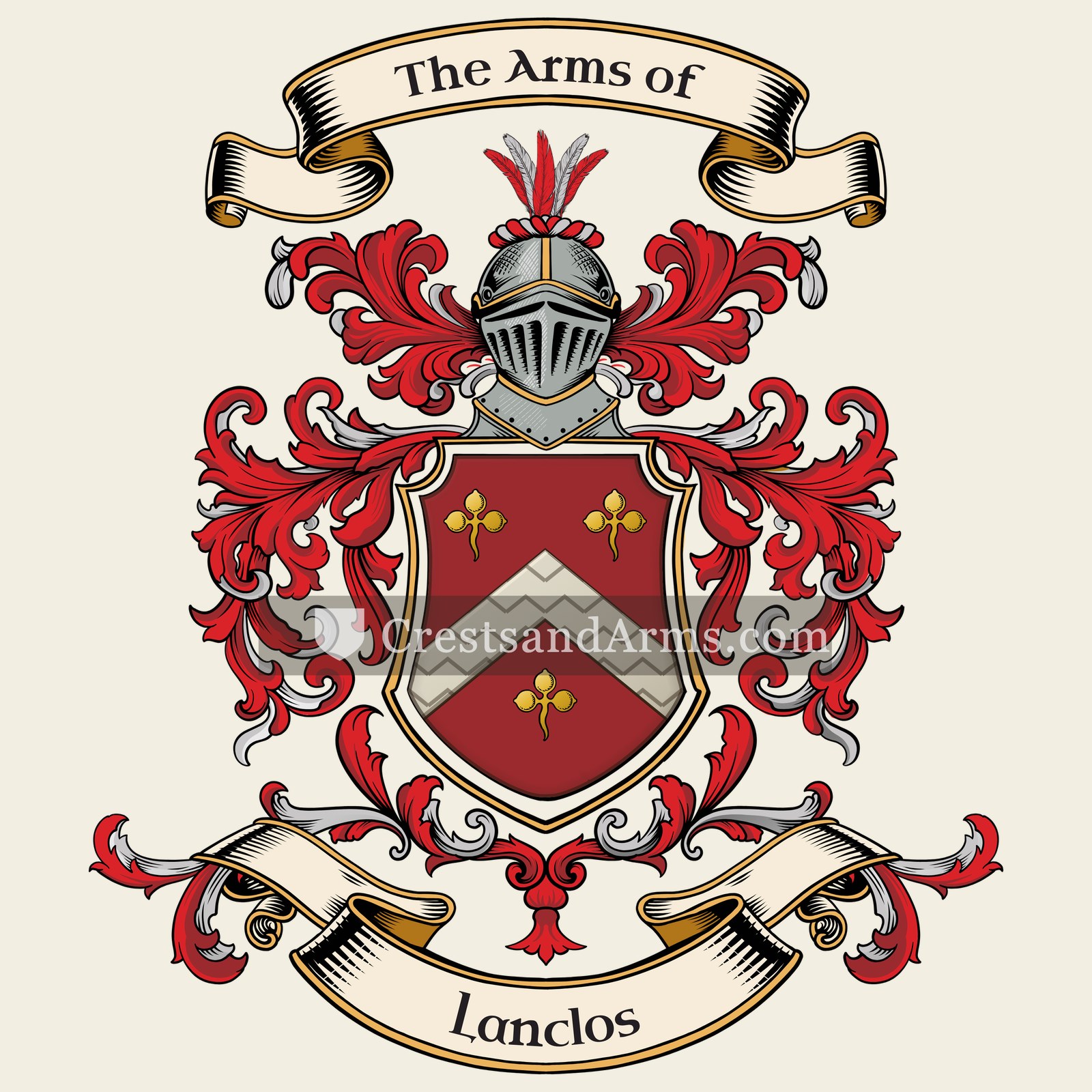


 anchorHope, and steadfastness in trouble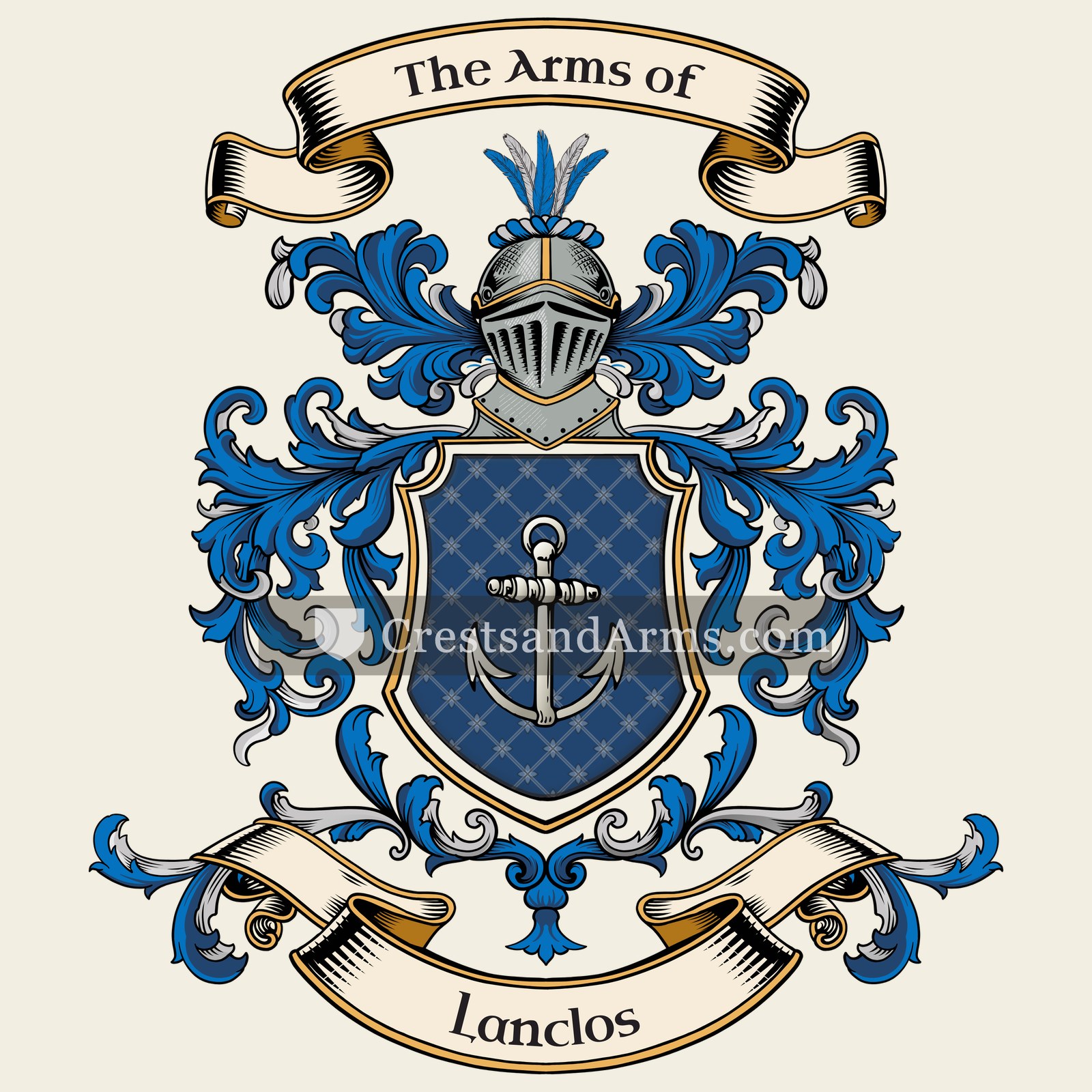


 chiefAuthority, wisdom and dominion
 crescentHonour by the sovereign, and the second son
 mulletThe third son, and a divine quality from above