Map of Germany showing where the Langenstein arms are recorded
The Langenstein arms were recorded in Hesse, c. 1765.
Hesse was central German country, divided among a large number of small landowners and prosperous towns. So many separate households held ground there that the region produced an unusual number of coats of arms.
This is where the arms were entered in the register. Families often moved to other parts of the country, so the same name can turn up in more than one region.
The body that granted and recorded arms in Germany in this period.
Francis I, Holy Roman Emperor
Sovereign of the period
Francis I, Holy Roman Emperor
1745–1765
Reigning in Germany when the Langenstein arms are first recorded.
How Arms Worked in Germany
In the Holy Roman Empire, coats of arms were often granted to individuals by the Emperor or his representatives. These arms were then passed down through the generations to all legitimate descendants of the original holder. Younger branches of a family usually kept the same shield design without needing to change it, as the arms belonged to the entire lineage.
Granting authority
The Holy Roman Emperor held the sole power to grant new coats of arms throughout his vast imperial territories.
How they got arms
Families typically obtained their coats of arms through a formal imperial grant or by proving their noble status to the authorities.
Where arms were recorded
These grants were officially recorded in the Imperial Chancery registers, which began keeping formal records of such honors during the Middle Ages.
The family's standing
Recorded among the armigerous families of Hesse.
Origin & History of the Langenstein Family in Germany
The surname Langenstein is a topographic name that originated in the German-speaking regions, specifically derived from the combination of the words "lang," meaning long, and "stein," meaning stone. Families bearing this name often lived near prominent natural landmarks, such as a long ridge of rock or a significant stone boundary marker, which served as a way to identify their home in an era before street addresses existed. By 1765, records confirm the presence of the Langenstein family in the state of Hesse. During this period, Hesse was a region defined by its agricultural landscape and small village communities, where families were deeply rooted in the local soil. The name likely evolved as a way to distinguish these individuals from others in the community based on their specific dwelling place. As the family moved through the Hessian countryside, the name became a permanent marker of their history and their connection to the land.
Meaning of the Langenstein family crest colors & symbols
Symbols on this shield
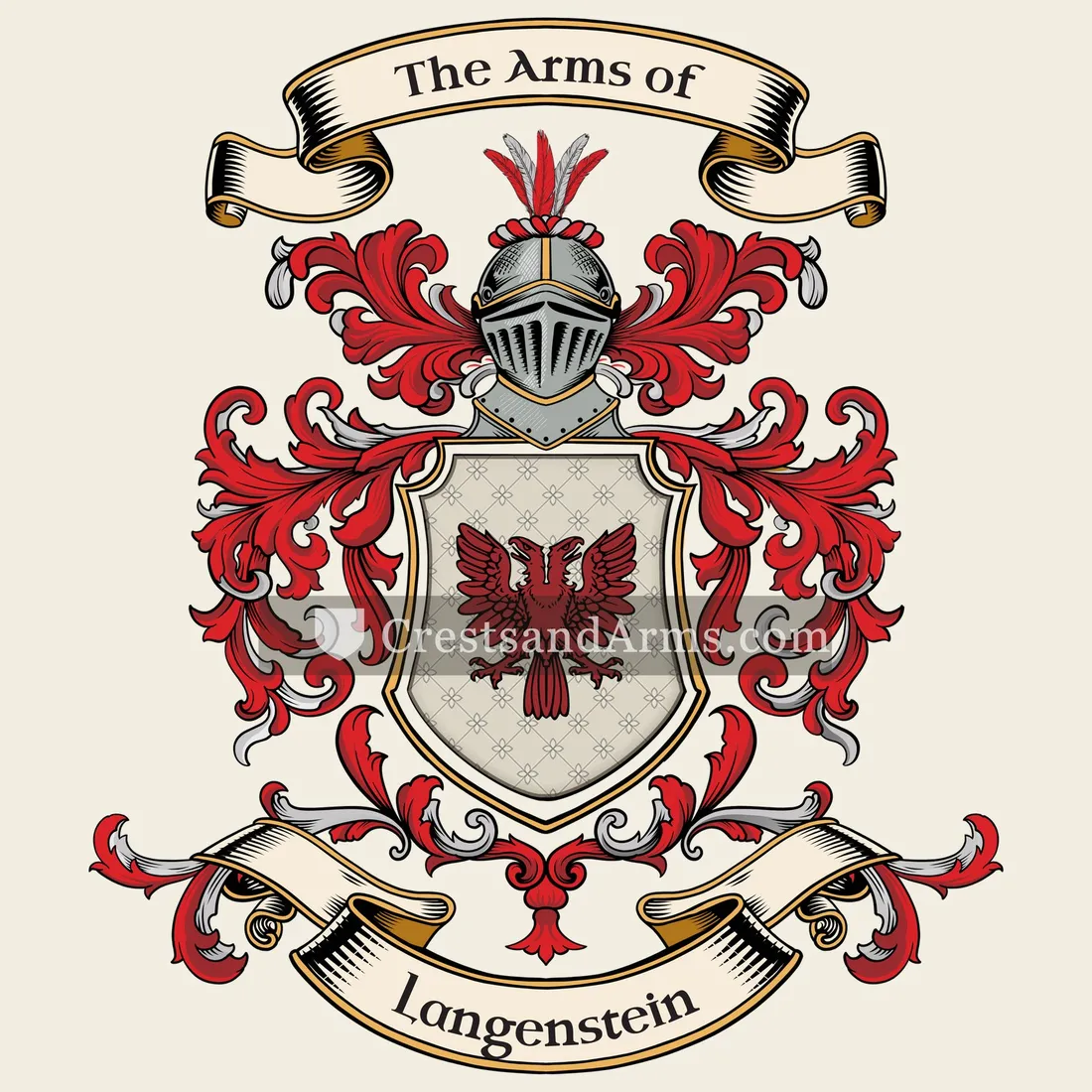
eagleNobility, strength and a keen mind
Colours
Silver (Argent)Means: Peace and sincerity
Red (Gules)Means: Military strength
Historical info
Source
J. B. Rietstap, Armorial Général, Gouda: G. B. van Goor Zonen, 1884–87
Blazon (the actual original written record)
“D'arg. à l'aigle de gu. C.: cinq épées d'arg., garnies d'or, les pointes en bas.”
Switzerlandc. 1745
Digital archive packCoat of arms PNG, gold border print PDF, vector SVG and the certificate of authenticity. Sent to your email in minutes.
Map of Switzerland showing where the Langenstein arms are recorded
The Langenstein arms were recorded in Switzerland, c. 1745.
Arms such as these were typically recorded in Bern.
Bern was the largest of the Swiss cantons and ran itself, with its own council and its own courts. Its governing families held office for generations, and office of that kind carried a shield with it.
This is where the arms were entered in the register. Families often moved to other parts of the country, so the same name can turn up in more than one region.
The body that granted and recorded arms in Switzerland in this period.
How Arms Worked in Switzerland
In Switzerland, coats of arms were not restricted to the nobility and were often adopted by common citizens and families. These symbols were passed down through generations to show family identity. When branches of a family grew, they often changed small details of the design to distinguish their own line from the original group.
Granting authority
Cantonal and civic authorities managed the use of coats of arms within their specific regions and local jurisdictions.
How they got arms
Families typically assumed their own coats of arms based on local custom rather than receiving them from a central monarch.
Where arms were recorded
Arms were recorded in various cantonal and civic registers starting from the fourteenth century throughout the Swiss region.
The family's standing
Recorded among the armigerous families of Switzerland.
Origin & History of the Langenstein Family in Switzerland
The surname Langenstein is deeply rooted in the history of the Swiss Confederation, with records confirming the presence of the family in the city of Bern as early as 1745. The name itself is topographic in origin, likely derived from the German words for long and stone, which suggests that the family’s earliest ancestors may have lived near a prominent landmark or a distinctively shaped rock formation. During the eighteenth century, Bern was a powerful city-state governed by a strict patrician class, and families established there often played active roles in the local craft guilds or agricultural administration. As the Langenstein name became more established in the region, members of the family integrated into the social and economic fabric of the Swiss cantons, transitioning from their rural roots to become part of the growing urban population. This steady presence in Bern highlights the family’s long-standing connection to the political and cultural developments of central Switzerland during the transition into the modern era.
Langenstein Meaning & Related Branches
Root word
Langen Stein
Long or tall stone or rock formation.
This name
LangensteinA topographic name for someone living near a prominent or elongated stone landmark.
also spelled
Langensteine
Langenstine
Langensteen
Documented Sources
J. B. Rietstap, Armorial Général, Gouda: G. B. van Goor Zonen, 1884–87
Bahlow, Hans. Deutsches Namenlexikon: Familien- und Vornamen nach Ursprung und Sinn erklärt. 1967
Heintze, Albert. Die deutschen Familiennamen: geschichtlich, geographisch, sprachlich. 1903
Hessisches Staatsarchiv Marburg, Kirchenbücher der evangelischen Kirchengemeinden in Hessen
Digital archive packCoat of arms PNG, gold border print PDF, vector SVG and the certificate of authenticity. Sent to your email in minutes.


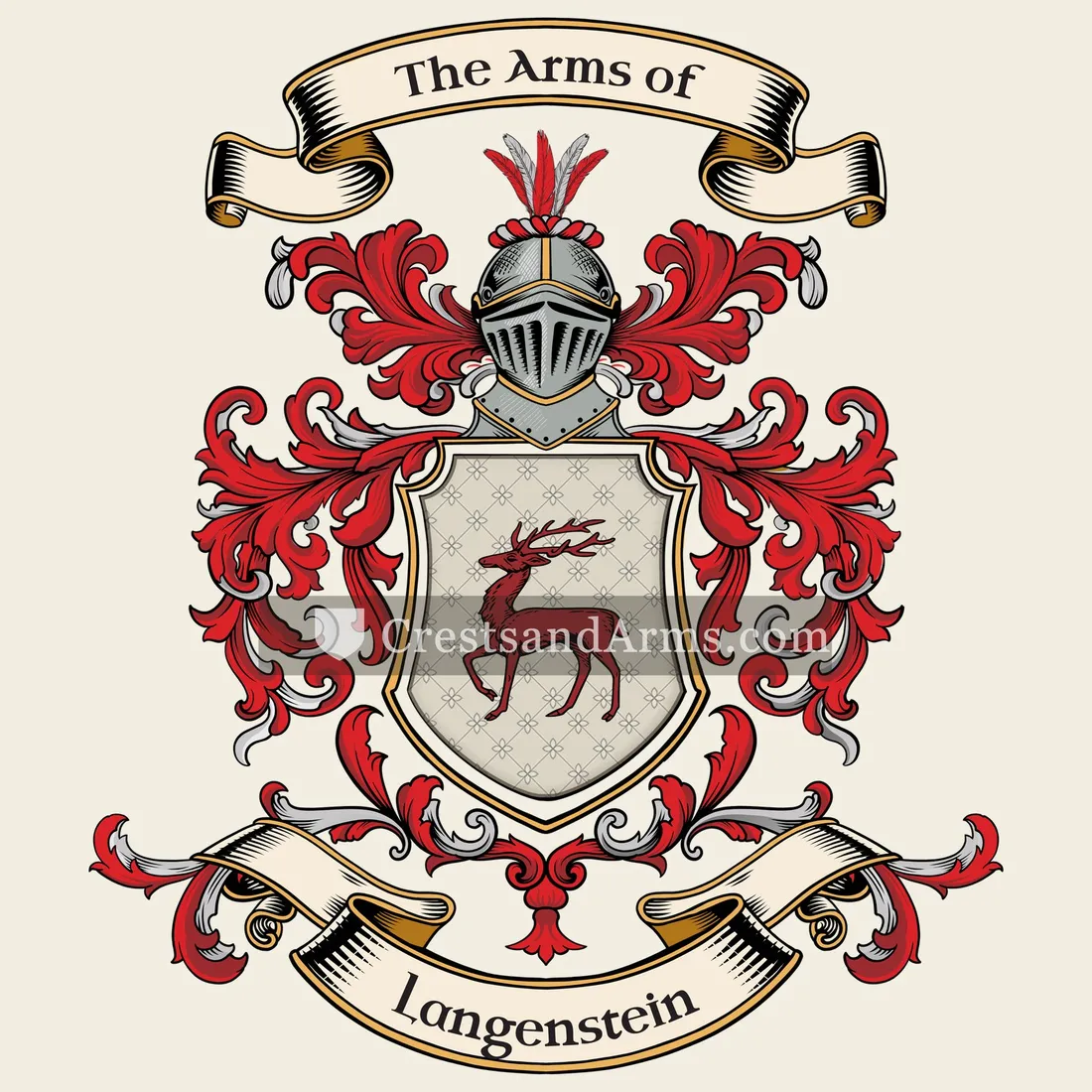
 stagPeace and harmony, and one who will not fight unprovoked
 stagPeace and harmony, and one who will not fight unprovoked


 eagleNobility, strength and a keen mind