Map of Britain showing where the Langley arms are recorded
The Langley arms were recorded in Bedfordshire, c. 1641.
This is where the arms were entered in the register. Families often moved to other parts of the country, so the same name can turn up in more than one region.
The body that granted and recorded arms in Britain in this period.
Charles I of England
Sovereign of the period
Charles I of England
1625–1649
Reigning in Britain when the Langley arms are first recorded.
How Arms Worked in Britain
English heraldry allowed arms to be shared by all legitimate descendants of the original owner. These symbols were treated as personal property that moved through the generations to all children. While the eldest son kept the original design, other family members could use the same shield without needing to change it or register their own unique versions.
Granting authority
The College of Arms in London has regulated the use of coats of arms throughout England and Wales since 1484.
How they got arms
Families typically obtained their coats of arms through a formal grant from the Crown or by proving their ancient right to them.
Where arms were recorded
All official coats of arms are recorded in the registers kept at the College of Arms, which date back to the fifteenth century.
The family's standing
Recorded among the armigerous families of Bedfordshire.
Origin & History of the Langley Family in Britain
The name Langley is a classic example of a locational surname, which means it originated from people who lived near a specific geographic feature. The name is derived from the Old English words "lang," meaning long, and "leah," meaning a clearing or a meadow. During the Middle Ages, families often took the name of the village or estate where they resided to help identify them within their local community. By the time records place the family in Bedfordshire in 1641, the name had already been established in England for several centuries. These early Langleys were likely farmers or tradespeople who were deeply connected to the rural landscape of the English countryside. As the family grew and moved across different counties, the name remained a link to their ancestral history of living in or near long, open clearings in the woods.
Coat of Arms & Family Crest Details
Symbols on this shield
wyvernValour and protection, and victory over the plague
Colours
Silver (Argent)Means: Peace and sincerity
Black (Sable)Means: Constancy
Historical info
Source
Sir Bernard Burke, The General Armory of England, Scotland, Ireland and Wales, London: Harrison & Sons, 1884
Blazon (the actual original written record)
“Ar. a cockatrice, wings endorsed and tail nowed sa. beaked or”
LancasterAgecroft · Lancaster, c. 1567
Digital archive packCoat of arms PNG, gold border print PDF, vector SVG and the certificate of authenticity. Sent to your email in minutes.
Map of England showing where the Langley arms are recorded
The Langley arms were recorded in Lancaster, c. 1567.
Lancashire was divided among a great many small landed families, more than most northern counties. Estates were passed down whole rather than split up, so the same names hold the same ground for centuries in the records.
This is where the arms were entered in the register. Families often moved to other parts of the country, so the same name can turn up in more than one region.
The body that granted and recorded arms in England in this period.
Elizabeth I of England
Sovereign of the period
Elizabeth I of England
1558–1603
Reigning in Britain when the Langley arms are first recorded.
How Arms Worked in England
English heraldry allowed arms to be shared by all legitimate descendants of the original owner. These symbols were treated as personal property that moved through the generations to all children. While the eldest son kept the original design, other family members could use the same shield without needing to change it or register their own unique versions.
Granting authority
The College of Arms in London has regulated the use of coats of arms throughout England and Wales since 1484.
How they got arms
Families typically obtained their coats of arms through a formal grant from the Crown or by proving their ancient right to them.
Where arms were recorded
All official coats of arms are recorded in the registers kept at the College of Arms, which date back to the fifteenth century.
The family's standing
Recorded among the armigerous families of Lancaster.
Origin & History of the Langley Family in England
The surname Langley is a locational name, meaning it was originally taken from people who lived in a specific place known as a "long meadow" or "long clearing." In Old English, the words "lang" and "leah" combined to form this description, which was a common way to identify families before the use of formal surnames became universal. By the mid-16th century, the family was well-established in the county of Lancashire, specifically appearing in records around the year 1567. During this era, families often stayed within the same geographic region for generations, working the land or participating in the local trade networks that defined the north of England. As the name spread from these early rural settlements, it became a permanent marker of the family’s deep connection to the English landscape and their long-standing presence in the historic communities of the northwest.
Coat of Arms & Family Crest Details
Symbols on this shield
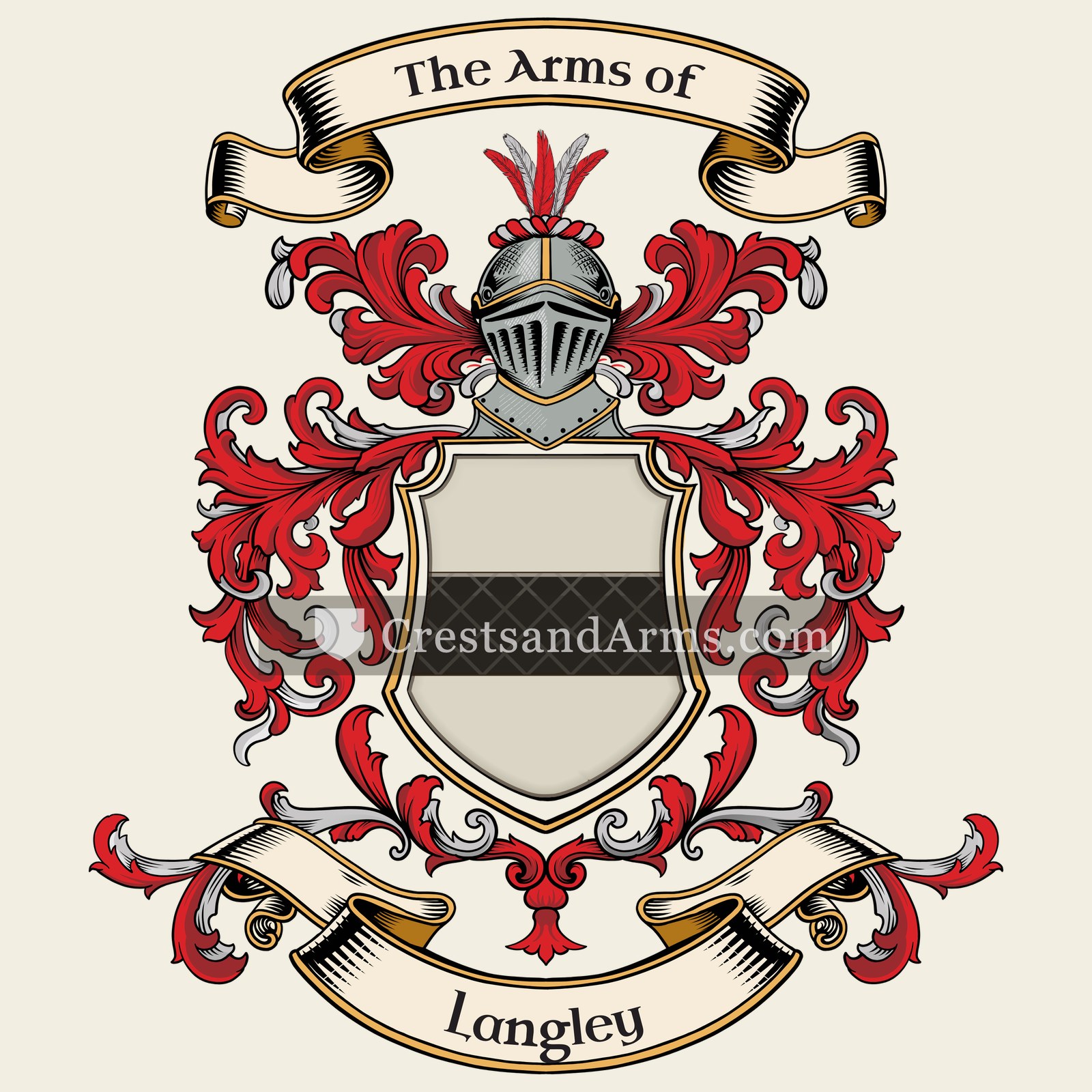
fessThe military belt, and readiness to serve
Colours
Silver (Argent)Means: Peace and sincerity
Black (Sable)Means: Constancy
Historical info
Source
Sir Bernard Burke, The General Armory of England, Scotland, Ireland and Wales, London: Harrison & Sons, 1884
Blazon (the actual original written record)
“Ar. a fesse sa. in”
TipperaryCoalbrook · Tipperary, c. 1645
Digital archive packCoat of arms PNG, gold border print PDF, vector SVG and the certificate of authenticity. Sent to your email in minutes.
Map of Ireland showing where the Langley arms are recorded
The Langley arms were recorded in Tipperary, c. 1645.
Tipperary was the best grazing land in Ireland, held by a small number of powerful families. Land of that value stayed in the same hands, and unbroken holding is what puts a name in the records.
This is where the arms were entered in the register. Families often moved to other parts of the country, so the same name can turn up in more than one region.
The body that granted and recorded arms in Ireland in this period.
Charles I of England
Sovereign of the period
Charles I of England
1625–1649
Reigning in Britain when the Langley arms are first recorded.
How Arms Worked in Ireland
The Ulster King of Arms granted coats of arms to individuals who proved their social standing and good character. These symbols were typically inherited by all legitimate descendants of the original holder. If a family branch wanted a unique look, they could apply for a specific change to their design through the office to ensure their identity remained distinct.
Granting authority
The Ulster King of Arms acted as the official body that regulated and issued all coats of arms throughout Ireland.
How they got arms
Families obtained their arms through formal grants issued by the office after proving their eligibility and paying the required fees.
Where arms were recorded
All official grants were recorded in the registers held by the Ulster King of Arms starting from the year 1552.
The family's standing
Recorded among the armigerous families of Tipperary.
Origin & History of the Langley Family in Ireland
The Langley family established a significant presence in County Tipperary by the mid-seventeenth century, with records confirming their residence in the region by 1645. The name itself is of English origin, derived from the Old English words for a long meadow, but the family became deeply integrated into the social and political landscape of Ireland during a time of great upheaval. Following the arrival of settlers during the seventeenth century, members of the Langley family acquired land and became part of the landed gentry in the south of Ireland. They were particularly associated with the area around Lisnamrock, where they maintained estates and participated in the local administration of the county. Over the generations, the family transitioned from newcomers to established members of the Irish community, leaving a lasting mark on the local history of Tipperary through their agricultural management and civic involvement.
Related Branches & Arms
Root word
Lang and Leah
Old English for long and a woodland clearing or glade.
This name
LangleyRefers to a person who lived near a long meadow or an elongated forest clearing.
also spelled
Langly
Langleigh
Langlie
Langlee
Related arms
Blundevillsimilar arms
Langlevariant spelling
Langléevariant spelling
Banburyrecorded with Langley, same area
Documented Sources
J. B. Rietstap, Armorial Général, Gouda: G. B. van Goor Zonen, 1884–87
Reaney, P.H. and Wilson, R.M., A Dictionary of English Surnames, 1997
Mills, A.D., A Dictionary of British Place-Names, 2011
The National Archives, Protestation Returns, 1641
Digital archive packCoat of arms PNG, gold border print PDF, vector SVG and the certificate of authenticity. Sent to your email in minutes.


 paleMilitary strength, and a fortified defence
 paleMilitary strength, and a fortified defence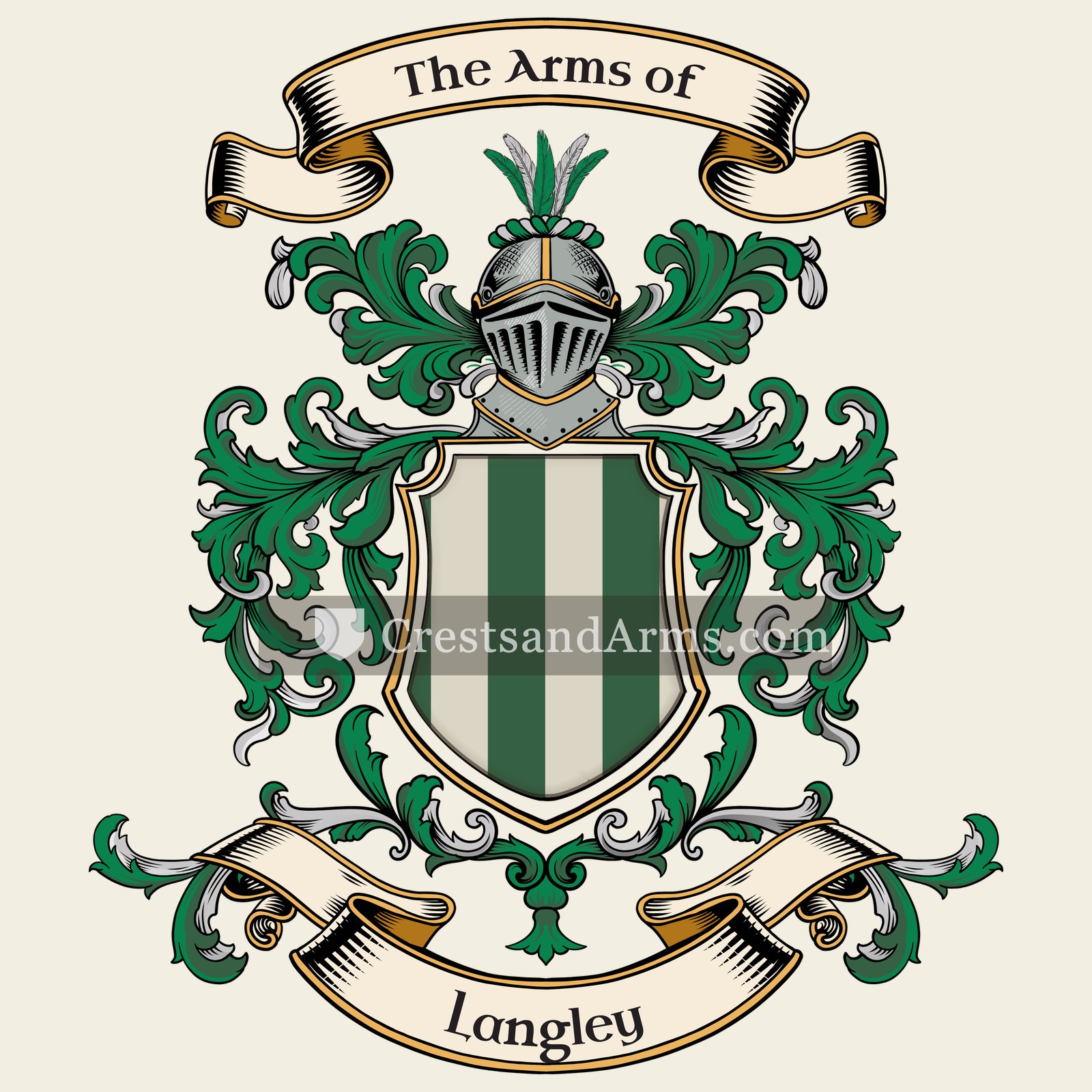


 wyvernValour and protection, and victory over the plague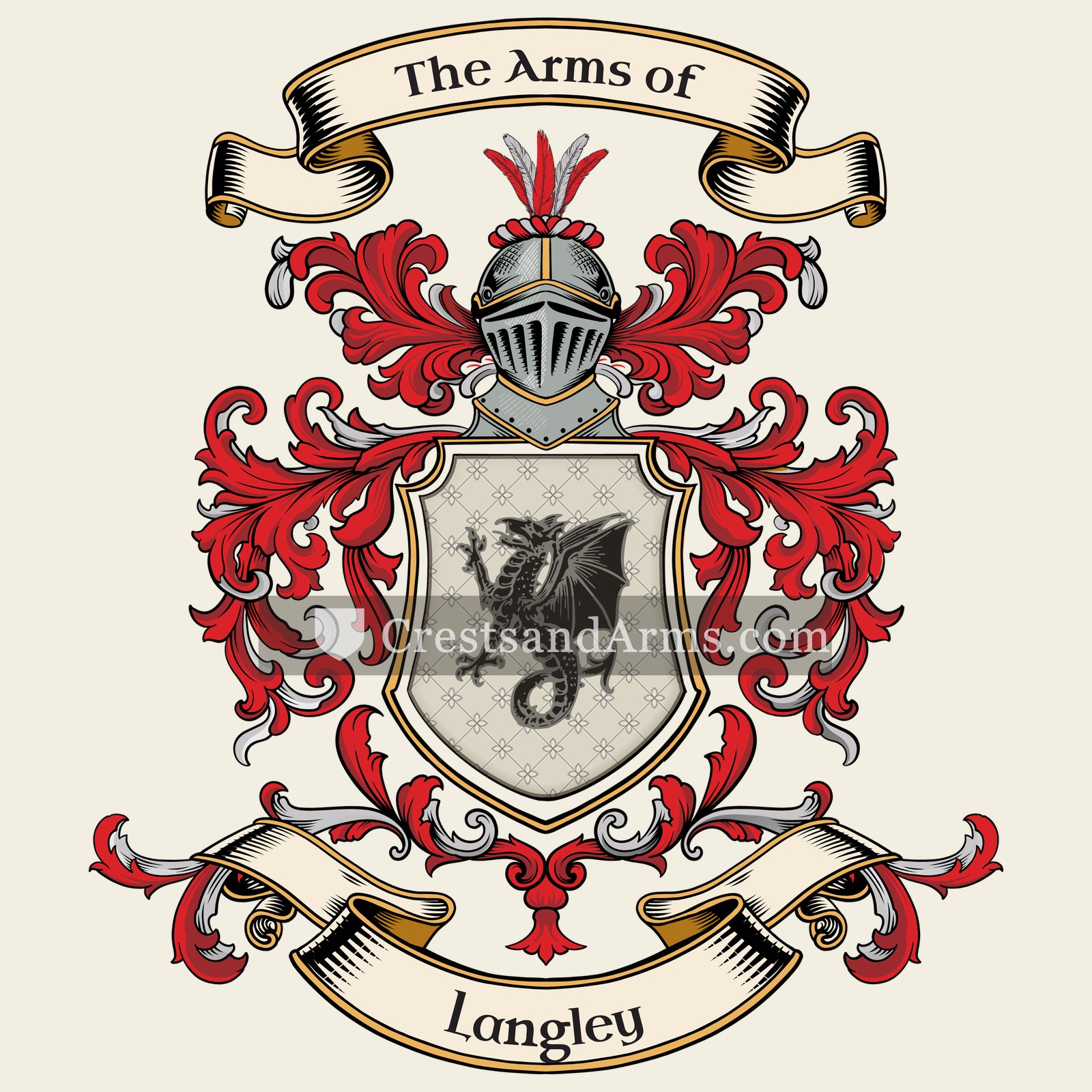

 fessThe military belt, and readiness to serve