Map of France showing where the Lappe arms are recorded
The Lappe arms were recorded in Alsace, c. 1663.
Alsace lay between France and the German lands and belonged to both at different times. Its families held small estates and served whichever side ruled, and men who served in arms carried arms of their own.
This is where the arms were entered in the register. Families often moved to other parts of the country, so the same name can turn up in more than one region.
The body that granted and recorded arms in France in this period.
Louis XIV of France
Sovereign of the period
Louis XIV of France
1643–1715
Reigning in France when the Lappe arms are first recorded.
How Arms Worked in France
In France, a coat of arms was a mark of honor that passed down through the male line to all legitimate descendants. Families often used the same shield without changes to show their shared heritage. If a branch wanted to stand out, they could add a small mark to their shield to show their specific place in the family tree.
Granting authority
The Juge d'armes de France acted as the official authority that regulated and verified coats of arms across the country.
How they got arms
Families typically inherited their arms from ancestors, though they could also receive them through royal grants or by proving their noble status.
Where arms were recorded
Coats of arms were officially recorded in the Armorial Général de France, which began its main collection in the year 1696.
The family's standing
Recorded among the armigerous families of Alsace.
Origin & History of the Lappe Family in France
The history of the Lappe family in France is deeply rooted in the cultural crossroads of the Alsace region. By 1663, records confirm that members of the family were already established in this area, which was a unique territory that frequently shifted between French and German influence. The name itself likely originated as a descriptive term or a local nickname, as was common for families living in the rural communities of the Upper Rhine Valley during the seventeenth century. Life for the Lappe family during this period was defined by the transition of Alsace into the Kingdom of France under Louis XIV. As the region integrated into the French state, the family navigated the complex social and religious changes that defined the borderlands. Their presence in the local parish registers of the time suggests they were settled members of the community who participated in the agricultural and trade-based economy that sustained the Alsatian landscape for generations.
Meaning of the Lappe family crest colors & symbols
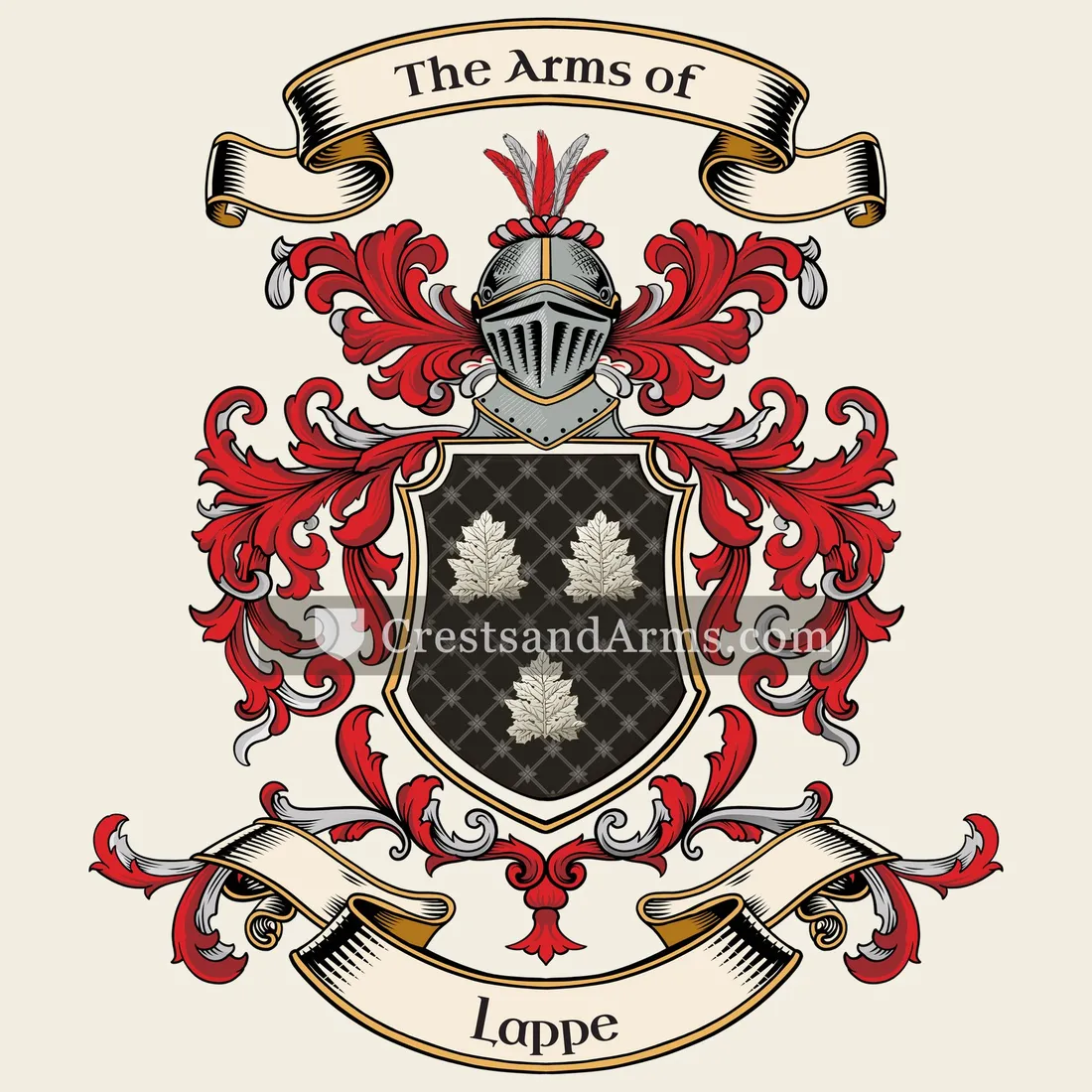
Symbols on this shield
leafHappiness and abundance
Colours
Black (Sable)Means: Constancy
Silver (Argent)Means: Peace and sincerity
Historical info
Source
J. B. Rietstap, Armorial Général, Gouda: G. B. van Goor Zonen, 1884–87
Blazon (the actual original written record)
“De sa. à trois feuilles de tilleul d'arg., les tiges en bas. C.: une feuille de l'écu, devant cinq roseaux de sa.”
WestphaliaWestphalia, c. 1765
Digital archive packCoat of arms PNG, gold border print PDF, vector SVG and the certificate of authenticity. Sent to your email in minutes.
Map of Germany showing where the Lappe arms are recorded
The Lappe arms were recorded in Westphalia, c. 1765.
Westphalia was a land of small estates and fortified farmhouses in western Germany. Its families were numerous and not especially rich, but each held its own ground, and holding ground was what brought arms.
This is where the arms were entered in the register. Families often moved to other parts of the country, so the same name can turn up in more than one region.
The body that granted and recorded arms in Germany in this period.
Francis I, Holy Roman Emperor
Sovereign of the period
Francis I, Holy Roman Emperor
1745–1765
Reigning in France when the Lappe arms are first recorded.
How Arms Worked in Germany
In the Holy Roman Empire, coats of arms were often granted to individuals by the Emperor or his representatives. These arms were then passed down through the generations to all legitimate descendants of the original holder. Younger branches of a family usually kept the same shield design without needing to change it, as the arms belonged to the entire lineage.
Granting authority
The Holy Roman Emperor held the sole power to grant new coats of arms throughout his vast imperial territories.
How they got arms
Families typically obtained their coats of arms through a formal imperial grant or by proving their noble status to the authorities.
Where arms were recorded
These grants were officially recorded in the Imperial Chancery registers, which began keeping formal records of such honors during the Middle Ages.
The family's standing
Recorded among the armigerous families of Westphalia.
Origin & History of the Lappe Family in Germany
The surname Lappe has deep roots in the Westphalia region of Germany, where families bearing the name were established by the mid-18th century. Historically, the name is linked to the Low German language, where the term "lappe" often referred to a patch of cloth or a person who worked as a tailor or mender. In the rural society of 1765 Westphalia, surnames were frequently derived from a person’s trade, physical traits, or the specific plot of land they farmed. Families in this area were often tied to the land through tenant farming or small-scale craftsmanship, living in tight-knit village communities that relied on local parish records to track births, marriages, and deaths. As the Lappe family moved through these Westphalian landscapes, they became part of a long tradition of regional identity that defined the social and economic life of northwestern Germany during the late 1700s.
Lappe Meaning & Related Branches
Root word
Lappa
A Germanic or Old French term referring to a cloth or rag.
This name
LappeA topographic or occupational name for someone who made or sold cloth patches.
also spelled
Lape
Lapy
Documented Sources
J. B. Rietstap, Armorial Général, Gouda: G. B. van Goor Zonen, 1884–87
Archives Départementales du Bas-Rhin, Registres paroissiaux et d'état civil, 1663
Grasser, Jean-Paul, Histoire de l'Alsace, 1988
Livet, Georges, L'Intendance d'Alsace sous Louis XIV, 1956
Digital archive packCoat of arms PNG, gold border print PDF, vector SVG and the certificate of authenticity. Sent to your email in minutes.


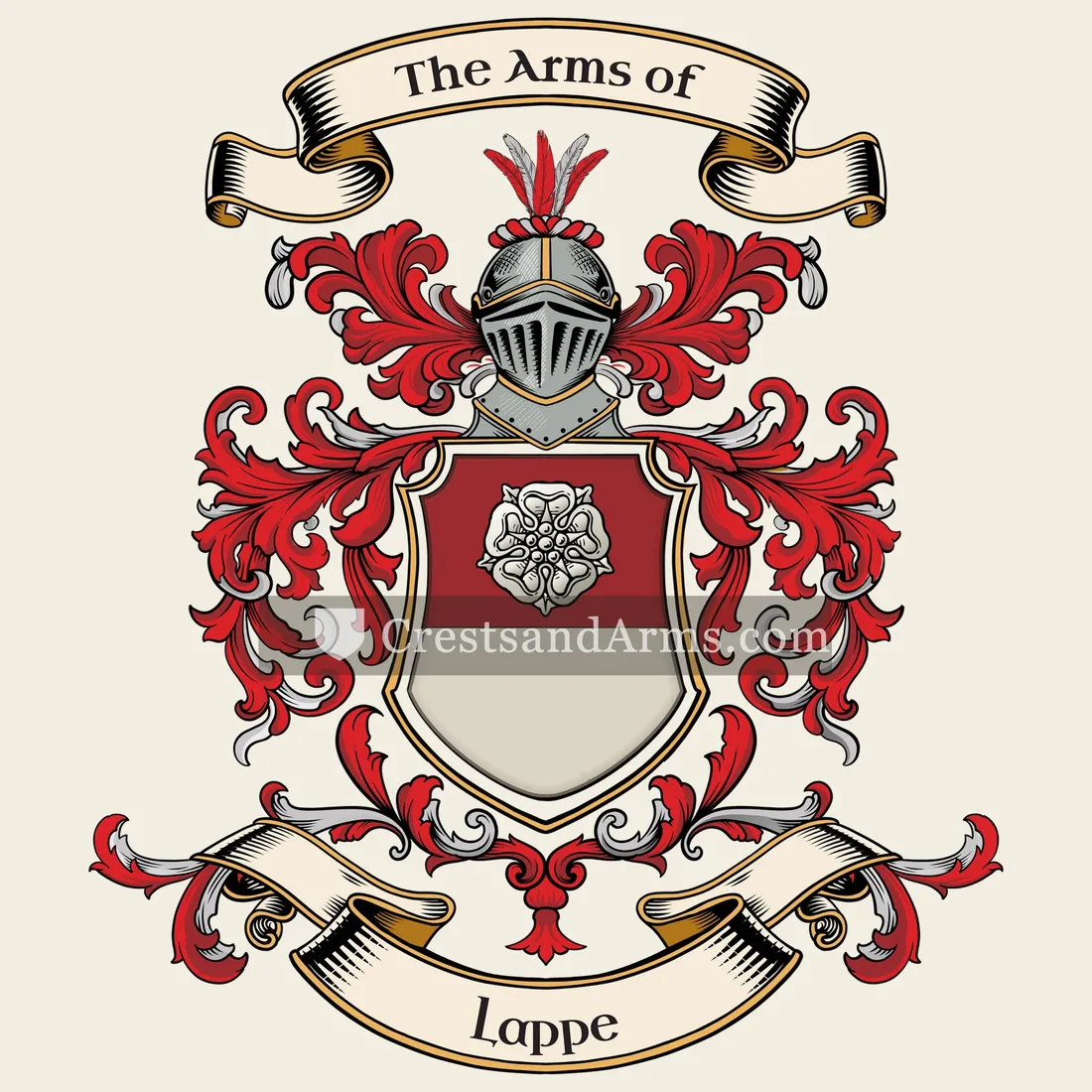
 roseThe seventh son, and beauty with grace
 roseThe seventh son, and beauty with grace


 leafHappiness and abundance