Map of Netherlands showing where the Larcher arms are recorded
The Larcher arms were recorded in Netherlands, c. 1815.
Arms such as these were typically recorded in Friesland.
Friesland was low, wet country on the northern coast of the Netherlands, farmed by families who had held the same land for centuries. Free landholders were unusually common there, and a free landholder could carry arms.
This is where the arms were entered in the register. Families often moved to other parts of the country, so the same name can turn up in more than one region.
Region
Friesland
First recorded
1815
Granting Authority for the Larcher Arms
Hoge Raad van Adel
Photograph made by me · CC BY-SA 3.0
The body that granted and recorded arms in Netherlands in this period.
William I of the Netherlands
Sovereign of the period
William I of the Netherlands
1815–1840
Reigning in Netherlands when the Larcher arms are first recorded.
How Arms Worked in Netherlands
In the Netherlands, coats of arms were often used by noble families and those who held specific public offices. These arms were passed down through the generations to legitimate descendants. Younger branches of a family usually kept the original design without needing to add special marks. This system ensured that the family identity remained clear and consistent over many years.
Granting authority
The Hoge Raad van Adel is the official body that regulates and manages noble titles and coats of arms in the Netherlands.
How they got arms
Families typically obtained their coats of arms through official royal grants or by proving their long-standing historical use of the symbols.
Where arms were recorded
Coats of arms are officially recorded in the registers held by the Hoge Raad van Adel, which began its work in 1814.
The family's standing
Recorded among the armigerous families of Netherlands.
Origin & History of the Larcher Family in Netherlands
The surname Larcher has deep roots in European history, often associated with the occupation of an archer or a bowman. While the name is frequently linked to French origins, its presence in the Netherlands, particularly in the northern province of Friesland, highlights the movement of families across borders during times of political change. By 1815, records confirm that members of the Larcher family were established residents of Friesland. This period was a significant turning point for the Netherlands, as it marked the transition into the United Kingdom of the Netherlands following the Napoleonic Wars. Families living in the region at this time often navigated shifting administrative requirements, such as the formal registration of surnames under the Napoleonic civil code. The Larcher family likely integrated into the local Frisian community by participating in the agricultural or artisanal trades that defined the region during the early nineteenth century. Their presence in the historical record serves as a testament to the diverse backgrounds of families who helped shape the social fabric of the Dutch provinces during this era of national reconstruction.
Meaning of the Larcher family crest colors & symbols
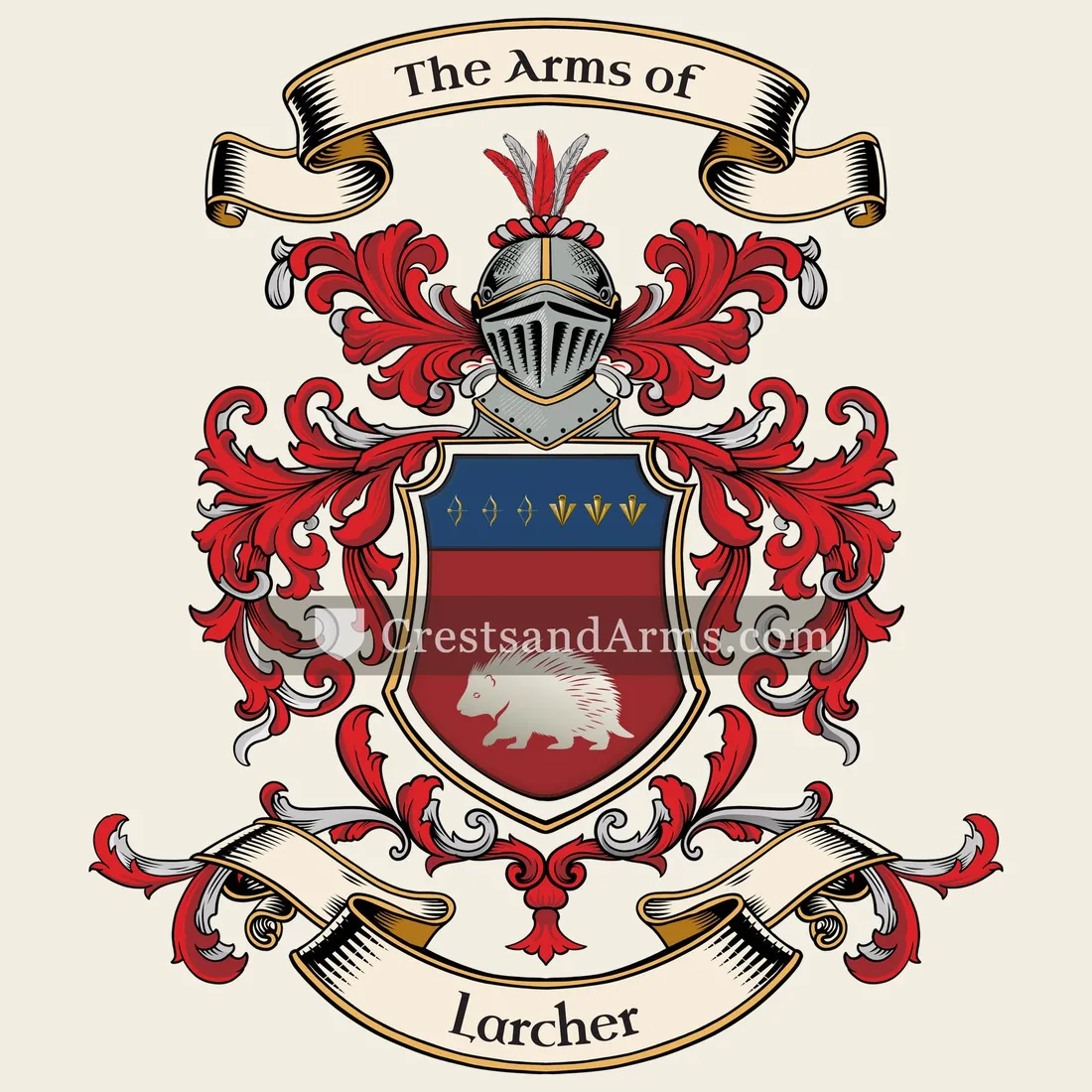
Symbols on this shield
chiefAuthority, wisdom and dominion
hedgehogA provident provider
bowReadiness, and the strength held in reserve
arrowReadiness for battle, and affliction endured
Colours
Red (Gules)Means: Military strength
Blue (Azure)Means: Loyalty and truth
Silver (Argent)Means: Peace and sincerity
Gold (Or)Means: Generosity
Historical info
Source
J. B. Rietstap, Armorial Général, Gouda: G. B. van Goor Zonen, 1884–87
Blazon (the actual original written record)
“De gu. à un porc-épic d'arg.; au chef d'azur, ch. de trois arcs, arm. de leurs flèches, d'or.”
NormandieNormandie, c. 1663
Digital archive packCoat of arms PNG, gold border print PDF, vector SVG and the certificate of authenticity. Sent to your email in minutes.
Map of France showing where the Larcher arms are recorded
The Larcher arms were recorded in Normandie, c. 1663.
Normandie held a dense crowd of knightly families on some of the best farmland in France. Its men had fought and settled abroad for generations, and a family that sent sons to war needed a shield they could be recognised by.
This is where the arms were entered in the register. Families often moved to other parts of the country, so the same name can turn up in more than one region.
The body that granted and recorded arms in France in this period.
Louis XIV of France
Sovereign of the period
Louis XIV of France
1643–1715
Reigning in Netherlands when the Larcher arms are first recorded.
How Arms Worked in France
In France, a coat of arms was a mark of honor that passed down through the male line to all legitimate descendants. Families often used the same shield without changes to show their shared heritage. If a branch wanted to stand out, they could add a small mark to their shield to show their specific place in the family tree.
Granting authority
The Juge d'armes de France acted as the official authority that regulated and verified coats of arms across the country.
How they got arms
Families typically inherited their arms from ancestors, though they could also receive them through royal grants or by proving their noble status.
Where arms were recorded
Coats of arms were officially recorded in the Armorial Général de France, which began its main collection in the year 1696.
The family's standing
Recorded among the armigerous families of Normandie.
Origin & History of the Larcher Family in France
The surname Larcher is a classic example of an occupational name that emerged during the Middle Ages in France. It is derived from the Old French word "archier," which translates to an archer or a maker of bows. Because the bow was a vital tool for both hunting and military defense, individuals who practiced this craft or served as skilled marksmen were essential members of their local communities. By the time the family was firmly established in the region of Normandie in 1663, the name had already become a permanent fixture of the local population. Families with this name were often found in rural parishes where they contributed to the agricultural and social life of the province. Over generations, the Larcher name spread across various French territories as families moved to seek new opportunities in trade and land cultivation. This history reflects the broader movement of French families who helped shape the identity of their provinces through their specific skills and daily labor.
Larcher Meaning & Related Branches
Root word
archier
Old French term for a bowman or archer.
This name
LarcherAn occupational surname for a person who made or used bows.
also spelled
Larchier
Larch
Larsher
Archer
Related arms
Larchiervariant spelling
Documented Sources
J. B. Rietstap, Armorial Général, Gouda: G. B. van Goor Zonen, 1884–87
Tresoar (Fries Historisch en Letterkundig Centrum), Burgerlijke Stand van Friesland, 1811-1950
Nederlandse Familienamenbank, Meertens Instituut, 2023
Digital archive packCoat of arms PNG, gold border print PDF, vector SVG and the certificate of authenticity. Sent to your email in minutes.


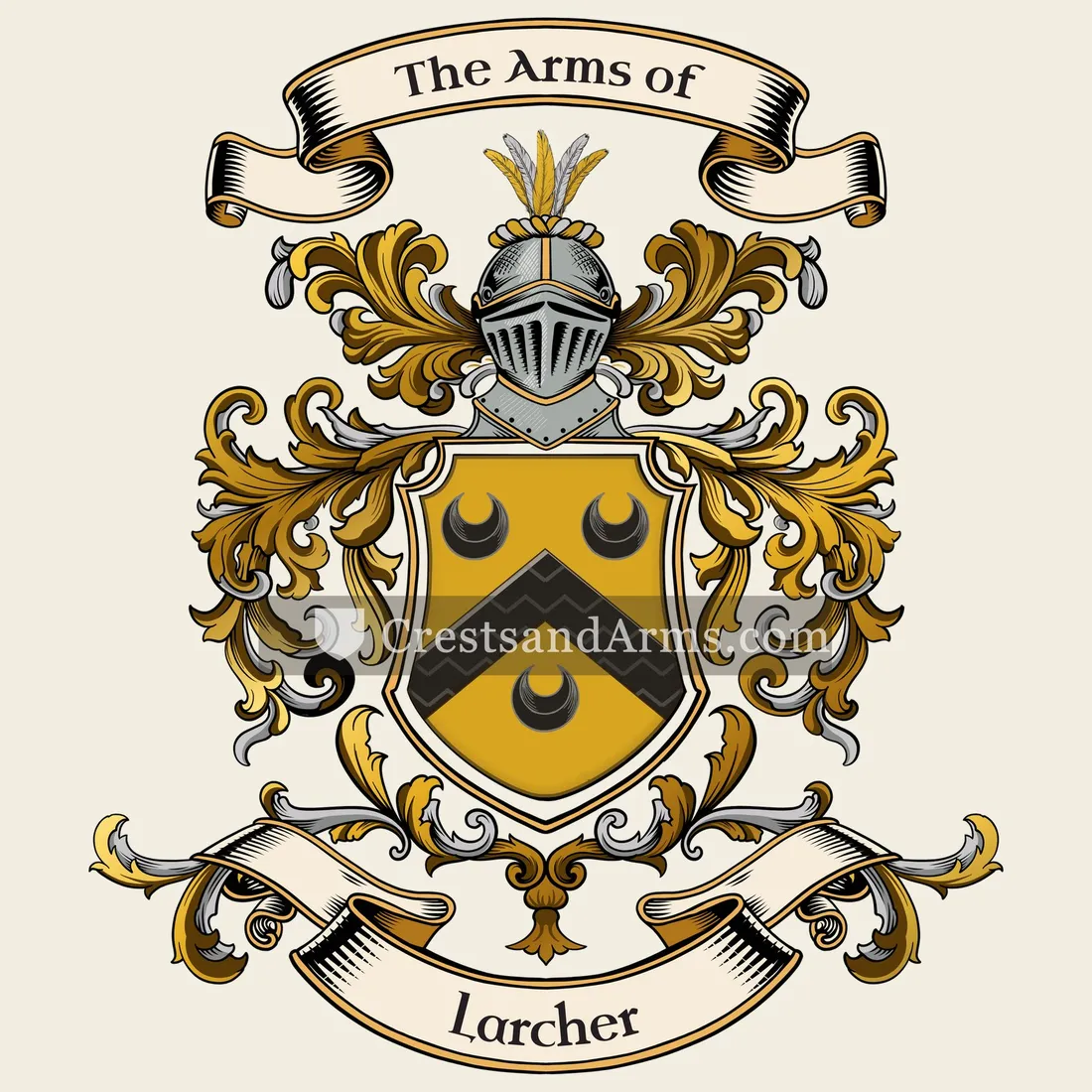
 chevronProtection, and faithful service completed
 crescentHonour by the sovereign, and the second son
 chevronProtection, and faithful service completed
 crescentHonour by the sovereign, and the second son


 chiefAuthority, wisdom and dominion
 hedgehogA provident provider
 bowReadiness, and the strength held in reserve
 arrowReadiness for battle, and affliction endured