Map of France showing where the Laube arms are recorded
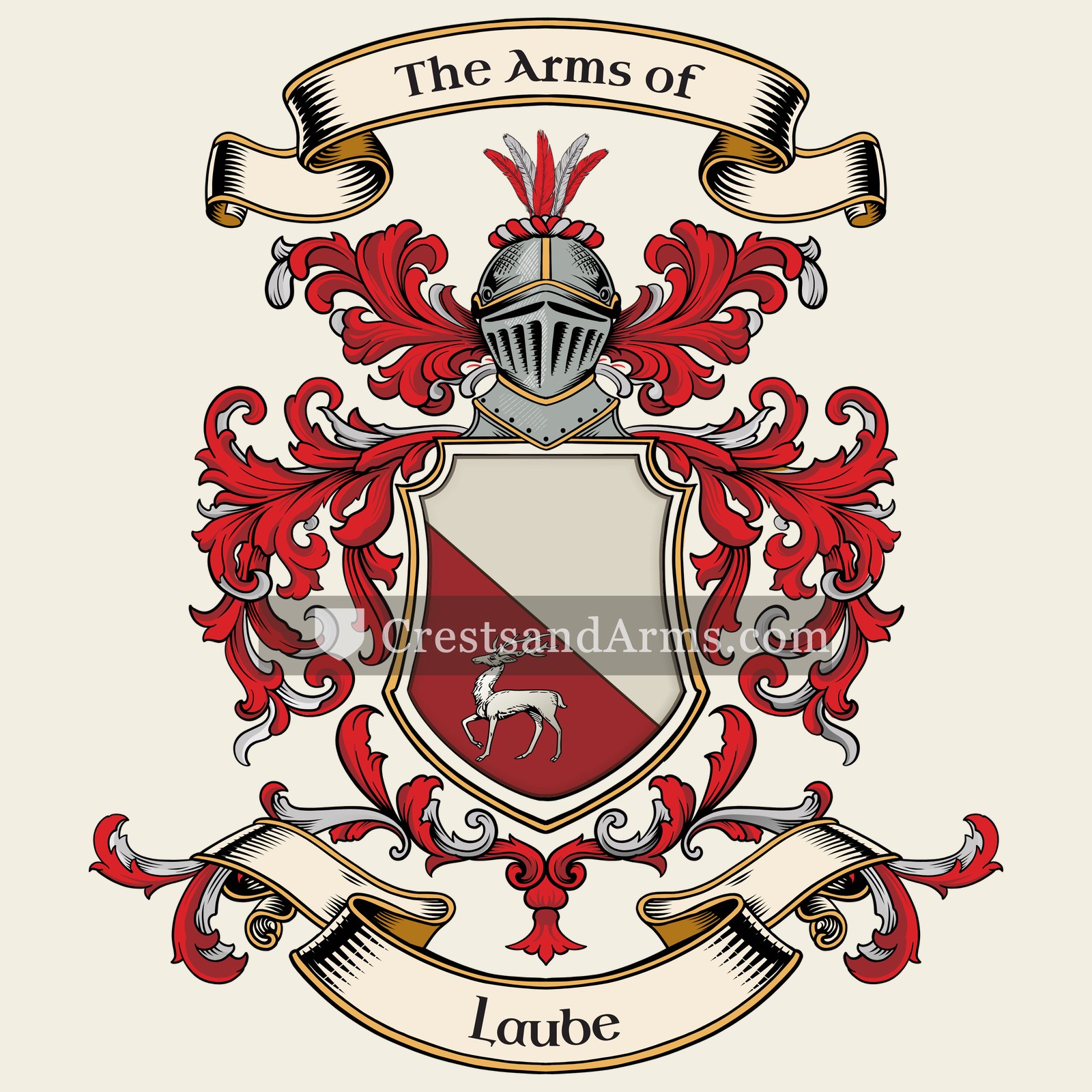
The Laube arms were recorded in Dauphine, c. 1663.
Dauphine lay in the mountains of south-eastern France, a country of small estates and scattered valleys. Its gentry were many and mostly modest, and even a small landholding was enough to justify arms.
This is where the arms were entered in the register. Families often moved to other parts of the country, so the same name can turn up in more than one region.
The body that granted and recorded arms in France in this period.
Louis XIV of France
Sovereign of the period
Louis XIV of France
1643–1715
Reigning in France when the Laube arms are first recorded.
How Arms Worked in France
In France, a coat of arms was a mark of honor that passed down through the male line to all legitimate descendants. Families often used the same shield without changes to show their shared heritage. If a branch wanted to stand out, they could add a small mark to their shield to show their specific place in the family tree.
Granting authority
The Juge d'armes de France acted as the official authority that regulated and verified coats of arms across the country.
How they got arms
Families typically inherited their arms from ancestors, though they could also receive them through royal grants or by proving their noble status.
Where arms were recorded
Coats of arms were officially recorded in the Armorial Général de France, which began its main collection in the year 1696.
The family's standing
Recorded among the armigerous families of Dauphine.
Origin & History of the Laube Family in France
The history of the Laube family in France is deeply rooted in the rugged and mountainous region of Dauphiné. By the year 1663, records confirm that members of the family were already established in this area, which served as a vital gateway between the high Alps and the Rhone Valley. The name itself is thought to derive from the Old French word "laube," which referred to a type of shelter, a porch, or a specific architectural feature common in alpine homes. Families living in this region often took names based on their surroundings or their specific trade, suggesting that the early Laubes were likely builders or people who lived in distinct dwellings near the mountain passes. Life in 17th-century Dauphiné was defined by the challenging climate and the need for strong community ties, and the Laube family would have been part of the local agricultural and social fabric that defined this historic province long before the French Revolution reshaped the nation.
Coat of Arms & Family Crest Details
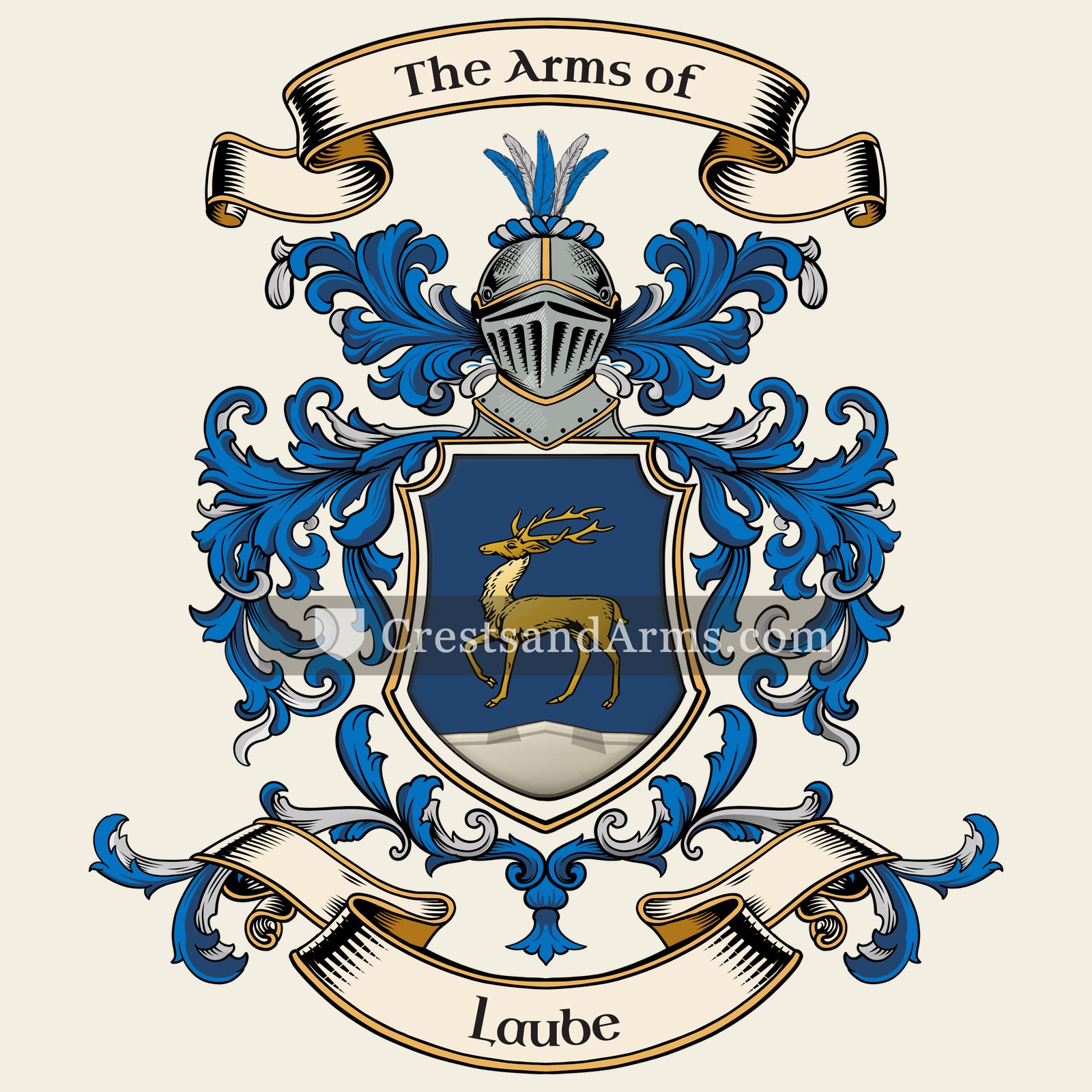
Symbols on this shield
stagPeace and harmony, and one who will not fight unprovoked
Colours
Red (Gules)Means: Military strength
Silver (Argent)Means: Peace and sincerity
Historical info
Source
J. B. Rietstap, Armorial Général, Gouda: G. B. van Goor Zonen, 1884–87
Blazon (the actual original written record)
“Taillé de gu. sur arg.; à un cerf ramp. au nat., br. sur le tout, tenant entre ses dents une tige feuillée de cinq pièces de sin. Cq. cour. C.: le cerf iss. L. d'arg. et de gu.”
Germanyc. 1765
Digital archive packCoat of arms PNG, gold border print PDF, vector SVG and the certificate of authenticity. Sent to your email in minutes.
Map of Germany showing where the Laube arms are recorded
The Laube arms were recorded in Germany, c. 1765.
Arms such as these were typically recorded in Bavaria.
Bavaria was a country of old landed families and walled market towns. Estates passed down the same line for centuries, and both the landowners and the leading townsmen kept arms, which is why so many Bavarian names sit in the registers.
This is where the arms were entered in the register. Families often moved to other parts of the country, so the same name can turn up in more than one region.
The body that granted and recorded arms in Germany in this period.
Francis I, Holy Roman Emperor
Sovereign of the period
Francis I, Holy Roman Emperor
1745–1765
Reigning in France when the Laube arms are first recorded.
How Arms Worked in Germany
In the Holy Roman Empire, coats of arms were often granted to individuals by the Emperor or his representatives. These arms were then passed down through the generations to all legitimate descendants of the original holder. Younger branches of a family usually kept the same shield design without needing to change it, as the arms belonged to the entire lineage.
Granting authority
The Holy Roman Emperor held the sole power to grant new coats of arms throughout his vast imperial territories.
How they got arms
Families typically obtained their coats of arms through a formal imperial grant or by proving their noble status to the authorities.
Where arms were recorded
These grants were officially recorded in the Imperial Chancery registers, which began keeping formal records of such honors during the Middle Ages.
The family's standing
Recorded among the armigerous families of Germany.
Origin & History of the Laube Family in Germany
The surname Laube is deeply rooted in the German language and likely originated as a descriptive nickname or a reference to a specific location. In Middle High German, the word "loube" referred to a leafy arbor, a porch, or a sheltered area, suggesting that early ancestors may have lived near a prominent structure or a wooded area. By the time members of the family were documented in Bavaria in 1765, the name had already been established for generations across various German-speaking regions. During this era, families often moved within the Holy Roman Empire to find better farmland or to pursue trades in growing towns. The presence of the Laube family in 18th-century Bavaria reflects the broader movement of people who were beginning to settle into more permanent communities as record-keeping by local parishes and regional governments became more consistent.
Related Branches & Arms
Root word
Laub
Germanic term referring to foliage, leaves, or a leafy bower.
This name
LaubeA topographic name for someone who lived near a leafy tree or in a wooded area.
also spelled
Laubee
Laub
Lowb
Related arms
Laubvariant spelling
Documented Sources
J. B. Rietstap, Armorial Général, Gouda: G. B. van Goor Zonen, 1884–87
Archives Départementales de l'Isère, Registres paroissiaux et d'état civil de la province du Dauphiné, 1663
Boyer, Auguste, Histoire des familles du Dauphiné, 1924
Chorier, Nicolas, Histoire générale de Dauphiné, 1661
Digital archive packCoat of arms PNG, gold border print PDF, vector SVG and the certificate of authenticity. Sent to your email in minutes.


 mountThe ground held, and steadfastness upon it
 stagPeace and harmony, and one who will not fight unprovoked
 mountThe ground held, and steadfastness upon it
 stagPeace and harmony, and one who will not fight unprovoked