Map of Belgium showing where the le Prévost arms are recorded
The le Prévost arms were recorded in Hainaut, c. 1523.
Hainaut sat on the border between France and the Low Countries and was fought over for centuries. Families there held their land under arms and expected to defend it, so a shield was a working thing.
This is where the arms were entered in the register. Families often moved to other parts of the country, so the same name can turn up in more than one region.
The body that granted and recorded arms in Belgium in this period.
Charles V
Sovereign of the period
Charles V
1519–1556
Reigning in Belgium when the le Prévost arms are first recorded.
How Arms Worked in Belgium
In Belgium, a coat of arms is considered personal property that is passed down through the male line to legitimate descendants. Families often use the same shield design across generations to show their shared heritage. If a branch of the family wants to change the design, they must apply for an official update to their specific version of the arms.
Granting authority
The Conseil héraldique is the official body that regulates and approves all coats of arms in Belgium.
How they got arms
Families obtain their coats of arms through formal royal grants or by confirming their historical right to use existing designs.
Where arms were recorded
All approved coats of arms are officially recorded in the public registers of the Conseil héraldique since 1844.
The family's standing
Recorded among the armigerous families of Hainaut.
Origin & History of the le Prévost Family in Belgium
The surname Le Prévost originates from the medieval title of a "prévôt," which was a high-ranking administrative or judicial official appointed by a lord or the crown to manage local affairs. By the early 16th century, the family had firmly established itself within the County of Hainaut, a region known for its complex feudal structure and strategic importance in the Low Countries. Records from 1523 confirm their presence in this area, suggesting that the family likely served in roles involving tax collection, legal oversight, or the administration of justice for local nobility. As the title of prévôt was often tied to specific landholdings or offices, the family name became a way to identify those who held these positions of authority. Over time, the name transitioned from a professional designation into a hereditary surname, reflecting the family's integration into the social and political fabric of the Hainaut region during a period of significant transition in Belgian history.
Coat of Arms & Family Crest Details
Symbols on this shield
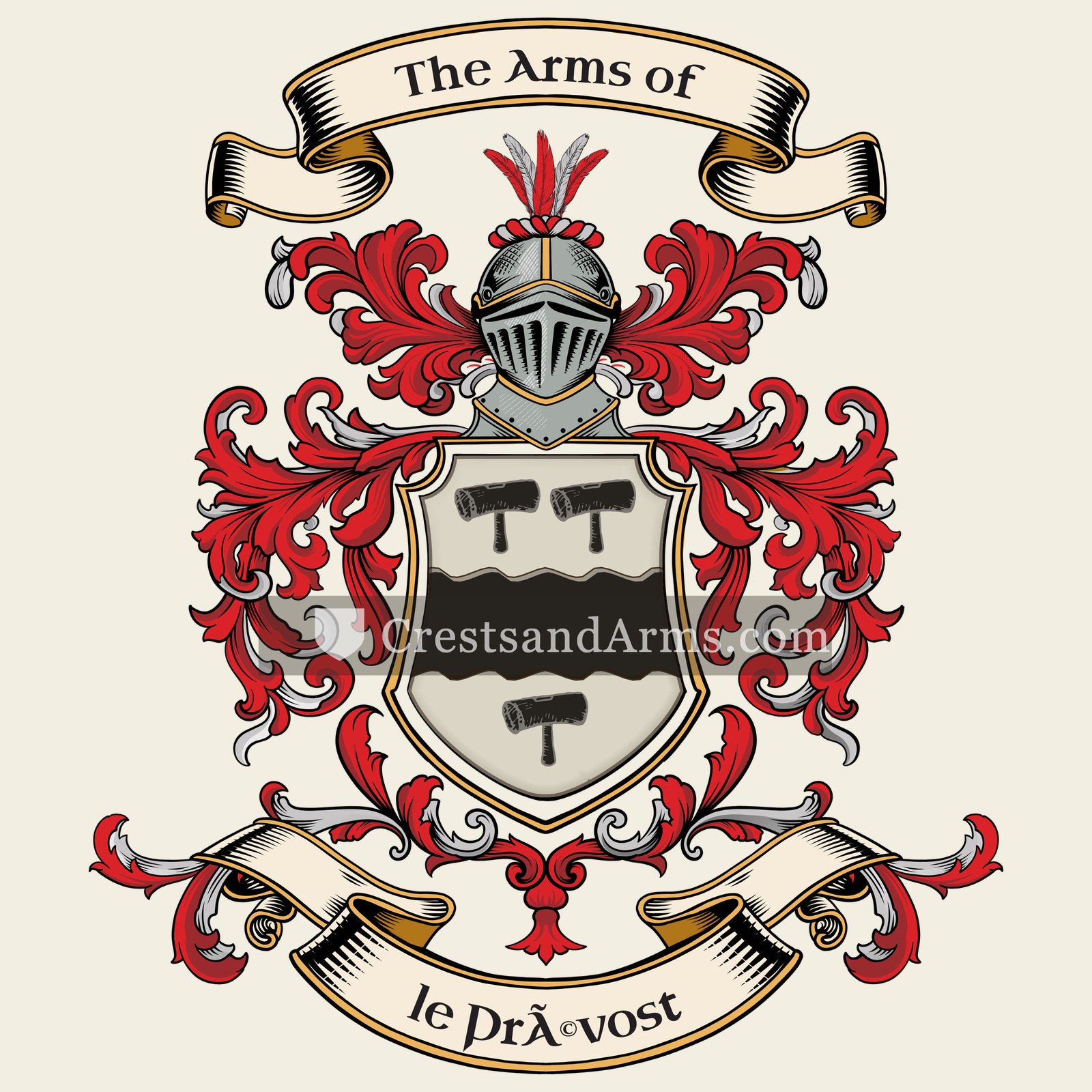
fessThe military belt, and readiness to serve
hammerHonest labour, and the smith's craft
Colours
Silver (Argent)Means: Peace and sincerity
Black (Sable)Means: Constancy
Historical info
Source
J. B. Rietstap, Armorial Général, Gouda: G. B. van Goor Zonen, 1884–87
Blazon (the actual original written record)
“D'arg. à la fasce ondée de sa., acc. de trois maillets du même.”
ArtoisArtois, c. 1663
Digital archive packCoat of arms PNG, gold border print PDF, vector SVG and the certificate of authenticity. Sent to your email in minutes.
Map of France showing where the le Prévost arms are recorded
The le Prévost arms were recorded in Artois, c. 1663.
Artois lay on the disputed ground between France and the Low Countries and was fought over for centuries. Families there held their land under arms, and a shield was how a fighting household was known.
This is where the arms were entered in the register. Families often moved to other parts of the country, so the same name can turn up in more than one region.
The body that granted and recorded arms in France in this period.
Louis XIV of France
Sovereign of the period
Louis XIV of France
1643–1715
Reigning in Belgium when the le Prévost arms are first recorded.
How Arms Worked in France
In France, a coat of arms was a mark of honor that passed down through the male line to all legitimate descendants. Families often used the same shield without changes to show their shared heritage. If a branch wanted to stand out, they could add a small mark to their shield to show their specific place in the family tree.
Granting authority
The Juge d'armes de France acted as the official authority that regulated and verified coats of arms across the country.
How they got arms
Families typically inherited their arms from ancestors, though they could also receive them through royal grants or by proving their noble status.
Where arms were recorded
Coats of arms were officially recorded in the Armorial Général de France, which began its main collection in the year 1696.
The family's standing
Recorded among the armigerous families of Artois.
Origin & History of the le Prévost Family in France
The surname Le Prévost originates from the French word *prévôt*, which refers to a medieval administrative or judicial official similar to a provost or a sheriff. During the Middle Ages, this title was granted to individuals who acted as local representatives for the king or a high-ranking nobleman, tasked with maintaining order and collecting taxes. By the time the family was firmly established in the province of Artois in 1663, the name had transitioned from a functional job title into a hereditary family surname. Living in Artois during the seventeenth century placed the family in a region that was frequently contested due to its strategic location between France and the Spanish Netherlands. As the family settled into this northern landscape, they became part of a long tradition of local governance and social structure that defined the rural life of the era.
Related Branches & Arms
Root word
praepositus
Latin term meaning placed before, in charge, or a superior official.
This name
le PrévostAn occupational surname for a provost, magistrate, or a chief administrative official.
also spelled
Leprevot
le Prayvo
Prevost
Related arms
Prévost (le) de Basserodevariant spelling
Prévost (le) de Glimontvariant spelling
Prévost (le) de Locmariavariant spelling
Prévost (le) de Penanrunvariant spelling
Documented Sources
J. B. Rietstap, Armorial Général, Gouda: G. B. van Goor Zonen, 1884–87
Archives: Archives de l'État à Mons, Fonds de la Cour féodale de Hainaut
Books: Devillers, Léopold, Cartulaire des comtes de Hainaut, 1881
Books: Hocquet, Adolphe, Tournai et le Tournaisis au XVIe siècle, 1906
Digital archive packCoat of arms PNG, gold border print PDF, vector SVG and the certificate of authenticity. Sent to your email in minutes.


 fessThe military belt, and readiness to serve
 chiefAuthority, wisdom and dominion
 eagleNobility, strength and a keen mind
 fessThe military belt, and readiness to serve
 chiefAuthority, wisdom and dominion
 eagleNobility, strength and a keen mind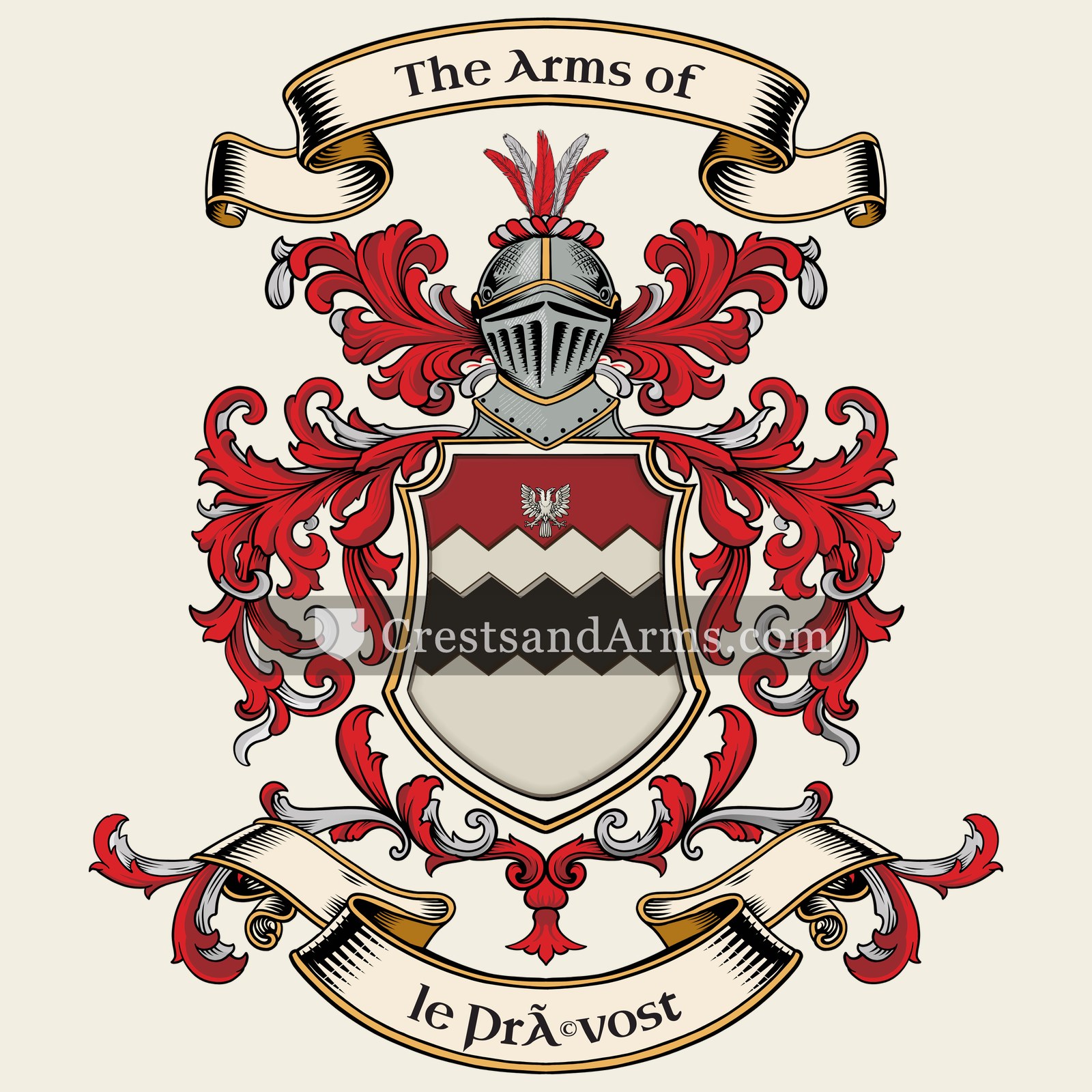


 hammerHonest labour, and the smith's craft