Map of Spain showing where the Lechuga arms are recorded
The Lechuga arms were recorded in Andalusia, c. 1722.
Andalusia was the last part of Spain taken back from the Moors, and the land was shared out among the men who took it. A grant of land came with a grant of arms, so the region produced a great many.
This is where the arms were entered in the register. Families often moved to other parts of the country, so the same name can turn up in more than one region.
The body that granted and recorded arms in Spain in this period.
Philip V of Spain
Sovereign of the period
Philip V of Spain
1714–1724
Reigning in Spain when the Lechuga arms are first recorded.
How Arms Worked in Spain
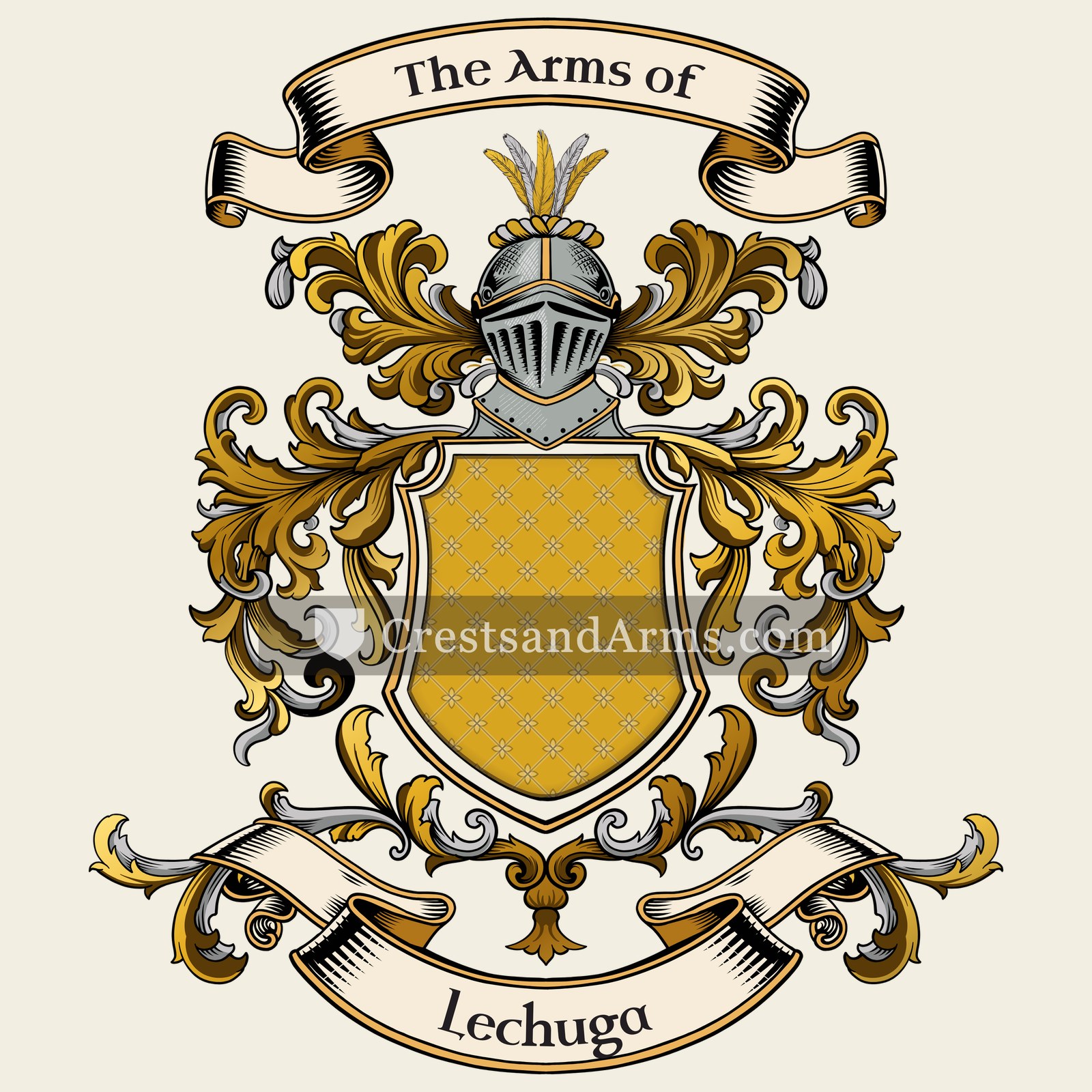
In Spain, a coat of arms was considered a form of property that belonged to the entire family line. These arms were passed down from a father to all his children equally. Younger branches of the family usually kept the original design without needing to add any special marks to distinguish their specific line.
Granting authority
The Cronista Rey de Armas was the official body that regulated and granted coats of arms throughout Spain.
How they got arms
Families often obtained their arms through royal grants or by proving their noble status to the official heraldic authority.
Where arms were recorded
Coats of arms were officially recorded in the registers of the Cronista Rey de Armas starting in 1496.
The family's standing
Recorded among the armigerous families of Andalusia.
Origin & History of the Lechuga Family in Spain
The surname Lechuga is deeply rooted in the historical landscape of Andalusia, Spain. By the early 18th century, families bearing this name were well-established within the region, particularly in areas surrounding Seville and Cordoba. The word itself is the Spanish term for lettuce, which suggests that the name likely originated as a descriptive nickname. In medieval naming customs, such names were often given to individuals who were known for cultivating specific crops or who lived near notable garden plots. As these families grew, the name became a permanent identifier passed down through generations. By 1722, the Lechuga family was already integrated into the social and agricultural fabric of southern Spain, contributing to the local community life that defined the Andalusian countryside during the Bourbon era.
Related Branches & Arms
Root word
lactuca
Latin term for lettuce or a milky plant sap.
This name
LechugaA topographic or occupational surname referring to a grower or seller of lettuce.
also spelled
Lechugae
Lechugah
Lechugar
Lechugas
Lechooga
Documented Sources
J. B. Rietstap, Armorial Général, Gouda: G. B. van Goor Zonen, 1884–87
Moll, Francesc de B., Els llinatges catalans: Catalunya, País Valencià, Illes Balears, 1959
Faure, Roberto, Diccionario de apellidos españoles, 2001
Archivo General de Indias, Sección de Gobierno, Audiencia de Sevilla
Archivo Histórico Provincial de Sevilla, Protocolos Notariales
Digital archive packCoat of arms PNG, gold border print PDF, vector SVG and the certificate of authenticity. Sent to your email in minutes.