Map of Germany showing where the Lederer arms are recorded
The Lederer arms were recorded in Germany, c. 1765.
Arms such as these were typically recorded in Bavaria.
Bavaria was a country of old landed families and walled market towns. Estates passed down the same line for centuries, and both the landowners and the leading townsmen kept arms, which is why so many Bavarian names sit in the registers.
This is where the arms were entered in the register. Families often moved to other parts of the country, so the same name can turn up in more than one region.
The body that granted and recorded arms in Germany in this period.
Francis I, Holy Roman Emperor
Sovereign of the period
Francis I, Holy Roman Emperor
1745–1765
Reigning in Germany when the Lederer arms are first recorded.
How Arms Worked in Germany
In the Holy Roman Empire, coats of arms were often granted to individuals by the Emperor or his representatives. These arms were then passed down through the generations to all legitimate descendants of the original holder. Younger branches of a family usually kept the same shield design without needing to change it, as the arms belonged to the entire lineage.
Granting authority
The Holy Roman Emperor held the sole power to grant new coats of arms throughout his vast imperial territories.
How they got arms
Families typically obtained their coats of arms through a formal imperial grant or by proving their noble status to the authorities.
Where arms were recorded
These grants were officially recorded in the Imperial Chancery registers, which began keeping formal records of such honors during the Middle Ages.
The family's standing
Recorded among the armigerous families of Germany.
Origin & History of the Lederer Family in Germany
The surname Lederer is a classic example of a name derived from a person’s occupation in medieval Germany. The word itself comes from the German term for a leather worker or tanner. During the Middle Ages, families often took on the names of their trades to help identify them within their local communities. By the time records confirm the presence of the Lederer family in Bavaria in 1765, the name was already well-established across various German-speaking regions. These early family members likely lived in towns where the leather trade was a vital part of the local economy. Because tanning required access to water and specific raw materials, these families often settled near riverbanks or on the outskirts of growing trade centers. Over many generations, the name transitioned from a simple job description into a permanent family identifier that was passed down from parents to their children.
Meaning of the Lederer family crest colors & symbols
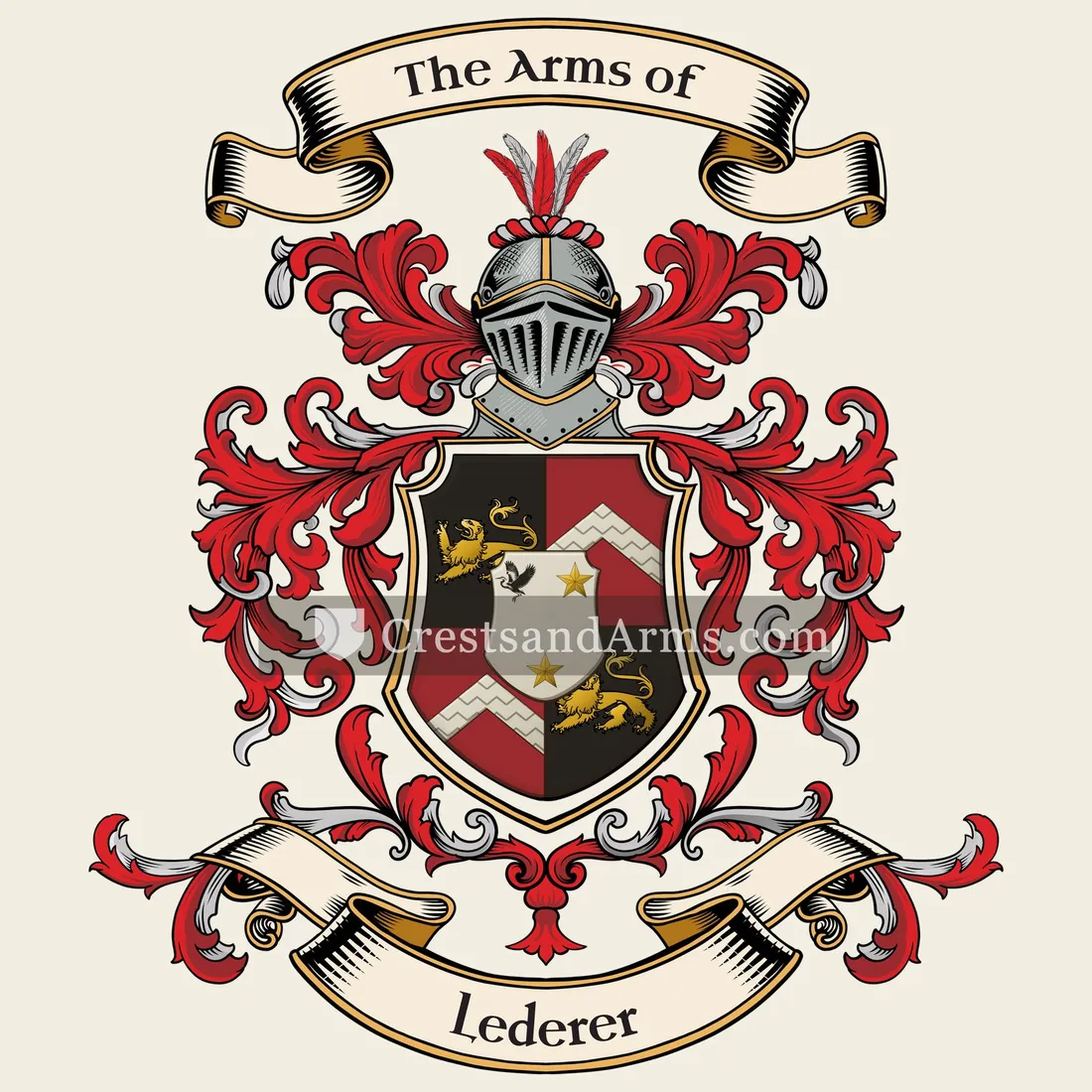
Symbols on this shield
mountThe ground held, and steadfastness upon it
heronPatience and quiet watchfulness
mulletThe third son, and a divine quality from above
Colours
Blue (Azure)Means: Loyalty and truth
Green (Vert)Means: Hope
Silver (Argent)Means: Peace and sincerity
Gold (Or)Means: Generosity
Historical info
Source
J. B. Rietstap, Armorial Général, Gouda: G. B. van Goor Zonen, 1884–87
Blazon (the actual original written record)
“D'azur à une grue avec sa vigilance d'arg., posée sur un tertre de sin. et acc. en chef de deux étoiles d'or.”
BelgiumBruxelles, c. 1763
Digital archive packCoat of arms PNG, gold border print PDF, vector SVG and the certificate of authenticity. Sent to your email in minutes.
Map of Belgium showing where the Lederer arms are recorded
The Lederer arms were recorded in Bruxelles, c. 1763.
This is where the arms were entered in the register. Families often moved to other parts of the country, so the same name can turn up in more than one region.
The body that granted and recorded arms in Belgium in this period.
Francis I, Holy Roman Emperor
Sovereign of the period
Francis I, Holy Roman Emperor
1745–1765
Reigning in Germany when the Lederer arms are first recorded.
How Arms Worked in Belgium
In Belgium, a coat of arms is considered personal property that is passed down through the male line to legitimate descendants. Families often use the same shield design across generations to show their shared heritage. If a branch of the family wants to change the design, they must apply for an official update to their specific version of the arms.
Granting authority
The Conseil héraldique is the official body that regulates and approves all coats of arms in Belgium.
How they got arms
Families obtain their coats of arms through formal royal grants or by confirming their historical right to use existing designs.
Where arms were recorded
All approved coats of arms are officially recorded in the public registers of the Conseil héraldique since 1844.
The family's standing
Recorded among the armigerous families of Belgium.
Origin & History of the Lederer Family in Belgium
The surname Lederer is an occupational name that originated from the German word for a leather worker or tanner. While the name is deeply rooted in Central European history, its presence in Belgium is documented as early as 1763 in the city of Brussels. During the eighteenth century, Brussels was a bustling center for trade and craftsmanship under the rule of the Austrian Netherlands. Families with this name likely migrated to the region to seek new economic opportunities within the city's thriving guilds and leather-working districts. As these individuals settled into the local community, they integrated into the urban fabric of Brussels, transitioning from itinerant artisans to established residents. This migration pattern reflects the broader movement of skilled laborers across Europe during the Enlightenment, where professional expertise often dictated where families chose to build their lives.
Meaning of the Lederer family crest colors & symbols
Symbols on this shield
chevronProtection, and faithful service completed
heronPatience and quiet watchfulness
mulletThe third son, and a divine quality from above
lionCourage, strength and royalty
Colours
Black (Sable)Means: Constancy
Red (Gules)Means: Military strength
Silver (Argent)Means: Peace and sincerity
Gold (Or)Means: Generosity
Historical info
Source
J. B. Rietstap, Armorial Général, Gouda: G. B. van Goor Zonen, 1884–87
Blazon (the actual original written record)
“Ec.: aux 1 et 4 de sa. au lion d'or, supp. dans ses pattes une croisette pattée du même; le lion du 1 cont.; aux 2 et 3 de gu. au chev. alésé d'arg. Sur le tout de Lederer qui est d'azur à une grue avec sa vigilance d'arg., acc. en chef de deux étoiles d'or. Trois cq. cour. C.: 1° le lion du 1, iss.; 1. d'arg. et de gu.; 2° un Pégase iss. d'arg.; 1. d'or et de sa.; 3° un demi-vol aux armes du 2; 1. d'arg. et d'azur. S.: deux grues reg. au nat., le bec entr'ouvert.”
Austriac. 1763
Digital archive packCoat of arms PNG, gold border print PDF, vector SVG and the certificate of authenticity. Sent to your email in minutes.
Map of Austria showing where the Lederer arms are recorded
The Lederer arms were recorded in Austria, c. 1763.
Arms such as these were typically recorded in Tyrol.
Tyrol was mountain country in western Austria, where the valleys were held by families who had been there a very long time. Old tenure counted for more than money, and old families carried arms.
This is where the arms were entered in the register. Families often moved to other parts of the country, so the same name can turn up in more than one region.
Region
Tyrol
First recorded
1763
Granting Authority for the Lederer Arms
Imperial and Royal chancery
Sodacan · CC BY-SA 3.0
The body that granted and recorded arms in Austria in this period.
Francis I, Holy Roman Emperor
Sovereign of the period
Francis I, Holy Roman Emperor
1745–1765
Reigning in Germany when the Lederer arms are first recorded.
How Arms Worked in Austria
Austrian coats of arms were often linked directly to noble titles granted by the Emperor. These symbols belonged to the entire family line rather than just one individual. When a family grew, new branches kept the original design without needing to change it. This system allowed all members of a noble house to share the same identity across many generations.
Granting authority
The Imperial and Royal chancery managed all heraldic matters and controlled the official granting of arms throughout the Austrian lands.
How they got arms
Families typically received their arms through a formal imperial decree that often accompanied the elevation of a person to noble status.
Where arms were recorded
Official records of these grants were kept in the Imperial Register of Nobility which began its formal documentation process in 1453.
The family's standing
Recorded among the armigerous families of Austria.
Origin & History of the Lederer Family in Austria
The surname Lederer is a professional name that originated from the medieval German word for a leather worker or tanner. In the mountainous region of Tyrol, this name identified families who played a vital role in the local economy by processing animal hides into durable goods. By 1763, the Lederer family was well-established in this area, likely serving as skilled craftsmen who provided leather for clothing, footwear, and agricultural equipment. Because leather was an essential material for survival in the harsh Alpine climate, these families often held a respected position within their village communities. Over many generations, the name transitioned from a simple job description into a permanent family identifier, marking the lineage of those who mastered the difficult and labor-intensive trade of tanning in the Austrian highlands.
Lederer Meaning & Related Branches
Root word
Leder
German word for animal hide or skin.
This name
LedererAn occupational surname for a leather worker, tanner, or merchant.
also spelled
Leder
Ledere
Ledererr
Related arms
Maguschsimilar arms
Mayersimilar arms
Stockingersimilar arms
Windischsimilar arms
Documented Sources
J. B. Rietstap, Armorial Général, Gouda: G. B. van Goor Zonen, 1884–87
Bahlow, Hans, Deutsches Namenlexikon: Familien- und Vornamen nach Ursprung und Sinn erklärt, 1967
Heintze, Albert, Die deutschen Familien-Namen: geschichtlich, geographisch, sprachlich, 1903
Bayerisches Hauptstaatsarchiv, Kurbayern Hofkammer: Steuer- und Katasterwesen, 1765
Digital archive packCoat of arms PNG, gold border print PDF, vector SVG and the certificate of authenticity. Sent to your email in minutes.


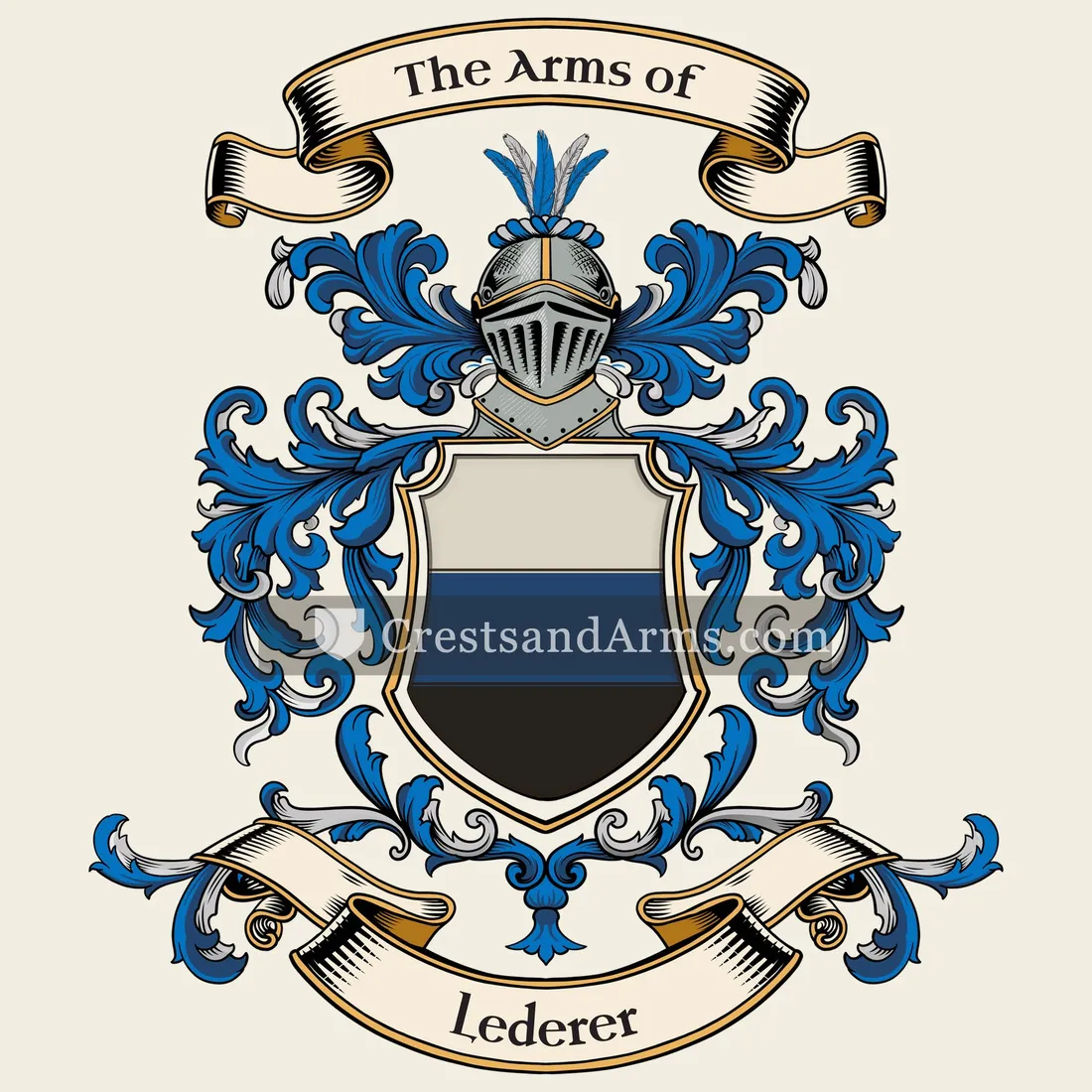


 mountThe ground held, and steadfastness upon it
 heronPatience and quiet watchfulness
 mulletThe third son, and a divine quality from above
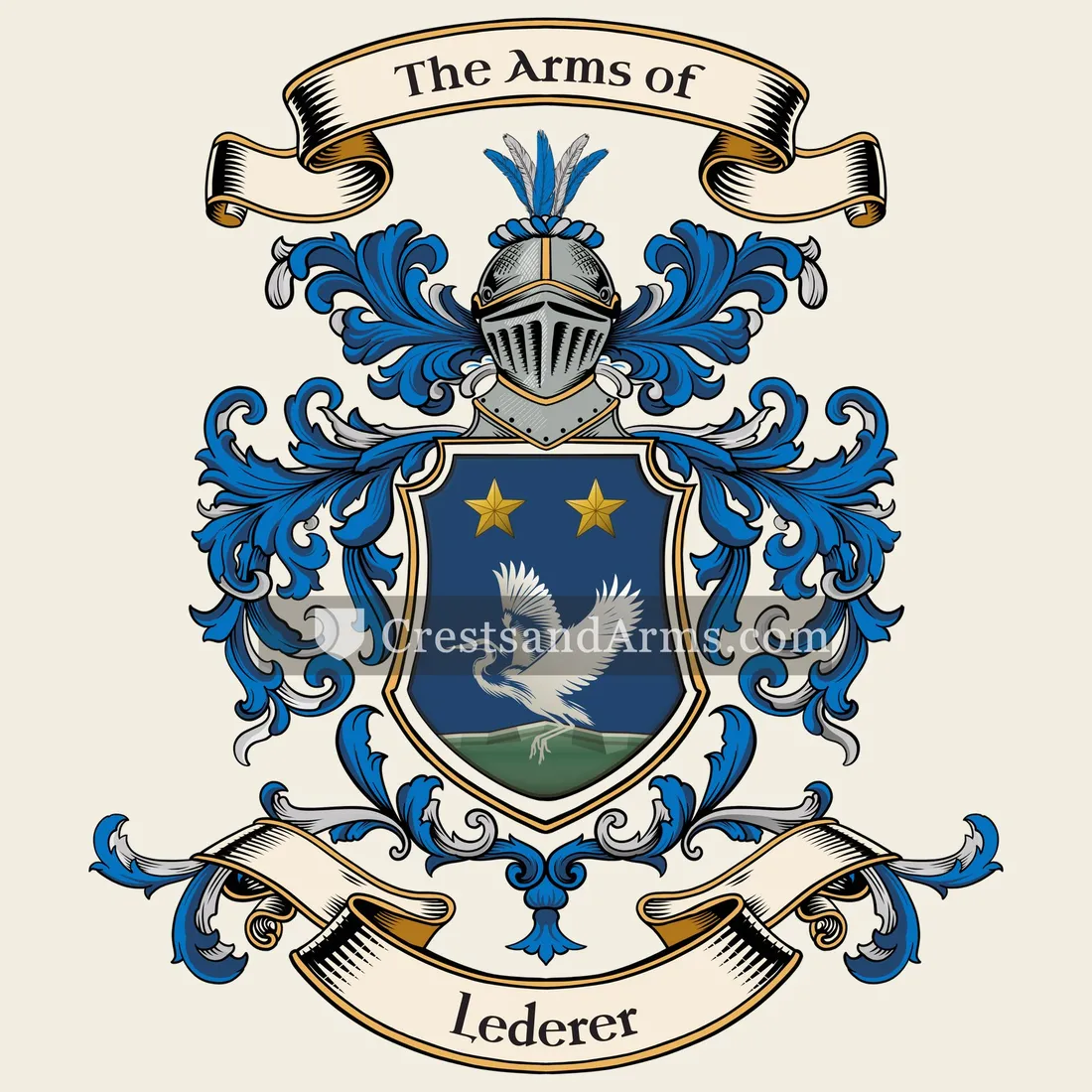

 chevronProtection, and faithful service completed
 lionCourage, strength and royalty