Map of Belgium showing where the Leis arms are recorded
The Leis arms were recorded in Flandre, c. 1663.
Flandre grew rich on cloth, and its towns were among the busiest in Europe. Merchant families bought land with their profits and took arms to go with it, so trade put as many names in the registers here as land did.
This is where the arms were entered in the register. Families often moved to other parts of the country, so the same name can turn up in more than one region.
The body that granted and recorded arms in Belgium in this period.
Philip IV of Spain
Sovereign of the period
Philip IV of Spain
1621–1665
Reigning in Belgium when the Leis arms are first recorded.
How Arms Worked in Belgium
In Belgium, a coat of arms is considered personal property that is passed down through the male line to legitimate descendants. Families often use the same shield design across generations to show their shared heritage. If a branch of the family wants to change the design, they must apply for an official update to their specific version of the arms.
Granting authority
The Conseil héraldique is the official body that regulates and approves all coats of arms in Belgium.
How they got arms
Families obtain their coats of arms through formal royal grants or by confirming their historical right to use existing designs.
Where arms were recorded
All approved coats of arms are officially recorded in the public registers of the Conseil héraldique since 1844.
The family's standing
Recorded among the armigerous families of Flandre.
Origin & History of the Leis Family in Belgium
The history of the Leis family in Belgium begins in the region of Flanders, where records confirm their presence as early as 1663. During the seventeenth century, Flanders was a landscape defined by shifting borders and the influence of both local traditions and foreign powers. Families like the Leis group often lived in agricultural or merchant communities where names were frequently adapted to reflect the local dialect. The name likely evolved from regional linguistic roots, serving as a way to identify individuals within their specific parish or town. As residents of Flanders, these early family members lived through a time of significant transition, navigating the social and economic changes that shaped the Low Countries. By maintaining their presence in the region, the family became part of the long history of Flemish settlement, contributing to the local culture that defined the area for generations.
Meaning of the Leis family crest colors & symbols
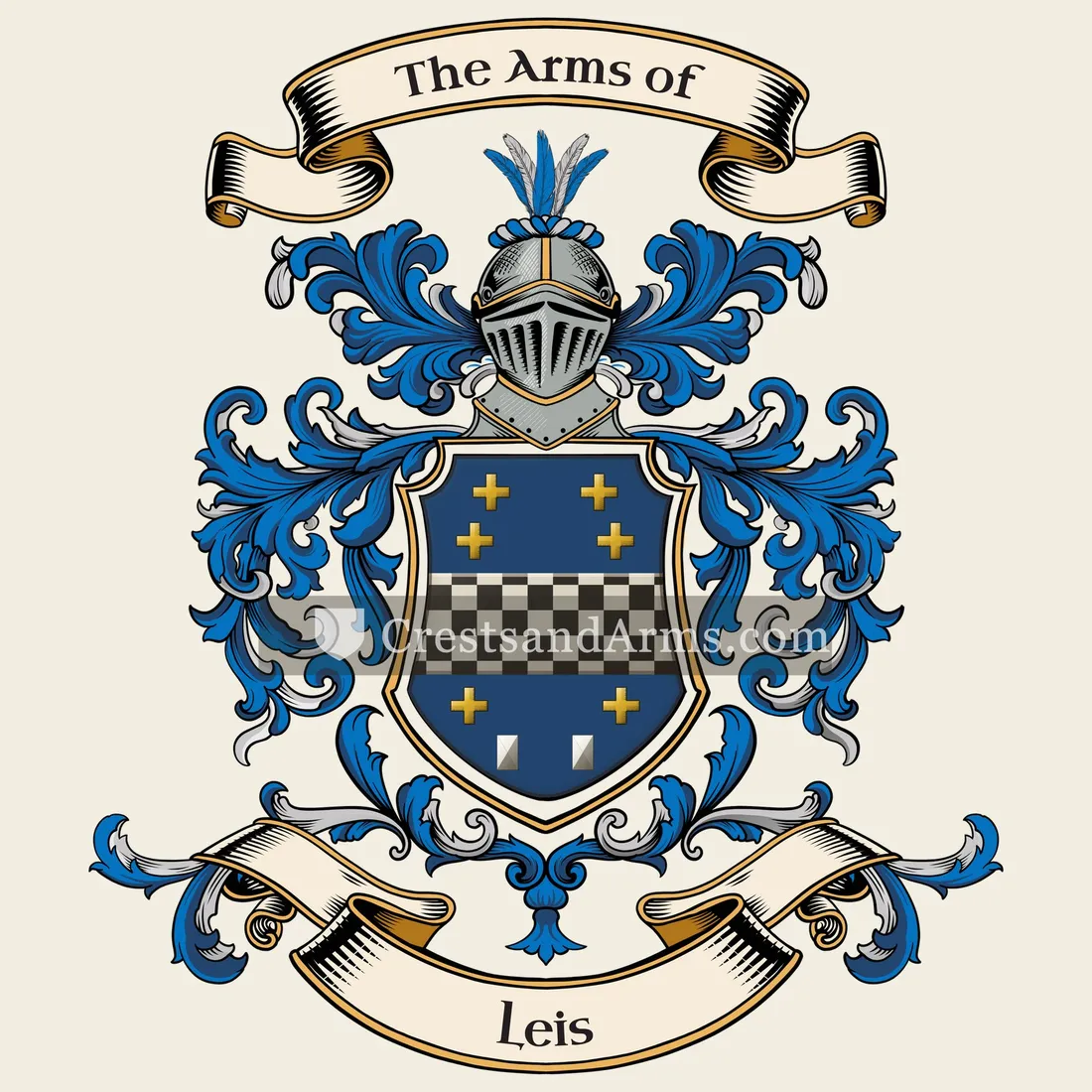
Symbols on this shield
fessThe military belt, and readiness to serve
chequyConstancy, and the counting-board
cross symbolChristian faith and service
billetThe sealed letter, and a message delivered
Colours
Blue (Azure)Means: Loyalty and truth
Black (Sable)Means: Constancy
Gold (Or)Means: Generosity
Silver (Argent)Means: Peace and sincerity
Historical info
Source
Sir Bernard Burke, The General Armory of England, Scotland, Ireland and Wales, London: Harrison & Sons, 1884
Blazon (the actual original written record)
“Az. a fesse chequy ar and sa. betw. six cross crosslets fitchée, three in the chief and three in the nombril points or, and three billets, two in the honor and one in the base points of the second”
DublinBlackrock · Dublin, c. 1645
Digital archive packCoat of arms PNG, gold border print PDF, vector SVG and the certificate of authenticity. Sent to your email in minutes.
Map of Ireland showing where the Leis arms are recorded
The Leis arms were recorded in Dublin, c. 1645.
Dublin was the seat of government in Ireland and the place where grants were sought and recorded. Families with business at the castle or the courts settled nearby, and settling there put their arms on record.
This is where the arms were entered in the register. Families often moved to other parts of the country, so the same name can turn up in more than one region.
The body that granted and recorded arms in Ireland in this period.
Charles I of England
Sovereign of the period
Charles I of England
1625–1649
Reigning in Belgium when the Leis arms are first recorded.
How Arms Worked in Ireland
The Ulster King of Arms granted coats of arms to individuals who proved their social standing and good character. These symbols were typically inherited by all legitimate descendants of the original holder. If a family branch wanted a unique look, they could apply for a specific change to their design through the office to ensure their identity remained distinct.
Granting authority
The Ulster King of Arms acted as the official body that regulated and issued all coats of arms throughout Ireland.
How they got arms
Families obtained their arms through formal grants issued by the office after proving their eligibility and paying the required fees.
Where arms were recorded
All official grants were recorded in the registers held by the Ulster King of Arms starting from the year 1552.
The family's standing
Recorded among the armigerous families of Dublin.
Origin & History of the Leis Family in Ireland
The history of the Leis family in Ireland is rooted in the bustling urban environment of seventeenth-century Dublin. By 1645, members of the family were already established residents within the city, a period marked by significant political upheaval and shifting social structures following the Irish Confederate Wars. During this era, Dublin served as a critical hub for trade and administration, attracting families who often integrated into the city’s merchant or artisan classes. While the name is not as common as others of Gaelic or Anglo-Norman origin, its presence in early modern Dublin records suggests that the family was part of the diverse population that navigated the complex religious and economic transitions of the time. These early settlers likely contributed to the growth of the city’s infrastructure, living through a transformative century that reshaped the social landscape of the Irish capital.
Meaning of the Leis family crest colors & symbols
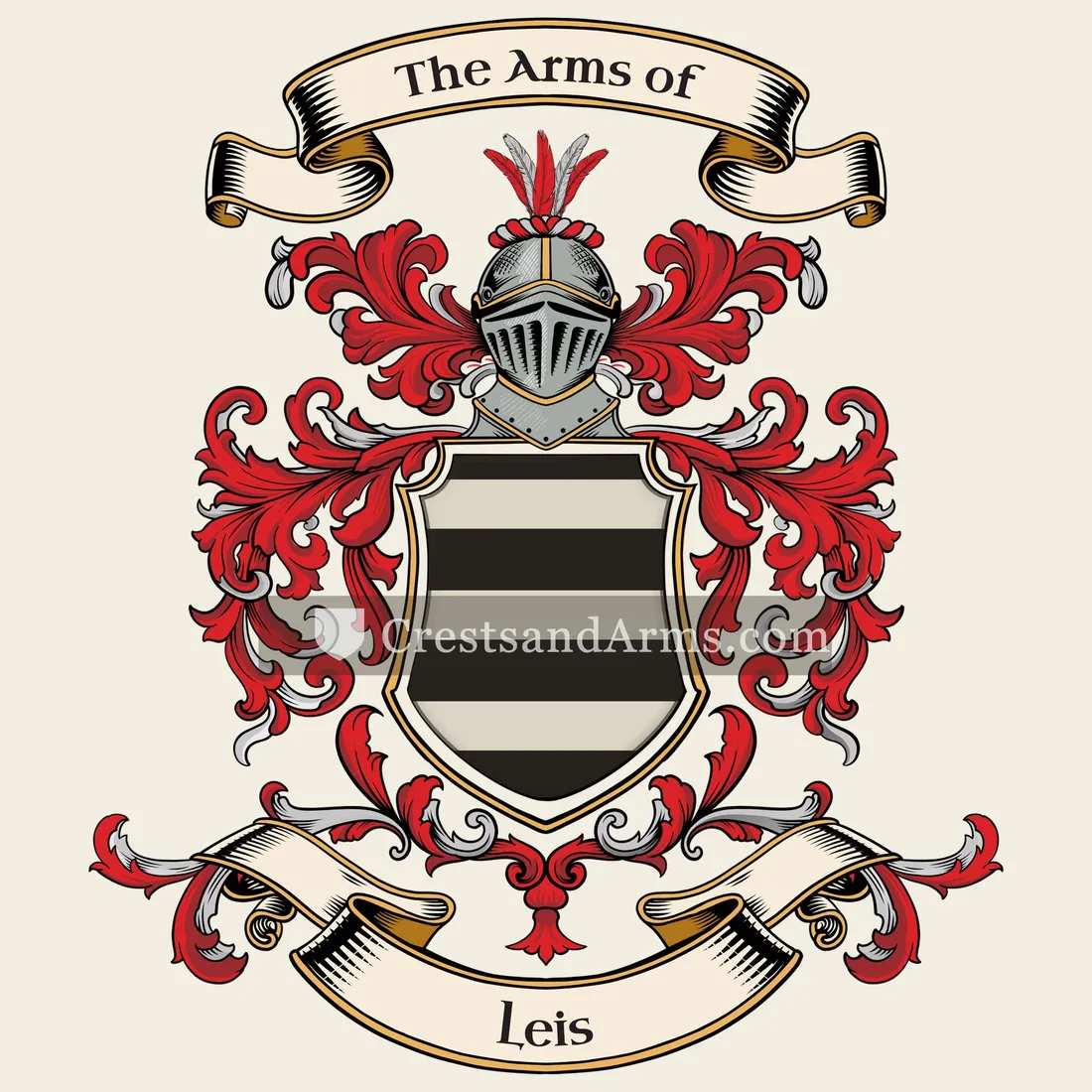
Colours
Black (Sable)Means: Constancy
Silver (Argent)Means: Peace and sincerity
Historical info
Source
Sir Bernard Burke, The General Armory of England, Scotland, Ireland and Wales, London: Harrison & Sons, 1884
Blazon (the actual original written record)
“(Lees, co. Lancaster). Sa. three bars ar”
Englandc. 1620
Digital archive packCoat of arms PNG, gold border print PDF, vector SVG and the certificate of authenticity. Sent to your email in minutes.
Map of England showing where the Leis arms are recorded
The Leis arms were recorded in England, c. 1620.
Arms such as these were typically recorded in York.
Yorkshire is the largest of the English counties, and it held more gentry families than any other. Land there was split among a great many households rather than a few, so a great many of them carried arms.
This is where the arms were entered in the register. Families often moved to other parts of the country, so the same name can turn up in more than one region.
The body that granted and recorded arms in England in this period.
James VI and I
Sovereign of the period
James VI and I
1603–1625
Reigning in Belgium when the Leis arms are first recorded.
How Arms Worked in England
English heraldry allowed arms to be shared by all legitimate descendants of the original owner. These symbols were treated as personal property that moved through the generations to all children. While the eldest son kept the original design, other family members could use the same shield without needing to change it or register their own unique versions.
Granting authority
The College of Arms in London has regulated the use of coats of arms throughout England and Wales since 1484.
How they got arms
Families typically obtained their coats of arms through a formal grant from the Crown or by proving their ancient right to them.
Where arms were recorded
All official coats of arms are recorded in the registers kept at the College of Arms, which date back to the fifteenth century.
The family's standing
Recorded among the armigerous families of England.
Origin & History of the Leis Family in England
The history of the Leis family in England is rooted in the northern city of York, where records confirm their presence by the year 1620. During the early seventeenth century, York was a bustling center of trade and religious transition, providing a backdrop for families to establish themselves within the local merchant or artisan classes. The name itself likely evolved from regional dialects or occupational descriptions common in the North of England during the late medieval and early modern periods. As residents of a major administrative hub, early members of the Leis family were part of a society defined by guild structures and parish life. Their documented presence in 1620 suggests they were settled members of the community who participated in the social and economic rhythms of a city that served as the gateway to the north. By maintaining a foothold in York, the family became part of the long-standing demographic tapestry of a city that had been significant since Roman times.
Leis Meaning & Related Branches
Root word
Elias
The Lord is my God
This name
LeisA patronymic form derived from the personal name Elias, common in the Low Countries.
also spelled
Leis
Leyse
Leise
Lays
Documented Sources
J. B. Rietstap, Armorial Général, Gouda: G. B. van Goor Zonen, 1884–87
State Archives in Belgium (Rijksarchief), Parochieregisters (Registers of Baptisms, Marriages, and Burials)
De Smet, A., Geschiedenis van Vlaanderen, 1965
Pirenne, H., Histoire de Belgique, 1900
Digital archive packCoat of arms PNG, gold border print PDF, vector SVG and the certificate of authenticity. Sent to your email in minutes.


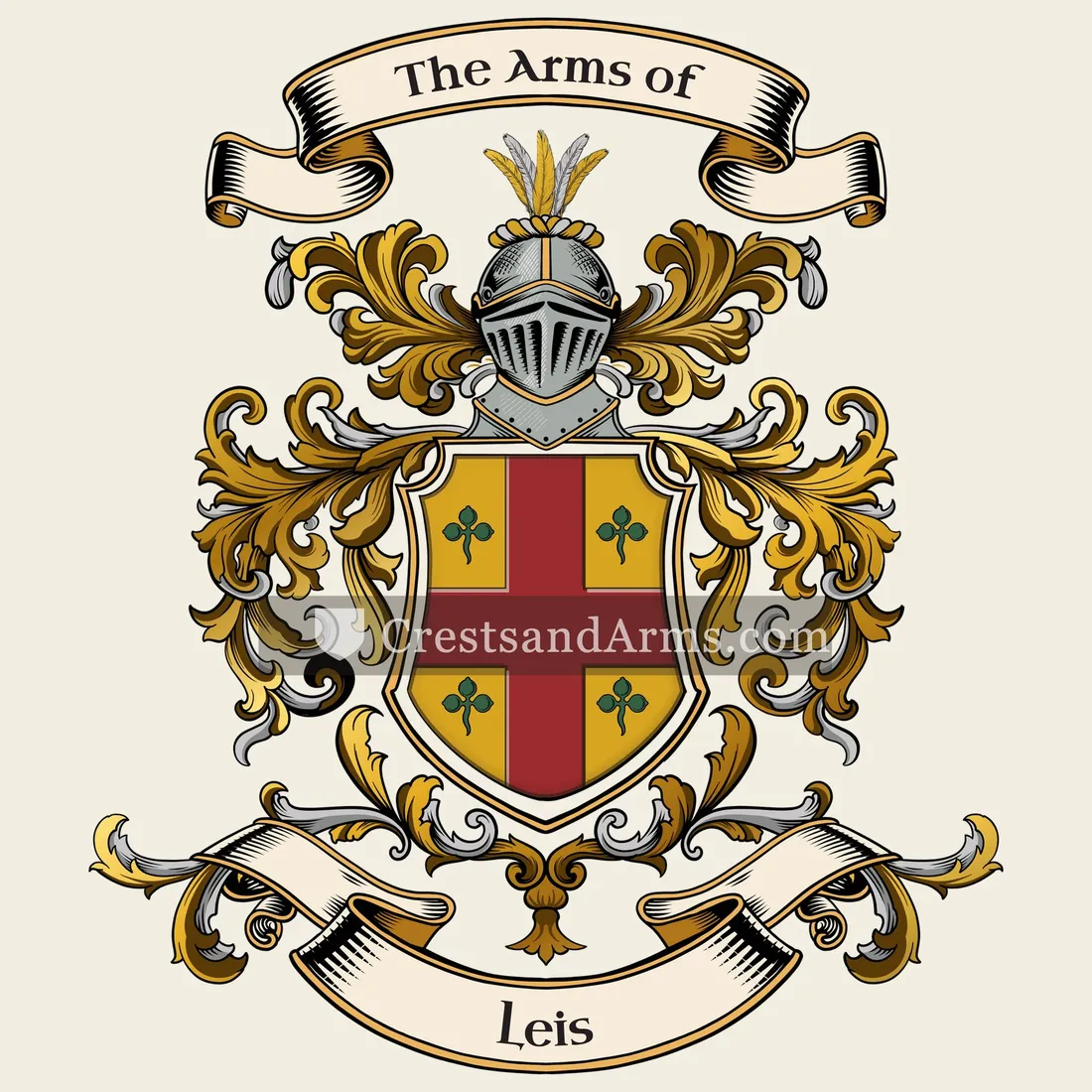
 cross symbolChristian faith and service
 trefoilPerpetuity, and the Trinity
 cross symbolChristian faith and service
 trefoilPerpetuity, and the Trinity


 fessThe military belt, and readiness to serve
 chequyConstancy, and the counting-board
 billetThe sealed letter, and a message delivered