Map of Denmark showing where the Leitl arms are recorded
The Leitl arms were recorded in Denmark, c. 1722.
Arms such as these were typically recorded in Sjaælland.
Zealand held the Danish court, the crown's offices and Copenhagen itself. Families who served the king kept estates within reach of it, and royal service was the ordinary route to a coat of arms.
This is where the arms were entered in the register. Families often moved to other parts of the country, so the same name can turn up in more than one region.
The body that granted and recorded arms in Denmark in this period.
Frederik IV of Denmark
Sovereign of the period
Frederik IV of Denmark
1699–1730
Reigning in Denmark when the Leitl arms are first recorded.
How Arms Worked in Denmark
Danish heraldry during this period was closely tied to noble status and royal favor rather than being open to all citizens. Arms were typically granted by the monarch to individuals, and these symbols were then shared by all members of the noble house. If a family line died out, the right to use those specific arms ended with them.
Granting authority
The Danish royal chancery held the power to issue and regulate official coats of arms for the kingdom.
How they got arms
Families usually received their arms through a formal royal grant that confirmed their noble status and rights.
Where arms were recorded
These grants were officially recorded in the Danish Royal Chancery records starting in the sixteenth century.
The family's standing
Recorded among the armigerous families of Denmark.
Origin & History of the Leitl Family in Denmark
The family name Leitl is historically rooted in the German-speaking regions of Central Europe, but its presence in Denmark offers a fascinating glimpse into the movement of people during the early eighteenth century. By 1722, records confirm that members of the family had established themselves on the island of Sjaælland. During this era, Denmark was a hub for skilled laborers and craftsmen who often migrated from the south to work on royal projects or within the growing urban centers of Copenhagen. The name itself likely originated as a diminutive form of a descriptive term for a person, perhaps referring to a specific physical trait or a local landmark near their ancestral home. As these early family members settled in Sjaælland, they integrated into the local Danish society, adapting to the language and customs of their new environment while maintaining the distinct identity of their surname. This migration pattern reflects the broader history of Northern Europe, where families frequently crossed borders to seek new opportunities in trade and agriculture.
Coat of Arms & Family Crest Details
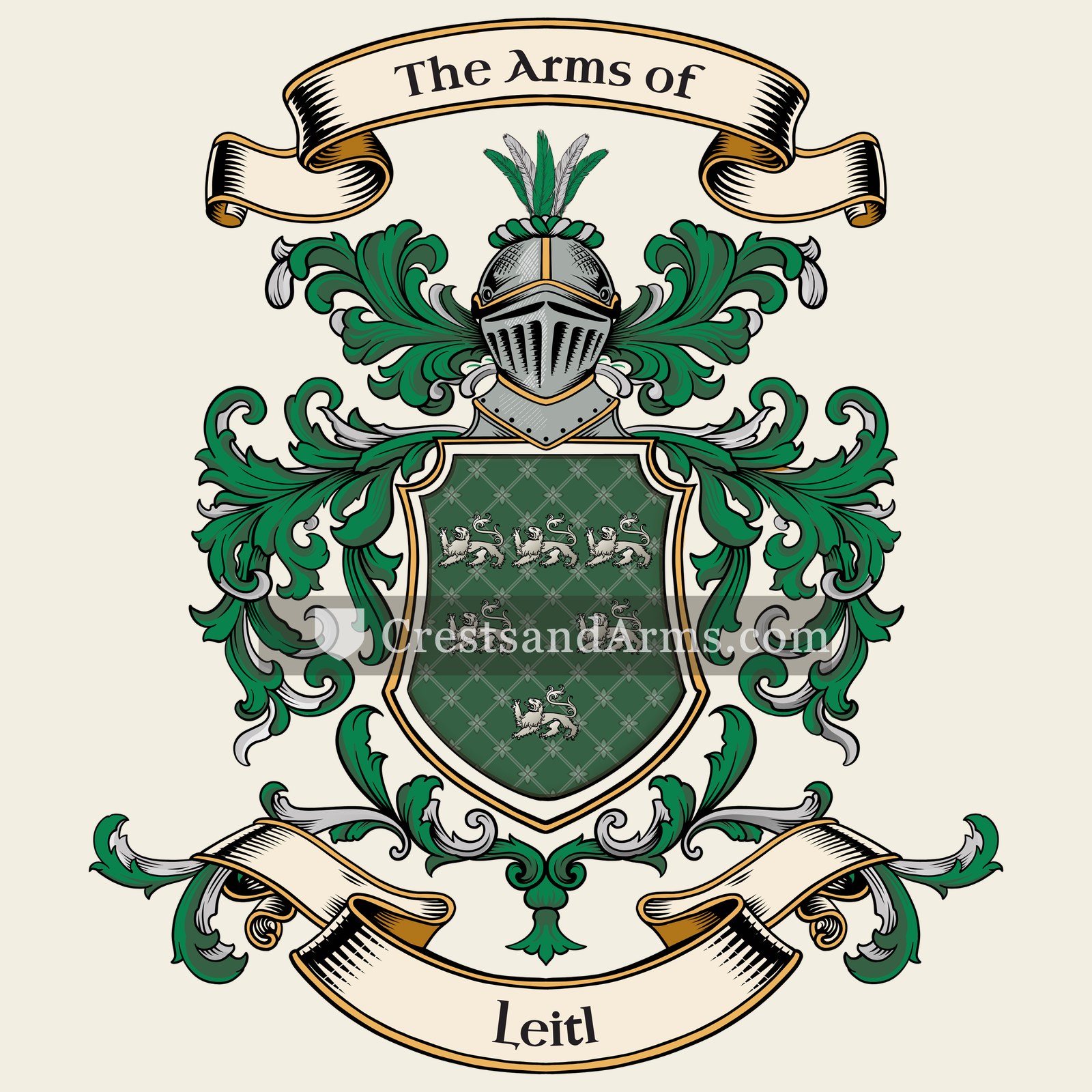
Symbols on this shield
lionCourage, strength and royalty
Colours
Green (Vert)Means: Hope
Silver (Argent)Means: Peace and sincerity
Historical info
Source
Sir Bernard Burke, The General Armory of England, Scotland, Ireland and Wales, London: Harrison & Sons, 1884
Blazon (the actual original written record)
“Vert six lions ramp. ar”
Englandc. 1620
Digital archive packCoat of arms PNG, gold border print PDF, vector SVG and the certificate of authenticity. Sent to your email in minutes.
Map of England showing where the Leitl arms are recorded
The Leitl arms were recorded in England, c. 1620.
Arms such as these were typically recorded in York.
Yorkshire is the largest of the English counties, and it held more gentry families than any other. Land there was split among a great many households rather than a few, so a great many of them carried arms.
This is where the arms were entered in the register. Families often moved to other parts of the country, so the same name can turn up in more than one region.
The body that granted and recorded arms in England in this period.
James VI and I
Sovereign of the period
James VI and I
1603–1625
Reigning in Denmark when the Leitl arms are first recorded.
How Arms Worked in England
English heraldry allowed arms to be shared by all legitimate descendants of the original owner. These symbols were treated as personal property that moved through the generations to all children. While the eldest son kept the original design, other family members could use the same shield without needing to change it or register their own unique versions.
Granting authority
The College of Arms in London has regulated the use of coats of arms throughout England and Wales since 1484.
How they got arms
Families typically obtained their coats of arms through a formal grant from the Crown or by proving their ancient right to them.
Where arms were recorded
All official coats of arms are recorded in the registers kept at the College of Arms, which date back to the fifteenth century.
The family's standing
Recorded among the armigerous families of England.
Origin & History of the Leitl Family in England
The history of the Leitl family in England begins with a small but distinct presence in the city of York during the early seventeenth century. Records confirm that members of the family were living in this historic northern hub by 1620, a time when York served as a vital center for trade and regional administration. The name itself is of Germanic origin, typically derived from a term for a small field or a person who lived near a specific piece of cultivated land. It is likely that these early ancestors arrived in England as part of the movement of skilled laborers or merchants from Central Europe who sought new opportunities in the growing English economy. By settling in York, the Leitl family became part of the city’s diverse social fabric, living alongside local artisans and traders. While the name remained relatively rare in England compared to its prevalence in the German-speaking regions of Europe, the 1620 records provide a clear starting point for their integration into the local community.
Related Branches & Arms
Root word
Leit
A slope, path, or track leading up a hillside.
This name
LeitlA topographic surname for someone who lived near a mountain path or slope.
also spelled
Lyttle
Lytle
Littell
Litel
Little
Documented Sources
J. B. Rietstap, Armorial Général, Gouda: G. B. van Goor Zonen, 1884–87
The Danish National Archives (Rigsarkivet), Census Records of 1722 (Folketællinger)
The Danish National Archives (Rigsarkivet), Church Records of the Diocese of Copenhagen (Kirkebøger for Københavns Stift)
Knudsen, Anders, Navne i Danmark: En historisk gennemgang af efternavnes oprindelse, 1998
Nielsen, Oluf, Kjøbenhavns Historie og Beskrivelse, 1877
Digital archive packCoat of arms PNG, gold border print PDF, vector SVG and the certificate of authenticity. Sent to your email in minutes.


 fessThe military belt, and readiness to serve
 fessThe military belt, and readiness to serve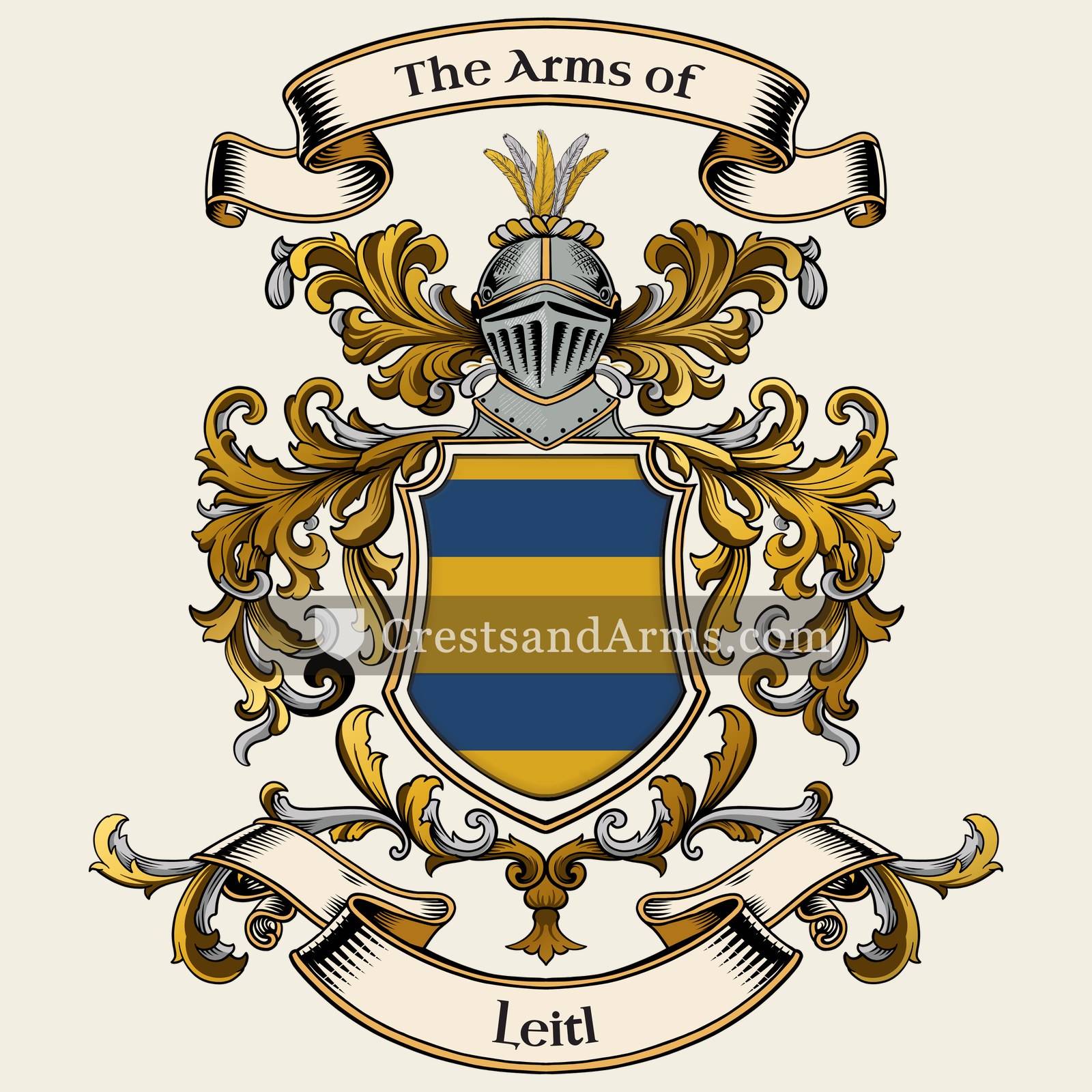


 lionCourage, strength and royalty