Map of Belgium showing where the Leman arms are recorded
The Leman arms were recorded in Tournai, c. 1737.
This is where the arms were entered in the register. Families often moved to other parts of the country, so the same name can turn up in more than one region.
The body that granted and recorded arms in Belgium in this period.
Charles VI, Holy Roman Emperor
Sovereign of the period
Charles VI, Holy Roman Emperor
1711–1740
Reigning in Belgium when the Leman arms are first recorded.
How Arms Worked in Belgium
In Belgium, a coat of arms is considered personal property that is passed down through the male line to legitimate descendants. Families often use the same shield design across generations to show their shared heritage. If a branch of the family wants to change the design, they must apply for an official update to their specific version of the arms.
Granting authority
The Conseil héraldique is the official body that regulates and approves all coats of arms in Belgium.
How they got arms
Families obtain their coats of arms through formal royal grants or by confirming their historical right to use existing designs.
Where arms were recorded
All approved coats of arms are officially recorded in the public registers of the Conseil héraldique since 1844.
The family's standing
Recorded among the armigerous families of Belgium.
Origin & History of the Leman Family in Belgium
The family name Leman has deep roots in the historical landscape of Belgium, particularly within the ancient city of Tournai. By the year 1737, records confirm that members of the Leman family were well-established residents in this region, which was then a significant center for trade and craftsmanship. The name itself is often linked to the Old French word "le mans," which served as a geographic identifier for people who originated from the city of Le Mans in France. As families migrated across borders during the eighteenth century, they often settled in bustling urban hubs like Tournai to pursue work in the textile industry or local government. These early Leman ancestors were part of a growing middle class that helped shape the social and economic character of the Southern Netherlands. Their presence in Tournai highlights how families moved through Europe to find stability and new opportunities during a time of great regional change.
Meaning of the Leman family crest colors & symbols
Symbols on this shield
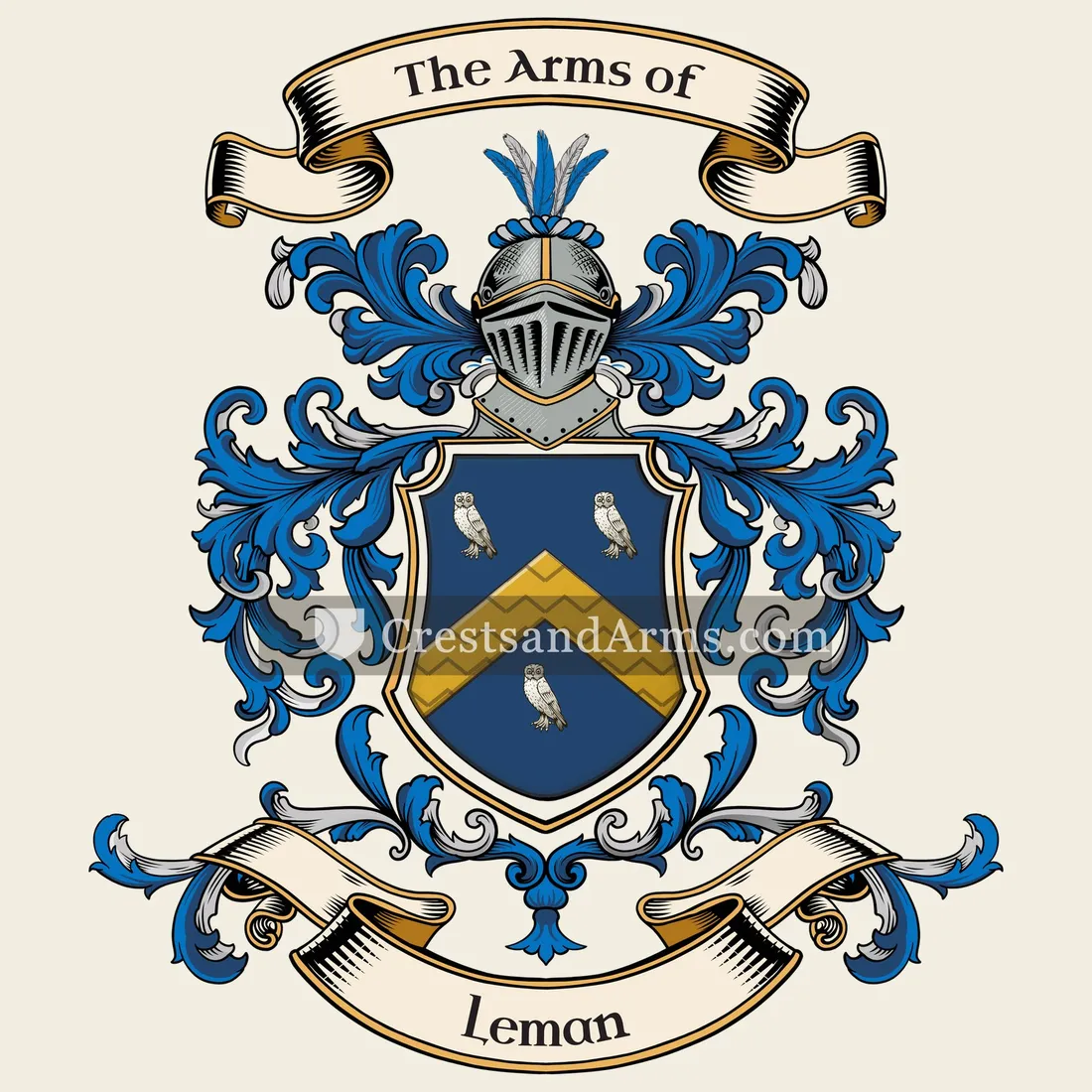
chevronProtection, and faithful service completed
owlWisdom and vigilance by night
Colours
Blue (Azure)Means: Loyalty and truth
Gold (Or)Means: Generosity
Silver (Argent)Means: Peace and sincerity
Historical info
Source
Sir Bernard Burke, The General Armory of England, Scotland, Ireland and Wales, London: Harrison & Sons, 1884
Blazon (the actual original written record)
“Az. a chev. or, betw. three owls ar. legged of the second”
SuffolkBrampton Hall · Suffolk, c. 1620
Digital archive packCoat of arms PNG, gold border print PDF, vector SVG and the certificate of authenticity. Sent to your email in minutes.
Map of England showing where the Leman arms are recorded
The Leman arms were recorded in Suffolk, c. 1620.
Suffolk was wool country, and its cloth towns were among the wealthiest in England. Clothier families bought manors with their profits, and holding a manor was the ordinary route to a coat of arms.
This is where the arms were entered in the register. Families often moved to other parts of the country, so the same name can turn up in more than one region.
The body that granted and recorded arms in England in this period.
James VI and I
Sovereign of the period
James VI and I
1603–1625
Reigning in Belgium when the Leman arms are first recorded.
How Arms Worked in England
English heraldry allowed arms to be shared by all legitimate descendants of the original owner. These symbols were treated as personal property that moved through the generations to all children. While the eldest son kept the original design, other family members could use the same shield without needing to change it or register their own unique versions.
Granting authority
The College of Arms in London has regulated the use of coats of arms throughout England and Wales since 1484.
How they got arms
Families typically obtained their coats of arms through a formal grant from the Crown or by proving their ancient right to them.
Where arms were recorded
All official coats of arms are recorded in the registers kept at the College of Arms, which date back to the fifteenth century.
The family's standing
Recorded among the armigerous families of Suffolk.
Origin & History of the Leman Family in England
The surname Leman has deep roots in the English county of Suffolk, where families bearing the name were well established by the early 17th century. The name itself is thought to have originated as a descriptive term, likely derived from the Middle English word "leman," which meant a lover or a sweetheart. In medieval society, such names often began as nicknames given to individuals based on their personality or social standing before they became permanent family identifiers. By 1620, the Leman family had integrated into the local Suffolk community, often appearing in parish registers and legal documents as landowners and tradespeople. Their presence in this region suggests they were part of the growing middle class that helped shape the local economy and social structure of East Anglia during the late Tudor and early Stuart periods. Through these early records, we can see the family transitioning from individuals identified by simple nicknames to established citizens with a lasting legacy in the English countryside.
Meaning of the Leman family crest colors & symbols
Symbols on this shield
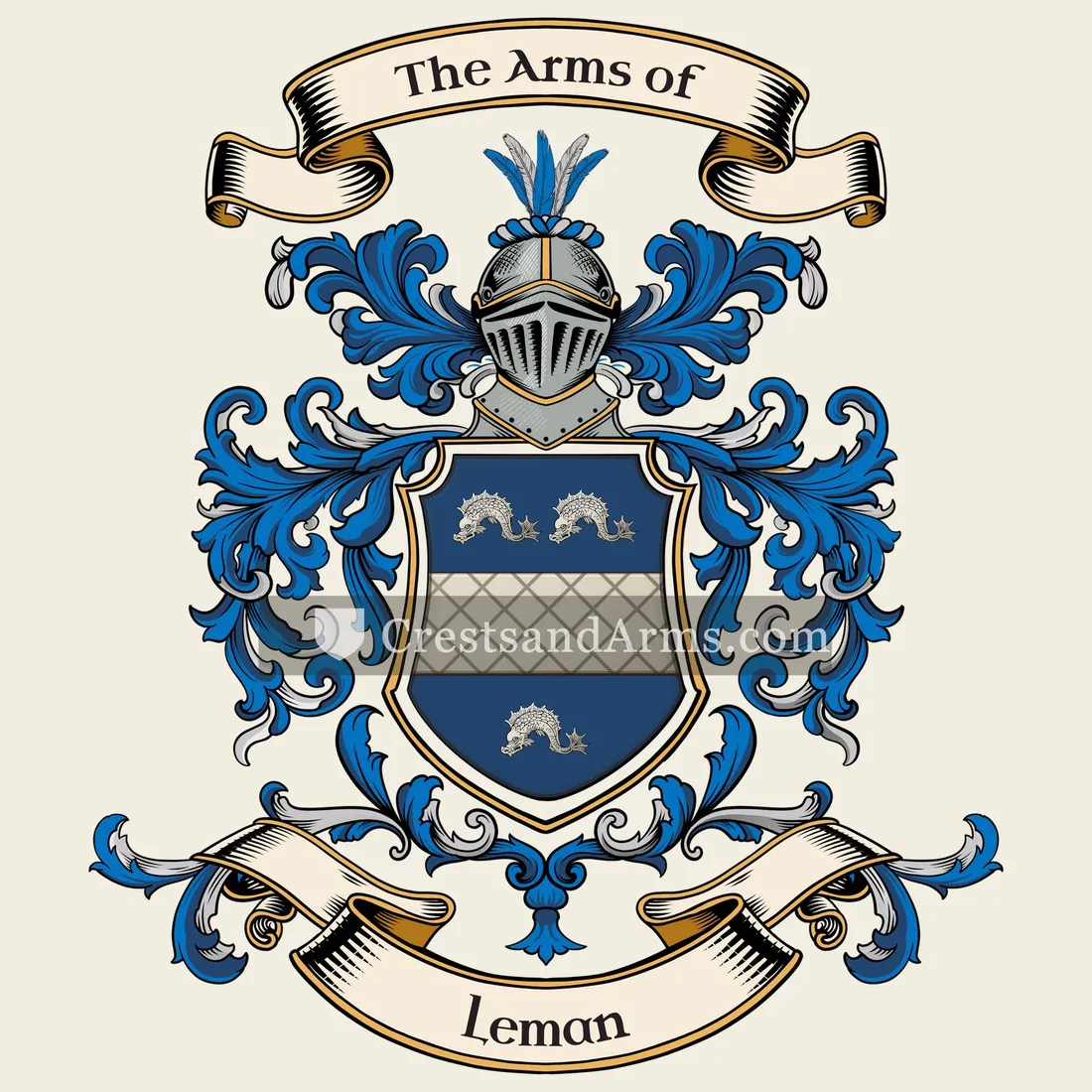
fessThe military belt, and readiness to serve
dolphinSwiftness, charity and love
Colours
Blue (Azure)Means: Loyalty and truth
Silver (Argent)Means: Peace and sincerity
Historical info
Source
Sir Bernard Burke, The General Armory of England, Scotland, Ireland and Wales, London: Harrison & Sons, 1884
Blazon (the actual original written record)
“Az. a fess betw. three dolphins embowed ar”
Irelandc. 1671
Digital archive packCoat of arms PNG, gold border print PDF, vector SVG and the certificate of authenticity. Sent to your email in minutes.
Map of Ireland showing where the Leman arms are recorded
The Leman arms were recorded in Ireland, c. 1671.
Arms such as these were typically recorded in Dublin.
Dublin was the seat of government in Ireland and the place where grants were sought and recorded. Families with business at the castle or the courts settled nearby, and settling there put their arms on record.
This is where the arms were entered in the register. Families often moved to other parts of the country, so the same name can turn up in more than one region.
The body that granted and recorded arms in Ireland in this period.
Charles II of England
Sovereign of the period
Charles II of England
1660–1685
Reigning in Belgium when the Leman arms are first recorded.
How Arms Worked in Ireland
The Ulster King of Arms granted coats of arms to individuals who proved their social standing and good character. These symbols were typically inherited by all legitimate descendants of the original holder. If a family branch wanted a unique look, they could apply for a specific change to their design through the office to ensure their identity remained distinct.
Granting authority
The Ulster King of Arms acted as the official body that regulated and issued all coats of arms throughout Ireland.
How they got arms
Families obtained their arms through formal grants issued by the office after proving their eligibility and paying the required fees.
Where arms were recorded
All official grants were recorded in the registers held by the Ulster King of Arms starting from the year 1552.
The family's standing
Recorded among the armigerous families of Ireland.
Origin & History of the Leman Family in Ireland
The Leman family name has a distinct presence in Irish history that traces back to the late seventeenth century. By 1671, records confirm that members of the family were established in Dublin, a city that served as a bustling center for trade and administration during the Restoration period. The name itself is often linked to the Middle English word for a lover or a sweetheart, suggesting that it may have originated as a descriptive nickname before evolving into a formal surname. As these early settlers integrated into the social fabric of Dublin, they likely participated in the urban growth and commercial expansion that defined the capital at the time. Their presence in the city suggests they were part of the professional or merchant classes who helped shape the civic life of Ireland during this era of significant political and social transition.
Leman Meaning & Related Branches
Root word
Le Man
Old French term meaning the man or the person.
This name
LemanA locative or occupational surname referring to a person from the region of Le Mans or a specific individual.
also spelled
Lemman
Lehman
Leaman
Lemmon
Related arms
Le Marchantsame arms
Newenhamrecorded with Leman, same area
Documented Sources
J. B. Rietstap, Armorial Général, Gouda: G. B. van Goor Zonen, 1884–87
Archives de l'État à Tournai, Registres paroissiaux de la ville de Tournai
Archives de la Ville de Tournai, Registres aux bourgeois de Tournai
Dauzat, Albert, Dictionnaire étymologique des noms et prénoms de France, 1951
Rolland, Victor, Dictionnaire des noms de famille en Belgique romane, 1945
Digital archive packCoat of arms PNG, gold border print PDF, vector SVG and the certificate of authenticity. Sent to your email in minutes.


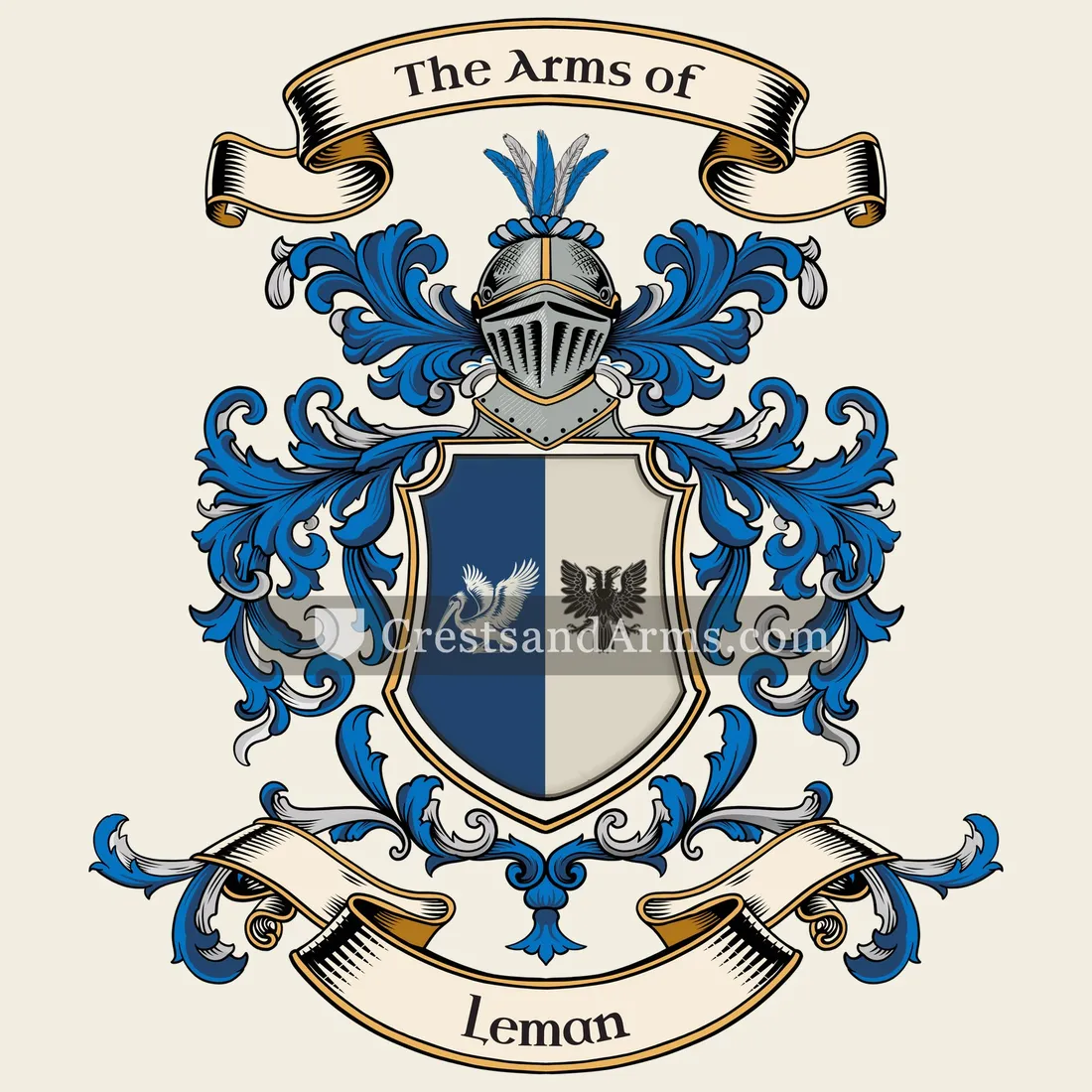
 pelicanSelf-sacrifice and devotion to one's children
 eagleNobility, strength and a keen mind
 pelicanSelf-sacrifice and devotion to one's children
 eagleNobility, strength and a keen mind


 chevronProtection, and faithful service completed
 owlWisdom and vigilance by night


 fessThe military belt, and readiness to serve
 dolphinSwiftness, charity and love