Map of France showing where the Lemin arms are recorded
The Lemin arms were recorded in Lorraine, c. 1558.
Lorraine sat on the border between France and the German lands, and border country bred soldiers. Families here held small estates and served in arms, and a fighting man was exactly the sort who carried a shield of his own.
This is where the arms were entered in the register. Families often moved to other parts of the country, so the same name can turn up in more than one region.
The body that granted and recorded arms in France in this period.
Henry II of France
Sovereign of the period
Henry II of France
1547–1559
Reigning in France when the Lemin arms are first recorded.
How Arms Worked in France
In France, a coat of arms was a mark of honor that passed down through the male line to all legitimate descendants. Families often used the same shield without changes to show their shared heritage. If a branch wanted to stand out, they could add a small mark to their shield to show their specific place in the family tree.
Granting authority
The Juge d'armes de France acted as the official authority that regulated and verified coats of arms across the country.
How they got arms
Families typically inherited their arms from ancestors, though they could also receive them through royal grants or by proving their noble status.
Where arms were recorded
Coats of arms were officially recorded in the Armorial Général de France, which began its main collection in the year 1696.
The family's standing
Recorded among the armigerous families of Lorraine.
Origin & History of the Lemin Family in France
The family name Lemin traces its roots to the historic region of Lorraine in northeastern France, where records confirm members of the family were established by 1558. During the sixteenth century, Lorraine was a semi-independent duchy that served as a cultural bridge between the French-speaking world and the German states. Families living in this area were often shaped by the complex political shifts and religious tensions of the Reformation era. The name likely developed from local linguistic variations common to the borderlands, where French and Germanic influences blended together. As residents of a region frequently caught in the middle of European power struggles, the early Lemin family would have relied on strong community ties and agricultural stability to maintain their presence in the local parish records. Their survival and documentation in the mid-1500s suggest they were part of the established rural or merchant classes who helped define the social fabric of the Lorraine countryside during this transformative period of French history.
Coat of Arms & Family Crest Details
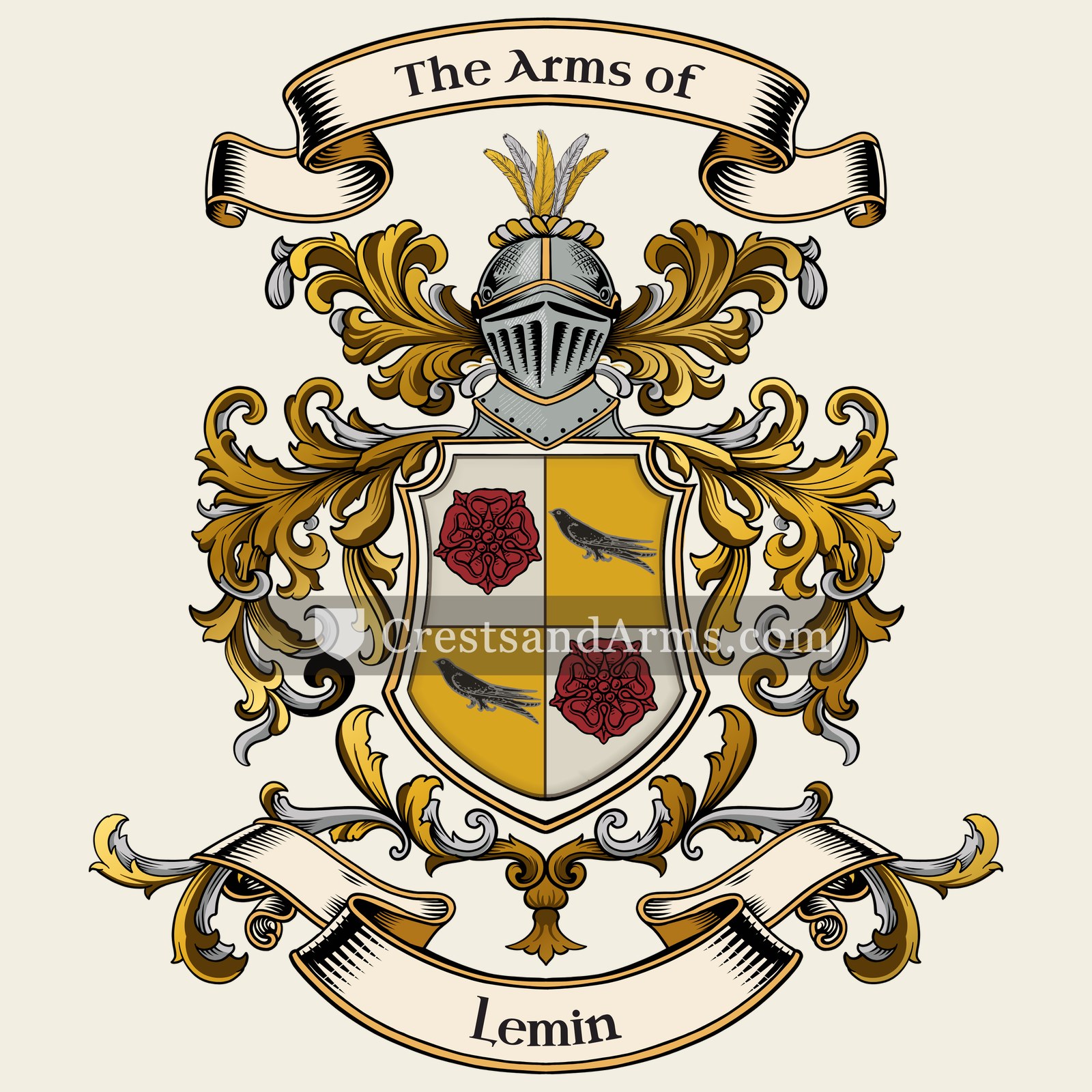
Symbols on this shield
roseThe seventh son, and beauty with grace
martletA younger son, who must win his own land
Colours
Silver (Argent)Means: Peace and sincerity
Gold (Or)Means: Generosity
Red (Gules)Means: Military strength
Black (Sable)Means: Constancy
Historical info
Source
J. B. Rietstap, Armorial Général, Gouda: G. B. van Goor Zonen, 1884–87
Blazon (the actual original written record)
“Parti d'un trait, coupé de deux autres, qui font six quartiers: aux 1, 4 et 5 d'arg. à une rose de gu., bout. d'or, barbée de sin.: aux 2, 3 et 6 d'or à une merlette de sa. C.: une rose de l'écu, tigée et feuillée de sin.”
BelgiumVerviers, c. 1737
Digital archive packCoat of arms PNG, gold border print PDF, vector SVG and the certificate of authenticity. Sent to your email in minutes.
Map of Belgium showing where the Lemin arms are recorded
The Lemin arms were recorded in Verviers, c. 1737.
This is where the arms were entered in the register. Families often moved to other parts of the country, so the same name can turn up in more than one region.
The body that granted and recorded arms in Belgium in this period.
Charles VI, Holy Roman Emperor
Sovereign of the period
Charles VI, Holy Roman Emperor
1711–1740
Reigning in France when the Lemin arms are first recorded.
How Arms Worked in Belgium
In Belgium, a coat of arms is considered personal property that is passed down through the male line to legitimate descendants. Families often use the same shield design across generations to show their shared heritage. If a branch of the family wants to change the design, they must apply for an official update to their specific version of the arms.
Granting authority
The Conseil héraldique is the official body that regulates and approves all coats of arms in Belgium.
How they got arms
Families obtain their coats of arms through formal royal grants or by confirming their historical right to use existing designs.
Where arms were recorded
All approved coats of arms are officially recorded in the public registers of the Conseil héraldique since 1844.
The family's standing
Recorded among the armigerous families of Belgium.
Origin & History of the Lemin Family in Belgium
The Lemin family name has deep roots in the eastern region of Belgium, particularly within the industrial city of Verviers. By 1737, records confirm that members of the family were already established in this area, which was then part of the Prince-Bishopric of Liège. During the eighteenth century, Verviers was rapidly transforming into a major hub for the wool and textile trade. Families like the Lemins often played a role in this local economy, either as skilled craftsmen or as participants in the growing mercantile networks that defined the region. Because Verviers was a crossroads for trade between the Low Countries and the German states, the family likely lived in a vibrant, multilingual environment that shaped their daily lives and social standing. Their presence in the city during this era suggests they were part of the hardworking population that helped establish the textile reputation for which Verviers became world-famous.
Related Branches & Arms
Root word
le main
The hand or a person with a distinct physical characteristic.
This name
LeminA topographic or occupational surname referring to a person with a notable hand.
also spelled
Lemoigne
Lemoyne
Lemoin
Lemoyn
Documented Sources
J. B. Rietstap, Armorial Général, Gouda: G. B. van Goor Zonen, 1884–87
Archives départementales de Meurthe-et-Moselle, Série B: Cours et juridictions (Chambre des comptes de Lorraine)
Bastien, Henri, Le duché de Lorraine au XVIe siècle, 1974
Martin, Jean-Pierre, Histoire des familles lorraines sous l'Ancien Régime, 1988
Digital archive packCoat of arms PNG, gold border print PDF, vector SVG and the certificate of authenticity. Sent to your email in minutes.


 harpWell-tuned governance and love of music
 harpWell-tuned governance and love of music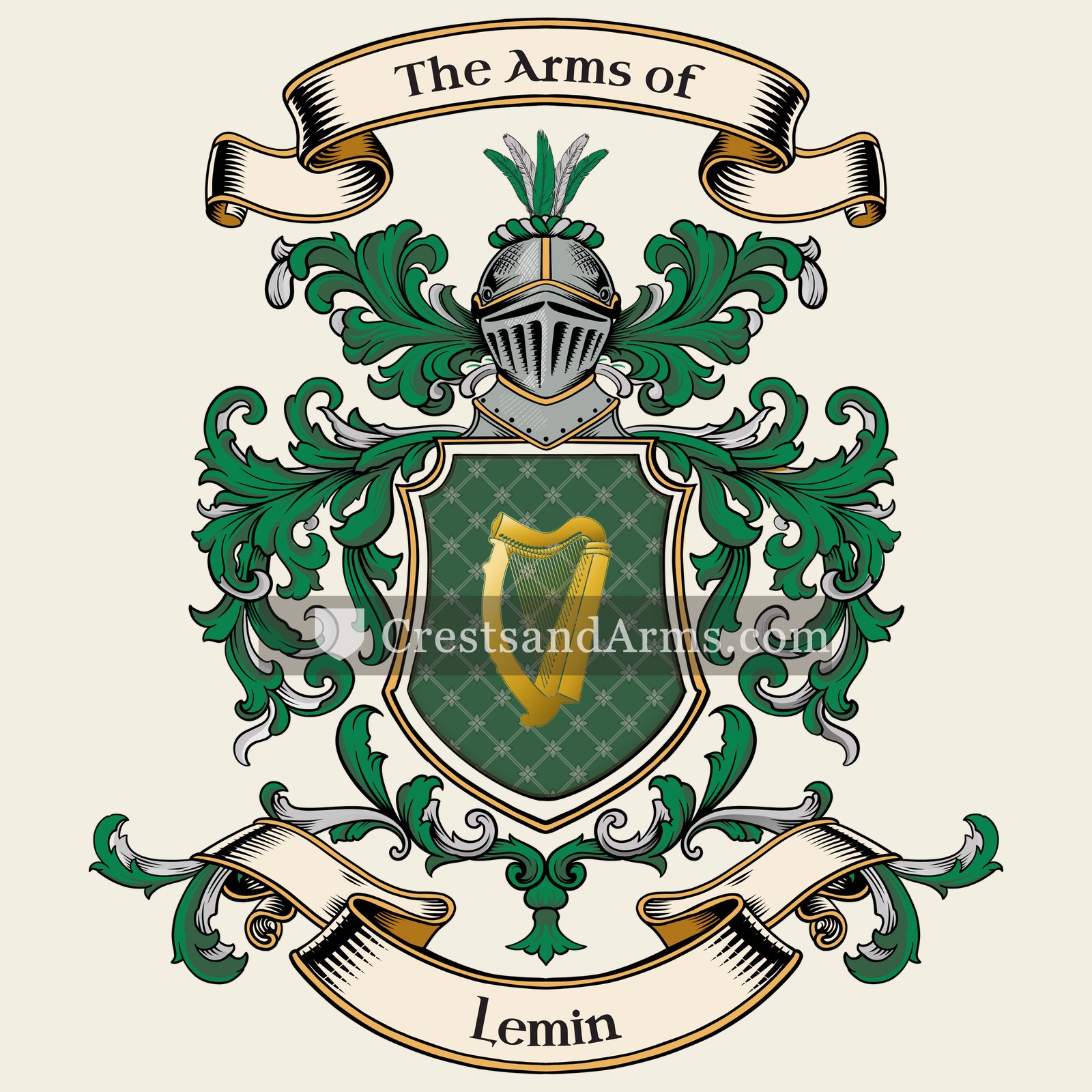


 roseThe seventh son, and beauty with grace
 martletA younger son, who must win his own land