Map of Spain showing where the Lemko arms are recorded
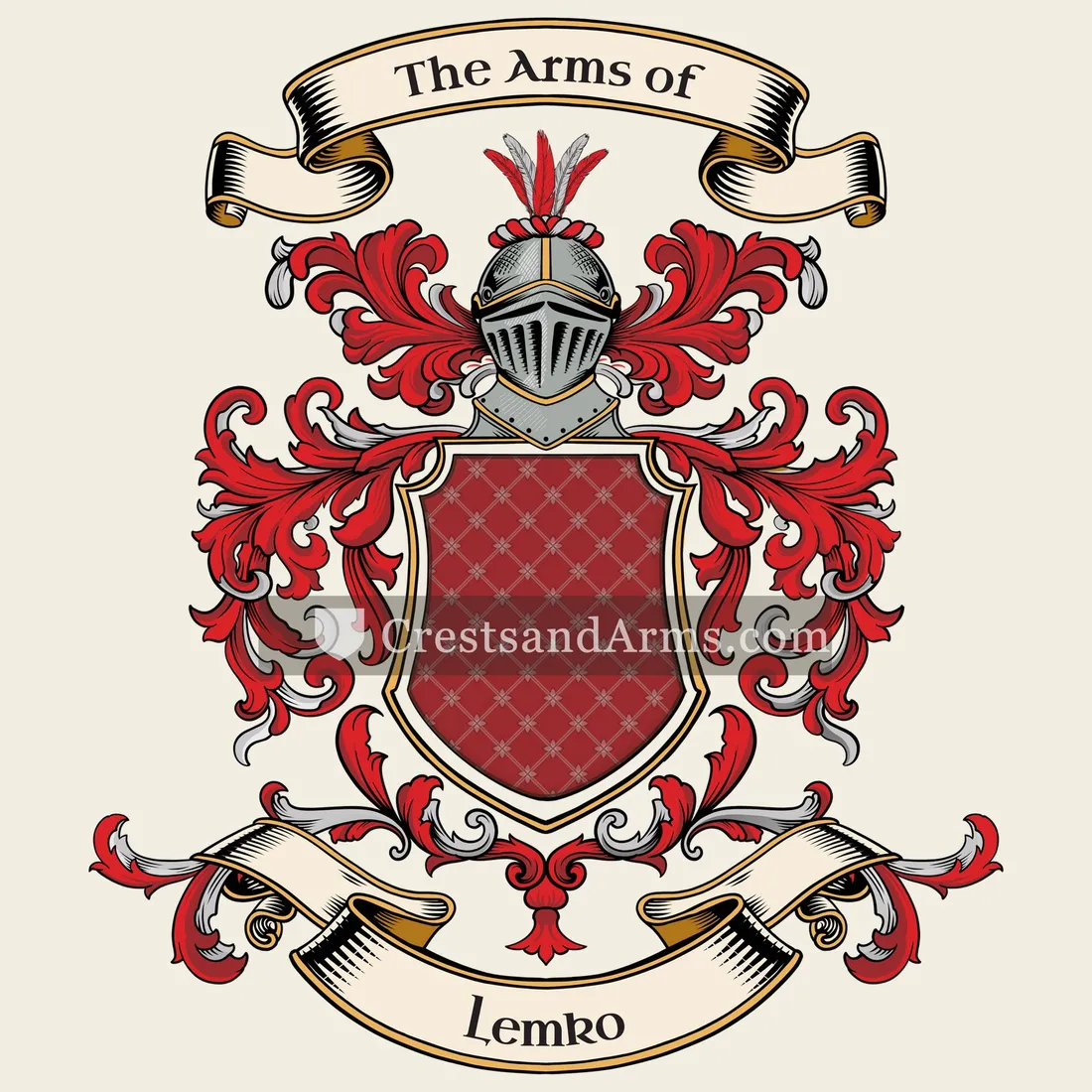
The Lemko arms were recorded in Galicia, c. 1722.
Galicia was eastern country of large estates and small farming villages, held by families who had been there for a very long time. Land was what entitled a family to arms, and land there rarely changed hands.
This is where the arms were entered in the register. Families often moved to other parts of the country, so the same name can turn up in more than one region.
The body that granted and recorded arms in Spain in this period.
Philip V of Spain
Sovereign of the period
Philip V of Spain
1714–1724
Reigning in Spain when the Lemko arms are first recorded.
How Arms Worked in Spain
In Spain, a coat of arms was considered a form of property that belonged to the entire family line. These arms were passed down from a father to all his children equally. Younger branches of the family usually kept the original design without needing to add any special marks to distinguish their specific line.
Granting authority
The Cronista Rey de Armas was the official body that regulated and granted coats of arms throughout Spain.
How they got arms
Families often obtained their arms through royal grants or by proving their noble status to the official heraldic authority.
Where arms were recorded
Coats of arms were officially recorded in the registers of the Cronista Rey de Armas starting in 1496.
The family's standing
Recorded among the armigerous families of Galicia.
Origin & History of the Lemko Family in Spain
The family name Lemko is deeply connected to the historical region of Galicia, where records confirm the presence of family members as early as 1722. The name itself is closely linked to the Lemko people, an ethnic group of Rusyn origin who lived in the northern slopes of the Carpathian Mountains. Historically, the term Lemko was used as an ethnonym to describe these mountain dwellers, derived from their frequent use of the word "lem," which means "only" or "but" in their local dialect. Families bearing this name were often part of a distinct culture that blended Slavic traditions with unique mountain customs. Over time, the name transitioned from a general label for a regional group into a specific family surname as record-keeping became more formal in the Austro-Hungarian Empire. This evolution reflects the transition of a mountain community into the broader administrative structures of the eighteenth century.
Lemko Meaning & Related Branches
Root word
Lemos
Derived from the Latin word limus meaning mud or silt.
This name
LemkoA topographic surname referring to someone who lived near a muddy or silty area.
also spelled
Lemosse
Lemoos
Lemosh
Documented Sources
J. B. Rietstap, Armorial Général, Gouda: G. B. van Goor Zonen, 1884–87
Magocsi, Paul Robert, The Rusyn-Ukrainians of Czechoslovakia: An Historical Survey, 1983
Pugh, Stefan M., Rusyn: A Language in Transition, 2009